
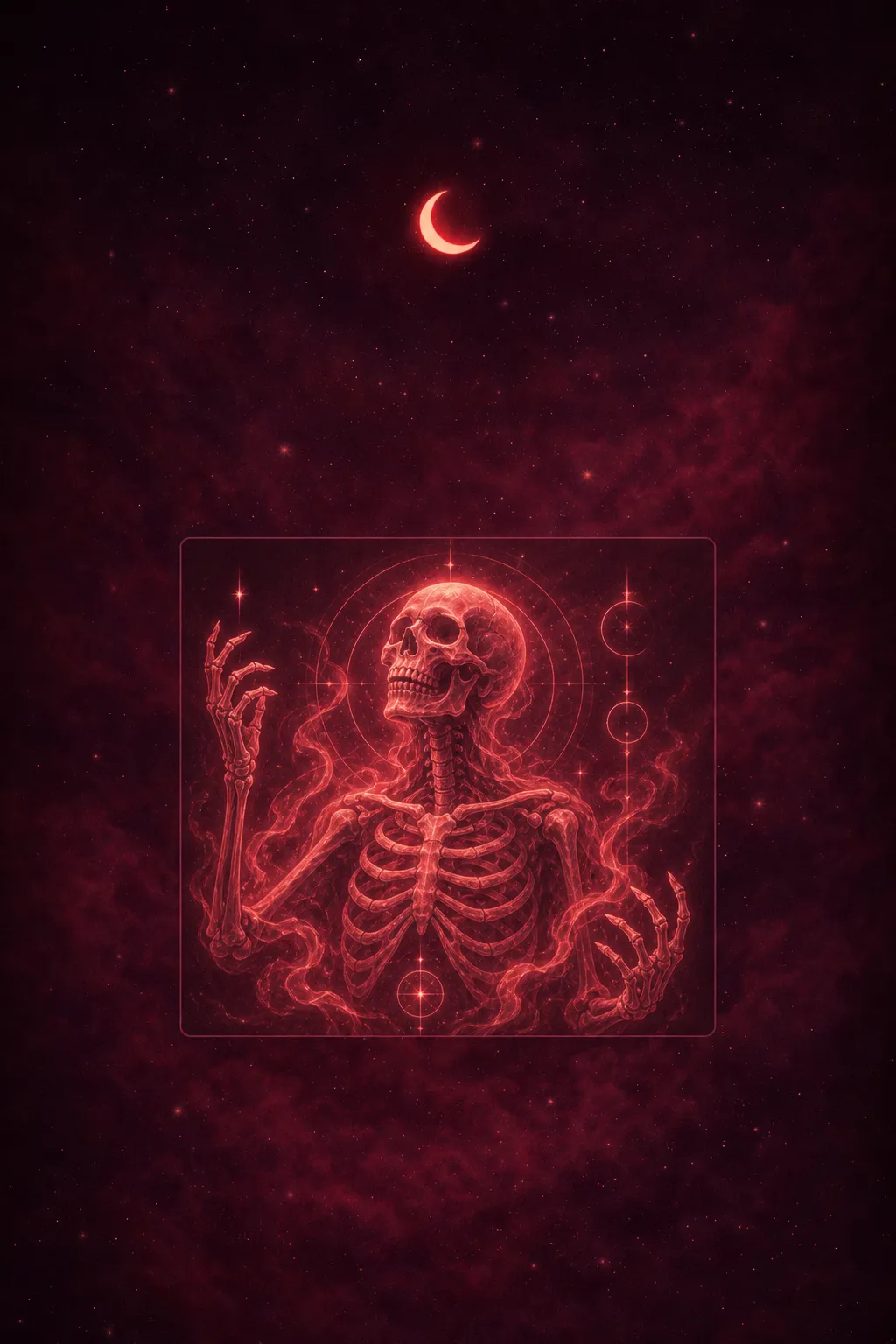

Skeleton dream meaning centers on confronting hidden truths, mortality, or long-buried emotions, as seeing a skeleton in a dream often signals that something once alive in your life—a relationship, ambition, or part of your identity—has been stripped to its bare bones and is urging you to acknowledge what remains before moving forward.
In under a minute you could read what your exact dream means for you, and see a picture of it. Free.
A dream still on your mind? Get your personal reading.
Describe your dream in a line or two. In seconds you get a reading of your exact dream, a picture drawn from your own words, and every symbol explained.
Free. No sign-up. Takes 10 seconds. Your dream stays private.
0%
Analyzing your dream…
Something went wrong. Please try again in a moment.
Your dreams deserve more than a dictionary
Common Skeleton Dream Scenarios and What They Mean
The scenario in which a skeleton appears shapes its meaning considerably.
Dreaming of simply seeing a skeleton
Seeing a skeleton in a room, a field, or an undefined space typically signals that something in your waking life has been stripped to its bare bones: a relationship drained of warmth, a career plan hollowed out by repeated setbacks, or a belief you once held firmly that no longer has substance behind it. The dream pushes you to stop avoiding that bare-bones reality and deal with what actually remains.
A bad dream isn't a bad sign.
Dreaming of a skeleton in a closet
This scenario draws directly on the familiar idiom: something concealed — a past mistake, a hidden shame, an unspoken truth — is pressing toward the surface. The anxiety here is often about control: who discovers it, when, and on whose terms.
Dreaming of seeing your own skeleton or an X-ray of yourself
This points to deep self-examination and identity reduced to its core. It is sometimes tied to health worries or a persistent feeling of emotional depletion — a sense that the outer self has worn away and only the essential framework is left.
Dreaming of a skeleton chasing or attacking you
An unresolved fear or a matter you believed was finished has returned with force. This is a classic signal that avoidance is no longer working — the dread you buried is now actively pursuing you and demanding a response.
Dreaming of an animated, walking, or talking skeleton
Something hollow is persisting without genuine vitality — a relationship or project going through the motions long after its real substance has gone. The skeleton moves, yet nothing living drives it.
Dreaming of the skeleton of someone you know
This can reflect grief, emotional distance, or an honest reckoning with that relationship stripped of its comforting surface — seeing past appearances to what the bond has actually become.
But what does your version mean?
Dreaming of digging up skeletal remains
You are deliberately or accidentally unearthing buried history or a repressed memory. Something laid to rest has not fully settled, and the act of digging signals it is ready — or insisting — to be acknowledged.
Dreaming of a skeleton as decoration or costume
A lighter, more familiar relationship with mortality — reflecting the way Halloween imagery can defuse dread and make death feel manageable rather than threatening.
Across nearly all these variants, the central tension is the same: something stripped of its outer layer is now visible, and the dream is asking whether you will look clearly at what remains or turn away again.
What this dream could look like
Tap an image to open it full screen
Example images. Only you can see what you write in Dream Book.
The Psychological Reading: What Your Mind Is Processing
From a psychological standpoint, dreaming of a skeleton is your subconscious forcing a moment of radical honesty. The outer layers — persona, social roles, carefully managed impressions — have been dissolved, leaving only the core framework. Psychologists in the tradition of depth psychology interpret this as the psyche demanding that you stop hiding behind surface appearances and reckon with what is actually holding your life together, or quietly falling apart beneath the surface. For many dreamers wrestling with modern pressures — overloaded schedules, identity fatigue, the constant performance of wellness — the skeleton is the mind's blunt way of asking: what is left when everything non-essential is removed?
There is also a strong control and anxiety dimension here. The skeleton can surface during periods of burnout, grief, or major transition, when the dreamer fears being "seen through" — exposed as depleted, fraudulent, or fundamentally changed. Rather than pure dread, however, many psychological frameworks read this imagery as clarifying rather than catastrophic. What survives stripping-down is, after all, structure: the bones that support everything else. From a broadly Christian psychological perspective, this mirrors the biblical call to examine what is truly foundational in one's inner life, separate from reputation or achievement.
- Repressed awareness: something you already know but have been avoiding is surfacing.
- Depletion anxiety: fear that stress or loss has worn you down to nothing sustainable.
- Transformative clarity: the stripping-away process, though uncomfortable, reveals what is genuinely durable in your personality or circumstances.
- Loss of control: vulnerability to being fully known — or fully exhausted — by others or by life demands.
Every dream you log starts to connect.
Dream Book keeps your dreams in one place and reveals the threads between them over time — your private dream journal. Free to start.


Cultural and Traditional Readings of the Skeleton
Across Western folk tradition, the skeleton has long functioned as the great equalizer — the image beneath every king and commoner alike. The medieval concept of the danse macabre placed skeletons alongside the living to remind people that rank and wealth offer no lasting shelter. That folk wisdom quietly persists: a skeleton in a dream still carries a cultural charge of humility, a reminder that status and surface identity are temporary arrangements. In a modern context shaped by productivity pressure and social-media performance, that charge feels newly relevant — the dream may be registering fatigue with maintaining appearances that no longer feel sustainable.
Was yours a sign? Find out.
Within American Christian folk belief, the skeleton resonates with scriptural themes of dust and return — the body as a temporary vessel and the soul as the enduring truth. Rather than simple dread, this tradition often reads the symbol as an invitation toward honest reckoning: what truly remains when worldly concerns are set aside? The vision of dry bones restored in Ezekiel has given the skeleton a secondary meaning of unexpected renewal, suggesting that what looks finished may still carry latent structure worth rebuilding.
- Halloween and pop culture: The commercialized skeleton has softened some of its edge, but folk intuition still treats it as a boundary marker between the known and the unknown.
- Skeleton in the closet: This deeply embedded idiom shapes how many dreamers instinctively interpret the image — as a concealed truth finally pressing toward the surface.
- Endurance symbol: Bones outlast everything else; culturally, they also signal what is load-bearing and essential once everything nonessential has fallen away.
The Spiritual Reading: Mortality, Revelation, and What Endures
Within a broadly Christian frame, a skeleton dream carries the quiet weight of memento mori — the ancient reminder that the body is temporary and the soul is what ultimately matters. Rather than reading that awareness as pure dread, many believers find it reorienting: the dream strips away status, achievement, and surface identity to ask what actually holds you together at your core. That kind of spiritual inventory can feel unsettling, but it is also clarifying in the way that honest prayer or confession is clarifying.
The most striking biblical parallel is Ezekiel 37, where a valley of dry bones is breathed back into life. Understood as a dream image, a skeleton need not signal only ending — it can point toward the possibility of restoration after a season of depletion. If your waking life has felt hollowed out by prolonged stress or a loss of purpose, this imagery may carry a quiet assurance that bare structure is not the final word.
- Mortality as invitation: the dream prompts questions about meaning, legacy, and what you value beyond appearances.
- Revelation and accountability: being spiritually "seen through" mirrors the idea that nothing essential is hidden from a higher perspective — uncomfortable but ultimately freeing.
- Restoration imagery: dry bones made whole suggests that periods of stripping-back can precede genuine renewal rather than permanent loss.
Related Dream Meanings

body health
Bones Dream Meaning: Strength, Mortality & Hidden Truths
5 min read

nightmares
Death Dream Meaning: Transformation, Loss & Change
5 min read
nightmares
Dreaming About a Grave: Meaning and Interpretation
6 min read
nightmares
What Does It Mean to Go Crazy in a Dream? Dream Interpretation
5 min read
nightmares
Losing Your Mind Dream: Overwhelm, Fear & Exhaustion
6 min read
nightmares
Dark Entity Dream Meaning: Fear, Shadow & Hidden Self
6 min read

nightmares
What Does It Mean When Something Is Under Your Bed in a Dream
5 min read
nightmares
Dead Dog Dream Meaning: Loss, Loyalty & Change
6 min read
Practical Takeaways: What to Do After a Skeleton Dream
Rather than filing the dream away as unsettling noise, treat it as a prompt for a focused self-audit. A skeleton in a dream often surfaces when waking life has quietly accumulated clutter — commitments, relationships, or self-images that look substantial but are already hollowed out. The practical first move is a simple triage: write down the two or three areas of your life that feel most depleted or dishonest right now, and rank them by urgency. That list is your actual agenda.
- Name the skeleton in the closet. If the dream carried a sense of concealment or exposure, ask yourself what you have been avoiding saying aloud — to yourself or to someone else. Journaling for ten minutes without editing tends to surface it faster than careful reflection.
- Audit your load, not just your schedule. Modern anxiety often builds when obligations accumulate invisibly. Strip your commitments back to what is genuinely load-bearing — the structural essentials — and let peripheral ones lapse or be renegotiated.
- Distinguish fear from signal. The discomfort the dream stirs is data, not a verdict. If mortality or loss was the emotional texture, consider whether a routine health check-up or a long-postponed difficult conversation has been deferred too long.
- Rebuild from the frame up. Once you have identified what is core, set one concrete action — not a resolution, but a next step — that reinforces that foundation rather than decorates over the problem.
A bad dream isn't a bad sign.
Control, in this context, does not mean suppressing what the dream revealed; it means responding to it deliberately. The skeleton shows you the structure. What you build on it is still your decision.
If it keeps coming back, the app helps you understand the pattern.
Log each recurring dream and the free app shows you what's underneath — calmly, over time. Free to start.
People Also Ask
A skeleton in a dream typically symbolizes hidden truths, mortality, and things stripped down to their core essence. It can represent fears you have buried, unresolved issues from your past, or a situation that has lost its vitality. Context matters greatly — a calm skeleton feels very different from a threatening one.
Spiritually, a skeleton represents the soul's enduring essence beyond the physical body. Many traditions see it as a reminder of life's impermanence and the importance of focusing on what truly matters. It may signal a spiritual awakening, urging you to shed superficial concerns and reconnect with your deeper, authentic self.
A skeleton dream may feel like a divine warning if it arrives during a time of moral conflict or poor decision-making. Warning dreams typically carry intense emotion, vivid clarity, and a lingering sense of urgency upon waking. Pay attention to any symbolic message within the dream rather than reacting to fear alone.
Verified mutual dreams — where two people independently share nearly identical dream content — are considered among the rarest. Prophetic lucid dreams rank highly too. A skeleton can absolutely appear in such rare dreams, often carrying a profound, shared symbolic message about endings, transformation, or confronting something long hidden between the dreamers.
Curious what your dream would look like?