
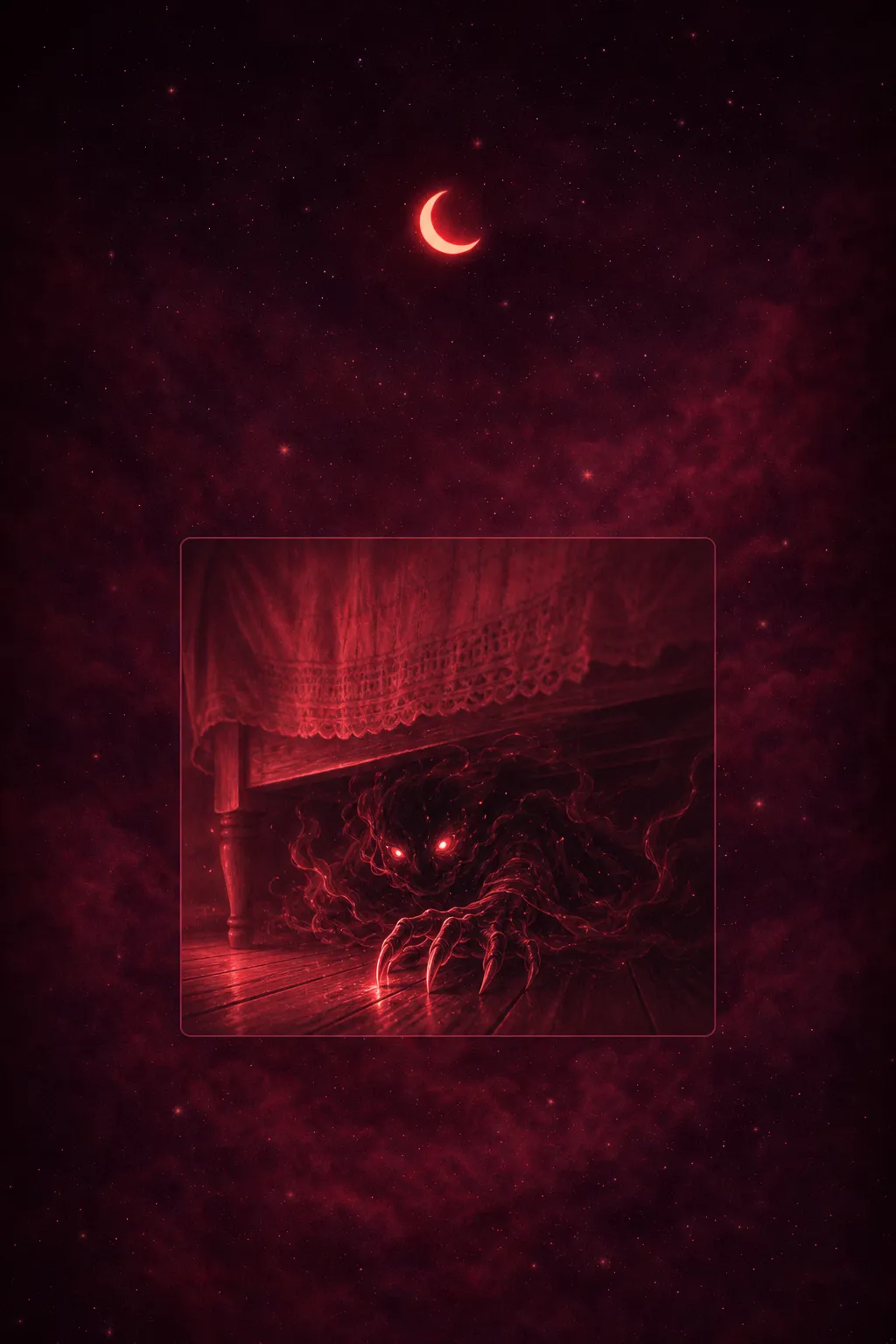

Something under your bed in a dream typically means you are harboring hidden fears, repressed emotions, or unresolved issues lurking just beneath the surface of your conscious awareness, since the space under a bed symbolizes the subconscious mind—urging you to confront whatever you have been avoiding or refusing to acknowledge in waking life.
In under a minute you could read what your exact dream means for you, and see a picture of it. Free.
Bad dream? See exactly what you dreamed — turned into a picture.
Just describe it and Dream Book paints your dream as a real image, plus a reading of what it means for you. Free, and it takes under a minute.


A dream still on your mind? Get your personal reading.
Describe your dream in a line or two. In seconds you get a reading of your exact dream, a picture drawn from your own words, and every symbol explained.
Free. No sign-up. Takes 10 seconds. Your dream stays private.
0%
Analyzing your dream…
Something went wrong. Please try again in a moment.
Your dreams deserve more than a dictionary
Common Dream Scenarios and What They Mean
The details of what lies — or stirs — beneath the bed shift the dream's meaning in important ways. Each variant below points to a distinct flavor of hidden anxiety or unacknowledged inner material.
Dreaming of sensing something under the bed without seeing it
The most common and unsettling version, where dread lives entirely in suggestion. This mirrors generalized anxiety perfectly: a threat you feel but cannot name or confront. The absence of a visible cause is itself the message — your nervous system is signaling danger before your conscious mind has caught up.
A bad dream isn't a bad sign.
Dreaming of a monster or creature under the bed
The dream is doing you a small favor by giving your fear a face. Psychologically, this often represents an overwhelming worry or an old fear-schema from childhood that has been reactivated by current stress. Naming the creature is the first step toward reducing its power over you.
Dreaming of a hand or limb reaching out from under the bed
The imagery shifts toward loss of agency — something is pulling you toward a situation you have been resisting, and the dream is signaling how little control you feel in waking life. The grabbing motion points to an intrusive force that feels impossible to ignore any longer.
Dreaming of an intruder or stranger hiding under the bed
A violation of your most private space, pointing to broken trust, boundary concerns, or anxiety that someone in your life is not who they appear to be. The bedroom's intimacy makes the intrusion feel especially sharp.
Dreaming of sounds or movement with nothing visible
Ambiguous threat on a low simmer — the mind registering that something is "stirring" before you have consciously identified what it is. This variant often accompanies periods of vague unease or a decision you have been putting off.
But what does your version mean?
Dreaming of discovering a stored object or box under the bed
A quieter, often revelatory scenario; forgotten memories, kept secrets, or unfinished business rising back into awareness. From a broadly spiritual angle, this can feel like an invitation toward honest self-examination rather than a source of dread.
Across nearly all these variants, the emotional throughline is the same: something you have tucked out of sight has not gone away. The dream is less a warning about external danger and more a nudge toward self-knowledge — look under the bed before whatever is there decides to look for you.
What this dream could look like
Tap an image to open it full screen
Example images. Only you can see what you write in Dream Book.
Psychological Meaning: What Hides Beneath the Surface
In psychological terms, the space under the bed functions as a near-perfect metaphor for the unconscious mind — close enough to affect you, just out of direct sight. Whatever lurks there in the dream typically represents material you have pushed out of conscious awareness: an unresolved conflict, a suppressed emotion, or a vague stressor you have been unwilling to examine directly. Because the bed is the place where defenses drop and the mind surrenders control, it becomes the natural setting for this repressed content to assert itself. The dreaming brain, in a sense, cannot keep the lid on anymore.
From a modern-anxiety standpoint, the imagery also reflects hypervigilance — the nervous system's tendency, during periods of stress or emotional overload, to keep scanning for danger even in supposedly safe spaces. People navigating burnout, relationship tension, or major life transitions frequently report this type of dream. The not-seeing element is psychologically significant: it mirrors the waking experience of knowing something is wrong without being able to identify or manage it precisely. That ambiguity is often more distressing than any concrete problem would be.
- Shadow material: Emotions or impulses you have judged unacceptable and stored away, now pressing for acknowledgment.
- Childhood fear schemas: Early insecurity patterns reactivated by current vulnerability — the adult brain borrowing an old template.
- Relational secrecy: When the bed carries intimacy associations, the hidden presence may point to an unspoken issue or eroding trust within a close relationship.
- Control anxiety: A signal to identify the vague stressor in waking life and move it from felt dread into something concrete enough to address.
General meanings end here. Read your own dream.
Describe your dream in a line or two. In seconds you get a reading of your exact dream, a picture drawn from your own words, and every symbol explained.
Free. No sign-up. Takes 10 seconds. Your dream stays private.
0%
Analyzing your dream…
Something went wrong. Please try again in a moment.
Your dreams deserve more than a dictionary
Every dream you log starts to connect.
Dream Book keeps your dreams in one place and reveals the threads between them over time — your private dream journal. Free to start.
Cultural and Traditional Readings
The "monster under the bed" is one of the most universally recognized images in Anglo-American childhood culture — a fixture of bedtime rituals, horror films, and folk warnings passed from parents to children for generations. As a cultural shorthand, it captures something the waking mind knows well: that the place meant for rest can feel like the least safe place imaginable once the lights go out. When this image resurfaces in an adult dream, it carries all that inherited weight, signaling that a fear once dismissed as childish may be reasserting itself in grown-up clothing.
Within broadly Christian cultural households, the bed has long carried a quiet spiritual significance — a place for evening prayer and surrender of the day's burdens. Something lurking beneath it, then, carries an implicit sense of unresolved spiritual unease or sin not yet brought to light, a shadow that prayer or honest self-examination might address.
- Modern-anxiety lens: The hidden threat most adults instinctively map onto this image today is not a creature but a circumstance — a financial shortfall, a health worry, a job at risk — something that sits just beneath the surface of daily routine and cannot be fully controlled.
- Control and self-knowledge: Culturally, the dream functions as a nudge toward naming what is being avoided; folklore consistently holds that a named fear loses much of its power.
Was yours a sign? Find out.
Across these traditions, the underlying message is strikingly consistent: denial keeps the threat alive, while honest acknowledgment — however uncomfortable — is the first step toward reclaiming a sense of safety and control.
Spiritual Meaning: Bringing What Is Hidden Into the Light
From a spiritual standpoint, the space beneath the bed carries a quiet but pointed message: something concealed in your inner life may be asking for honest acknowledgment. In the Christian tradition, rest is more than physical — it is a posture of trust before God, and a disturbed night can feel like an invitation to examine what has been left unconfessed or unaddressed. Luke 8:17 reminds believers that nothing hidden will remain concealed forever, and this dream may echo that same call: the unspoken guilt, the avoided conversation, or the long-buried doubt that you have been sleeping over rather than surrendering.
Psalm 91:5 offers the counterweight — a promise that the "terror of the night" need not have the final word. If your dream leaves you gripped by dread rather than insight, this tradition frames that fear as something to be met with trust rather than avoidance. The spiritual invitation is not panic but prayer: shine a light under the bed, so to speak, and see what actually stands there.
- Unconfessed matter: Something you have kept from yourself or others may be quietly draining your sense of peace.
- Spiritual oppression: Some traditions read persistent nighttime dread as a prompt to reestablish a felt sense of protection and grounding.
- Disclosure as healing: Bringing a hidden thing into conscious, honest view — whether through prayer, reflection, or conversation — is itself a spiritual act of restoration.
Related Dream Meanings

nightmares
What Does It Mean to Dream About a Spider Bite
5 min read

nightmares
Funeral Dream Meaning: End, Loss & New Beginnings
5 min read

nightmares
Being Chased by a Snake: Meaning and Interpretation
6 min read

nightmares
Being Attacked Dream Meaning: Fear & Hidden Anxiety
5 min read

nightmares
Hell Dream Meaning: Fear, Guilt & Unresolved Issues
5 min read

nightmares
Graveyard Dream Meaning: Endings, Closure & New Starts
5 min read

nightmares
Intruder in House: Meaning and Interpretation
5 min read

nightmares
Dead Snake Dream Meaning: Transformation & Endings
5 min read
Practical Takeaways: Turning Unease Into Action
When this dream recurs or lingers into your morning mood, treat it as a low-grade alert worth taking seriously rather than dismissing. The imagery points to something avoided — a conversation you keep postponing, a financial worry you scroll past, a relationship tension you go to bed with every night. A simple first step is to write down, in plain language, the one thing you most dread looking at in your waking life right now. Naming it on paper moves it from the space under the bed into the light where it can actually be addressed.
- Do a "hidden stressors" audit. List any ongoing situations you have been managing by not thinking about them — unread messages, deferred medical appointments, unspoken needs. Avoidance keeps the anxiety alive.
- Reestablish a sense of control at bedtime. A short wind-down routine (brief journaling, a few minutes of slow breathing, or a private prayer of release) signals to your nervous system that the day's unresolved material has been acknowledged and set aside, not buried.
- Talk to someone qualified if the dream repeats. A therapist, counselor, or trusted pastoral figure can help you surface what the dream is pointing to without it feeling overwhelming.
- Notice the timing. Did the dream follow a specific event or decision? Tracking that pattern often reveals the hidden concern more quickly than any symbol analysis.
A bad dream isn't a bad sign.
The goal is not to eliminate all uncertainty — that is impossible — but to shrink the gap between what you sense and what you are willing to look at directly. Most of what hides under the bed in a dream is far less dangerous once you actually check.
If it keeps coming back, the app helps you understand the pattern.
Log each recurring dream and the free app shows you what's underneath — calmly, over time. Free to start.
People Also Ask
Spiritually, a bed represents your innermost self, rest, and vulnerability. It symbolizes the sacred space where your conscious guard drops. Dreaming of a bed often points to intimacy, healing, or hidden truths about your emotional life. What surrounds or lurks beneath it reveals what lies just below your waking awareness.
Something under your bed in a dream typically represents suppressed fears, hidden emotions, or unresolved issues you've pushed out of sight. It signals that your subconscious is urging you to confront what you've been avoiding. The nature of what's hiding there — a creature, object, or shadow — shapes the specific meaning.
Never ignore recurring dreams, nightmares that wake you in distress, or dreams involving hidden threats like something lurking under your bed. Dreams featuring loved ones delivering warnings, vivid symbols of danger, or strong emotional weight often carry important psychological messages your waking mind hasn't fully processed yet.
A warning dream usually feels unusually vivid, emotionally intense, or stays with you long after waking. Symbolic imagery — like a threatening presence under your bed — repeated across multiple nights is a strong signal. Many people describe a gut certainty that the dream carried meaning beyond ordinary sleep activity.
Curious what your dream would look like?