
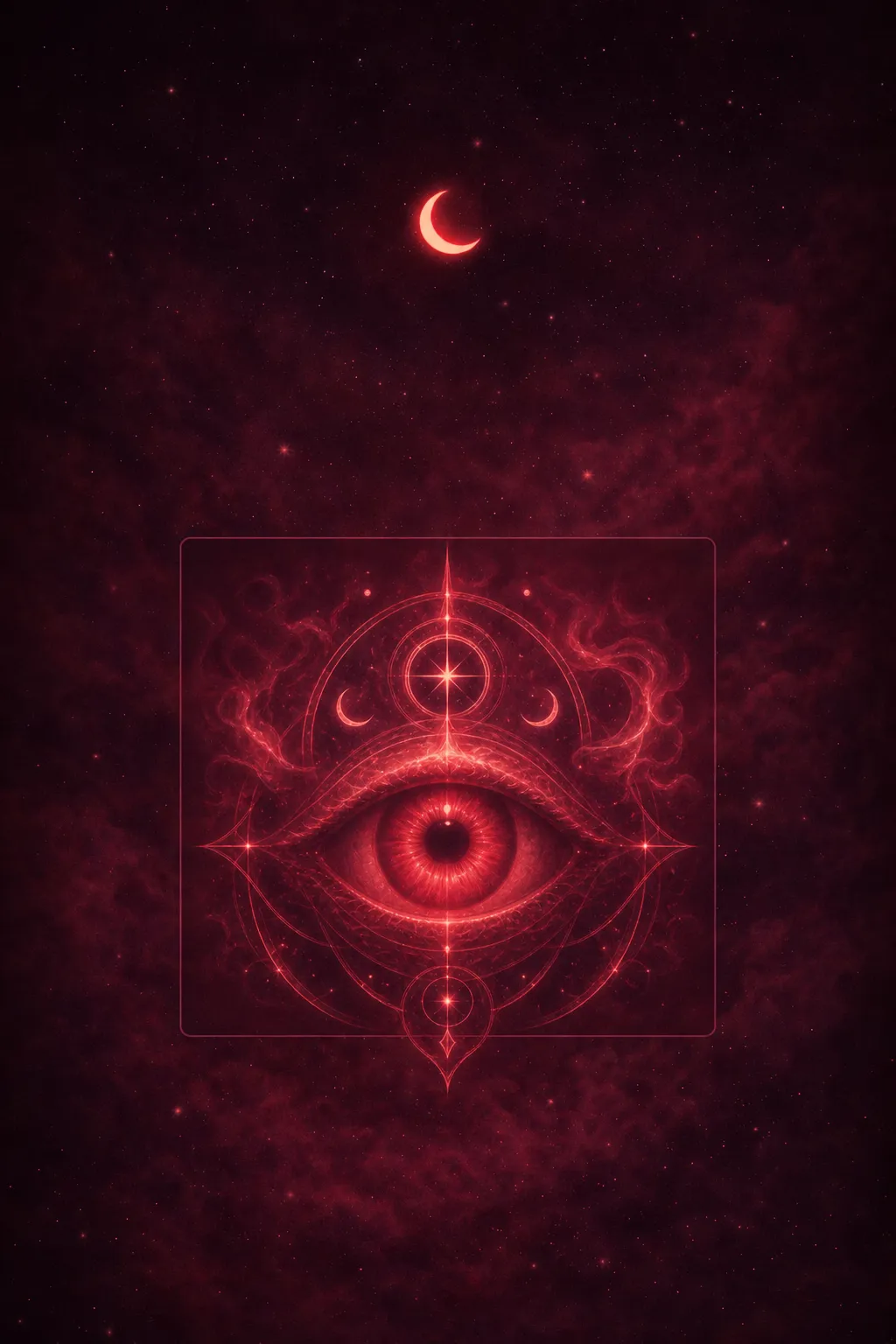

Dreaming about being watched typically signals heightened self-consciousness, social evaluation anxiety, or an inner critic projecting itself as an external observer; it can also reflect modern surveillance stress, performance pressure, or—in a spiritual reading—the comforting yet conscience-stirring sense of being fully known by a divine presence.
In under a minute you could read what your exact dream means for you, and see a picture of it. Free.
A dream still on your mind? Get your personal reading.
Describe your dream in a line or two. In seconds you get a reading of your exact dream, a picture drawn from your own words, and every symbol explained.
Free. No sign-up. Takes 10 seconds. Your dream stays private.
0%
Analyzing your dream…
Something went wrong. Please try again in a moment.
Your dreams deserve more than a dictionary
Common Scenarios: What Kind of Watching Are You Dreaming About?
The specific shape of the watching matters enormously. Two people can both dream of being observed and wake up with completely different emotional residue depending on who—or what—was doing the watching.
Dreaming of being watched by someone unseen or hidden
This is by far the most commonly reported form. You feel eyes on you, but you can't locate their source. A figure stays just outside your peripheral vision; a shadow retreats when you turn around. This diffuse, sourceless surveillance maps almost directly onto generalized anxiety in waking life. You may be carrying stress without being able to pin it to a single problem, or walking through a season where everyone around you seems to be forming opinions you can't read.
A bad dream isn't a bad sign.
Dreaming of being watched by a crowd or audience
Standing under the collective gaze of a crowd—even a silent, faceless one—amplifies social-evaluation anxiety to its peak. This scenario surges before high-stakes events: a job review, a presentation, a social situation where you fear being judged and found wanting. It shares emotional DNA with the classic dream about being naked in public—both are about sudden, involuntary exposure of something you'd rather keep private.
Dreaming of cameras or authority figures watching you
A boss who won't look away, a security camera that follows your movements, a phone screen that seems to stare back—these scenarios carry a surveillance-anxiety signature that is distinctly modern. We live in an era where data is collected, behavior is logged, and the sense of being monitored has leaked out of dystopian fiction and into everyday life. When that low-grade anxiety reaches dream state, it often arrives as cameras in every corner or an authority figure whose gaze you simply cannot escape.
Dreaming that a specific person you know is watching you
When the watcher has a face—a friend, an ex, a parent, a colleague—the dream is essentially pointing at that relationship. You're processing a concern about how that individual sees you, or whether you're living up to an expectation they carry.
Dreaming about cameras or phones monitoring you
You discover footage of yourself, notice a phone recording you without consent, or find every screen in a room broadcasting your image. This speaks to loss-of-privacy anxiety and the uneasy sense that nothing is truly off the record in the digital age.
Dreaming of a benevolent or protective presence watching over you
Not every observation dream is threatening. Occasionally the sensation of being watched arrives wrapped in warmth rather than dread—a gentle awareness that something is keeping an eye out for you rather than on you. These dreams tend to follow periods of grief, illness, or crisis, and in a Christian framing they can carry the reassurance of being seen and cared for by God.
But what does your version mean?
Dreaming of a sinister or supernatural entity watching you
When the watcher feels malevolent and otherworldly, the fear is acute rather than diffuse. This scenario is frequently linked to sleep-state physiology—particularly the hypnagogic or hypnopompic sensations that accompany sleep paralysis, where the brain generates a vivid sense of a threatening presence before the body has fully transitioned in or out of sleep.
What a dream about being watched could look like
Tap an image to open it full screen
Example images. Only you can see what you write in Dream Book.
The Psychology Behind Being Watched in a Dream
Psychologically, being watched in a dream is considered a classic externalization of the inner critic. The part of your mind that evaluates, judges, and second-guesses your behavior—what Freudian theory calls the superego—can project itself outward during sleep and appear as a watcher, an audience, or a surveillance system. You're not actually being observed; you are observing yourself, and the dream is dramatizing that relentless self-monitoring in visual form.
This reading aligns with several real patterns in waking life. Hypervigilance—the state of being perpetually alert to potential threat or judgment—is a well-documented feature of anxiety and trauma responses. When you've spent the day scanning rooms, second-guessing emails, or rehearsing conversations, your brain doesn't simply switch that off at night. It keeps running the same program, just in the symbolic language of dreams.
Performance pressure deserves its own mention here. Whether it's a career milestone, a public-facing role, or even the quiet pressure of social media—where every post is implicitly submitted for audience review—contemporary life asks many people to perform near-constantly. The watching dream is often that pressure crystallized into a single, unavoidable image: you, on display, with nowhere to hide.
Importantly, the emotional tone of the dream is your best diagnostic tool. Dread and paralysis suggest the inner critic is winning. Curiosity about the watcher, or a sense of calm despite being observed, suggests you may be moving toward self-acceptance rather than away from it.
Every dream you log starts to connect.
Dream Book keeps your dreams in one place and reveals the threads between them over time — your private dream journal. Free to start.


Cultural Context: Observation, Privacy, and the Surveillance Age
The fear of being watched is not new, but its texture has changed considerably. Pre-digital generations associated surveillance dreams with authority, accountability, and conscience—being caught doing something wrong, or living under the eye of an institution with real power over your life. Those themes are still present and still potent.
Was yours a sign? Find out.
What's newer is the ambient, low-grade quality of modern monitoring. Facial recognition, browsing history, location data, workplace productivity tracking—the architecture of surveillance has become so embedded in daily life that many people carry a background hum of being watched even when no specific authority is involved. Dreams about cameras and screens are a direct reflection of this cultural shift: the watcher is no longer a person, it's a system, and that feels in many ways more difficult to confront.
Being-watched dreams share significant overlap with being chased in a dream—both involve a threat you can't fully see, an inability to act freely, and the physiological arousal of flight-or-fight. The difference is that being chased externalizes pursuit while being watched externalizes judgment. Chase dreams are about escape; watching dreams are about exposure.
Spiritual Dimensions: Being Seen and Known
Within a Christian framework, the idea of being watched carries a profoundly different valence than the anxious surveillance scenarios described above. Scripture is explicit that God's awareness of each person is total and inescapable—"You have searched me, Lord, and you know me" (Psalm 139:1). "The eyes of the Lord are everywhere, keeping watch on the wicked and the good" (Proverbs 15:3).
For many dreamers in the Anglo-American Christian tradition, a dream of being watched can therefore land as conscience rather than threat—a quiet reminder that behavior, thought, and motive are all visible to something larger than social opinion. When the emotional tone of the watching dream is solemn rather than terrifying, this spiritual reading often resonates more than the psychological one.
Equally, for dreamers who have recently lost someone or who are navigating grief, the benevolent-watching scenario can carry genuine comfort: the sense that a departed loved one, or a divine presence, is still keeping watch over them. Dream Book receives many accounts of this type, and the consistent element is peace rather than dread—the opposite of the threat-surveillance scenario despite the same basic structure.
Related Dream Meanings

common dreams
Naked Dream Meaning: Vulnerability & Exposure
5 min read
nightmares
What Does It Mean When Someone Is Following You in a Dream
6 min read
nightmares
Sleep Paralysis Dream Meaning: Helplessness & Anxiety
5 min read

nightmares
Being Chased Dream Meaning: Anxiety & Avoidance
5 min read
nightmares
Someone Dying Dream Meaning: Change & Fear of Loss
5 min read

nightmares
Dead Person Dream Meaning: Closure & Unresolved Loss
5 min read

nightmares
Dead Relative: Meaning and Interpretation
5 min read

nightmares
Dead Mother: Meaning and Interpretation
5 min read
What to Do With a Being-Watched Dream
Dreams rarely demand action, but they do reward attention. If you're regularly dreaming about being observed, consider these grounding questions when you wake:
- Who or what was watching? The identity of the watcher is often the clearest clue. A boss points to workplace anxiety; a faceless crowd points to social performance pressure; an unknown entity points to generalized stress or self-criticism.
- How did the watching make you feel? Shame and paralysis suggest the dream is processing self-judgment. Fear suggests threat appraisal or hypervigilance. Warmth or safety suggests reassurance.
- What were you doing when you were noticed? The activity being observed often names the area of life under pressure—working, speaking publicly, simply existing in a private space that was breached.
- Are you getting enough genuine privacy? Practically speaking, chronic watching dreams can be a signal to audit how much unobserved, unperformed space you allow yourself in waking hours. Rest that doesn't perform anything for anyone is increasingly rare, and the psyche notices.
A bad dream isn't a bad sign.
If the dreams are accompanied by strong sleep disruptions, especially the sensation of a presence in the room during the transition between sleep and wakefulness, it's worth reading about sleep paralysis—a physiological phenomenon that creates a remarkably convincing sense of being watched by something threatening, with no supernatural explanation required.
If it keeps coming back, the app helps you understand the pattern.
Log each recurring dream and the free app shows you what's underneath — calmly, over time. Free to start.
People Also Ask
Dreaming about being watched usually reflects heightened self-consciousness, social evaluation anxiety, or an internalized inner critic appearing as an external observer. It can also signal surveillance stress, performance pressure, or—for spiritually oriented dreamers—a sense of divine awareness or conscience. The emotional tone of the dream is the most reliable guide to which meaning applies.
Yes. Sleep apnea disrupts the normal architecture of sleep, fragmenting REM cycles and reducing oxygen levels, which can intensify dream vividness, generate nightmares, and increase anxiety-themed dreams—including being-watched or threat scenarios. Effective treatment of sleep apnea typically reduces the frequency and distress of these disruptive dreams significantly.
Some people taking statins report unusually vivid, intense, or disturbing dreams as a side effect, though this is not universally experienced. The proposed mechanism involves fat-soluble statins crossing the blood-brain barrier and potentially affecting neurotransmitter activity during sleep. If statin use coincides with a noticeable change in dream content or quality, it's worth discussing with a prescribing physician.
Recurring dreams with high emotional distress—especially those involving pursuit, attack, exposure, or entrapment—are worth taking seriously as signals of unresolved waking stress or anxiety. Dreams that coincide with physical symptoms like chest tightness or breathing disruptions may flag a sleep disorder. And any dream that leaves a persistent emotional residue through the following day deserves reflection.
Curious what your dream would look like?