
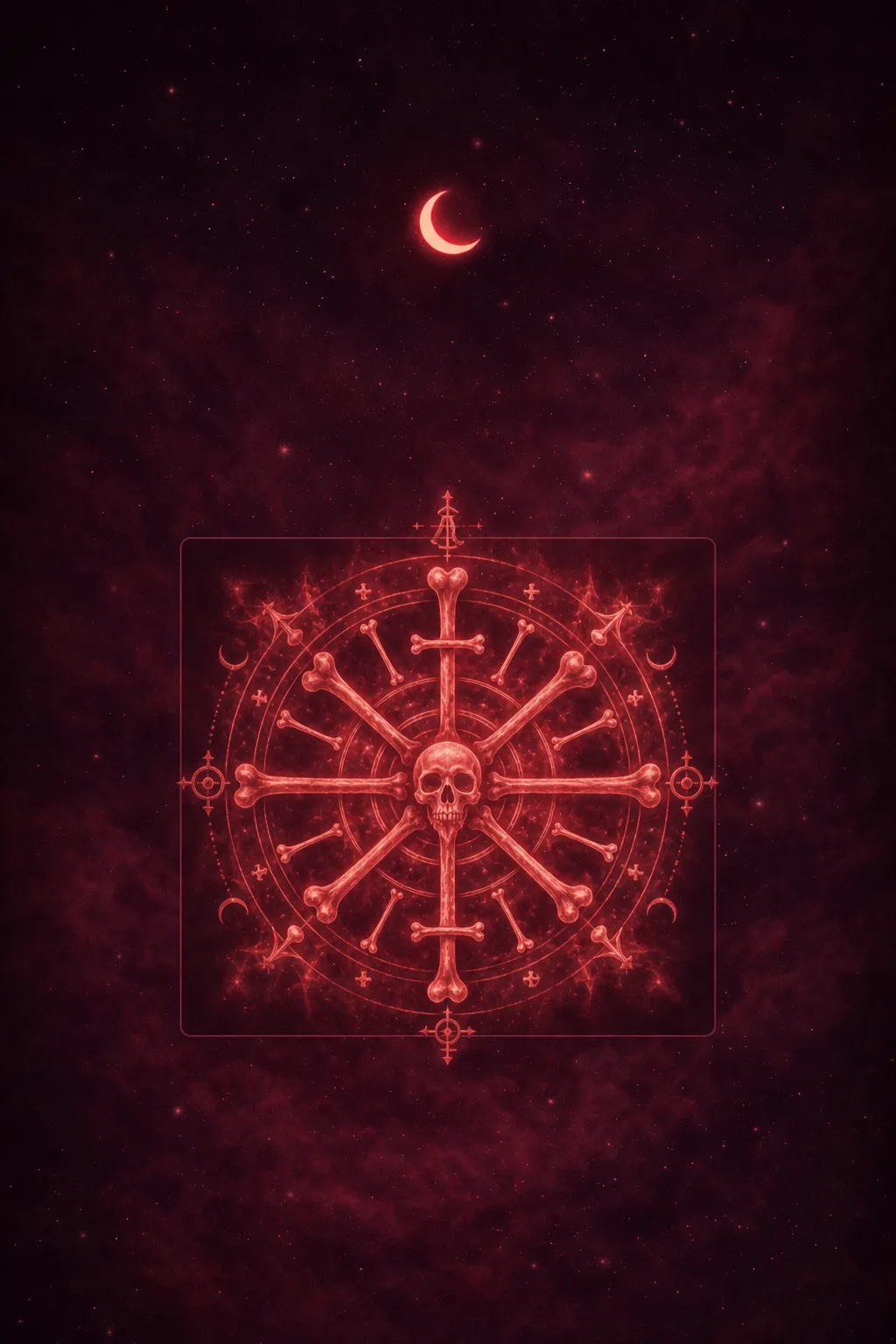

Dreaming of bones often reflects a confrontation with mortality, deep-seated fears, or the essential core of who you are. Bones can symbolize hidden truths being exposed or a need to reconnect with your inner strength and foundation. The emotional tone of the dream usually shapes whether this symbol points toward vulnerability, resilience, or transformation.
In under a minute you could read what your exact dream means for you, and see a picture of it. Free.
You read what it can mean. But what did yours mean?
General meanings stop here. In the free app, tell Dream Book your exact dream and get a reading that actually makes sense for you.


A dream still on your mind? Get your personal reading.
Describe your dream in a line or two. In seconds you get a reading of your exact dream, a picture drawn from your own words, and every symbol explained.
Free. No sign-up. Takes 10 seconds. Your dream stays private.
0%
Analyzing your dream…
Something went wrong. Please try again in a moment.
Your dreams deserve more than a dictionary
Common Bones Dream Scenarios
Finding or Digging Up Bones
You're in a field, a basement, or a forest floor — and you unearth bones. This dream almost always signals something buried coming back to light. A secret, a grief you thought you'd processed, a part of yourself you quietly put underground years ago.
If the bones feel ancient or belong to an unknown person, you're likely brushing against something inherited — emotional patterns passed down through family, or unresolved history that still shapes how you move through the world. If you know whose bones they are, pay close attention. That relationship holds the key.
This scenario often surfaces around the same time as dreams about skeletons or visits to a graveyard — all part of the same psychological excavation.
But what does your version mean?
Your Own Bones Exposed or Visible
Imagine looking down at your hand and seeing the bone through your skin, or watching your ribs emerge through your chest. Disturbing as it is, this dream is rarely about physical illness. It's about vulnerability — the terror of being truly seen, of having your defenses stripped away.
There's also a strand of this dream that speaks to exhaustion. When you're running on empty, when you've given so much that there's nothing left but the frame, your dreaming mind literalizes that feeling. You're showing yourself your own skeleton and asking: what's actually holding you up right now?
Broken Bones in a Dream
A broken bone in a dream points to a structural failure — something load-bearing in your life has cracked. This might be a relationship, a belief system, a career path, or your sense of self-worth. The location of the break often matters: a broken spine suggests you feel unsupported, broken hands point to what you can no longer hold or build.
If you're watching someone else's bones break, you may be witnessing — or fearing — the collapse of something they're carrying. This connects naturally to the anxiety that runs through broken teeth dreams and teeth falling out dreams — all symbols of something solid giving way.
A Pile of Bones or a Bone-Filled Room
Walking into a room full of bones, or stumbling across a pile of them, is one of those dreams that lodges in the chest for days. This image tends to represent accumulated loss — the residue of many endings, not just one. Deaths, relationships, versions of yourself that didn't survive.
It can also signal that you're avoiding a reckoning. The bones have piled up because nothing has been properly mourned or released. Dreams about skulls often appear alongside this imagery, amplifying the message: it's time to face what you've been stepping around.
What this dream could look like
Tap an image to open it full screen
Example images. Only you can see what you write in Dream Book.
Psychological Interpretation
Freud saw bones as deeply connected to the death drive — what he called Thanatos, the counterforce to desire. For Freud, dreams involving bones, decay, or the stripped-down body were the unconscious processing its most fundamental anxiety: that everything ends. He'd also note the repression angle — bones are what's hidden under flesh, under presentation, under the persona we show the world. To dream of them is to dream of what we work hard to keep buried.
Jung took the symbolism further into myth. Bones, for Jung, carry the essence of a being — they're what persists. In many of the world's oldest stories, bones are what shamans use to resurrect the dead, what gods breathe life back into. In a Jungian frame, dreaming of bones often signals a process of individuation: you're being asked to get down to your essential self, past the roles, the masks, the accumulated personality. The death imagery isn't the end of the story — it's the beginning of transformation.
Was yours a sign? Find out.
Calvin Hall's content analysis of tens of thousands of dream reports found that body-related dreams — including bones, injury, and physical vulnerability — cluster heavily during periods of life transition and stress. His research showed these aren't random anxiety dreams; they track real-world concerns about stability and identity with remarkable consistency. Ernest Hartmann, whose work on emotional memory processing reshaped how we think about dreaming, would frame a bones dream as the sleeping brain using a stark, visceral image to process an emotion it hasn't been able to integrate while awake. The image of exposed bones is emotionally intense precisely because it needs to be — that's how the brain tags something as important enough to work through. If you've been experiencing death anxiety or navigating grief, Hartmann's framework suggests these dreams are doing necessary work, not tormenting you arbitrarily.
Hobson and McCarley's activation-synthesis model offers a grounding counterpoint: the sleeping brain fires signals semi-randomly, and the cortex weaves them into narrative. Bones might emerge simply because the brain activated circuits tied to structural concepts, physical sensation, or memory fragments — and your story-making mind built something haunting from the pieces. That doesn't make the dream meaningless. It means the meaning is in how you assembled it, what emotional weight you gave those bones when you woke.
General meanings end here. Read your own dream.
Describe your dream in a line or two. In seconds you get a reading of your exact dream, a picture drawn from your own words, and every symbol explained.
Free. No sign-up. Takes 10 seconds. Your dream stays private.
0%
Analyzing your dream…
Something went wrong. Please try again in a moment.
Your dreams deserve more than a dictionary
Every dream you log starts to connect.
Dream Book keeps your dreams in one place and reveals the threads between them over time — your private dream journal. Free to start.
Cultural & Spiritual Meaning
In Western tradition, bones have long carried dual symbolism — death and permanence at once. The skeleton appears on medieval memento mori art not as a horror image but as a reminder to live fully. To dream of bones in this tradition is to receive a message from your own mortality: something is asking for your attention before it's too late. Across many Indigenous traditions, bones are sacred — the seat of the soul, the part of a being that carries its spirit even after the flesh is gone. Dreams of bones in these frameworks are often understood as contact with ancestors, a message from those who came before.
Ibn Sirin, the 8th-century Islamic scholar whose dream interpretations remain influential across the Islamic world, wrote specifically about bones as symbols of wealth, sustenance, and the core of a person's livelihood. In his framework, seeing healthy, intact bones in a dream often signals financial stability or the strength of one's family lineage. Broken or scattered bones, however, warned of disruption to that foundation — family conflict, loss of resources, or a weakening of one's social standing. It's a strikingly practical lens compared to Western psychology, but the underlying logic rhymes: bones are what holds everything else up.
A bad dream isn't a bad sign.
In East Asian dream traditions, bones appearing in dreams are frequently connected to ancestral communication — particularly the bones of deceased relatives. To receive bones from a dead ancestor in a dream is considered, in some traditions, a profound blessing: a transfer of strength or wisdom from one generation to the next. This sits alongside dreams of deceased loved ones as part of a broader tradition of the dead reaching back through sleep to offer something to the living.
Related Dream Meanings
nightmares
Skeleton Dream Meaning: What It Reveals About Your Inner Self
5 min read
nightmares
Graveyard Dream Meaning: Endings, Closure & New Starts
5 min read
body health
Broken Teeth Dream Meaning: Anxiety, Power & Appearance
5 min read
body health
Teeth Falling Out Dream: Anxiety, Loss & Vulnerability
5 min read
nightmares
Skull Dream Meaning: Transformation, Fear & Change
5 min read

nightmares
Death Dream Meaning: Transformation, Loss & Change
5 min read
nightmares
Deceased Loved One Dream: Closure, Messages & Grief
5 min read

nightmares
Dying Dream Meaning: Transformation, Fear & Change
5 min read
What to Do After This Dream
Start with the emotion, not the image. When you woke from the dream, what were you feeling — dread, sadness, relief, curiosity? That emotional residue is the real data. The bones are the symbol; the feeling is the message.
Ask yourself what's been buried. What have you been avoiding looking at directly? Bones dreams have a way of appearing when something foundational — a relationship, a belief, a version of yourself — needs to be either rebuilt or properly laid to rest. You don't have to have the answer immediately. Just asking the question opens something.
If this dream keeps returning, it's worth going deeper with a personalized interpretation. Dream Book lets you describe exactly what you saw — whose bones, what condition, what you felt — and ask follow-up questions to understand what your subconscious is actually working through. A dictionary gives you the range of meanings; a conversation helps you find the one that fits.
Finally, if the dream surfaced grief or anxiety about dying or loss, don't rush past that. Sometimes the most useful thing you can do is sit with the image, let it speak, and ask what it would mean to truly face whatever it's pointing at.
But what does your version mean?
Understanding your bones dream is the first step. The next is asking what it means for your life right now — that's where a personalized interpretation goes deeper than any dictionary.
One dream is never the whole picture.
The free app remembers your dreams, draws them, and connects the threads over time — so the next one means even more. Free to start.
People Also Ask
Finding bones in a dream typically signals that something buried — a secret, an old grief, or a forgotten part of yourself — is surfacing. The location where you find them and your emotional reaction are the most important clues to what's being unearthed.
Not necessarily. While bones are associated with mortality, they more often symbolize foundations, hidden truths, and what endures. Ibn Sirin actually interpreted healthy bones in dreams as a sign of strength and stable livelihood, not impending misfortune.
Seeing your own bones exposed usually reflects vulnerability, exhaustion, or a fear of being truly seen. It can also signal that you're being asked to reconnect with your core self, stripped of the roles and defenses you carry in waking life.
Recurring broken bone dreams often point to something structural in your life that feels fractured — a relationship, a belief system, or your sense of stability. Ernest Hartmann's emotional processing theory suggests the dream keeps returning because the underlying feeling hasn't been fully integrated yet.
Curious what your dream would look like?