
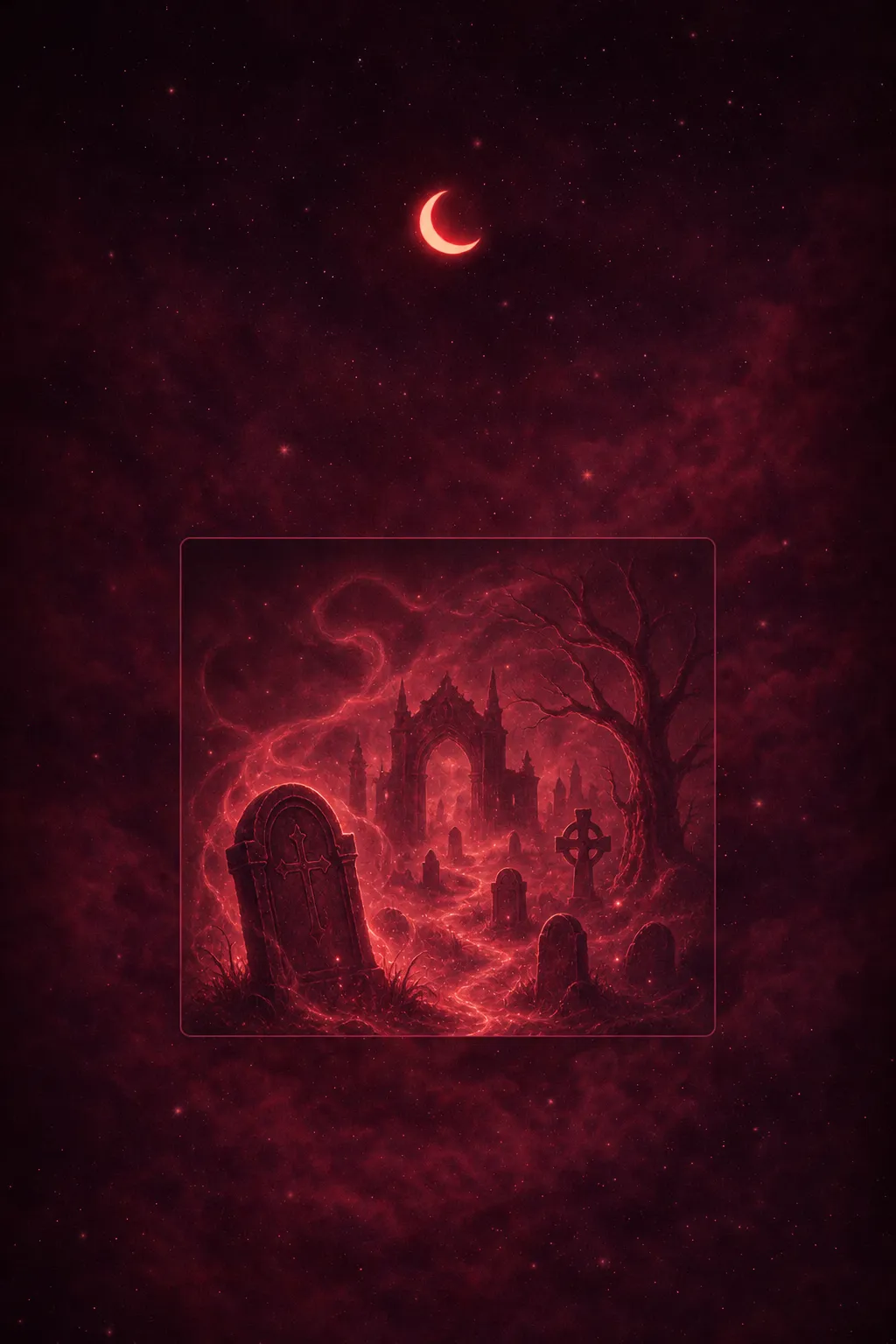

A graveyard dream often symbolizes reflection on mortality, endings, and new beginnings. It can signify unresolved issues or a need for closure.
In under a minute you could read what your exact dream means for you, and see a picture of it. Free.
Common Graveyard Dream Scenarios
Dreaming of Walking Through a Graveyard
When you find yourself meandering through a graveyard in your dreams, it often signifies a confrontation with your own mortality. Imagine the chill in the air as you step over worn tombstones, each one a reminder of what has passed. This dream can signal a need to acknowledge the end of certain phases in your life, be it relationships or personal growth.
A dream still on your mind? Get your personal reading.
Describe your dream in a line or two. In seconds you get a reading of your exact dream, a picture drawn from your own words, and every symbol explained.
Free. No sign-up. Takes 10 seconds. Your dream stays private.
Add who was there and how you felt, and the reading will be about your dream.
0%
Analyzing your dream…
Something went wrong. Please try again in a moment.
Your dreams deserve more than a dictionary
Seeing a graveyard might also hint at unresolved feelings about someone you’ve lost. If you’ve experienced the death of a loved one, this dream could be your subconscious urging you to process that grief. If you’re also grappling with feelings of fear or anxiety surrounding death, this dream creates a vivid space for reflection.
Dreaming of a Funeral in the Graveyard
A funeral in your dream can feel heavy, laden with sorrow. This scene is often a metaphor for saying goodbye to something significant in your life. Perhaps a relationship, a job, or an old version of yourself is being laid to rest. The presence of mourning can point to both loss and the possibility of renewal, much like the cycles of nature.
Freud would interpret this as a manifestation of your repressed emotions and desires, suggesting a need for closure. Meanwhile, Jung viewed funerals as archetypal experiences that push you toward individuation. If you feel an overwhelming sense of dread during this dream, it may be worth exploring other fears, such as being chased or dying.
But what does your version mean?
Dreaming of Visiting a Grave
Visiting a grave in your dream can stir a mix of emotions—nostalgia, sadness, or even acceptance. Picture yourself standing before a grave, perhaps of someone you knew or a faceless figure. This dream often signifies a desire to connect with parts of your past or to acknowledge feelings that you’ve buried deep within.
Ibn Sirin, the esteemed Islamic dream interpreter, noted that visiting graves can symbolize encountering one’s fate. You might be wrestling with your current life choices or questioning what legacy you will leave behind. If you’re facing decisions that feel monumental, this dream can serve as a gentle nudge to reflect on your path, much like the introspective nature of houses in dreams.
Was yours a sign? Find out.
Dreaming of Digging a Grave
Digging a grave in your dream can be an unsettling experience, often evoking feelings of anxiety and foreboding. Imagine the soil beneath your fingers, the weight of the earth as you unearth something long hidden. This act may symbolize a confrontation with your fears, regrets, or the need to bury something that no longer serves you.
This scenario can often highlight issues of control and acceptance. As Hartmann suggested, dreams are a form of emotional processing, and digging a grave might indicate that you’re ready to face buried emotions. If you’re feeling overwhelmed by responsibilities, this dream can also be a call to let go, akin to floods washing away the past.
What this dream could look like
Tap an image to open it full screen
Open a frame to see the details
Example images. Only you can see what you write in Dream Book.
Psychological Interpretation
Freud saw graveyards as powerful symbols of repressed desires and the shadowy corners of your psyche. For him, dreaming of a graveyard often reflected deep-seated anxieties surrounding mortality and loss, highlighting what you might be pushing away from conscious thought. Jung expanded on this, suggesting that these dreams connect you to the collective unconscious, where archetypes of death and rebirth reside.
Calvin Hall’s extensive content analysis of dream reports revealed that graveyards frequently symbolize transitions or the need for personal transformation. They often emerge when you're grappling with significant changes in your life, whether emotional or situational. This aligns with Hartmann's view that dreams serve as emotional memory processing, helping you work through feelings tied to endings, much like how you would process water flowing away.
From a neuroscience perspective, Hobson and McCarley proposed the activation-synthesis hypothesis, suggesting that dreams arise from random neural firings. Even so, the emotional weight of a graveyard dream hints that your brain is trying to make sense of deep-seated fears or unresolved issues related to death or change, connecting back to the symbolism of funerals as well.
Every dream you log starts to connect.
Dream Book keeps your dreams in one place and reveals the threads between them over time — your private dream journal. Free to start.


Tonight, let the moon slow your breathing.
A few minutes of breathing with a glowing moon, then rain or ocean waves that slowly fade into quiet. Sleep mode in Dream Book is free.
All your dreams on one map. See what keeps coming back.
Your Dream Map puts each dream you interpret on the moon phase it happened under. As you add more, recurring patterns start to show.
Cultural & Spiritual Meaning
Dreams of graveyards carry rich cultural narratives. In many Western traditions, they can symbolize an end or a transition, prompting individuals to reflect on their own lives. In contrast, Eastern perspectives often view graveyards as places of peace, where the cycle of life and death is embraced rather than feared. This nuanced understanding can lead to a more profound acceptance of life’s impermanence.
Ibn Sirin offered insights in the Islamic tradition, interpreting graveyard dreams as a way to confront one’s own fate and destiny. He believed that such dreams can indicate the need for spiritual renewal, much like a cleansing of the soul. Indigenous cultures may view graveyards as sacred spaces, where ancestors reside, reminding dreamers of their roots and the importance of honoring family ties, often highlighted in the presence of dead relatives in dreams.
These cultural lenses can add layers to your understanding of graveyard dreams. They serve as reminders that while death is a natural part of life, the emotional journeys we traverse can lead to healing and growth.
Related Dream Meanings

nightmares
Death Dream Meaning: Transformation, Loss & Change
5 min read

nightmares
Being Chased Dream Meaning: Anxiety & Avoidance
5 min read

nightmares
Dying Dream Meaning: Transformation, Fear & Change
5 min read
common dreams
What Does It Mean to Dream About Houses
6 min read

common dreams
Flood Dream Meaning: Emotions, Loss & Need for Change
5 min read

common dreams
Water Dream Meaning: Emotions, Intuition & Growth
5 min read
nightmares
Funeral Dream Meaning: End, Loss & New Beginnings
5 min read
nightmares
Dead Relative: Meaning and Interpretation
5 min read
What to Do After This Dream
After waking from a graveyard dream, take a moment to breathe and reflect. What emotions stirred within you during the dream? Consider journaling your feelings or thoughts, as this can help you untangle the threads of your subconscious.
If this dream keeps returning, it’s worth exploring with a personalized interpretation — Dream Book lets you describe your dream and ask follow-up questions to understand what your subconscious is really saying. Engaging in practices like meditation or talking to someone you trust can also provide clarity.
Understanding your graveyard dream is the first step. The next is asking what it means for your life right now — that's where a personalized interpretation goes deeper than any dictionary.
If it keeps coming back, the app helps you understand the pattern.
Log each recurring dream and the free app shows you what's underneath — calmly, over time. Free to start.
All your dreams on one map. See what keeps coming back.
Your Dream Map puts each dream you interpret on the moon phase it happened under. As you add more, recurring patterns start to show.
Tonight, let the moon slow your breathing.
A few minutes of breathing with a glowing moon, then rain or ocean waves that slowly fade into quiet. Sleep mode in Dream Book is free.
People Also Ask
Dreaming about a graveyard often symbolizes the end of something significant in your life, such as a relationship or phase. It can also evoke feelings about mortality and the need for emotional processing.
Funeral dreams can signify closure and the need to let go of something. They often reflect your subconscious processing feelings of loss or change.
Digging a grave in your dream can be unsettling, but it often represents confronting buried emotions or the need to release something that no longer serves you.
Consider keeping a dream journal to explore your feelings and thoughts after your dream. Using tools like Dream Book can also help you dive deeper into the meanings behind your dreams.
Curious what your dream would look like?