
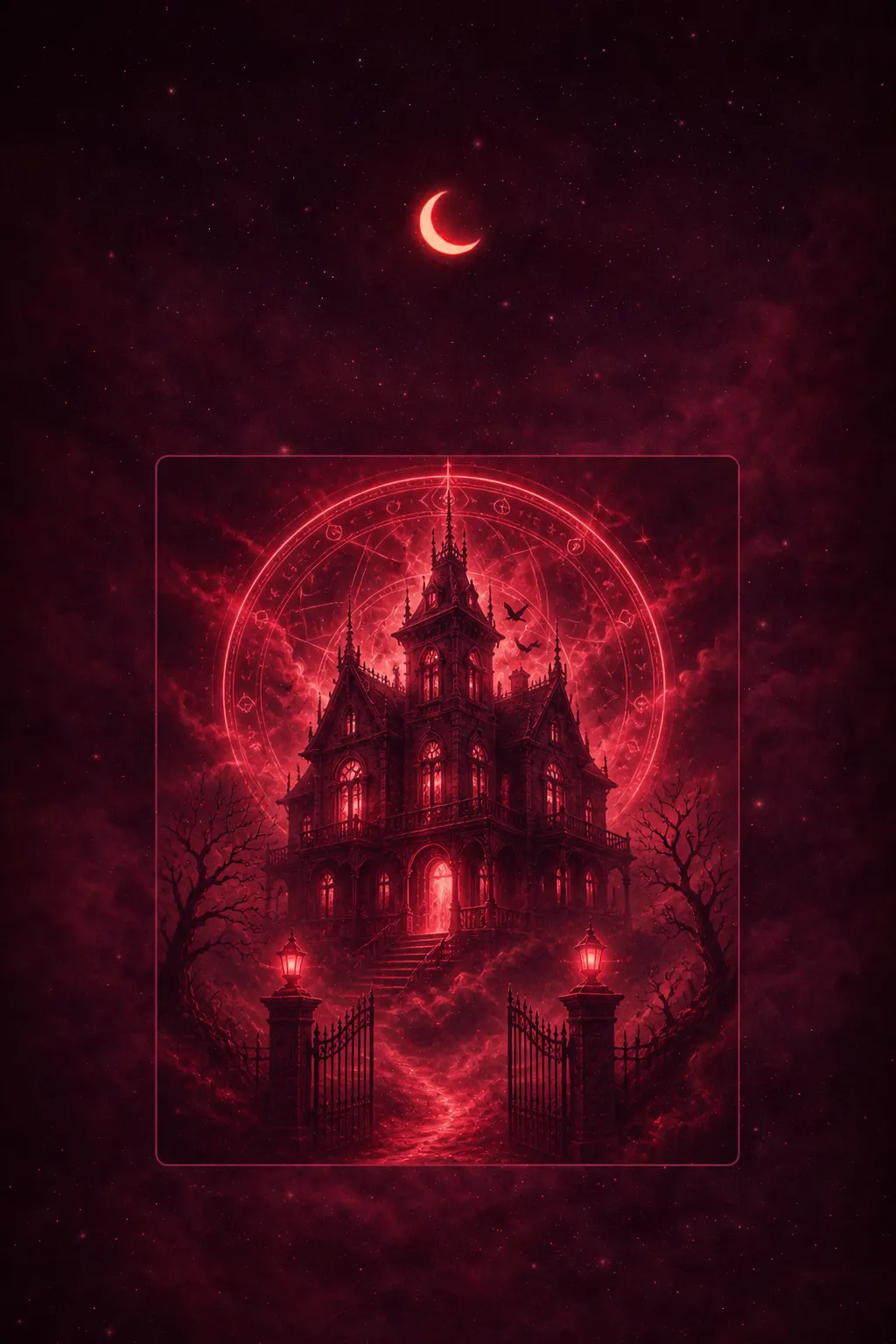

Dreaming about a haunted house typically signals unresolved emotions, repressed memories, or lingering fears from your past that your subconscious mind is urging you to confront, as each room often represents a hidden aspect of your psyche waiting to be acknowledged, healed, and finally released so you can move forward with greater confidence.
In under a minute you could read what your exact dream means for you, and see a picture of it. Free.
Bad dream? See exactly what you dreamed — turned into a picture.
Just describe it and Dream Book paints your dream as a real image, plus a reading of what it means for you. Free, and it takes under a minute.


Common Haunted Mansion Dream Scenarios
The specific details of your dream shift its meaning considerably. A few of the most frequently reported variations include: At Dream Book we explore this symbol in depth.
- Wandering through empty or unknown rooms: Drifting through unfamiliar chambers suggests you are beginning to notice parts of yourself — talents, memories, or needs — that have long gone unacknowledged. The unsettled feeling that accompanies this is normal; modern psychology frames it as the mind carefully scanning its own blind spots.
- Being chased by a presence: A ghost closing in on you typically represents a truth, guilt, or old wound that keeps catching up no matter how far you run. This is the dream's way of signaling that avoidance is costing you more energy than confrontation would.
- Unable to find an exit: Doors that lead nowhere or corridors that loop back on themselves point to feeling trapped in an inherited role, a family obligation, or an identity that no longer fits. Finding a locked door with no key in this context deepens that sense of lost agency.
- Inheriting the mansion: Owning the haunted property mixes pride with burden — you may be stepping into a family legacy that carries unresolved history alongside its rewards.
- Discovering a hidden or secret room: Stumbling onto a sealed room signals a repressed memory or disowned aspect of yourself rising toward awareness — the dream rarely lets you look away once the door swings open.
- Meeting a calm, non-threatening ghost: A peaceful spirit often represents grief that is finally being integrated, or an internalized figure — a parent, mentor, or lost relationship — offering quiet resolution.
- Renovating or lighting up the mansion: Actively cleaning, repairing, or brightening the space is one of the most hopeful variants, reflecting deliberate inner work and a reclaiming of neglected emotional territory.
A bad dream isn't a bad sign.
Across all these scenarios, pay attention to how much control you felt: whether you moved through the mansion with agency or were driven by fear says as much about your waking relationship to the past as the haunting itself does.
What this dream could look like
Tap an image to open it full screen
Example images. Only you can see what you write in Dream Book.
Psychological Meaning of a Haunted Mansion Dream
In mainstream psychology, the house is one of the most reliable symbols for the self, and a haunted mansion intensifies that metaphor considerably. Its sheer scale signals that a large volume of inner material — accumulated over years, or inherited across generations — is pressing for your attention. The "haunting" itself maps onto what psychologists describe as the return of repressed content: memories, grief, or emotional patterns you have walled off rather than worked through. Encountering a locked door inside the mansion in waking life or in a dream often mirrors the same impulse — the mind barring entry to whatever feels too destabilizing to face directly.
Modern anxiety culture adds another layer. Many dreamers report haunted mansion imagery during periods of high stress, major transitions, or a felt loss of control — moments when the unfinished business of the past seems to crowd the present. From a broadly Christian perspective, the imagery can carry a conviction that unconfessed or unresolved wrongs linger until they are genuinely reckoned with, not merely suppressed. Either way, the emotional charge of dread mixed with curiosity is psychologically significant: dread signals genuine threat to the ego's sense of order, while curiosity suggests the psyche is actually ready — even if reluctantly — to investigate.
- Grief and nostalgia: The mansion's faded grandeur often reflects mourning for a version of yourself, a relationship, or a family dynamic that no longer exists.
- Inherited patterns: The "family estate" quality points to psychological legacies — behavioral or emotional scripts passed down rather than chosen.
- Transformation readiness: Moving through the mansion, however fearfully, is the subconscious rehearsing the act of self-examination and, ultimately, integration.
General meanings end here. Read your own dream.
Describe your dream in a line or two. In seconds you get a reading of your exact dream, a picture drawn from your own words, and every symbol explained.
Free. No sign-up. Takes 10 seconds. Your dream stays private.
0%
Analyzing your dream…
Something went wrong. Please try again in a moment.
Your dreams deserve more than a dictionary
Cultural and Traditional Readings of a Haunted Mansion Dream
Across Anglo-American folk tradition, a haunted house has long served as shorthand for unfinished business — the idea that the dead linger where the living have left something unresolved. Gothic literature cemented this image in the cultural imagination: from the crumbling manor in Victorian ghost stories to the cursed family estate in American horror, the haunted mansion stands for inherited sin, secret-keeping, and the weight of ancestry pressing on the present. These narratives quietly shaped how many English-speaking dreamers instinctively read such a symbol — not as random nightmare scenery, but as a warning that old family patterns or suppressed history are still active.
But what does your version mean?
Within US Christian tradition, a haunted dwelling can carry a moral dimension: the unquiet spirit sometimes reads as a prompt toward confession or reconciliation, a reminder that unacknowledged wrongs tend to resurface. More broadly, many faith frameworks share the folk conviction that dreaming of a decaying or forsaken structure signals spiritual neglect — something once valued that has been left to ruin through avoidance rather than active choice.
- Modern anxiety framing: contemporary dreamers often map the haunted mansion onto stress about family legacy, inherited debt, or generational trauma — pressures that feel too large to confront directly.
- Control and self-knowledge: folklore consistently frames the brave explorer who enters the haunted house as the one who gains mastery; culturally, daring to name what haunts you is the act that dissolves its power.
- Scale as cultural signal: the mansion specifically — not a cottage — implies that folk wisdom reads this as a significant, long-standing burden rather than a passing worry.
Spiritual Meaning of a Haunted Mansion Dream
From a Christian perspective, dreaming of a haunted mansion can function as a quiet spiritual inventory. Scripture describes the self as a dwelling: Paul's reminder in 1 Corinthians 3:16 that the body is a temple suggests that what occupies that inner space matters. The haunting presences wandering your dream mansion may point to spiritual "clutter" — unconfessed guilt, old grievances, or grief that has never been surrendered — that keeps the soul from resting. Jesus's image in Matthew 12:43–45 of a swept house that is left empty and then reoccupied adds a further layer: clearing out darkness is only half the work; what you fill that space with matters just as much.
Was yours a sign? Find out.
In the broader Anglo folk-spiritual imagination, a haunted house signals that the past has not been properly laid to rest. While mainstream readers take this symbolically rather than literally, the emotional truth is the same — something has been left unacknowledged and now demands attention. Dreaming of a locked door within that mansion would sharpen this reading considerably, pointing to a specific truth or wound still sealed off from awareness.
Spiritually, the mansion's grandeur is part of the message: the scale of the haunting matches the weight of what has been carried. Common spiritual invitations this dream may be offering include:
- Releasing inherited family wounds or patterns through prayer, honest reflection, or forgiveness
- Examining whether anxiety about control is keeping you from trusting a larger process of healing
- Actively "filling the house" — cultivating practices, relationships, or faith commitments that bring genuine peace rather than just suppressing old fears
Related Dream Meanings
common dreams
Locked Door Dream Meaning: Blocked Desires & Hidden Fears
5 min read
common dreams
What Does It Mean to Dream About an Abandoned Building
5 min read
nightmares
What Does It Mean When a Dead Person Visits You in a Dream
6 min read
nightmares
Blood Moon Dream Meaning: What It Symbolizes in Your Dreams
5 min read
nightmares
Dreaming of a Cemetery Meaning: What Your Dream Reveals
6 min read
nightmares
Waking Up Crying Dream Meaning: Grief, Stress & Release
5 min read
nightmares
Out of Body Experience Dream Meaning
6 min read
nightmares
What Does Dreaming About a Zombie Apocalypse Mean
5 min read
Practical Takeaways: What to Do After a Haunted Mansion Dream
When this dream surfaces, treat it less as a warning and more as an internal memo — one worth acting on while the details are still fresh. The scale of a mansion suggests the backlog is significant, so rather than trying to tackle everything at once, identify the single room, figure, or locked corridor that carried the strongest emotional charge. That specific detail is usually pointing at the most urgent unfinished business in your waking life.
A bad dream isn't a bad sign.
- Journal immediately. Write down the rooms you entered, the ones you avoided, and any presences you sensed. Patterns across multiple dreams will clarify which compartment of your life — a relationship, a career chapter, a family pattern — needs conscious attention.
- Map the "haunts" to real stressors. Ask yourself what in waking life feels inherited, unresolved, or too long ignored. A dream featuring a locked door you cannot open often mirrors a conversation or decision you have been postponing.
- Take one small, concrete step. Confront one avoided topic — a difficult call, a therapy session, a frank conversation — rather than waiting for perfect readiness. The dream's dread typically eases once real-world action begins.
- Consider professional support. If the dream recurs or leaves lasting anxiety, a licensed therapist can help you process the deeper inherited or repressed material the imagery is flagging.
If it keeps coming back, the app helps you understand the pattern.
Log each recurring dream and the free app shows you what's underneath — calmly, over time. Free to start.
People Also Ask
Biblically, a haunted house dream may represent spiritual oppression, unconfessed sin, or ancestral burdens weighing on your soul. Scripture often uses houses as symbols of the self. Such dreams can signal a call to prayer, repentance, or deliverance, urging you to seek God's protection and cleansing in troubled areas of your life.
A haunted house typically symbolizes unresolved past trauma, hidden fears, or suppressed memories lodged deep in the psyche. Each room can represent a different aspect of self — relationships, identity, or ambition. The 'haunting' suggests old wounds or guilt that still linger, demanding your conscious attention before you can truly move forward.
Never ignore recurring dreams, especially those featuring dark presences, warnings, or a strong emotional charge upon waking. Dreams involving haunted spaces, chasing figures, or collapsing structures often reflect urgent psychological or spiritual messages. If a dream disturbs you deeply and returns repeatedly, treat it as your mind — or perhaps something greater — demanding serious reflection.
A divine warning dream typically feels vivid, unusually calm yet serious, and stays with you long after waking. It often carries a clear moral or directional message rather than random imagery. If the dream aligns with scripture, prompts you toward righteousness, or steers you away from harm, many believers consider that a genuine sign worth heeding.
Curious what your dream would look like?