
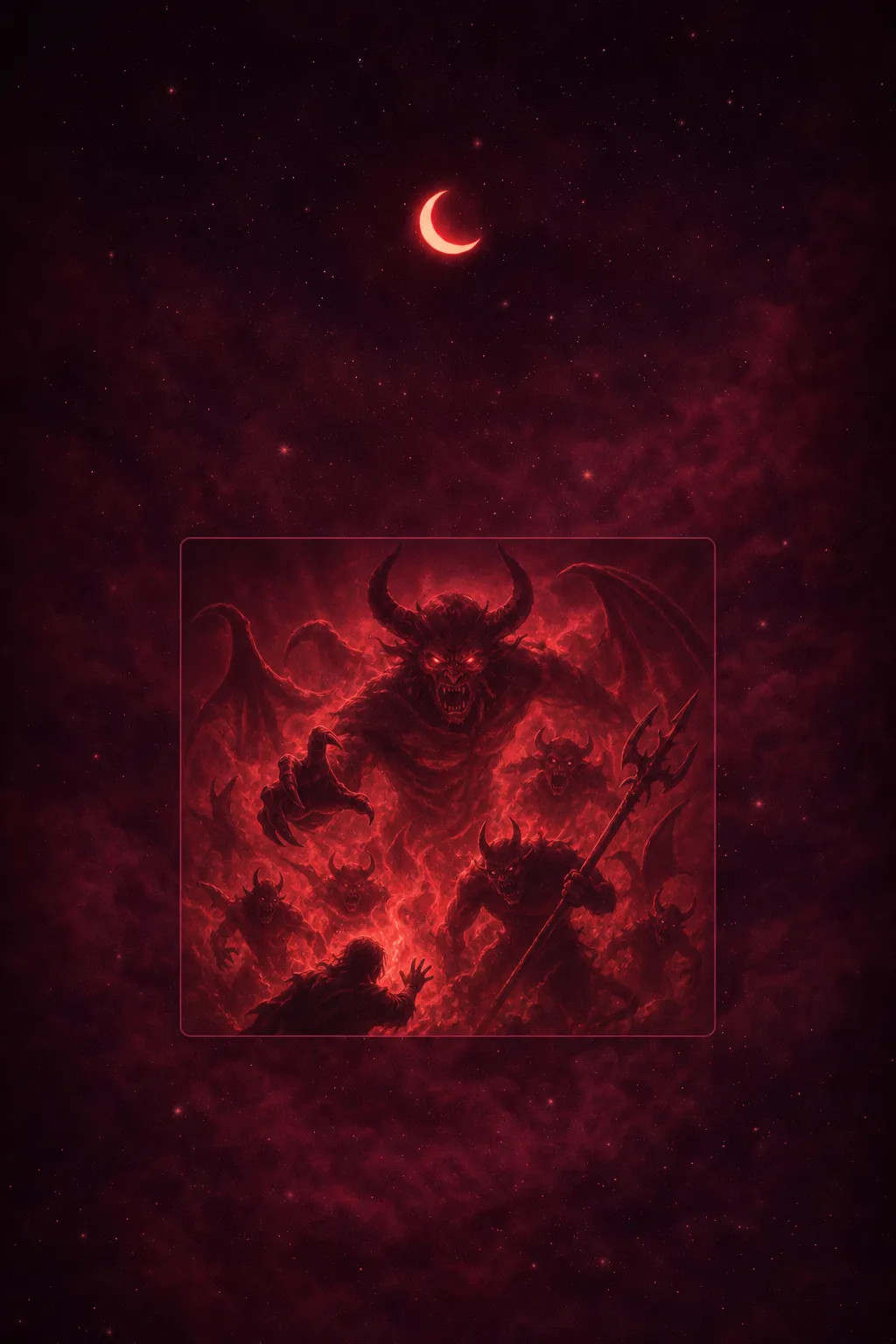

When demons attack you in a dream, it typically means you are facing intense inner conflict, overwhelming fear, guilt, or repressed emotions that your subconscious mind is struggling to confront, often reflecting real-life situations where you feel powerless, threatened, or tormented by negative thoughts, toxic relationships, or unresolved trauma demanding your urgent attention.
In under a minute you could read what your exact dream means for you, and see a picture of it. Free.
A dream still on your mind? Get your personal reading.
Describe your dream in a line or two. In seconds you get a reading of your exact dream, a picture drawn from your own words, and every symbol explained.
Free. No sign-up. Takes 10 seconds. Your dream stays private.
0%
Analyzing your dream…
Something went wrong. Please try again in a moment.
Your dreams deserve more than a dictionary
Common Demon Attack Dream Scenarios
The shape a demon attack takes in a dream often points directly to the specific pressure weighing on you in waking life. The most frequently reported variant — a single demon in relentless pursuit — typically mirrors a concrete anxiety you have been avoiding rather than addressing: a looming deadline, an unresolved conflict, or a habit you keep outrunning instead of confronting. When the dream shifts to paralysis — pinned down, unable to fight or flee — it edges into territory that overlaps with sleep paralysis phenomenology, and psychologically it reflects suppressed agency: a situation where you feel utterly without options.
- Protecting family or children: caretaker anxiety surfacing as fear of failing the people who depend on you, often triggered by real-life change or instability at home.
- Fighting back and winning: a genuinely positive signal — your mind is integrating a feared part of yourself and recovering a sense of control rather than fleeing from it, much like the resolution that can follow dreams of fighting an opponent.
- Demon trying to possess you: fear of being overtaken by an impulse, addiction, or outside influence; a core identity-threat scenario common during periods of temptation or loss of direction.
- Demons invading the home: the domestic space represents your inner sense of safety — an attack there suggests a threat has moved uncomfortably close to who you fundamentally are.
- An unseen, sensed presence: diffuse, unnamed dread that no figure can fully represent — often the mind's signal that a problem exists but has not yet been consciously named or acknowledged.
What a dream about demons attacking could look like
Tap an image to open it full screen
Example images. Only you can see what you write in Dream Book.
What Your Mind Is Really Processing
From a psychological standpoint, a demon attack dream is the brain's threat-response system working overtime — translating chronic or acute stress into vivid, menacing imagery rather than letting it sit as shapeless dread. Clinicians recognize this as nightmare-class content: the sleeping mind externalizes internal pressure onto a concrete adversary because a figure you can confront feels more manageable than anxiety you cannot name. If you have been living under sustained pressure at work, in a relationship, or around finances, your subconscious may cast that pressure as something with teeth — much the way chase dreams externalize avoidance into a pursuing threat.
A bad dream isn't a bad sign.
Carl Jung's concept of the shadow is especially relevant here. Impulses, memories, or aspects of yourself that you have pushed out of conscious awareness do not disappear — they accumulate. An attacking demon can be the mind's dramatic way of forcing you to acknowledge disowned anger, guilt, or shame that has grown too large to ignore. Unresolved guilt in particular tends to take hostile form in dreams, turning inward criticism into an outward attacker. This is also why the dreams often intensify during trauma reactivation or sleep disruption — experiences closely linked to sleep paralysis intrusions, where a sense of a menacing presence feels physically real.
Key psychological signals worth reflecting on after this dream include:
- Loss of agency: feeling pinned down or powerless suggests a waking situation where your sense of control is genuinely under siege.
- Boundary violation: a demon that invades your space often mirrors a person or circumstance that feels invasive in daily life.
- Guilt or shame: if the attacker feels like a judge rather than a random threat, unprocessed self-criticism may be the real target of the dream.
- Transformation signal: repeatedly facing — and surviving — the attack in a dream can mark the beginning of integrating what you have been avoiding.
Every dream you log starts to connect.
Dream Book keeps your dreams in one place and reveals the threads between them over time — your private dream journal. Free to start.


Cultural Traditions and Folk Beliefs Around Demon Attack Dreams
Across Anglo-American folk belief, demons have long served as convenient symbols for forces that feel both deeply personal and dangerously beyond one's control. Long before modern psychology coined the phrase "personal demons," everyday English idiom was already using it to name addictions, destructive habits, and the weight of past mistakes — suggesting that ordinary people intuitively understood demonic imagery as a mirror of inner conflict rather than literal supernatural threat. That tradition quietly persists: when someone says they are "wrestling with their demons," the cultural shorthand carries real psychological weight without requiring any doctrinal belief.
But what does your version mean?
For many dreamers today, however, the specific look and feel of a demon attack owes less to scripture or folklore than to decades of horror films and video games. Media conditioning has given the cultural imagination a vivid, shared vocabulary of claws, shadows, and relentless pursuit — imagery that the sleeping mind borrows freely. This is especially true for secular dreamers who may have no religious framework for the symbol yet still find it viscerally loaded. In this light, dreams of being chased by a demonic figure often say more about modern-anxiety culture — overwork, social pressure, fear of losing control amid rapid change — than about any spiritual tradition. Closely related experiences, such as sleep paralysis, show how the same dread of a menacing, uncontrollable presence can bleed between waking and dreaming states.
- Personal-demons idiom: addictions, regret, or shame projected outward as an attacker
- Media influence: horror and gaming imagery shapes the demon's appearance more than doctrine for many secular dreamers
- Modern-anxiety mapping: the attack scenario reflects stress, overwork, and the dread of losing control
- Folk resilience belief: surviving the attack in the dream is traditionally read as a sign of inner strength
The Spiritual Reading: Warfare, Faith, and the Call to Resistance
Within a US Christian framework, a dream of demons attacking is often read through the lens of spiritual warfare — the understanding, rooted in passages like Ephesians 6:12, that believers contend not only with flesh-and-blood pressures but with forces that feel genuinely malevolent. Rather than treating the dream as literal prophecy, most pastoral counselors position it as a prompt: an invitation to examine where you feel spiritually exposed or morally compromised, and to respond through prayer, community, or renewed commitment to faith. James 4:7's directive to "resist the devil and he will flee" becomes a practical framework — the dream is less a warning of impending doom than a call to active, intentional resistance.
This spiritual lens sits comfortably alongside modern-anxiety framing. Guilt, moral failure, or the sense that something in your life is spiritually out of alignment can surface at night as an attacking figure — especially when waking life offers no clean outlet for those feelings. The demon externalizes an inner verdict you have not yet consciously acknowledged. Seen this way, the dream functions as a mirror for self-knowledge: what exactly is attacking you, and what part of your inner life have you left unguarded? Dreams of being relentlessly chased carry a structurally similar dynamic, and the same question applies — whether the pursuer is named theologically or psychologically, the first spiritual task is honest identification rather than panicked escape. It is also worth noting that the oppressive, paralyzed quality many people describe in these dreams closely resembles the experience explored in sleep paralysis dreams, where a sense of dark presence feels both spiritual and physical at once.
Was yours a sign? Find out.
The key point this tradition emphasizes is agency. The dreamer is not portrayed as a helpless victim; scripture and lived faith practice both insist that the attacked person has recourse — through prayer, accountability, or simply naming what feels threatening. That emphasis on chosen response, rather than passive suffering, is where the spiritual reading most usefully reinforces the broader theme of self-knowledge and restored control.
Related Dream Meanings

nightmares
Being Chased Dream Meaning: Anxiety & Avoidance
5 min read
nightmares
Sleep Paralysis Dream Meaning: Helplessness & Anxiety
5 min read

nightmares
Fighting Dream Meaning: Conflict, Power & Stress
5 min read

nightmares
Police Dream Meaning: Authority, Guilt & Control
5 min read

nightmares
Near Death Experience Dream: Transformation & Renewal
5 min read

nightmares
What Does It Mean to Dream About Vampires
6 min read

nightmares
What Does It Mean to Dream About a Werewolf
5 min read

nightmares
Alien Dream Meaning: The Unknown, Change & Belonging
5 min read
Practical Steps When Demon Attack Dreams Keep Returning
Because these dreams almost always signal an internalized pressure reaching a tipping point, the most useful first move is a simple stress audit. Within 24 hours of the dream, write down every obligation, conflict, or unspoken fear currently competing for your attention. Seeing the list in plain daylight often strips the overwhelming quality from what felt monstrous at 3 a.m. — and points you toward the one or two items actually driving the nightmare rather than the whole pile at once.
If the dreams recur or escalate, treat them as a signal worth acting on rather than just enduring:
- Name the "demon" concretely. Ask what emotion the attacking figure carried — contempt, accusation, relentless pursuit. If the figure chases you down, the pattern overlaps closely with what people report in chase dreams, where avoidance of a waking threat is the core driver. Matching that feeling to a real-life situation gives you something you can actually address.
- Reclaim a sense of control before bed. Brief routines — journaling, a short prayer or meditation, even a five-minute tidy — signal to your nervous system that the day is closed and you are not helpless.
- Check sleep hygiene basics. Nightmare frequency spikes with sleep deprivation and alcohol; cutting back on both reduces the raw material the brain has to work with.
- Consider professional support. If the dreams follow trauma or accompany waking sleep paralysis, a therapist trained in trauma-focused approaches can offer structured relief well beyond self-help.
A bad dream isn't a bad sign.
The underlying message is almost never supernatural doom — it is your own mind insisting that something unresolved needs your attention. Treating the dream as useful information, rather than something to push away, is usually the most direct route to making it stop.
If it keeps coming back, the app helps you understand the pattern.
Log each recurring dream and the free app shows you what's underneath — calmly, over time. Free to start.
People Also Ask
Many people experience vivid, frightening dreams that feel like genuine attacks. Sleep paralysis often triggers sensations of a dark presence or pressure. While spiritually minded individuals may interpret these as real encounters, psychologists link them to stress, trauma, or disrupted sleep cycles. Both perspectives are worth considering when reflecting on your experience.
Demons in dreams typically symbolize inner conflicts, repressed fears, guilt, or negative influences in your waking life. They can represent toxic relationships, self-destructive habits, or overwhelming anxiety. Much like dreams about being chased, they often mirror the parts of yourself you find hardest to confront or accept, urging you toward healing and self-awareness.
Warning dreams from a spiritual source often feel unusually vivid, emotionally charged, and deeply meaningful upon waking. They tend to repeat or linger in memory for days. If the dream prompts you toward positive change, protection, or moral reflection rather than fear alone, many believers interpret that as a meaningful divine signal worth prayerful consideration.
The Bible acknowledges spiritual warfare and warns believers to stay alert against dark forces. Passages like Ephesians 6:12 describe struggles against spiritual wickedness. Some Christian traditions teach that demonic dreams are real spiritual battles, encouraging prayer, scripture reading, and faith as protection. Discernment and spiritual counsel are advised when such dreams feel persistent or deeply disturbing.
Curious what your dream would look like?