
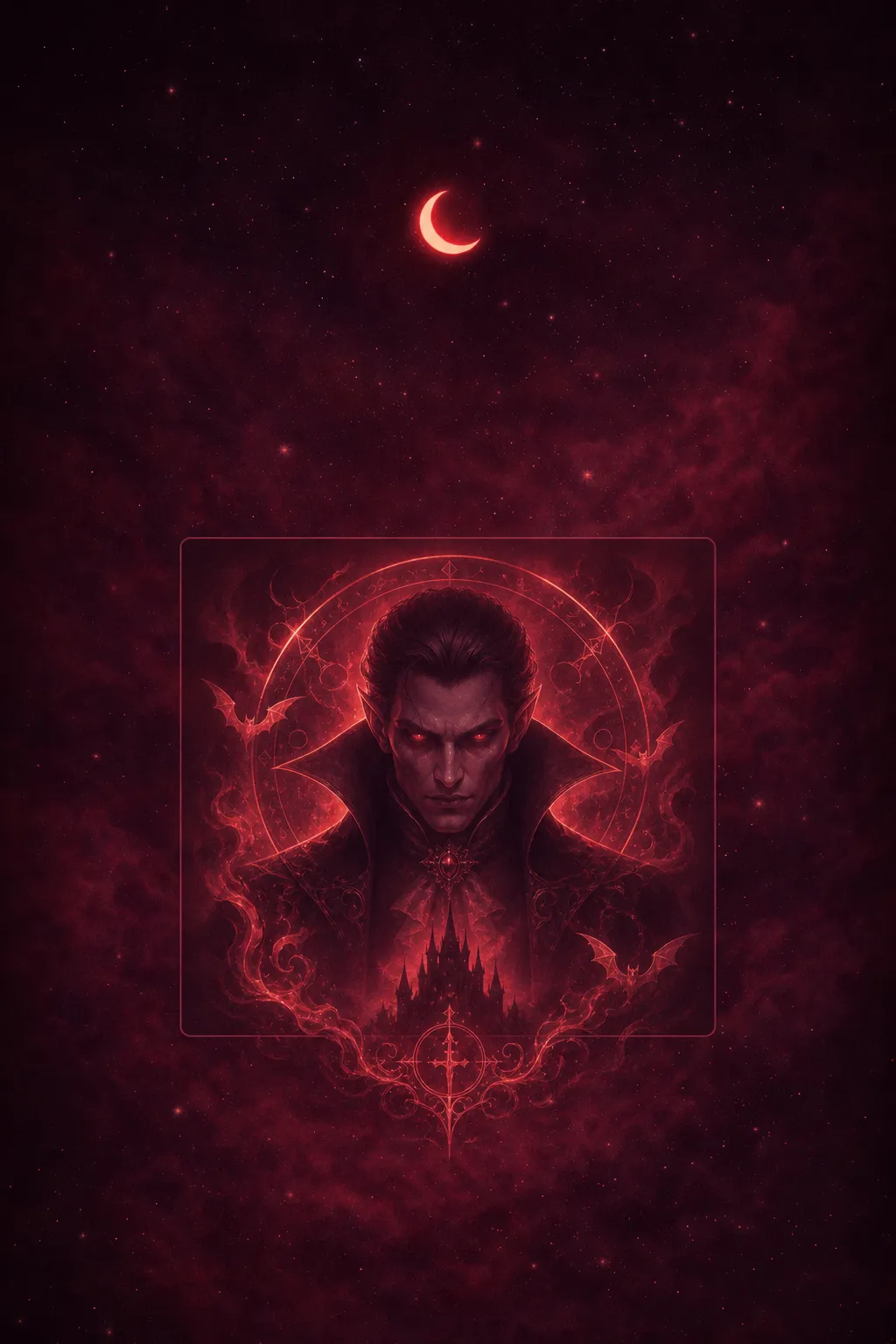

Dreaming about vampires typically means something or someone in your waking life is draining your energy, time, or emotional resources, and your subconscious is urging you to recognize toxic relationships or habits that leave you feeling depleted, powerless, or unable to escape a cycle of manipulation and control.
In under a minute you could read what your exact dream means for you, and see a picture of it. Free.
A dream still on your mind? Get your personal reading.
Describe your dream in a line or two. In seconds you get a reading of your exact dream, a picture drawn from your own words, and every symbol explained.
Free. No sign-up. Takes 10 seconds. Your dream stays private.
0%
Analyzing your dream…
Something went wrong. Please try again in a moment.
Your dreams deserve more than a dictionary
Common Vampire Dream Scenarios and What They Mean
The specific action unfolding in a vampire dream shapes its message considerably. Being bitten or fed upon is the most reported variant and almost always points to a real-life relationship or obligation that is quietly draining your energy — the violation you feel in the dream mirrors a waking sense of exploitation or eroded autonomy. If the bite carries an unsettling undercurrent of attraction, your psyche may be flagging ambivalence about someone whose influence over you feels both magnetic and harmful. Closely related is the scenario of being chased by a vampire, which reflects relentless pressure you are trying to outrun — a demanding boss, a suffocating expectation, or a conflict you keep postponing rather than addressing, much like the raw dread explored in being-chased dreams.
- Turning into a vampire — guilt about draining others; a shadow-side of yourself that craves control or takes without giving back.
- Seduced by an attractive vampire — drawn to something you know is harmful; the dream surfaces the tension between desire and self-protection, much like blood imagery that mingles life and danger.
- Fighting off or killing a vampire — a hopeful sign of boundary-setting; you are actively reclaiming energy and asserting control over what had felt inescapable, echoing the loss-and-recovery theme found in teeth-falling-out dreams.
- Vampire as a romantic partner — intimacy entangled with fear of being consumed; the relationship may feel all-or-nothing in waking life.
- Using protective symbols (garlic, a cross, sunlight) — your mind is searching for safeguards, whether emotional, spiritual, or practical, against a perceived threat.
A bad dream isn't a bad sign.
Across all these variants, the central question your dream is posing is the same: where in your waking life do you feel your vitality slipping away, and what — or who — is holding the door open?
What this dream could look like
Tap an image to open it full screen
Example images. Only you can see what you write in Dream Book.
The Psychological Reading: Depletion, Boundaries, and the Shadow Self
From a psychological standpoint, the vampire is a near-perfect symbol of what happens when personal boundaries erode. The unconscious mind reaches for this predatory figure when it needs to name something it struggles to articulate in waking life: a relationship, habit, or obligation that steadily drains your sense of self. The dread-mixed-with-attraction that most dreamers report mirrors the real ambivalence many people feel toward emotionally exhausting connections — the boss whose approval you crave, the partner whose neediness you enable, the social role you perform at a cost you rarely admit. Modern anxiety culture intensifies this dynamic; when people feel chronically overscheduled and under-resourced, the vampire becomes a vivid shorthand for lost energy with no obvious wound to point to — not unlike the creeping helplessness captured in dreams of teeth falling out, where the body itself becomes the site of uncontrolled loss.
Jung would locate the vampire squarely in the shadow — the part of the psyche that houses impulses judged unacceptable. Dreaming of being a vampire can therefore be a moment of uncomfortable self-knowledge: the unconscious may be surfacing your own tendency to lean too heavily on others, or a hunger for control you have not yet consciously owned. In a broadly Christian cultural frame, this reading carries a moral undertone — the vampire as a figure of unchecked desire, and the dream as an invitation toward accountability rather than condemnation.
- Boundary collapse: recurring vampire dreams often correlate with waking situations where you find it difficult to say no.
- Control anxiety: being transformed or turned can reflect fear of losing your identity under external pressure.
- Shadow projection: the vampire may represent a disowned part of yourself — ambition, anger, or desire — demanding integration rather than suppression.
- Fascination as signal: if the dream feels thrilling rather than terrifying, your psyche may be pointing toward vitality you have been denying yourself, not just a threat from outside.
Every dream you log starts to connect.
Dream Book keeps your dreams in one place and reveals the threads between them over time — your private dream journal. Free to start.


Cultural and Folk Traditions: The Vampire as a Symbol of Stolen Life
Long before the vampire became a Hollywood staple, Eastern European folklore — particularly from Slavic, Romanian, and Balkan traditions — treated the undead as a genuine communal threat. Folk belief held that the restless dead could return to feed on the living, sapping vitality and spreading illness through entire households. Dreaming of such a figure was taken as a serious warning: someone close to you was drawing on your life force, whether through envy, unresolved grief, or outright malice. This intuition maps surprisingly well onto modern anxieties about toxic relationships and emotional burnout — the cultural image simply gave an older name to a pattern people have always recognized.
But what does your version mean?
Within American Christian culture, the vampire carries additional resonance. Blood is a loaded biblical symbol tied to covenant, sacrifice, and spiritual corruption, so a dream figure that feeds on blood can feel like an image of something spiritually predatory — a force pulling the dreamer away from faith, wholeness, or moral clarity. This reading doesn't require a literal demonic interpretation; more often it surfaces as an uneasy sense that a person or habit is stealing what should be consecrated to your own wellbeing. That creeping loss of self also echoes the dread many people report in dreams about dying or fading away, where the threat feels slow, invisible, and hard to name.
- Control and agency: Folk remedies against vampires — garlic, crosses, thresholds the creature cannot cross uninvited — all emphasize the power of deliberate boundaries, a theme that translates directly into self-knowledge and reclaiming control in waking life.
- Ambivalence: Gothic and Romantic tradition consistently portrayed the vampire as seductive, not merely monstrous, acknowledging that what drains us often holds genuine appeal — much like the uneasy fascination found in dreams about being swallowed by darkness.
- Modern anxiety: Contemporary culture has recycled the vampire into a metaphor for charismatic people who leave others exhausted — the "energy vampire" — confirming that the archetype still does real psychological work.
The Spiritual Reading: Corruption, Consent, and Protecting Your Vitality
Within a Christian frame, the vampire's defining act — stealing blood, the substance the Bible repeatedly equates with life itself (Leviticus 17:14) — gives the dream an unmistakably spiritual charge. To dream of a vampire feeding is to dream of something claiming what rightfully belongs to God alone: your life force. Many believers who report this dream describe a nagging sense that a person or situation in their life has subtly usurped authority over them, crowding out prayer, rest, or a clear conscience. The image of darkness and predatory pursuit can therefore function as a spiritual alarm — a prompt to examine where your consent and energy are actually going.
From a broader spiritual perspective that blends modern anxiety with older soul-care traditions, the vampire dream raises questions of discernment: Can you identify what — or who — is feeding on your peace? Several spiritual warning signs this dream may surface include:
Was yours a sign? Find out.
- A relationship that leaves you feeling spiritually empty rather than nourished
- Habitual patterns (overwork, compulsive scrolling, chronic people-pleasing) that quietly hollow out your inner life
- A sense of losing autonomy — of being "turned" gradually rather than in one dramatic moment, not unlike the helplessness that colors dreams of death
- Difficulty maintaining practices — prayer, reflection, community — that once grounded you
The hopeful counterpoint built into nearly every vampire myth is that the creature requires your invitation or at least your passivity. Spiritually, the dream can therefore be read as a call to reclaim agency: to name the drain, set a boundary, and consciously reinvest your energy in what restores rather than depletes you.
Related Dream Meanings
nightmares
Being Chased Dream Meaning: Anxiety & Avoidance
5 min read
body health
Blood Dream Meaning: Loss, Vitality & Transformation
5 min read
body health
Teeth Falling Out Dream: Anxiety, Loss & Vulnerability
5 min read
nightmares
Death Dream Meaning: Transformation, Loss & Change
5 min read
nightmares
Darkness Dream Meaning: Fear, Uncertainty & Hidden Self
5 min read
nightmares
Rape Dream Meaning: Vulnerability & Loss of Control
5 min read
nightmares
Deceased Visiting Dream: Closure, Guidance & Grief
5 min read
nightmares
Shadow Person in Dreams: What It Means When You See Them
5 min read
Practical Takeaways: What to Do After a Vampire Dream
The most useful move after this dream is a honest audit of your current relationships and commitments. Ask yourself which people or obligations consistently leave you feeling flat, irritable, or depleted — not just tired, but hollowed out. That feeling maps closely to what the vampire represents, and naming it clearly is the first step toward changing it.
- Track your energy, not just your schedule. For one week, note how you feel before and after time spent with key people in your life. Patterns of consistent depletion are data worth taking seriously.
- Identify where you struggle to say no. Boundary erosion rarely happens all at once; it tends to be gradual concessions that compound over time. Pinpoint the specific requests or dynamics where you override your own limits.
- Consider what draws you in despite the cost. The dream's mix of dread and attraction often mirrors a real ambivalence — a draining relationship you stay in because it also offers something compelling, like status, familiarity, or excitement. Recognizing that pull gives you more genuine control over what you give of yourself and why.
- Notice if fear itself is the pattern. If the dream left you with a lingering sense of being hunted or cornered, explore whether that dread of the dark extends into waking life — chronic anxiety about losing autonomy is worth addressing directly, not just symbolically. Dreams of losing something vital often cluster with vampire imagery when depletion anxiety runs deep.
- Set one concrete limit this week. Insight without action changes little. Choose a single boundary — a declined request, a shortened obligation — and follow through on it.
A bad dream isn't a bad sign.
Modern life makes chronic over-extension feel normal, which is exactly why the unconscious escalates to something as visceral as a vampire to get your attention. Treat the dream as a prompt for self-knowledge rather than anxiety: it is telling you where your vitality is leaking before waking stress forces the issue.
If it keeps coming back, the app helps you understand the pattern.
Log each recurring dream and the free app shows you what's underneath — calmly, over time. Free to start.
People Also Ask
Spiritually, a vampire often represents an energy drain or a force drawing life away from you. It can signal that something — a relationship, habit, or environment — is depleting your vitality. Many traditions see it as a warning to protect your personal boundaries and reclaim your spiritual strength.
Dreaming you become a vampire suggests a growing awareness of your own power, but also fear of losing your humanity or moral compass. It may reflect feelings of dependency on others or a desire for control. It can also indicate a personal transformation that feels both thrilling and unsettling.
Vampires commonly symbolize toxic relationships, manipulation, or emotional exhaustion. They can represent a person in your waking life who drains your energy or oversteps boundaries. Alternatively, they may reflect repressed desires, forbidden attraction, or a fear of intimacy — similar to the helplessness felt in being-chased dreams — that you are struggling to confront.
Vampire dreams are not among the rarest dream types, but they are less common than everyday anxiety dreams. Truly rare dreams include prophetic visions or out-of-body experiences. Vampire dreams tend to emerge during periods of stress, unhealthy relationships, or when you feel powerless and overwhelmed by outside influences.
Curious what your dream would look like?