
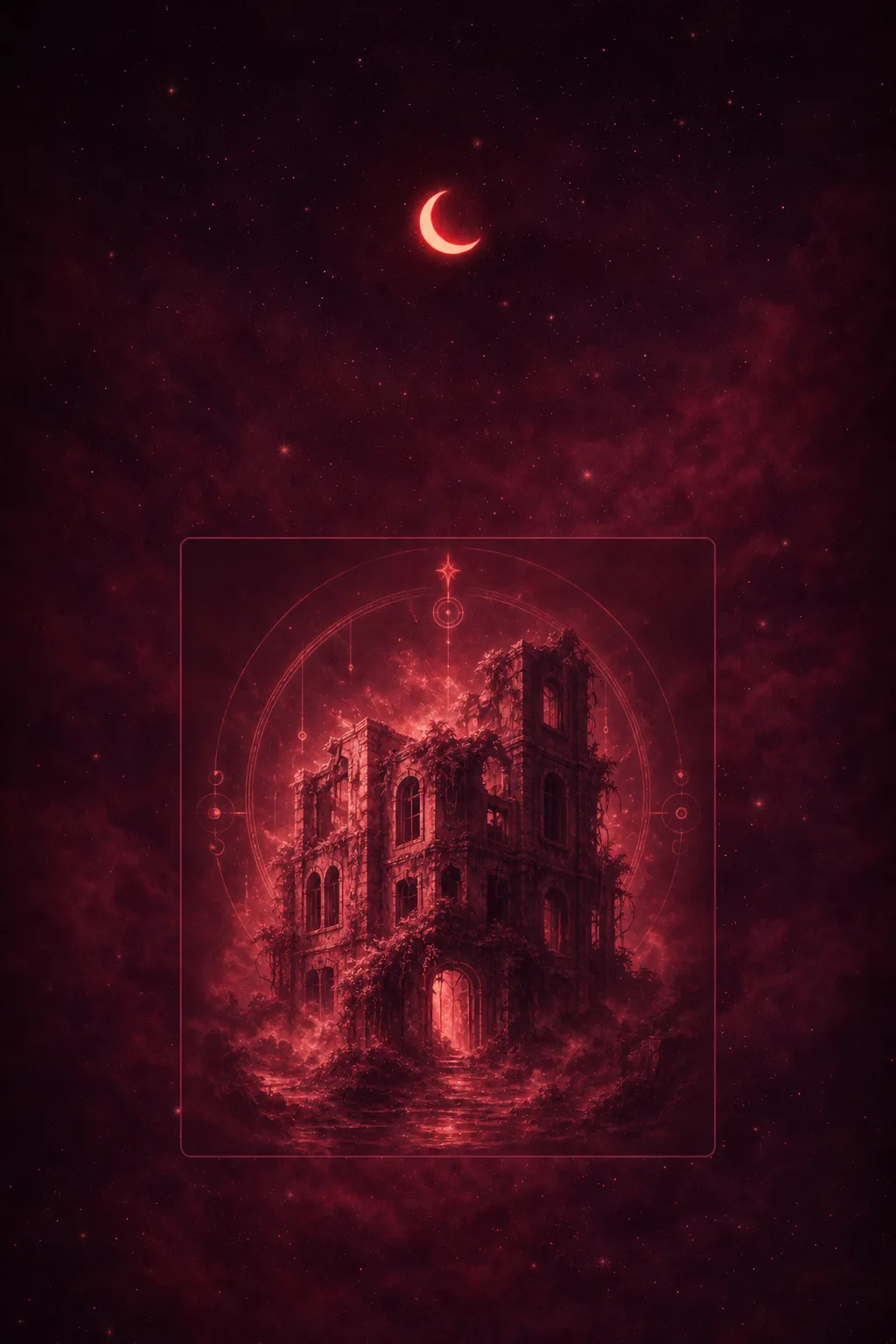

Dreaming about an abandoned building typically represents neglected parts of yourself—forgotten ambitions, unresolved emotions, or aspects of your past that you have left behind, and your subconscious may be urging you to revisit, reclaim, or finally release these dormant feelings before they continue to silently shape your waking life.
In under a minute you could read what your exact dream means for you, and see a picture of it. Free.
You read what it can mean. But what did yours mean?
General meanings stop here. In the free app, tell Dream Book your exact dream and get a reading that actually makes sense for you.


Common Scenarios Involving an Abandoned Building
The specific details of your dream shape its meaning considerably. Exploring an abandoned building alone suggests a willingness — however cautious — to examine a neglected part of your life: a career path dropped, a relationship gone quiet, or a version of yourself you quietly outgrew. The solitude matters; you are conducting a private audit, not ready to involve anyone else. If you find yourself lost or trapped inside, the dream reflects feeling locked in an outdated identity or circumstance, unable to exit a phase that has already run its course — a classic sign of anxiety during major life transitions. At Dream Book we explore this symbol in depth.
- Building visibly collapsing or in ruin: signals urgent concern about something once stable — health, a relationship, professional standing — that now feels like it is actively deteriorating and needs a decision: repair it or let it go.
- A familiar place (childhood home, old school, former workplace) now abandoned: points to grief or nostalgia for a closed chapter, or unfinished emotional business with a role you no longer occupy.
- Sensing danger or an intruder inside: suggests that the avoided corner of your psyche is not as empty as assumed — unresolved fear or something you have been running from has taken up residence there.
- Discovering something valuable hidden inside: an encouraging reversal — dormant talent, forgotten ambition, or inner resource waiting to be reclaimed.
- Restoring or reoccupying the building: the most constructive variant, reflecting a conscious decision to reclaim neglected ground and rebuild a sense of purpose after a fallow period.
But what does your version mean?
Finding strangers or squatters living in the ruin adds a layer of lost control — the concern that neglected inner space has been colonized by outside demands, other people's expectations, or habits that are no longer yours but have quietly moved in.
What this dream could look like
Tap an image to open it full screen
Example images. Only you can see what you write in Dream Book.
What Your Mind Is Really Processing
From a psychological standpoint, an abandoned building is one of the more direct images the dreaming mind produces: it maps almost one-to-one onto a neglected interior space. Mainstream psychology, drawing on ego-state theory and shadow work, would read the structure as a region of the self that has been cordoned off — not destroyed, but unmaintained. That distinction matters. Decay implies something was once functional, which means the potential is still structurally present, just buried under disuse. The emotional residue — loneliness, melancholy, a low hum of unease — signals that the psyche is registering the cost of avoidance, even if waking life has not yet caught up.
Modern anxiety patterns sharpen this reading considerably. In an era defined by rapid change and the fear of being left behind, the abandoned building can crystallize a very specific dread: that you have already peaked, that a version of yourself was used up and discarded before you noticed. This connects to what therapists sometimes call obsolescence anxiety — the creeping sense that your skills, roles, or relationships no longer fit a world that has moved on. Dreams of standing before a locked door carry a related weight, but the abandoned building goes further: the door is open, the rooms are accessible, and still nothing is being done. That passivity is the message. The subconscious is not presenting a barrier — it is presenting a choice.
Was yours a sign? Find out.
- Self-neglect signal: A life domain — health, creativity, faith, a relationship — has been quietly shelved and is now deteriorating in the background.
- Outgrown identity: You may be haunting a role or self-concept that genuinely no longer fits, rather than grieving it and moving forward.
- Unprocessed memory: Old experiences preserved but not integrated tend to surface as decaying structures — still standing, still taking up psychic real estate.
- Dormant potential: The building is not rubble; it can be reclaimed. The dream may be an invitation toward intentional reconstruction rather than continued avoidance.
General meanings end here. Read your own dream.
Describe your dream in a line or two. In seconds you get a reading of your exact dream, a picture drawn from your own words, and every symbol explained.
Free. No sign-up. Takes 10 seconds. Your dream stays private.
0%
Analyzing your dream…
Something went wrong. Please try again in a moment.
Your dreams deserve more than a dictionary
Cultural and Traditional Readings of Abandoned Buildings in Dreams
In the Anglo-American cultural imagination, derelict spaces carry a weight that goes well beyond personal psychology. Post-industrial landscapes — shuttered factories, hollowed-out shopping malls, boarded-up houses — have become shorthand for economic decline and the anxiety of being left behind by change. When these images surface in dreams, they tap into a collective unease that most people in Western cultures absorb almost unconsciously: the fear that progress moves on without us, that communities (and by extension, individuals) can simply become obsolete. Dreaming of an abandoned building can therefore reflect not just private neglect but a broader cultural dread of irrelevance.
At the same time, Western culture holds a genuine fascination with ruin aesthetics. The growing popularity of urban exploration — wandering through forgotten hospitals, mills, and estates — reframes decay as something worth examining rather than fleeing. Seen through this lens, an abandoned building in a dream carries a quiet invitation toward self-knowledge: the wreckage is worth walking through, because what is hidden inside may still be salvageable. This mirrors a modern-anxiety framing in which confronting neglected parts of life is recast as a form of control rather than defeat.
- Haunted-house tradition: The haunted-house dream genre links abandoned structures to unresolved history — things left undone that continue to exert pressure on the present.
- Folk belief: Older Anglo folk tradition associated derelict homes with restless spirits, a metaphor still alive in the cultural sense that unfinished emotional business lingers like a ghost.
- Christian undertone: Some readers interpret the crumbling structure as a reminder of stewardship — the biblical call to tend what one has been given, whether relationships, gifts, or faith.
Spiritual Meaning of an Abandoned Building in Dreams
Within a Christian framework, the image of a ruined structure carries unmistakable weight. Paul's reminder in 1 Corinthians 3:16–17 that the body and soul together form a temple places immediate spiritual pressure on any dream of a building fallen into disrepair: if the structure is you, its neglect is more than psychological — it is a signal that something sacred has been left untended. Nehemiah 2:17 adds a redemptive edge, urging the community to "rebuild the walls" and refuse to remain in ruin, a call that translates naturally into the dream space as an invitation to restore what anxiety, busyness, or avoidance has allowed to decay. And when Jesus describes a house left "desolate" in Matthew 23:38, the word lands as spiritual emptiness — life going through the motions without genuine vitality or direction.
A bad dream isn't a bad sign.
For dreamers who hold a more broadly spiritual worldview, a haunted or spiritually charged house and an abandoned one sit close together in meaning: both suggest unresolved energy, a space where something once lived that has not properly been released or honored. The modern-anxiety layer intensifies all of this — when daily life feels out of control or purposeless, the dreaming mind may summon a derelict building not as a verdict but as a prompt. The spiritual reading, then, is ultimately hopeful: ruins can be rebuilt, foundations can be re-laid, and the first step is simply acknowledging what has been left behind.
Related Dream Meanings

nightmares
Being Chased Dream Meaning: Anxiety & Avoidance
5 min read

common dreams
Locked Door Dream Meaning: Blocked Desires & Hidden Fears
5 min read

nightmares
Haunted House Dream Meaning: Fears, Trauma & Healing
5 min read

common dreams
Joy Dream Meaning: Fulfillment, Hope & Inner Peace
5 min read

common dreams
Dreaming About Being Happy: Meaning and Interpretation
5 min read

common dreams
Regret Dream Meaning: Guilt, Healing & Unfinished Business
5 min read

common dreams
Guilt Dream Meaning: Regret, Shame & Inner Conflict
6 min read

common dreams
Job Interview Dream Meaning: Anxiety, Ambition & Self-Worth
5 min read
Practical Takeaways: What to Do After This Dream
When an abandoned building shows up in your sleep, treat it less as a warning and more as a prompt for an honest inventory. Modern life is good at burying neglected areas under packed schedules and low-grade anxiety — the dream may simply be surfacing what you already half-know. A useful first step is to write down, within a day or two of the dream, any area of your life that feels stalled, unmaintained, or quietly avoided. Career drift, a friendship you keep meaning to revive, a creative interest shelved years ago — these are the kinds of things the image typically points toward.
- Name the room. Which specific life domain felt most alive in the dream — work, relationships, your body, a goal? That room is usually the one that needs attention first.
- Small re-entry, not a full renovation. Reclaiming something neglected rarely requires a dramatic overhaul. One concrete step — a single email, a gym session, thirty minutes on a forgotten project — breaks the avoidance loop more effectively than a grand plan.
- Check what you're avoiding. If the building in your dream felt threatening (like a haunted house), ask honestly whether the avoidance is protecting you from discomfort or actually keeping you stuck.
- Revisit quarterly. If the same image recurs, use it as a check-in signal — something you intended to address has likely slipped again.
But what does your version mean?
The core message is about agency: the building is abandoned, not demolished. Whatever it represents can still be re-entered, assessed, and — where it still serves you — restored.
One dream is never the whole picture.
The free app remembers your dreams, draws them, and connects the threads over time — so the next one means even more. Free to start.
People Also Ask
An abandoned building in a dream typically symbolizes neglected emotions, forgotten memories, or untapped potential. It may reflect parts of yourself you have shut away or left unresolved. The condition of the building matters — a crumbling structure can signal deeper inner decay, while an exploreable one suggests hidden opportunities waiting to be rediscovered.
Warning dreams often feel vivid, emotionally intense, and unusually memorable upon waking. They tend to repeat or carry a strong sense of urgency. Spiritually, many traditions believe such dreams carry symbolic guidance. If an abandoned building appears repeatedly with feelings of dread, it may be worth reflecting seriously on neglected areas of your waking life.
Dreams featuring recurring locations, strong emotional distress, or symbolic imagery like abandoned buildings deserve attention. These often point to unresolved trauma, suppressed stress, or meaningful subconscious processing. Dreams involving vivid warnings, loss, or feelings of being trapped are particularly worth journaling and reflecting on, as they frequently mirror real psychological or emotional concerns needing acknowledgment.
Dreaming of a fictional place, such as an unfamiliar abandoned building, suggests your mind is constructing a symbolic landscape to process feelings or experiences. These invented locations often represent emotional states or life situations. An unknown derelict building might embody feelings of isolation, unexplored potential, or a chapter of your life that feels hollow and forgotten.
Truly lucid dreams — where you are fully aware and in control — are considered among the rarest experiences. Verified prophetic dreams and shared dreams reported by two people independently are also exceptionally uncommon. Dreaming vividly of symbolic settings like abandoned buildings while in a fully lucid state combines two rare phenomena and can feel profoundly meaningful.
Curious what your dream would look like?