
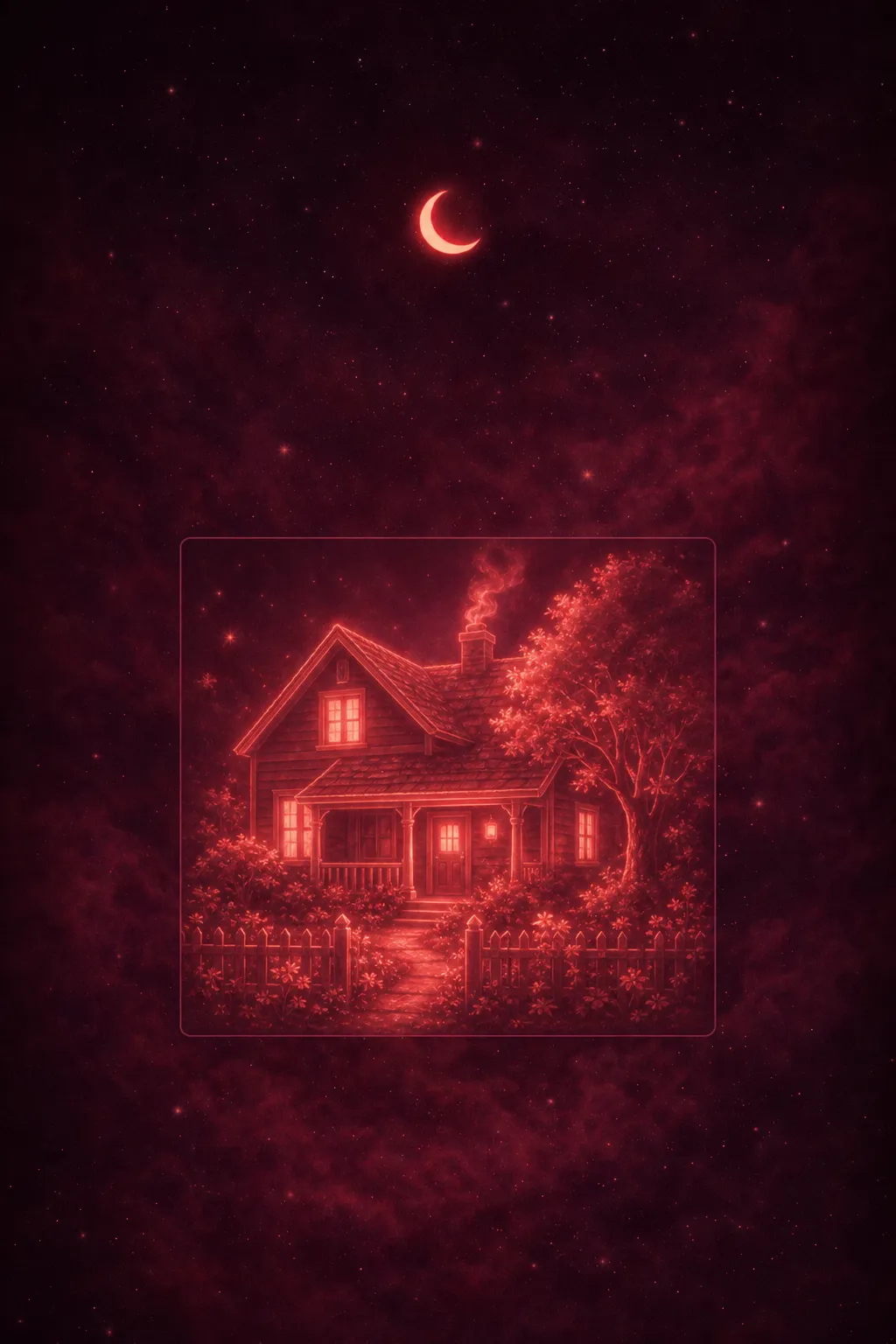

Dreaming about your childhood home meaning centers on nostalgia, unresolved emotions, and your psychological foundations, as this symbol typically reflects a desire for security and comfort, urges you to revisit formative memories or past wounds, and signals that your subconscious is examining how your earliest experiences continue to shape your present identity and emotional well-being.
In under a minute you could read what your exact dream means for you, and see a picture of it. Free.
A dream still on your mind? Get your personal reading.
Describe your dream in a line or two. In seconds you get a reading of your exact dream, a picture drawn from your own words, and every symbol explained.
Free. No sign-up. Takes 10 seconds. Your dream stays private.
0%
Analyzing your dream…
Something went wrong. Please try again in a moment.
Your dreams deserve more than a dictionary
Common Childhood Home Dream Scenarios
The most frequent version — walking through the old house exactly as you remember it — typically surfaces during periods of stress or upheaval. The psyche is essentially anchoring itself to a familiar "home base" when the present feels too unpredictable. Far from simple nostalgia, it is often an identity check-in: your mind asking who you were before life got complicated. When the home appears altered, crumbling, or subtly wrong, however, the tone shifts into something more unsettling. That decay usually mirrors a quiet grief — the growing awareness that the past no longer fits who you have become, a feeling that intensifies when parents age, family ties fray, or a major life reassessment forces you to accept that you genuinely cannot go back.
- Discovering hidden or extra rooms: A hopeful sign that unexplored parts of the self are surfacing — often triggered by therapy or a nagging sense that daily routine has been suppressing something real in you.
- Locked out or unable to enter: Points to disconnection from your roots or unresolved family rupture; a feeling of not belonging even to your own history.
- The home under threat — intruder, fire, storm: Boundary and control anxiety projected onto your earliest symbol of safety, common during acute stress or when the ground beneath your present life feels unstable. Dreams of being chased often share this same undercurrent of threatened security.
- Deceased relatives present as if alive: Usually a sign of ongoing grief or unfinished emotional business — especially likely around milestones when you instinctively wish you could ask them for guidance.
- Feeling stuck or unable to leave: Suggests a fear of regression — that old family-of-origin roles or dependencies still have a hold on you, pulling against the person you are working to become.
What this dream could look like
Tap an image to open it full screen
Example images. Only you can see what you write in Dream Book.
Psychological Meaning of Dreaming About Your Childhood Home
From a psychological standpoint, the childhood home functions as the mind's shorthand for the self in its earliest, most unguarded form. Carl Jung famously framed the house in dreams as a map of the psyche — upper floors representing conscious life, while older, dimmer rooms below mirror buried memories and unmet needs. When that house is specifically the one you grew up in, the subconscious is doing something pointed: it is pulling you back to the emotional blueprint laid down before you had the language or power to shape it. This often surfaces not as pure nostalgia but as an invitation — sometimes an urgent one — to examine which childhood patterns are still quietly running your adult decisions.
But what does your version mean?
Modern anxiety adds another layer. In an era defined by rapid change, financial pressure, and fractured routines, the dreaming mind gravitates toward the earliest environment it coded as "safe" — even when that environment was far from perfect. The tension here is real: the same home that represents comfort can also represent stagnation or regression. Dreaming you are surrounded by family in the old house may signal a longing for belonging, but it can equally signal fear of losing the independence you have worked to build. Both readings can be true simultaneously, which is precisely why the emotional charge on waking tends to feel so mixed.
- Control and self-knowledge: If rooms feel locked or altered, the dream may be flagging unresolved emotional territory your waking self is not yet ready to confront.
- Identity consolidation: A calm, well-lit revisit often points to healthy integration — the psyche acknowledging where it came from without being trapped there.
- Unmet developmental needs: Recurring dreams of the home, especially with an anxious tone, can signal that an earlier emotional need — security, validation, autonomy — is still asking to be addressed in your present life.
Every dream you log starts to connect.
Dream Book keeps your dreams in one place and reveals the threads between them over time — your private dream journal. Free to start.


Cultural and Traditional Readings of the Childhood Home Dream
Across Western folk tradition, the home has long been treated as more than shelter — it is a symbol of the soul's container, and returning to one's childhood house in a dream has historically been read as the spirit seeking its roots. In many Anglo-American rural communities, such a dream was once considered an omen of significant life change ahead, a subconscious signal that the dreamer needed to "settle accounts" with the past before moving forward. This intuition maps neatly onto modern-anxiety thinking: when external pressures — career shifts, relationship stress, or a sense of lost control — mount up, the mind instinctively reaches back toward the first place it ever felt oriented.
Was yours a sign? Find out.
Within the US Christian tradition, the childhood home dream often carries a quieter spiritual weight. The biblical theme of homecoming — perhaps most vivid in the parable of the prodigal son — resonates here: the dream can feel like a gentle prompt toward self-examination, an invitation to acknowledge where you came from and whether your present life reflects the values instilled early on. It is rarely read as punishment, more often as a call to honest reflection.
- Nostalgia as warning: Folk belief in many communities held that dreaming fondly of a former home signaled dissatisfaction with present circumstances — a nudge toward conscious change rather than passive longing.
- Decay or damage: A crumbling childhood home was traditionally interpreted as unresolved family tension demanding attention before it erodes the dreamer's sense of identity further.
- Bright, restored rooms: Seeing the house repaired or sunlit was broadly considered a favorable sign — inner resources rediscovered and a stronger sense of self on the horizon.
Spiritual Meaning of Dreaming About Your Childhood Home
From a spiritual standpoint, the childhood home carries the weight of the soul's earliest formation. In a broadly Christian reading, the image resonates with the biblical theme of returning to one's foundation — much as Proverbs 22:6 speaks of the path laid in youth shaping the whole of a person's life. When anxiety or a season of rapid change drives this dream to the surface, many believers intuitively sense it as an invitation to examine what core values and faith commitments were planted early, and whether present-day choices still honor them. It is less a sign of regression and more a gentle spiritual audit.
Beyond the biblical frame, a number of spiritual traditions treat the dreaming mind as capable of genuine encounter — with the past, with deceased loved ones who once shared that space, or with earlier versions of the self that still carry unresolved longing. In that light, walking through the old rooms can feel less like memory and more like a kind of homecoming of the spirit, a chance to grieve what was lost, forgive what hurt, and reclaim what was left behind. Dreams about family members appearing in that home often intensify this sense of soul-level reconnection.
A bad dream isn't a bad sign.
Spiritually, the recurring childhood home dream may be prompting questions that neither therapy nor productivity culture can fully answer: Who am I at my core, beneath the roles I perform? Whether you approach that question through prayer, meditation, or quiet self-examination, the dream's deeper invitation is toward integrity — aligning who you are becoming with the truest, most essential self you have always been.
Related Dream Meanings

nightmares
Being Chased Dream Meaning: Anxiety & Avoidance
5 min read

people
Dreaming About Family Members Meaning - Dream Interpretation Guide
5 min read

common dreams
Blue Dream Meaning: Calm, Healing & Deeper Feelings
5 min read

common dreams
Green Color Dream Meaning: Growth, Healing & Renewal
5 min read

common dreams
Purple Dream Meaning: Spirituality, Creativity & Change
5 min read

common dreams
Forest Dream Meaning: Growth, Fear & Hidden Desires
5 min read

common dreams
Missing a Flight Dream: Anxiety, Fear & Missed Chances
5 min read
common dreams
Dreaming of Basement Meaning: What Your Subconscious Reveals
5 min read
What You Can Actually Do With This Dream
When your childhood home shows up in a dream, treat it less as a mystery to decode and more as a prompt to check in with yourself. Modern life keeps the pressure high and the pace relentless, and the dreaming mind often drags you back to that old house precisely when your sense of identity feels stretched thin. Rather than brushing the image off, pause and ask: what is genuinely unsettled right now, and am I handling it in a way that feels like me?
- Journal the floor plan. Sketch or describe which rooms you visited and how they felt. Rooms that seemed locked, cramped, or unfamiliar often point to the emotional territory you have been avoiding in waking life.
- Identify the unmet need. Was the dream home warm and inviting, or run-down and threatening? That emotional tone usually mirrors a current need — for comfort, for boundaries, or for honest self-appraisal.
- Check for regression vs. reflection. There is a difference between drawing on your roots for strength and retreating into old, unhelpful patterns. If recurring family dynamics keep appearing alongside the house, that distinction is worth taking seriously.
- Take one concrete step. Reconnect with a family member you have been meaning to call, revisit a value you have drifted from, or simply carve out quiet time — the dream is asking for integration, not just interpretation.
But what does your version mean?
You do not need to resolve everything the dream stirs up at once. Even small, deliberate actions — a conversation, a journal entry, a boundary set — move you from passive nostalgia toward genuine self-knowledge.
One dream is never the whole picture.
The free app remembers your dreams, draws them, and connects the threads over time — so the next one means even more. Free to start.
People Also Ask
Dreaming about returning to your childhood home typically signals a desire for comfort, security, or simpler times. It may suggest you are processing unresolved emotions from your past or seeking a sense of belonging. Psychologically, the home represents your inner self, and revisiting it points to self-reflection and personal growth.
Recurring dreams set in your childhood home often indicate unfinished emotional business from your early years. Your mind returns there when stress, anxiety, or major life changes trigger a need for safety and familiarity. It can also mean certain childhood patterns or beliefs are still influencing your present thoughts and decisions.
Spiritually, your old house symbolizes the soul and its accumulated experiences. Many traditions interpret this dream as an invitation to revisit your roots, heal ancestral wounds, or reconnect with your authentic self. It may signal a spiritual awakening, urging you to examine your foundations before moving forward on your life path.
Dreams you should never ignore include those featuring your childhood home in a state of ruin, recurring nightmares, vivid warnings, or strong emotional intensity. These often carry important subconscious messages about unresolved trauma, repressed fears, or urgent inner needs. Paying attention to such dreams can offer valuable insight into your mental and emotional wellbeing.
Curious what your dream would look like?