
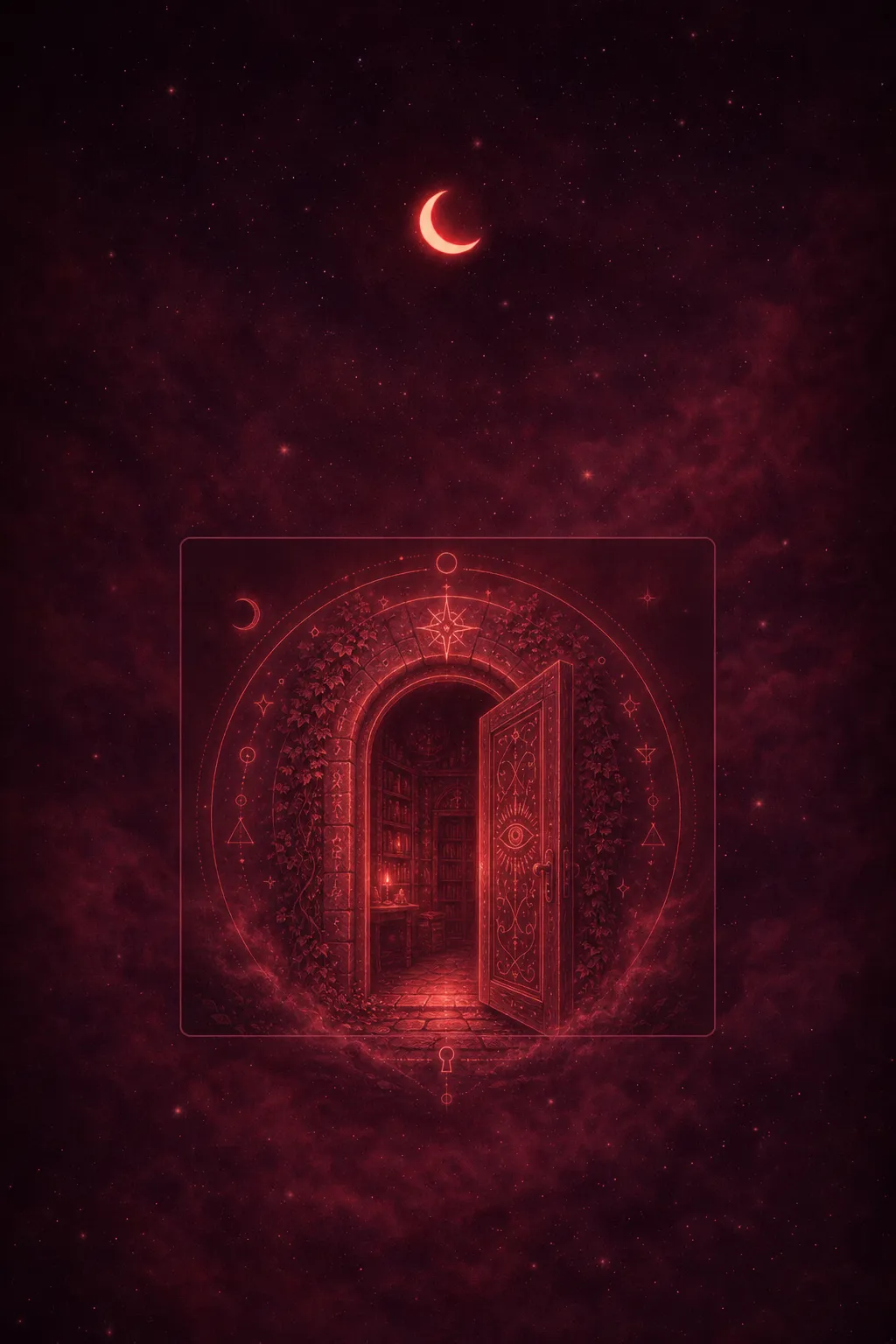

Dreaming of a secret room typically means you are discovering hidden aspects of yourself—repressed emotions, untapped talents, or forgotten memories—that your subconscious mind is now ready to explore, much like dreams of water reveal inner depths, suggesting personal growth, self-revelation, or the need to confront something you have long kept locked away from your own conscious awareness.
In under a minute you could read what your exact dream means for you, and see a picture of it. Free.
You read what it can mean. But what did yours mean?
General meanings stop here. In the free app, tell Dream Book your exact dream and get a reading that actually makes sense for you.


A dream still on your mind? Get your personal reading.
Describe your dream in a line or two. In seconds you get a reading of your exact dream, a picture drawn from your own words, and every symbol explained.
Free. No sign-up. Takes 10 seconds. Your dream stays private.
0%
Analyzing your dream…
Something went wrong. Please try again in a moment.
Your dreams deserve more than a dictionary
Common Secret Room Dream Scenarios
The most frequently reported version — stumbling upon a room in your home that you never knew existed — tends to arrive during periods of genuine transition: a career shift, a relationship change, or simply the quiet pressure of modern life urging you toward growth. That surge of wonder mixed with surprise is your mind signaling untapped potential or a life area that has only recently become available to you. Closely related is the image of a concealed door or hidden passage leading to the space; here the emphasis falls on readiness — something was deliberately closed off, and your psyche is now willing to look.
- An ominous or forbidden room: Dread flooding through the dream points to repressed fear, unresolved tension, or a problem you have been sidestepping. Anxiety about what self-awareness might actually reveal is a very common modern pressure, and this scenario voices it directly — not unlike the helpless exposure captured in dreams of being chased.
- A room full of objects or treasures: Pay attention to what fills the space — furniture, old belongings, forgotten tools. The contents identify a neglected resource, memory, or skill set waiting to be reclaimed.
- An entirely empty room: Ambivalence is the keynote here — open potential on one reading, a private sense of lack or hollowness on another.
- A person hiding inside: Shock or unease signals a disowned part of yourself, or a relationship dynamic quietly kept out of sight.
- Unable to find the room again: Waking with that frustrated, grasping feeling reflects a perceived loss of insight or the worry that a real opportunity has slipped through your hands.
What this dream could look like
Tap an image to open it full screen
Example images. Only you can see what you write in Dream Book.
What Psychology Says About the Secret Room
In mainstream psychology, the house is one of the mind's most reliable stand-ins for the self, and a hidden room inside it points directly to material that lives outside conscious awareness. Discovering that room with a rush of wonder suggests untapped potential — skills, desires, or capacities that have quietly been waiting for you to claim them. When the feeling tips toward unease, the room more likely holds defended content: old grief, a shelved ambition, or an aspect of identity you have kept carefully out of view, much the way a basement in dreams tends to surface what has been stored below everyday awareness.
But what does your version mean?
Modern life adds its own pressure to this image. When schedules are overloaded and the sense of control feels thin, the secret room can arrive as a symbol of something unresolved — a problem gathering dust in a corner of your life that you haven't faced yet. Dreams of being chased share a similar anxiety signature, where something unacknowledged presses urgently for attention. From a broadly Christian-influenced perspective, that concealment can also carry a moral weight: the private self versus the public face, the question of whether what is hidden could bear the light. Either way, the emotional charge the room carries on waking is your clearest clue to which reading applies.
- Positive affect on waking — points toward undiscovered capacity and readiness for a new phase of growth.
- Dread or unease — suggests repressed emotion, an avoided conflict, or a life area that needs honest attention.
- Ambivalence — reflects the real tension between the comfort of compartmentalization and the pull toward greater self-knowledge.
General meanings end here. Read your own dream.
Describe your dream in a line or two. In seconds you get a reading of your exact dream, a picture drawn from your own words, and every symbol explained.
Free. No sign-up. Takes 10 seconds. Your dream stays private.
0%
Analyzing your dream…
Something went wrong. Please try again in a moment.
Your dreams deserve more than a dictionary
Every dream you log starts to connect.
Dream Book keeps your dreams in one place and reveals the threads between them over time — your private dream journal. Free to start.
Cultural and Traditional Readings of the Secret Room
Across Anglo popular dream literature, the idea that a house represents the self has become so firmly established that it functions almost as folk wisdom — something readers absorb from self-help books, online forums, and casual conversation long before they ever open a psychology textbook. Within that tradition, a hidden room naturally reads as the part of yourself you have not yet claimed: a talent left dormant, a feeling pushed aside, or a chapter of personal history quietly waiting behind a closed door. The cultural shorthand here is powerful precisely because it is so widely shared; many dreamers arrive at a meaning almost instinctively, without formal study.
Was yours a sign? Find out.
For those who move in US Christian circles, the image carries an additional layer. Scripture speaks repeatedly of what is done or held "in secret" and of a God who sees the hidden interior of the heart — a framing that can make the undiscovered room feel less like a neutral psychological space and more like an invitation to honest self-examination, a prompt to bring concealed struggles or unacknowledged gifts into the light rather than leave them sealed off.
A darker cultural current also runs through these dreams, drawn from Gothic and haunted-house storytelling. In that tradition, a secret room suggests buried family secrets, inherited trauma, or something deliberately walled away — not unlike the way dreams of being chased channel the feeling that something unresolved is closing in. This resonates with a distinctly modern anxiety: the unsettling suspicion that self-knowledge and control are incomplete, that life's pressures may eventually force open rooms we have spent years keeping shut. Whether the feeling on waking is wonder or dread often signals which of these cultural readings your own dream is echoing.
Spiritual Meanings of the Secret Room Dream
In a Christian reading, the secret room resonates with the biblical idea that God searches every hidden corner of the heart — Proverbs 20:27 describes the human spirit as a lamp the Lord uses to examine the innermost parts. Dreaming of an undiscovered room can therefore feel like a quiet, spiritual summons: an invitation to bring what has been concealed into the light rather than leave it sealed behind a closed door. For believers carrying modern anxiety about self-control or personal direction, the dream may arrive as a nudge toward honest self-examination — a reminder that growth requires acknowledging the parts of yourself you have been reluctant to enter.
A bad dream isn't a bad sign.
Beyond explicitly Christian frameworks, many spiritually minded dreamers interpret the hidden room as a sign that the soul holds reserves of purpose or calling not yet acted upon. The unease that sometimes accompanies the discovery mirrors the tension between the comfort of the familiar and the cost of genuine transformation — not unlike the sinking dread many people report when dreaming of being chased, where avoidance itself becomes the source of fear. Rather than treating that dread as a warning, this tradition encourages the dreamer to read it as sacred discomfort — the kind that precedes real change.
- Revelation and accountability: the room as a prompt to examine what you have hidden from yourself or others.
- Unrealized calling: unused space as a spiritual metaphor for gifts or purpose left dormant.
- Sacred discomfort: the anxiety of discovery reframed as a necessary step toward spiritual wholeness.
Related Dream Meanings
common dreams
Door Dream Meaning: Opportunities, Transitions & Choices
5 min read

nightmares
Being Chased Dream Meaning: Anxiety & Avoidance
5 min read
common dreams
Dreaming of Basement Meaning: What Your Subconscious Reveals
5 min read

common dreams
Big Waves Dream Meaning: Emotions & Loss of Control
5 min read

common dreams
Dreaming of Dark Water Meaning: What Your Dream Reveals
6 min read
common dreams
What Does Dreaming About a Maze Mean? Dream Interpretation Guide
6 min read

common dreams
What Does It Mean to Dream About Getting Fired? Dream Interpretation
5 min read

common dreams
Beach: Meaning and Interpretation
6 min read
Practical Takeaways: What to Do After This Dream
Because the secret room so reliably surfaces during stress, overload, or stagnation, the most useful first step is simply to ask yourself what area of your life feels locked off right now. Is there a skill you have quietly shelved, a conversation you keep avoiding, or a creative project that never quite gets started? Jotting down a single honest answer in a notebook the morning after the dream — before the day's noise takes over — can turn a fleeting image into a concrete prompt for change.
But what does your version mean?
- Map the emotion, not just the image. Did the room feel threatening or inviting? Dread points toward something you may be avoiding; wonder points toward something worth pursuing. Let the feeling guide your next move.
- Pick one small door to open. You do not need a grand life overhaul. Choose one modest action — a conversation, a sign-up, a threshold you have been hesitating to cross — and take it within a week.
- Check your stress load. If anxiety dominated the dream, treat it as a signal to audit your current commitments. Hidden-room anxiety often tracks real feelings of lost control; scaling back one obligation can bring noticeable relief. Dreams dominated by a sense of being pursued or cornered frequently share this same stress signature and deserve the same honest audit.
- Revisit the dream in a few weeks. Recurring secret-room dreams tend to fade once the underlying issue is acknowledged. If the dream persists, that is useful data — something still wants your attention.
One dream is never the whole picture.
The free app remembers your dreams, draws them, and connects the threads over time — so the next one means even more. Free to start.
People Also Ask
A secret room typically represents hidden aspects of yourself — unexplored talents, suppressed emotions, or forgotten memories. Discovering it signals personal growth and self-awareness. It suggests your subconscious is inviting you to examine parts of your inner world you have long ignored, avoided, or kept locked away from conscious thought.
Rooms generally represent different compartments of the mind or areas of your life. A bedroom may reflect intimacy, a basement fear or the unconscious, and an attic old memories. Much like <a href="/dream-dictionary/water/">dreaming of water</a>, the condition, size, and feeling of the room all add meaning, revealing how you truly feel about that area of your inner or outer life.
Finding a hidden space or secret suggests you are ready to confront something previously concealed — perhaps a truth about yourself or others. It can signal a breakthrough moment, where buried potential or unresolved feelings are finally surfacing. The dream encourages you to embrace discovery rather than retreat from what has been hidden.
Spiritually significant dreams tend to feel vivid, unusually calm, or carry a strong sense of meaning upon waking. Recurring imagery, a clear message, or an unmistakable feeling of guidance are common signs. If a secret room dream leaves you with a pressing sense of urgency or moral reflection, many believe it carries a deeper spiritual message.
Curious what your dream would look like?