
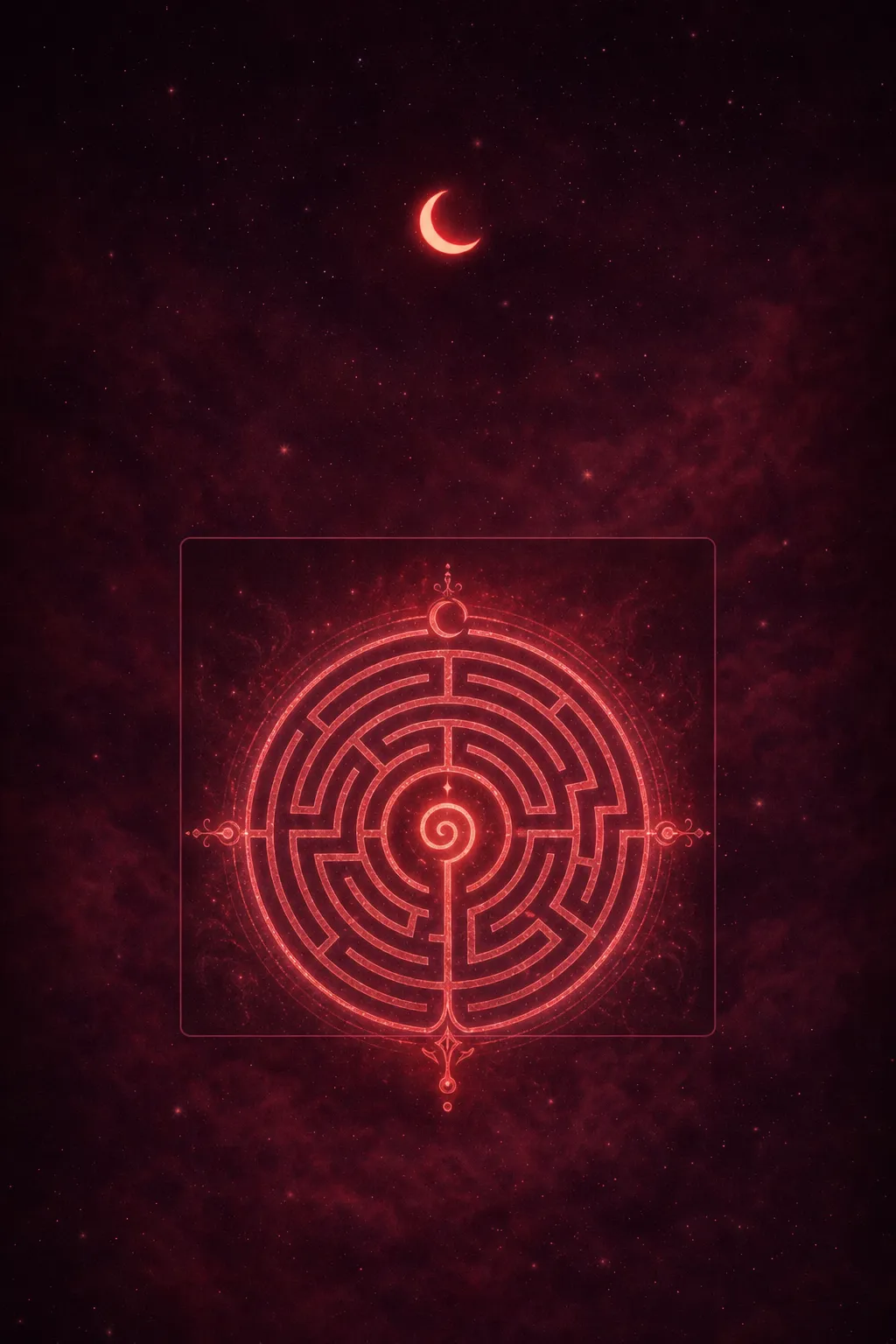

Dreaming about a maze typically means you feel confused, trapped, or overwhelmed by a complex situation in waking life, as your subconscious uses the winding, dead-end paths to reflect a sense of lost direction, a difficult decision, or an emotional struggle you are working hard to navigate and ultimately escape.
In under a minute you could read what your exact dream means for you, and see a picture of it. Free.
A dream still on your mind? Get your personal reading.
Describe your dream in a line or two. In seconds you get a reading of your exact dream, a picture drawn from your own words, and every symbol explained.
Free. No sign-up. Takes 10 seconds. Your dream stays private.
0%
Analyzing your dream…
Something went wrong. Please try again in a moment.
Your dreams deserve more than a dictionary
Common Maze Dream Scenarios and What They Mean
The specific shape your maze dream takes matters enormously. The most widespread version — wandering lost with no exit in sight — mirrors real-life overwhelm: a job situation, relationship, or decision that feels inescapable no matter which way you turn. By contrast, finding the way out or reaching the center is a hopeful sign, suggesting you are close to a genuine breakthrough and beginning to trust your own judgment again. If the dream ends with you repeatedly hitting dead ends, your sleeping mind may be signaling that the strategies you have been relying on simply are not working — a nudge to try a completely different approach rather than doubling down on the same route. Feelings of being cornered can also surface in dreams of teeth falling out, another classic symbol of lost control, or in dreams of falling, where the ground itself refuses to hold.
- Being chased through the maze: Combines the pressure of a pursuer with the confusion of the labyrinth. Much like other chase dreams, this points to avoidance — a fear or responsibility you are running from rather than confronting.
- Calmly walking a hedge or garden maze: The relaxed tone shifts the meaning; this often reflects quiet, contemplative processing of life choices rather than crisis.
- Viewing the maze from above: A strong signal of regained perspective and control — you are stepping back to see the bigger picture instead of reacting turn by turn.
- Walls that shift or a maze that never ends: Speaks to the modern anxiety of living under constantly changing rules — at work, in relationships, or during major life transitions — where stable ground feels impossible to find.
What this dream could look like
Tap an image to open it full screen
Example images. Only you can see what you write in Dream Book.
What Your Mind Is Working Through
From a psychological standpoint, dreaming of a maze is a direct projection of cognitive overload — the mind visualizing its own stuck state. When waking life piles on competing demands (career pressure, relationship tension, financial uncertainty), the subconscious renders that tangle as physical corridors with no clear exit. Psychologists recognize this as the brain's attempt to process decision paralysis: you cycle through options at night because you can't resolve the problem by day. The maze becomes a kind of internal rehearsal space, emotionally charged with the anxiety, frustration, and isolation you may be suppressing during waking hours — feelings that also surface in dreams about losing teeth, another classic symbol of helplessness and lost control.
But what does your version mean?
The control dimension is equally significant. Losing your bearings inside a maze reflects a deeper fear of losing agency over your own life's direction — a feeling that circumstances, or even other people, are steering you rather than the other way around. This connects naturally to dreams of being chased, where external pressure overrides personal choice. A sudden falling dream carries a similar shock of lost footing, underscoring how the sleeping mind returns repeatedly to themes of control and direction. From a broadly Christian-influenced perspective, this loss of direction often stirs a spiritual undertow: a quiet sense that one has strayed and needs reorientation toward purpose or calling, not just a practical exit.
- Avoidance loops: repeatedly hitting dead ends may signal that you are circling the same problem without changing your approach.
- Transitional identity: mazes frequently appear during major life shifts — new roles, endings, or periods of self-questioning — when the path forward is genuinely unformed.
- Suppressed determination: the emotional tone isn't always dread; the drive to keep searching suggests an underlying resilience the waking mind may be underestimating.
Every dream you log starts to connect.
Dream Book keeps your dreams in one place and reveals the threads between them over time — your private dream journal. Free to start.


Cultural and Traditional Readings of the Maze Dream
Across Western tradition, the maze carries deep symbolic weight rooted in the ancient Greek myth of the Cretan Labyrinth — a structure built not to guide but to trap, housing the Minotaur at its center. That foundational image has shaped how English-speaking cultures instinctively interpret maze dreams: as an encounter with something dangerous and hidden within oneself, a fear that must be faced before any exit is possible. Folk wisdom inherited from this tradition treats the maze as a test of character — those who panic fail, while those who reason carefully find the thread back to safety.
Was yours a sign? Find out.
Within a broadly Christian cultural frame, the maze resonates with the biblical theme of wandering in the wilderness — a season of disorientation that precedes clarity and renewal rather than signaling permanent defeat. From this perspective, feeling lost in a dream maze is not a bad omen but a call to patience and trust. Modern American folk psychology has absorbed this notion, blending it with a self-help ethos: the maze represents a growth challenge, and the urge to flee a threatening situation gives way, ideally, to the courage to keep moving forward. Dreams of losing all footing and control share this same cultural undertone of surrender to forces larger than oneself, while visions of being caught in a carefully constructed trap echo the maze's oldest folk meaning: that some snares are built by others, and escaping them demands awareness as much as effort.
- Ancient myth: The labyrinth as a confrontation with inner fears that must be faced, not outrun.
- Christian folk tradition: Maze-like wandering as a purposeful wilderness season leading to growth.
- Modern anxiety culture: The maze as a symbol of systemic overwhelm — feeling steered by forces (workplaces, systems, institutions) beyond personal control.
- Self-knowledge angle: Reaching the center is traditionally read as a sign of earned self-awareness, not just luck.
The Spiritual Meaning of a Maze Dream
Spiritually, a maze dream can speak to the soul's search for direction when human reasoning alone falls short. Within a Christian framework, the image echoes Proverbs 3:5–6 — the call to trust God's guidance rather than leaning entirely on your own understanding. When every corridor looks identical and no exit is visible, the dream may be nudging you toward a posture of surrender rather than sheer willpower. Psalm 23:4's image of walking through deep darkness without fear captures the same tension: the path is genuinely obscure, yet faith insists a way through exists.
Beyond formal religion, many people today encounter the maze as a symbol of spiritual pilgrimage — the ancient practice of walking a labyrinth as a meditative act, moving inward toward the self or toward the divine. Where a dream of being chased often signals fear-driven flight, the maze dream invites something quieter: a willingness to slow down, pay attention, and trust that the turns themselves carry meaning. Modern anxiety makes that stillness feel counterintuitive — every instinct says to move faster — but the spiritual read suggests the confusion may be purposeful, a season of formation rather than failure. This disorienting quality is also present in falling dreams, where loss of control similarly becomes an invitation to examine what you are gripping too tightly.
A bad dream isn't a bad sign.
- Loss of control as invitation: spiritually, hitting a dead end can signal the need to release the illusion of total self-sufficiency.
- The center as transformation: reaching the heart of the maze often represents a moment of hard-won self-knowledge or renewed faith — a destination not unlike the resolution sought in dreams of death, which many traditions read as symbolic rebirth rather than literal ending.
- Darkness as transition: walking an unclear path mirrors classic spiritual "dark night of the soul" imagery — disorienting, but ultimately a passage rather than a dead end.
Related Dream Meanings

body health
Teeth Falling Out Dream: Anxiety, Loss & Vulnerability
5 min read
common dreams
Falling Dream Meaning: Insecurity, Fear & Loss of Control
5 min read
nightmares
Being Chased Dream Meaning: Anxiety & Avoidance
5 min read

animals
Spiders Dream Meaning: Fear, Creativity & Entrapment
5 min read

nightmares
Death Dream Meaning: Transformation, Loss & Change
5 min read

common dreams
Cleaning: Meaning and Interpretation
5 min read

common dreams
Dream of Riding a Bike: Meaning and Interpretation
5 min read

common dreams
Praying: Meaning and Interpretation
6 min read
What to Do After a Maze Dream
Because maze dreams are so closely tied to decision paralysis and the feeling that life has become unmanageably complex, the most useful first step is a simple audit of your current stressors. Grab a notebook and list every open loop competing for your attention — unresolved work projects, stalled conversations, pending decisions. Seeing those items on paper often reveals that the "maze" is smaller than it felt at 3 a.m., and it gives you something concrete to act on rather than something abstract to dread.
Next, focus on regaining a sense of control in one specific area rather than trying to solve everything at once. Maze dreams tend to recur when we keep cycling through the same mental corridors — a pattern similar to dreams of being chased where avoidance keeps the tension alive. That same stuck, cornered feeling can surface in falling dreams or even in dreams about teeth falling out, all signaling that your mind is processing a loss of grip on your circumstances. Break that loop by committing to a single, small, irreversible choice in the area where you feel most stuck. Forward motion in one corridor — even a modest step — signals to your nervous system that exits do exist.
But what does your version mean?
- Map your pressure points: write down the top three decisions or situations draining your mental energy right now.
- Shrink the problem: identify the one next action you can take within 24 hours, however small.
- Rest intentionally: cognitive overload worsens with sleep deprivation — protect your sleep to reduce the dream's intensity.
- Talk it through: sharing the real-life tangle with a trusted friend, counselor, or pastor can surface exits you genuinely cannot see alone.
One dream is never the whole picture.
The free app remembers your dreams, draws them, and connects the threads over time — so the next one means even more. Free to start.
People Also Ask
A maze typically symbolizes confusion, life challenges, or a complex situation you are trying to navigate. It reflects feelings of being lost, overwhelmed by choices, or searching for direction. Spiritually, it can represent your inner journey toward self-discovery, urging you to trust your instincts and persist through difficulty.
Dreaming of being stuck in a maze suggests you feel trapped or unable to find a solution to a real-life problem. It often mirrors anxiety, indecision, or frustration. This dream encourages you to pause, reassess your approach, and consider seeking guidance rather than continuing down paths that lead nowhere.
A spiritually significant warning dream tends to feel vivid, emotionally intense, and unusually memorable upon waking. Recurring themes, a strong sense of urgency, or a feeling of profound clarity are common signs. Reflecting prayerfully on the imagery and seeking wise counsel can help you discern whether the message carries deeper meaning.
Dreaming of maize or corn generally symbolizes abundance, fertility, growth, and prosperity. It often signals that hard work will soon bear fruit or that a period of nourishment and reward is approaching. Rotting or withered maize, however, may warn of missed opportunities or concerns about financial or personal security.
Curious what your dream would look like?