
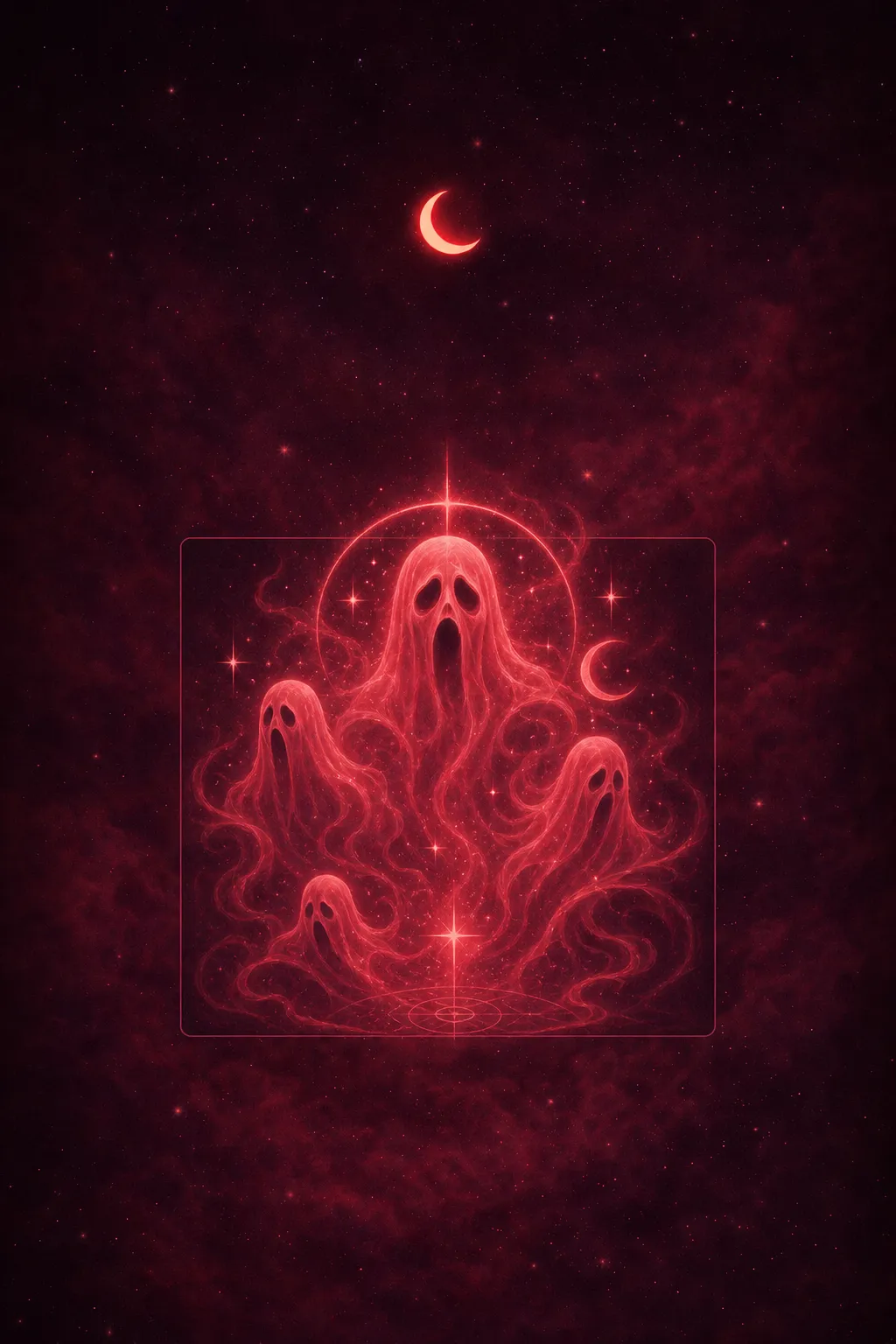

Dreams about ghosts often symbolize unresolved issues or emotions. They may reflect past experiences or feelings that need to be addressed in your waking life.
In under a minute you could read what your exact dream means for you, and see a picture of it. Free.
Bad dream? See exactly what you dreamed — turned into a picture.
Just describe it and Dream Book paints your dream as a real image, plus a reading of what it means for you. Free, and it takes under a minute.


A dream still on your mind? Get your personal reading.
Describe your dream in a line or two. In seconds you get a reading of your exact dream, a picture drawn from your own words, and every symbol explained.
Free. No sign-up. Takes 10 seconds. Your dream stays private.
0%
Analyzing your dream…
Something went wrong. Please try again in a moment.
Your dreams deserve more than a dictionary
Common Ghosts Dream Scenarios
Dreaming of Ghosts Chasing You
Picture yourself running through a shadowy corridor, breaths quickening as you feel the chilling presence of a ghost hot on your heels. This scenario often symbolizes unresolved fears and emotional baggage that haunt you in waking life. You might be grappling with past traumas or relationships that still cast long shadows over your current path. If you also find yourself being chased in your dreams, it’s worth exploring what—or who—you’re trying to escape. The ghost in this context can represent parts of yourself or your past that you haven’t fully confronted. According to Jung, these specters can be aspects of your Shadow Self, urging you to acknowledge and integrate what you’ve been avoiding. The more you run, the more powerful these feelings become. Here, the chase is a reflection of your inner turmoil, an invitation to face what you fear most.A bad dream isn't a bad sign.
Encountering a Deceased Loved One
Imagine standing face-to-face with a ghost of a loved one, their eyes filled with longing or sorrow. This dream can stir a whirlwind of emotions, often tied to grief or unresolved issues. It may be your subconscious trying to process feelings of loss or the desire for closure. The presence of a deceased loved one could signify that you're still holding onto the emotional memories, urging you to work through your grief. Freud viewed such experiences as a form of wish fulfillment, where you might crave the comfort of connection with those you've lost. It’s a reminder that love transcends even death, but it can also trigger a need for healing. If you dream of someone dying or a dead relative, pay attention to the feelings that arise. They may be keys to understanding what you need to let go of or embrace. If you dream of a Dead Father, it could indicate unresolved feelings or a desire for connection to your past.But what does your version mean?
Ghosts in Familiar Places
Have you ever found yourself haunted by a ghost in a house you know well? This scenario often reflects feelings of insecurity or nostalgia tied to your past. The familiarity of the setting suggests that these ghosts symbolize old memories or unhealed experiences that linger in your mind. It’s like your subconscious is calling you to revisit those moments and learn from them. Calvin Hall's studies indicate that dreams often mirror the dreamer's current state of mind. If you're dreaming of familiar places inhabited by ghosts, it might be time to confront what those spaces represent in your life. Are there unresolved emotions tied to a past relationship? Or perhaps a fear of change? If you're curious about these feelings, consider exploring nostalgia dreams as well. These familiar spaces might hold the secrets to your emotional landscape.Was yours a sign? Find out.
Ghostly Visions While Drowning
Picture yourself submerged in water, struggling for breath, as ghostly figures loom around you. This combination of drowning and ghosts intensifies the feeling of being overwhelmed. Hartmann’s emotional processing theory suggests that dreams like this may arise from deep-seated fears or unresolved emotional turmoil, creating a scenario where you feel trapped by your own feelings. The imagery of drowning alongside ghosts can serve as a powerful metaphor for being overwhelmed by your emotions. If you're feeling like you're "going under" in your waking life, this dream may be nudging you to address those emotions before they pull you under completely. If you’ve had dreams of water or sinking, consider how those elements connect to your emotional state. They might be your mind's way of urging you to find a lifeline.What this dream could look like
Tap an image to open it full screen
Example images. Only you can see what you write in Dream Book.
Psychological Interpretation
Freud saw ghosts as manifestations of repressed desires and unresolved conflicts. In his view, these spectral figures often embody the parts of ourselves we wish to ignore or forget. Jung expanded upon this, framing ghosts as representations of our Shadow Self—the hidden aspects of our personality that we often suppress. Confronting these ghosts in your dreams can be a pathway to individuation, allowing you to integrate these repressed elements into your conscious life. Calvin Hall’s extensive content analysis of dream reports revealed that dreams featuring ghosts often relate to feelings of unresolved issues or lingering attachments. He found that these dreams frequently reflect emotional states, suggesting that your subconscious is communicating what’s left unsaid or unresolved. This aligns with Ernest Hartmann’s theory, which posits that dreams serve as a therapeutic tool, helping you process emotions and experiences that might be too difficult to face directly while awake. From a neuroscience perspective, Hobson and McCarley proposed the activation-synthesis hypothesis, which suggests that dreams arise from random neural firing in the brain. In this context, ghosts may be your mind's way of trying to make sense of those chaotic signals, weaving together memories and emotions into a narrative that’s both compelling and revealing. If you’ve been feeling anxious or unsettled, these ghostly apparitions may be your brain’s attempt to process what’s been left unaddressed. Exploring anxiety dreams can also provide additional insight into the nature of those feelings.General meanings end here. Read your own dream.
Describe your dream in a line or two. In seconds you get a reading of your exact dream, a picture drawn from your own words, and every symbol explained.
Free. No sign-up. Takes 10 seconds. Your dream stays private.
0%
Analyzing your dream…
Something went wrong. Please try again in a moment.
Your dreams deserve more than a dictionary
Every dream you log starts to connect.
Dream Book keeps your dreams in one place and reveals the threads between them over time — your private dream journal. Free to start.
Cultural & Spiritual Meaning
In Western culture, ghosts often symbolize unresolved issues, lingering regrets, or the spirits of those we wish to reconnect with. They serve as reminders of the past, urging us to confront our fears and heal. In contrast, many Eastern philosophies view ghosts as transitional beings, caught between the physical and spiritual worlds, representing the impact of unresolved karma. Ibn Sirin, an esteemed Islamic dream interpreter, believed that dreams of ghosts can signify a warning to reflect on one’s actions or a reminder of the inevitability of death. He suggested that such dreams might indicate the need for repentance or a call to mend broken relationships. Indigenous cultures often honor the spirits of ancestors, viewing them as guides rather than fearful apparitions. In these contexts, dreams of ghosts can serve as a bridge to wisdom, urging you to seek guidance from those who came before you. These diverse perspectives highlight the rich tapestry of meanings behind ghost dreams. They illustrate the universal human experience of grappling with loss, memory, and the quest for understanding. If you resonate with the idea of ancestral guidance, you might also find it helpful to explore ancestor dreams. Each of these interpretations invites you to reflect on your own experiences and beliefs.Related Dream Meanings
nightmares
Being Chased Dream Meaning: Anxiety & Avoidance
5 min read
nightmares
Dead Father Meaning - Symbolism & Interpretation
6 min read
common dreams
Water Dream Meaning: Emotions, Intuition & Growth
5 min read
nightmares
Sinking Dream Meaning: Insecurity & Loss of Control
5 min read
nightmares
Ancestors Dream Meaning: Heritage, Guidance & Roots
5 min read
nightmares
Tsunami Dream Meaning: Overwhelm, Change & Raw Emotion
5 min read
nightmares
Killing Someone Dream Meaning: Repression & Change
5 min read
nightmares
Car Accident Dream Meaning: Loss of Control & Fear
5 min read
What to Do After This Dream
If you find yourself haunted by ghost dreams, it’s a gentle nudge from your subconscious to explore what those apparitions represent. Take time to reflect on any unresolved emotions or past experiences that might be weighing on you. Journaling can be a powerful tool to articulate your feelings and begin the healing process. If this dream keeps returning, it's worth exploring with a personalized interpretation — Dream Book lets you describe your dream and ask follow-up questions to understand what your subconscious is really saying. Engaging with these dreams can lead to profound insights and growth. Understanding your ghost dream is the first step. The next is asking what it means for your life right now — that's where a personalized interpretation goes deeper than any dictionary. ---If it keeps coming back, the app helps you understand the pattern.
Log each recurring dream and the free app shows you what's underneath — calmly, over time. Free to start.
People Also Ask
Dreaming about ghosts often signifies unresolved emotions or issues from your past that need attention. They can represent aspects of yourself or relationships that you have yet to confront.
Dreams about deceased loved ones can stem from feelings of grief, longing, or unresolved issues related to that person. They may be your subconscious seeking closure or comfort.
Dreams of ghosts can be nightmares, especially if they evoke fear or anxiety. However, they can also serve as reflective experiences, urging you to face unresolved feelings.
Take time to reflect on the emotions and memories that surfaced in the dream. Journaling or discussing your feelings can provide clarity and help you process what the ghost represents.
Curious what your dream would look like?