
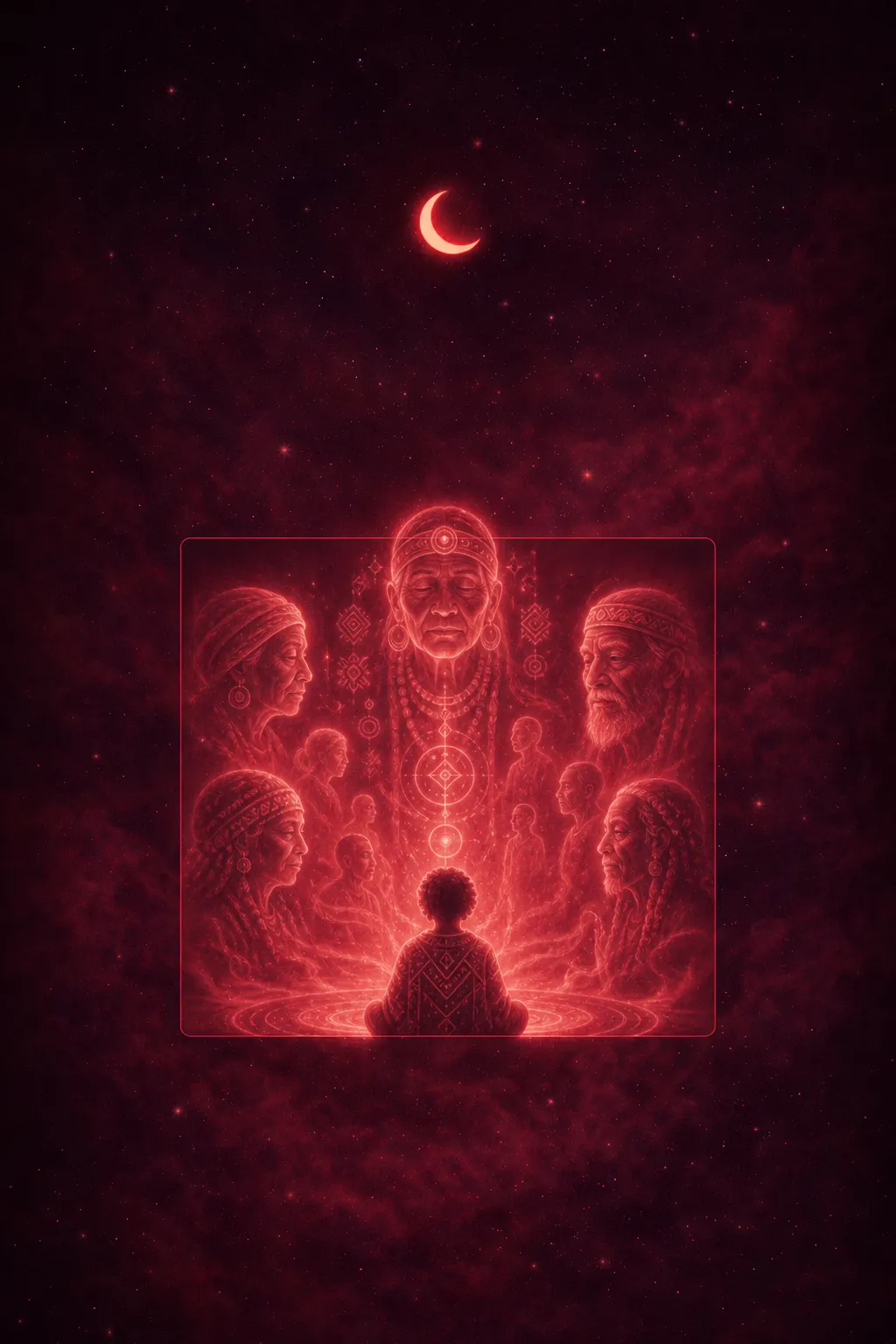

When ancestors visit you in a dream, it typically means your subconscious is drawing on inherited wisdom, unresolved family patterns, or deep cultural roots to guide you through a current life challenge, offering protection, warnings, or reassurance that you are supported by those who came before you.
In under a minute you could read what your exact dream means for you, and see a picture of it. Free.
A dream still on your mind? Get your personal reading.
Describe your dream in a line or two. In seconds you get a reading of your exact dream, a picture drawn from your own words, and every symbol explained.
Free. No sign-up. Takes 10 seconds. Your dream stays private.
0%
Analyzing your dream…
Something went wrong. Please try again in a moment.
Your dreams deserve more than a dictionary
Common Ancestor Visit Dream Scenarios
The shape of an ancestor's appearance often matters as much as the visit itself. When a deceased loved one — a parent or grandparent — shows up calm and smiling, the dream is typically the psyche's own reassurance work: grief-anxiety easing into a sense that the bond endures and that you are still "seen" by that figure. Contrast this with an ancestor who appears sad, sick, or somehow trapped; that image usually mirrors your own present distress or guilt rather than saying anything literal about the deceased, and it often surfaces when stress feels hardest to manage. Dreams that circle themes of death and loss frequently draw on ancestor figures in exactly this way.
- Ancestor speaks, advises, or warns: The content of the message reflects your own suppressed judgment projected onto a trusted authority. At a crossroads — a career shift, a relationship decision — the mind borrows a familiar voice to make its own wisdom feel credible.
- Ancestors gathered at home or a family event: A belonging signal during fragmentation; the psyche craves cohesion and stability when life feels out of your control.
- Ancestor silent, distant, or turned away: Points to unresolved emotional business or ambivalence about approval — worth sitting with rather than dismissing.
- Ancestor hands you an object, key, or heirloom: A symbolic transfer of permission or inherited strength, suggesting readiness to claim a legacy responsibility.
- An unknown or faceless ancestor: An archetypal roots motif, most common when current identity feels unmoored or you are curious about what traits and patterns you have inherited.
- Recurring visits from the same figure: The mind returns until integration happens — a signal that grief or a deferred decision still needs conscious attention.
A bad dream isn't a bad sign.
Across all these variants, the controlling thread is the tension between continuity and change: ancestors appear most vividly at thresholds precisely because that is when the pull of lineage — and the pressure to live up to it or depart from it — is felt most sharply. Dreams featuring grandparents in particular tend to amplify this dynamic, grounding the search for identity in the most accessible layer of family memory.
What this dream could look like
Tap an image to open it full screen
Example images. Only you can see what you write in Dream Book.
Psychological Reading: Ancestors as the Psyche's Inner Council
From a psychological standpoint, dreaming of ancestors visiting is the mind staging a dialogue with its own inherited architecture. Jungian thought would frame the ancestral figure as a carrier of the Self's deeper continuity — an internalized authority whose "voice" the dreamer has absorbed through family culture, repeated stories, and emotional modeling. When that figure appears uninvited in sleep, the subconscious is usually working through one of several pressure points: grief that hasn't fully processed, a major life decision demanding permission, or identity tension between who you were raised to be and who you are becoming. Dreams of a deceased loved one returning often sit at exactly this crossroads, and when the setting shifts to something like a graveyard, the psyche is signaling an even more deliberate confrontation with mortality and lineage.
Modern-anxiety framing adds an important layer. Ancestors tend to appear most urgently during transitions — a move, a career pivot, a relationship ending — precisely because the present feels ungovernable. The dreaming mind reaches backward for stable ground, summoning lineage as a psychological anchor when the future looks uncertain. This is not weakness; it is the psyche's adaptive search for continuity and control. Anxiety about change can also produce somatic dream imagery — the body-based dread familiar in classics like teeth falling out — but ancestor visits redirect that same nervous energy toward relational meaning rather than physical helplessness. There can also be a shadow side: legacy pressure, the unspoken worry that you are failing or diverging from family expectations, may project itself onto an ancestral face that judges rather than comforts.
- Grief integration: the visit allows continuing bonds with the deceased to process naturally, reducing waking anxiety about loss.
- Superego projection: the ancestor may voice internalized family rules or moral standards seeking conscious review.
- Threshold signaling: repeated visits often correlate with real-life decision points where approval or validation is psychologically desired.
- Identity rooting: the dream locates the self within a lineage, stabilizing identity during periods of rapid change.
Every dream you log starts to connect.
Dream Book keeps your dreams in one place and reveals the threads between them over time — your private dream journal. Free to start.


Cultural and Folk Traditions: Ancestors as Messengers Across Time
Across many cultures, a visit from an ancestor in a dream has long been treated as something more than private fantasy. In Anglo-American folk belief, shaped by both Protestant Christianity and older European folk memory, the dead were thought to return at threshold moments — a birth, a marriage, a brush with mortality — as if the family line itself needed to weigh in. Many families passed down stories of a grandmother appearing the night before a difficult decision, taken not as a haunting but as quiet confirmation that the living were not alone. A Christian reading tends to frame these visits as comfort rather than literal contact, emphasizing that the loved one is "at peace" and that the dream offers reassurance rather than instruction from beyond — gently sidestepping theological caution about consulting the dead while still honoring the emotional reality of the experience.
But what does your version mean?
Modern folk psychology has quietly absorbed these traditions, reframing them in the language of stress and self-knowledge. When life feels ungovernable — a career upheaval, a loss of someone close, a cross-country move — the mind reaches back to figures who represent stability and proven survival. In that sense, the ancestral visit is a culture-wide symbol of lineage-checking: an instinct to measure the present crisis against the yardstick of those who endured before. Dreams of grandparents appearing in particular carry this weight, often surfacing when the dreamer faces a choice that tests inherited values. Common folk meanings attached to such dreams include:
- Guidance at a crossroads — the ancestor signals approval or warning about a coming choice.
- Legacy reminder — a nudge to honor values or traditions the family carried forward.
- Protection during vulnerability — a sense that watchful care extends past death.
- Unfinished bonds — an invitation to reconcile with family history rather than carry it as unexamined weight.
Spiritual Reading: Watchful Care and the Weight of Inheritance
Within a broadly Christian framework — still the dominant spiritual lens for much of the English-speaking world — dreaming of a deceased loved one visiting tends to be received as comfort rather than communication in any literal sense. Scripture counsels against actively seeking contact with the dead, so many believers interpret these dreams not as genuine visitation but as God-permitted reassurance: a reminder that love outlasts death and that the dreamer is held within a chain of grace and faithfulness. The ancestor arrives not to deliver hidden knowledge but to confirm that the family's faith, its sacrifices, and its values have not been lost on you.
Was yours a sign? Find out.
For those who carry a more open spiritual worldview — including the widespread folk-Christian belief that God sometimes speaks through dreams — the ancestral visit can feel like a moment of genuine guidance at a crossroads. This reading gains particular weight when life feels ungovernable: a major career shift, a health crisis, or a fractured relationship can trigger a longing for the kind of grounded authority only an elder figure seems to hold. In that state of anxiety, the dreaming mind may dress divine reassurance in a familiar, beloved face precisely because that face is the one most likely to be trusted. Dreams of death and loss in the same period often accompany these visitations, circling the same unresolved need for continuity and control.
- Comfort at grief's edge: the dream may signal that mourning is moving toward acceptance, framed spiritually as the soul "at rest."
- A call to honor legacy: interpreted as an invitation to carry forward values — faith, integrity, resilience — rather than a warning.
- Permission at a threshold: spiritually read as the lineage releasing you to make a difficult but necessary change, much as dreams of falling can mark the psyche's surrender of control at a turning point.
Related Dream Meanings
nightmares
Deceased Loved One Dream: Closure, Messages & Grief
5 min read

nightmares
Death Dream Meaning: Transformation, Loss & Change
5 min read

people
Grandparents Dream Meaning: Wisdom, Guidance & Family
5 min read
nightmares
Graveyard Dream Meaning: Endings, Closure & New Starts
5 min read

body health
Teeth Falling Out Dream: Anxiety, Loss & Vulnerability
5 min read
common dreams
Falling Dream Meaning: Insecurity, Fear & Loss of Control
5 min read
nightmares
Dreaming of a Cemetery Meaning: What Your Dream Reveals
6 min read

nightmares
Waking Up Crying Dream Meaning: Grief, Stress & Release
5 min read
Practical Takeaways: Working With an Ancestor Visit Dream
When an ancestor appears in your dream, the most grounded first step is to treat it as a personal prompt rather than a mystery to decode. Ask yourself honestly: what major decision, transition, or loss is currently weighing on you? The dream almost always surfaces at a pressure point — a career crossroads, a family rupture, a move — and naming that pressure out loud cuts through the anxiety faster than chasing symbolic meaning alone. Other unsettling dreams that spike at high-stress moments — like teeth falling out or a sudden sense of falling — follow the same pattern: the imagery shifts, but the underlying pressure signal is the same.
- Journal the emotional tone, not just the plot. Did the ancestor feel approving, troubled, or neutral? That emotional residue is your real data — it often mirrors how you feel about the choice or change in front of you.
- Separate inherited expectation from personal conviction. If the dream carries legacy pressure — a sense of living up to something — write down which family values you genuinely endorse and which you've absorbed by default. The distinction matters for any decision you're facing.
- If grief is present, consider that dreaming of a deceased loved one is a well-documented part of normal mourning; giving yourself permission to feel comforted, without over-interpreting, is entirely reasonable.
- Take one concrete action. Look through old photographs, call a living relative, or revisit a family story you half-remember. Grounding the dream in real-world reconnection closes the loop the psyche is trying to open.
A bad dream isn't a bad sign.
The recurring theme across all these threads is agency: the dream surfaces material, but you decide what to do with it. Treating the ancestor visit as a cue for honest self-reflection — rather than a directive to obey or a fear to suppress — puts practical control back in your hands.
If it keeps coming back, the app helps you understand the pattern.
Log each recurring dream and the free app shows you what's underneath — calmly, over time. Free to start.
People Also Ask
When ancestors appear in your dreams, it often signals guidance, protection, or an unresolved family matter seeking attention. Many traditions believe the departed return to offer wisdom during difficult times — much like protective figures seen in <a href="/dream-dictionary/dogs/">dreams about dogs</a>. Pay close attention to their expressions and words, as these details usually carry the most meaningful personal message for your waking life.
Generally, ancestor visits are considered positive omens symbolizing protection, blessing, and inherited strength. However, if the ancestor appears troubled or warns you, it may signal caution ahead — similar to the urgency felt in <a href="/dream-dictionary/death/">dreams about death</a>. A peaceful, smiling ancestor typically brings comfort and reassurance, while an urgent or sorrowful presence suggests you should reflect on a current life situation.
A speaking ancestor is one of the most significant dream experiences. Their words are believed to carry direct guidance from beyond. Try to recall the message as precisely as possible upon waking. Common themes include warnings, encouragement, forgiveness, or instructions to address unfinished family business — particularly matters connected to <a href="/dream-dictionary/fire/">fire dreams</a> of passion or destruction — that still affect living relatives today.
Recurring visits from one ancestor suggest their message has not yet been fully understood or acted upon. Your subconscious may be processing grief, identity, or inherited trauma linked to that person. Reflecting on what they represented in life — their strengths, struggles, or unresolved conflicts — often reveals exactly what your dream is urging you to address.
Curious what your dream would look like?