
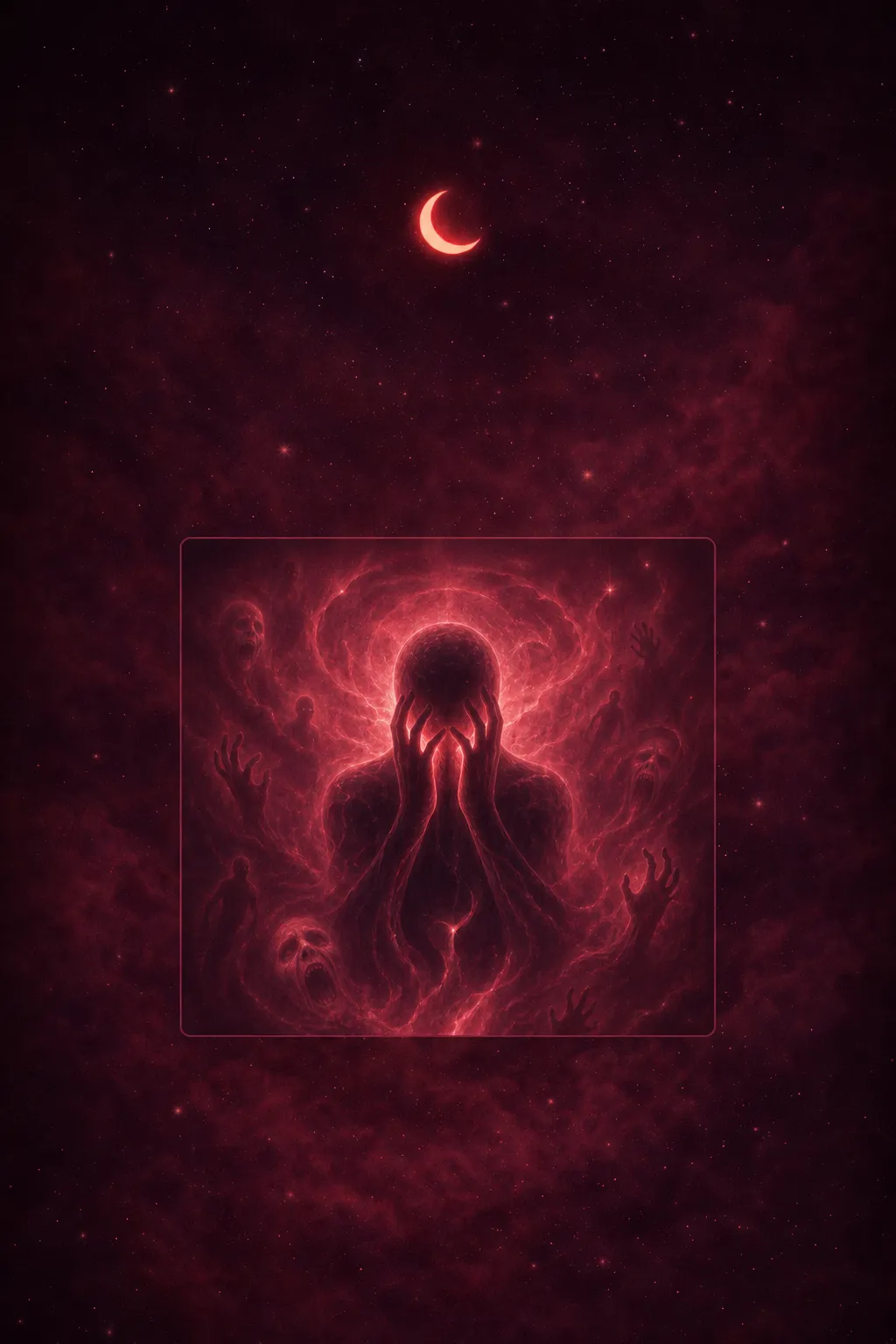

Feeling afraid in a dream typically means your subconscious is processing unresolved anxiety, stress, or emotional tension from waking life, using the safe space of sleep to confront fears you may be avoiding, and such dreams often signal that something in your daily life demands attention, courage, or a change in how you respond to perceived threats.
In under a minute you could read what your exact dream means for you, and see a picture of it. Free.
Bad dream? See exactly what you dreamed — turned into a picture.
Just describe it and Dream Book paints your dream as a real image, plus a reading of what it means for you. Free, and it takes under a minute.


Common Fear Dream Scenarios and What They Mean
The shape fear takes in a dream often points directly to the waking pressure behind it. A few patterns recur most frequently: At Dream Book we explore this symbol in depth.
- Frozen and unable to move: Being paralyzed while something threatens you reflects a felt loss of control — the sense that a real-life situation (a difficult job, a health scare, a collapsing relationship) has grown too large to manage. The body's helplessness in the dream mirrors the mind's overwhelm outside of it.
- Being chased: This is among the most reported fear dreams, and it almost always signals avoidance. Whatever is pursuing you in the dream tends to represent a problem, emotion, or conversation you have been dodging while awake. The threat grows larger the longer it goes unaddressed.
- A looming, unseen presence: Dread without a visible cause maps to diffuse, free-floating anxiety — the modern overload of uncertainty around work, finances, or health that has no single face to put to it.
- Fear for a loved one: Dreaming that harm comes to a child, partner, or family member is less a premonition than a signal of attachment anxiety — a deep awareness of how much you stand to lose, and how little you can fully protect those you love.
- Waking abruptly in terror: A nightmare that jolts you awake is the mind discharging acute stress. If this recurs, it may echo unprocessed trauma rather than everyday worry.
- Fear that resolves into escape or safety: When the dream moves through fear and out the other side, it suggests your mind is rehearsing coping — a constructive sign that you are building readiness to face a real challenge.
- Afraid but acting anyway: Feeling fear yet pushing forward within the dream reflects emerging courage — the psyche integrating a stressor rather than fleeing it, and preparing you to do the same while awake.
A bad dream isn't a bad sign.
Across all these variants, the key question is not what the dream predicts but what it reflects. Tracking which scenario repeats can become a surprisingly honest form of self-knowledge, pointing toward exactly the stressor or avoidance pattern most in need of attention.
What this dream could look like
Tap an image to open it full screen
Example images. Only you can see what you write in Dream Book.
The Psychological Reading: What Fear in Dreams Reveals About Your Inner World
From a psychological standpoint, fear in a dream is rarely a warning about something that will happen — it is a signal about something already happening beneath the surface. During REM sleep, the brain actively processes unresolved daytime emotion, and anxiety that has been pushed aside during waking hours tends to resurface with striking intensity. Researchers describe this as threat-simulation: the dreaming mind rehearses dangerous or overwhelming scenarios as a way of building emotional resilience, helping you rehearse coping before a real confrontation arrives. In this sense, a fearful dream is not a malfunction — it is the psyche doing exactly what it is designed to do.
Modern life adds considerable pressure to this process. Chronic stress from work deadlines, financial instability, or strained relationships does not simply disappear at bedtime; it bleeds into sleep architecture, heightening the brain's threat-detection systems overnight. Dreams of being chased or pursued are a classic example — the pursuer almost always represents something the dreamer is avoiding in waking life rather than confronting directly. The avoidance pattern is the key insight: whatever you flee in the dream often mirrors what you sidestep when you are awake.
- Loss of control: Fear dreams frequently spike during major life transitions — job changes, relationship shifts, health concerns — when the sense of agency feels threatened.
- Unprocessed vulnerability: Suppressed grief, shame, or uncertainty tends to find expression through fear-based imagery when conscious defenses are lowered in sleep.
- An invitation to self-knowledge: Identifying the specific fear in a dream and mapping it to a waking stressor is one of the most practical tools for emotional self-awareness and growth.
General meanings end here. Read your own dream.
Describe your dream in a line or two. In seconds you get a reading of your exact dream, a picture drawn from your own words, and every symbol explained.
Free. No sign-up. Takes 10 seconds. Your dream stays private.
0%
Analyzing your dream…
Something went wrong. Please try again in a moment.
Your dreams deserve more than a dictionary
Cultural and Traditional Readings of Fear in Dreams
Across Western folk tradition, a frightening dream was long treated as a meaningful omen rather than mere mental noise. Medieval European belief held that fear dreams could carry divine warning — a tradition echoed in the Bible, where God sometimes speaks through unsettling visions to prompt course correction rather than to predict doom. In that reading, waking up afraid is less a bad sign than an invitation to examine where life has drifted off course. Many Protestant and evangelical communities still carry a version of this view: dream fear as a nudge toward prayer, reflection, or a decision that keeps getting postponed.
But what does your version mean?
American folk culture blends this biblical thread with older superstitions — a nightmare before a big event was once read as the mind "clearing" nervous energy, almost like a pressure valve. Rather than fearing the fear itself, the practical folk wisdom was to name what scared you and move forward anyway. That instinct maps neatly onto modern anxiety framing: recurring fear dreams are widely understood today as a sign that stress has built past the point the waking mind can quietly manage, spilling into sleep and demanding attention. Dreaming of being chased is perhaps the most universally recognized example — a symbol so common it has become cultural shorthand for avoidance.
- Biblical tradition: fear in dreams as a call to reflection, not a literal prophecy of disaster.
- Folk belief: nightmares before major life changes seen as the psyche rehearsing and releasing tension.
- Modern reading: chronic dream fear treated as a signal of lost control, prompting a conscious review of waking stressors.
The Spiritual Reading: Fear in Dreams as a Call to Faith and Surrender
Within a US Christian framework, a fear-filled dream is less a prophecy than an invitation — a nudge toward examining where trust has worn thin. Scripture returns repeatedly to the phrase "fear not," and passages like Isaiah 41:10 and Psalm 23:4 frame the experience of walking through darkness not as evidence of abandonment but as the very terrain where faith is tested and deepened. Second Timothy 1:7 makes the logic explicit: a spirit of fear is contrasted with one of power, love, and self-discipline. Read spiritually, then, the dread that floods a dream of darkness or threat may reflect a waking soul under pressure — carrying more uncertainty than it has surrendered to God.
Was yours a sign? Find out.
This framing pairs naturally with modern-anxiety realities. When control slips — over a career, a relationship, a health outcome — the psyche rehearses worst cases in sleep, but the spiritual lens adds a layer: the fear may also be pointing toward an attachment that needs loosening, a worry being clutched rather than released. The dream becomes less a warning and more a diagnostic — revealing where anxiety has crowded out trust.
- Comfort over prediction: Biblical tradition encourages reading fear dreams as reassurance prompts, not literal omens.
- A test of surrender: Persistent fear in dreams may signal areas of life where the dreamer is straining to maintain control rather than accepting uncertainty.
- An invitation to reflection: Waking with fear is an opportunity to ask honestly — what am I most afraid to lose, and why?
Related Dream Meanings

nightmares
Being Chased Dream Meaning: Anxiety & Avoidance
5 min read

nightmares
Darkness Dream Meaning: Fear, Uncertainty & Hidden Self
5 min read
nightmares
Being Watched: Meaning & Interpretation
5 min read

nightmares
Dreaming About a Grave: Meaning and Interpretation
6 min read

nightmares
Being Eaten Alive: Meaning and Interpretation
5 min read

nightmares
Hugging a Dead Person: Meaning & Interpretation
5 min read
nightmares
What Does It Mean to Dream About Being Trapped
6 min read
nightmares
Dead Son Meaning - Interpretation Guide
6 min read
Practical Takeaways: Turning Fear Dreams Into Self-Knowledge
A fear dream is most useful when you treat it as feedback rather than threat. The morning after a frightening dream, resist the urge to brush it off or catastrophize — instead, sit with it briefly and ask: what waking situation carries the same emotional charge? Chronic stress and dreams of being chased often share a root in avoidance, so naming the thing you are sidestepping in real life is often the most productive first step.
- Journal the feeling, not just the plot. Write down the dominant emotion on waking — dread, helplessness, panic — and then note where that same feeling showed up in the past week of real life.
- Identify your control gap. Fear dreams frequently spike during periods of uncertainty. Pinpoint one area — work, health, a relationship — where you feel powerless, then list one small, concrete action that restores even partial control.
- Audit your stress load before bed. Screen time, unresolved arguments, and late-night worrying all elevate threat-response during sleep. A brief wind-down routine — even ten minutes of quiet reading — can reduce how intensely anxiety bleeds into your dreams.
- Notice repeating fears. If the same fear theme recurs across multiple dreams, it signals an unresolved stressor that deserves conscious attention, and possibly a conversation with a therapist or trusted person in your life.
A bad dream isn't a bad sign.
Ultimately, fear in a dream is your mind doing its job — rehearsing and processing what feels dangerous. The practical goal is not to eliminate these dreams but to close the loop they are pointing to while you are awake.
If it keeps coming back, the app helps you understand the pattern.
Log each recurring dream and the free app shows you what's underneath — calmly, over time. Free to start.
People Also Ask
Dreaming of fear usually reflects unresolved anxiety, stress, or emotional tension in your waking life. Your subconscious uses fear as a signal to draw attention to situations you may be avoiding. It can also represent self-doubt or a looming challenge you feel unprepared to face. Pay attention to what triggered the fear in the dream.
Nightmares can absolutely serve as warnings from your subconscious mind. They often highlight genuine emotional wounds, toxic relationships, or overwhelming stress you have been ignoring. While not every nightmare carries a literal prediction, recurring frightening dreams strongly suggest something in your waking life urgently needs your attention and honest reflection.
Never ignore recurring dreams, dreams featuring vivid danger, or those that leave a strong emotional residue upon waking. Dreams involving being chased, falling, or losing someone close often carry significant psychological messages. When a dream feels unusually real and stays with you throughout the day, your inner mind is almost certainly urging you to act.
A spiritually significant warning dream typically feels extraordinarily vivid, calm yet urgent, and deeply symbolic. Unlike ordinary stress dreams, these leave a lasting sense of conviction rather than panic. Common signs include repeated imagery across multiple nights, a clear moral message, or a strong inner sense that the dream carries meaning beyond ordinary subconscious processing.
Curious what your dream would look like?