
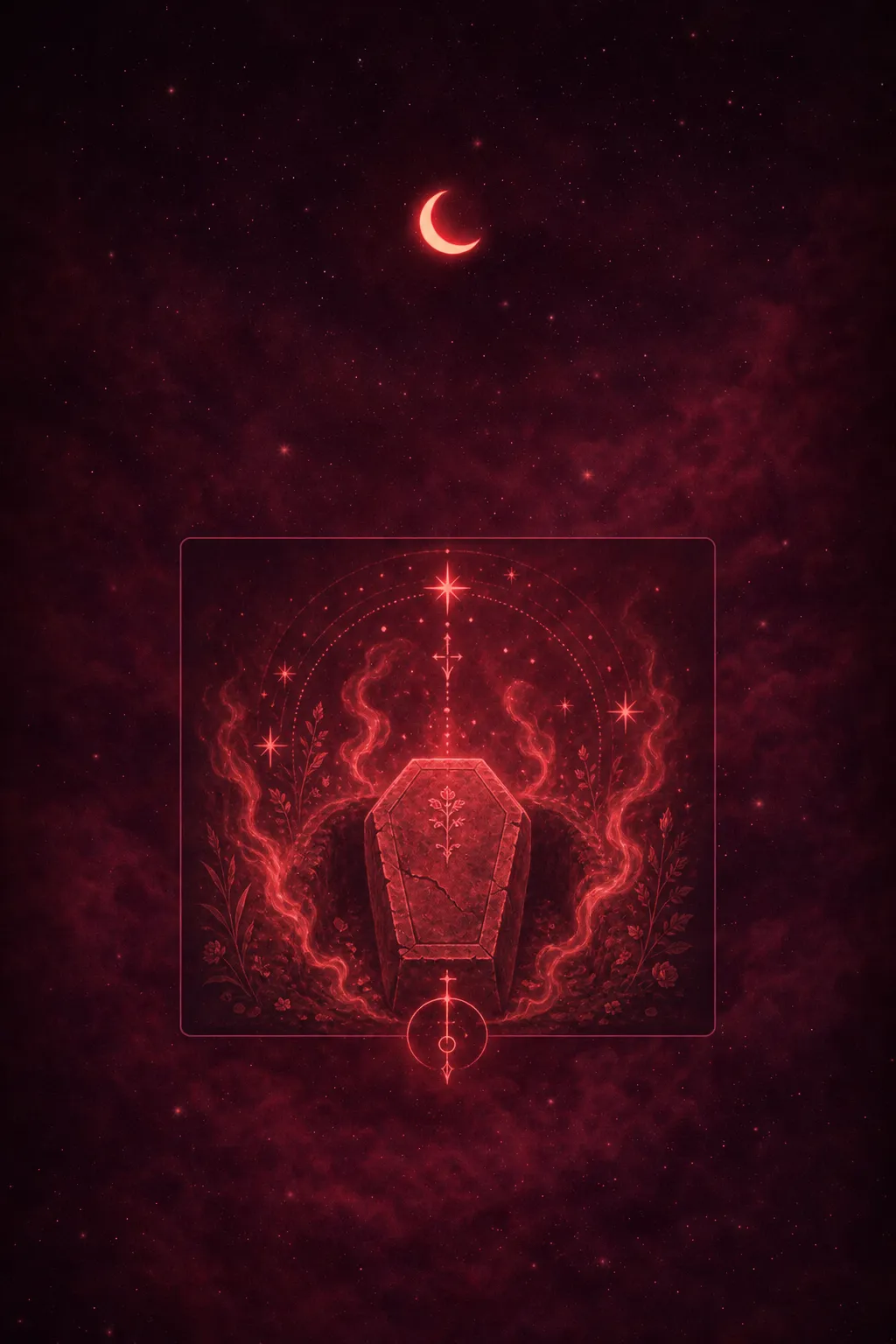

Dreaming about burial typically symbolizes the end of a phase, relationship, or emotion in your waking life, suggesting that your subconscious is processing loss, closure, or transformation — urging you to release what no longer serves you so that new growth, healing, and personal renewal can take root.
In under a minute you could read what your exact dream means for you, and see a picture of it. Free.
Bad dream? See exactly what you dreamed — turned into a picture.
Just describe it and Dream Book paints your dream as a real image, plus a reading of what it means for you. Free, and it takes under a minute.


Common Burial Dream Scenarios and What They Mean
The specific shape a burial dream takes shifts its meaning considerably. Attending someone else's burial or funeral rarely signals literal loss — more often it marks an ending the dreamer is ready, or being pushed, to acknowledge: a job, a relationship, or a chapter of life that has quietly closed. Burying a living relative or loved one tends to surface when emotional distance is growing or when that person's role in the dreamer's life is changing in ways that feel hard to name; it reflects fear of losing the bond, not prediction of death. In contrast, dreaming of being buried alive carries a sharper anxiety charge — feeling smothered by pressure, stripped of control, or suffocated by responsibilities piling up faster than they can be managed. This scenario shares psychological territory with dreams of falling, both pointing to a loss-of-control distress signal worth taking seriously. At Dream Book we explore this symbol in depth.
- Burying an object, box, or body: Points to something being deliberately hidden — a secret, guilt, or emotion the dreamer isn't ready to face openly; recurring versions can feel as relentless as dreams of being chased, with the same underlying avoidance dynamic.
- Witnessing your own burial: An ego-transition marker; an old identity or self-image is ending, often accompanying major personal reinvention, recovery, or a spiritual turning point.
- Digging up or exhuming a grave: Whatever was "laid to rest" is resurfacing — an unresolved memory or feeling demanding attention again.
- A mass or unmarked burial: Reflects fears of anonymity, being overlooked, or collective grief that hasn't been processed.
A bad dream isn't a bad sign.
Across all these variants, the central question is the same: is the dreamer genuinely finding closure, or using burial as avoidance — pressing something underground rather than dealing with it? Sitting with that distinction is often where the most useful self-knowledge begins.
What this dream could look like
Tap an image to open it full screen
Example images. Only you can see what you write in Dream Book.
What Burial Reveals About Your Inner World
From a psychological standpoint, dreaming of burial is rarely about death itself — it is the mind staging a deliberate act of closure. When life piles on transitions faster than conscious thought can absorb them, the subconscious reaches for a powerful ritual image: seal it, cover it, put it in the ground. This control anxiety is especially common in modern life, where change feels relentless and the pressure to "move on" rarely allows genuine mourning. The dream becomes the psyche's way of buying itself time — a private ceremony for whatever has ended before the dreamer was ready to let it go.
The Jungian thread here is hard to ignore: burying something in a dream often mirrors the act of pushing an uncomfortable truth — a wound, a rage, a version of yourself you no longer wish to be — into the shadow. The burial is not resolution; it is postponement. In this reading, the dream is less a farewell and more a warning flag. What gets buried without being properly grieved tends to resurface, much like the dream of death that forces confrontation with what the waking mind refuses to face. That same avoidance energy appears in dreams of being chased, where the psyche externalizes whatever it cannot yet bring itself to confront directly. A US Christian framing adds a layer: the image of going into the ground carries inherent resurrection logic, suggesting the psyche may already sense that what is being sealed away is not truly gone.
- Closure: Honoring the genuine end of a relationship, role, or life chapter.
- Repression: Hiding feelings rather than working through them — avoidance dressed as ritual.
- Transformation: The seed-in-ground motif — something must descend before new growth is possible.
- Identity shift: Burying an outdated self-image during a significant life transition.
- Grief work: The mind rehearsing loss, processing anticipatory or unresolved bereavement.
General meanings end here. Read your own dream.
0%
Analyzing your dream…
Something went wrong. Please try again in a moment.
Your dreams deserve more than a dictionary
Cultural and Traditional Readings of Burial Dreams
Anglo-American funeral customs have long treated burial as a formalized, communal act — a ritual that signals to everyone present that something is truly over. This cultural script runs deep: when burial appears in a dream, folk intuition tends to read it as the mind performing its own version of that ceremony, marking an ending with the same gravity society reserves for the graveside. The phrase "dead and buried" captures this perfectly; it means something is so finished it should never be raised again. Dreaming of burial can carry exactly that cultural weight — a signal that part of your story has been closed, witnessed, and filed away.
But what does your version mean?
Within US Christian tradition, burial also carries a quieter note of hope. The seed-into-ground imagery familiar from scripture frames burial not only as an ending but as a precondition for something new — a reading that softens the dream's somber mood without erasing it. This sits alongside the modern colloquial habit of saying we "bury" our problems, our feelings, or our mistakes — a phrase that already implies avoidance rather than resolution. That everyday metaphor is telling: culturally, burial can mean genuine closure around loss or a nervous attempt to hide what still has life in it. Dreams of teeth falling out share a similar cultural register — both tap a deep folk anxiety about things slipping irrevocably beyond our control.
- Formal closure: the dream mirrors Anglo funeral customs — marking an ending with communal, ritual finality.
- Avoidance signal: "burying" a problem is a recognized cultural shorthand for pushing it out of sight rather than facing it.
- Hopeful undertone: Christian folk tradition reads burial as transformation — what goes into the ground can return changed.
- Control and anxiety: in a culture that prizes moving on and staying productive, the dream may surface guilt about feelings that refuse to stay buried.
The Spiritual Meaning of Burial Dreams
Across Christian tradition, burial carries a quiet but persistent note of hope rather than pure loss. The image Jesus offers in John 12:24 — a seed that must fall into the ground and die before it can bear fruit — reframes what feels like an ending as the precondition for something new. Dreaming of burial through this lens invites a question the psychological reading alone cannot fully answer: what if this closing is not just inevitable, but purposeful? For many dreamers wrestling with grief or dreams involving death and finality, that scriptural undertone can shift the emotional weight considerably — from dread toward a tentative, provisional trust.
Was yours a sign? Find out.
Christian pastoral thought extends this into a practice of surrender: laying down a burden, a failed plan, or a painful season rather than carrying it indefinitely. The burial rite, in this reading, is not suppression — it is a formal, honoring release. That distinction matters, because the modern anxiety underneath so many burial dreams is precisely a fear of losing control. Spiritually, the invitation is to acknowledge that not everything can be held, and that relinquishing control to something larger than the self is its own form of strength — much as dreams of falling often surface the same terror of surrendering what we cannot keep.
- Redemptive endings: What is being buried may need to die for growth to follow.
- Surrender as self-knowledge: Recognizing limits is a spiritual act, not a defeat.
- Honoring what has passed: A rite-of-passage frame — grief observed fully makes room for renewal.
Related Dream Meanings
common dreams
Falling Dream Meaning: Insecurity, Fear & Loss of Control
5 min read

nightmares
Being Chased Dream Meaning: Anxiety & Avoidance
5 min read

nightmares
Death Dream Meaning: Transformation, Loss & Change
5 min read

body health
Teeth Falling Out Dream: Anxiety, Loss & Vulnerability
5 min read
nightmares
What Does It Mean When Someone Is Following You in a Dream
6 min read
nightmares
Someone Breaking Into Your House: Meaning and Interpretation
5 min read
nightmares
Losing Control: Meaning and Interpretation
5 min read

nightmares
Sinking Dream Meaning: Insecurity & Loss of Control
5 min read
Practical Takeaways: What to Do After a Burial Dream
Rather than brushing the dream aside, treat it as useful feedback from a mind under pressure. Burial dreams tend to surface when something unresolved is quietly draining your energy — a situation you haven't fully acknowledged as over, or a feeling you've been pushing down rather than working through. A simple first step is to write down what, or who, was buried, and honestly ask whether you've actually accepted that ending or simply stopped talking about it. Much like dreams of teeth falling out, burial imagery often signals that a loss or transition is demanding more conscious attention than you've given it.
- Name what's being buried. Jot a short list of relationships, habits, or roles that have ended in the past year. Which ones have you genuinely grieved, and which have you just shelved?
- Check for avoidance patterns. If the dream felt anxious rather than peaceful, it may signal that control — not closure — is the real issue. Notice where in waking life you're trying to manage something by suppressing it.
- Create a small ritual of release. Writing a letter you don't send, clearing out physical reminders, or having one honest conversation can move you from avoidance toward the kind of intentional ending the dream is pointing toward.
- Monitor recurring burial dreams. A one-off dream is a nudge; a repeating one is a stronger signal that the underlying grief or transition still needs your attention.
A bad dream isn't a bad sign.
Ultimately, the dream is less a warning than an invitation — your mind is ready to process something it hasn't been given space to finish.
If it keeps coming back, the app helps you understand the pattern.
Log each recurring dream and the free app shows you what's underneath — calmly, over time. Free to start.
People Also Ask
Dreaming of a burial typically symbolizes endings, letting go, or the need to move on from something in your waking life. It can represent closing a chapter, releasing old habits, grief, or transformation. Rather than signaling literal death, it usually points to significant personal change or the conclusion of a relationship, phase, or situation.
Biblically, dreaming of a funeral often represents spiritual transition, repentance, or resurrection of faith. Scripture associates death with transformation and new life. Such dreams may signal that God is calling you to bury sinful habits or old ways, preparing your spirit for renewal, growth, and a deeper walk with your faith.
Dreaming of your own death and funeral is rarely a bad omen. It most commonly reflects deep personal transformation — your subconscious processing the end of one identity and the birth of another. Similar to dreams about falling, it may also signal unresolved anxiety, fear of change, or a desire to escape current pressures and start life fresh.
Spiritually, a cemetery in a dream represents reflection, ancestral connection, and the boundary between past and present. It invites you to honor what has passed while releasing what no longer serves you. Visiting a peaceful cemetery suggests acceptance and healing, while a frightening one may reflect unresolved grief or fear of mortality.
Curious what your dream would look like?