
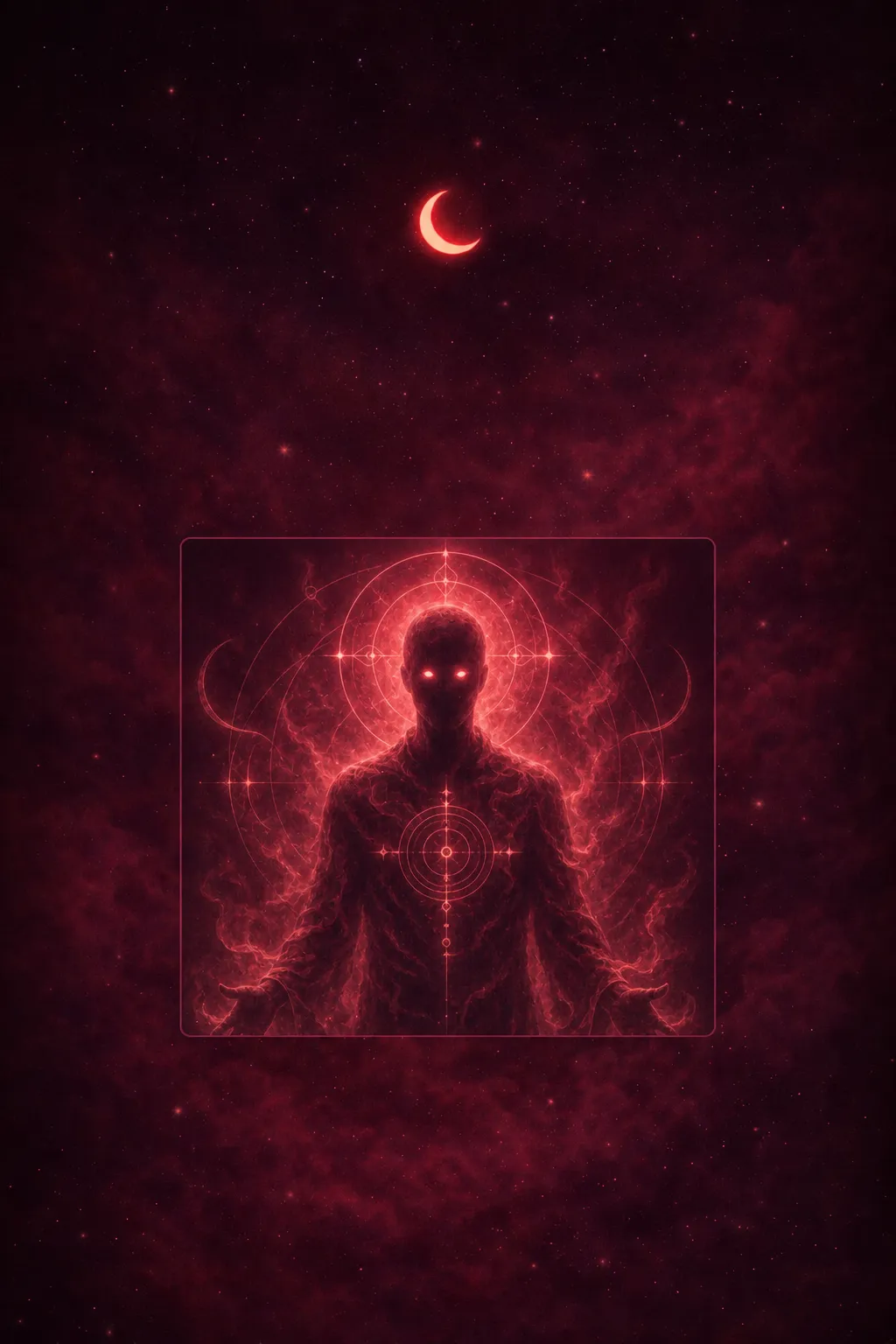

A shadow person in a dream typically represents repressed emotions, hidden fears, or unacknowledged aspects of your own personality that your subconscious is urging you to confront, and encountering one often signals a need to face inner conflict, unresolved guilt, or anxiety that has been lurking just beyond your conscious awareness.
In under a minute you could read what your exact dream means for you, and see a picture of it. Free.
Bad dream? See exactly what you dreamed — turned into a picture.
Just describe it and Dream Book paints your dream as a real image, plus a reading of what it means for you. Free, and it takes under a minute.


A dream still on your mind? Get your personal reading.
Describe your dream in a line or two. In seconds you get a reading of your exact dream, a picture drawn from your own words, and every symbol explained.
Free. No sign-up. Takes 10 seconds. Your dream stays private.
0%
Analyzing your dream…
Something went wrong. Please try again in a moment.
Your dreams deserve more than a dictionary
Common Shadow Person Dream Scenarios
The specific shape a shadow person dream takes often matters as much as the figure itself. In the most frequently reported version, the figure simply stands still and watches — hovering in a doorway or corner without moving. This surveillance quality tends to mirror a waking sense that something unresolved is keeping quiet tabs on you: a decision you're dodging, a guilt you haven't named, or the unsettling feeling of being truly seen. A closely related and deeply distressing variant involves the figure slowly approaching while you cannot move. That paralysis-plus-threat combination maps directly onto mounting real-life pressure — deadlines, relationship conflict, financial strain — where you sense the problem closing in yet feel unable to act. At Dream Book we explore this symbol in depth.
- Figure at the bedside or bedroom door: The bedroom represents rest and safety; its invasion by a shadow person often signals that everyday stress has breached your last refuge, sometimes intensified by hypervigilance after a real-world disruption.
- Being chased by a shadow person: The pursuer embodies whatever you're actively avoiding — an honest conversation, an uncomfortable truth, a task that keeps getting pushed back. The chase ends only when the avoidance does.
- The figure resolves into someone you know: When features sharpen into a recognizable face, the dream is localizing tension onto a specific relationship — unspoken conflict, distrust, or ambivalence you haven't yet addressed.
- You are the shadow person: This rarer scenario flips the dynamic inward. Feeling invisible, overlooked, or disconnected from your own identity can manifest as becoming the very figure that unsettles others in your dreams.
A bad dream isn't a bad sign.
Across all these variants, the common thread is a loss of control — either over an external situation or over parts of yourself you haven't fully acknowledged. Noticing which scenario recurs is often the first practical step toward identifying what your waking life is quietly demanding you face.
What a dream about a shadow person could look like
Tap an image to open it full screen
Example images. Only you can see what you write in Dream Book.
Psychological Meaning of the Shadow Person Dream
In psychological terms, the shadow person is almost textbook Jungian: it embodies the parts of yourself you have pushed out of conscious awareness — shame, rage, grief, or desires you consider unacceptable. Rather than letting that repressed material surface directly, the dreaming mind dresses it in an ambiguous human silhouette and places it just at the edge of your vision. The paralysis many dreamers report is telling. Feeling frozen in the presence of the figure mirrors a very real waking experience: knowing something inside you demands attention but feeling utterly unable to face it. Integration, not avoidance, is what most depth-psychological frameworks recommend — treating the figure as a messenger rather than a threat.
Modern-anxiety dynamics add another layer. Chronic stress, decision fatigue, and a persistent sense of losing control over your circumstances can condense into exactly this kind of dream image — a looming presence you cannot name, negotiate with, or outrun. Hypervigilance trained by daily overwhelm keeps the brain's threat-detection system fired up even during sleep, generating figures that feel dangerous without being identifiable. For some dreamers, the shape also carries grief or guilt: a loss or a wrong that never fully resolved takes on a vague human outline because the mind still registers it as a presence in the room.
- Repressed emotion: anger, shame, or desire the waking self refuses to claim
- Loss of control: a life situation — career, relationship, health — that feels beyond your management
- Hypervigilance: a nervous system conditioned to scan for threats, even in sleep
- Unresolved grief or guilt: an absence that the psyche still registers as a presence
General meanings end here. Read your own dream.
Describe your dream in a line or two. In seconds you get a reading of your exact dream, a picture drawn from your own words, and every symbol explained.
Free. No sign-up. Takes 10 seconds. Your dream stays private.
0%
Analyzing your dream…
Something went wrong. Please try again in a moment.
Your dreams deserve more than a dictionary
Every dream you log starts to connect.
Dream Book keeps your dreams in one place and reveals the threads between them over time — your private dream journal. Free to start.
Cultural and Folk Traditions Behind the Shadow Person Dream
Long before dream dictionaries weighed in, English-speaking cultures were already priming people to interpret a dark, human-shaped figure as something threatening and paranormal. The "old hag" tradition — the sense of a malevolent intruder pinning you down in the night — is one of the oldest folk explanations for sleep paralysis in Anglo-American discourse, and it bleeds directly into how many people narrate shadow person dreams the morning after. Modern paranormal forums and ghost-hunting media have amplified this into a full subculture: "shadow people" now carry their own lore, complete with debated subtypes (the Hat Man, the Hooded Figure), cementing the image as a fear symbol rather than a neutral one.
But what does your version mean?
Mainstream Western culture treats the shadow person almost exclusively as a paranormal or horror motif — think late-night Reddit threads and true-crime-adjacent podcasts — rather than an omen of future events in the traditional sense. That framing matters because it shapes the emotional weight dreamers bring to the experience before any interpretation begins. From a modern-anxiety perspective, the cultural script hands people a ready-made narrative of powerlessness: something unknown is watching, and you cannot act. That script can reinforce real feelings of lost control or unresolved stress rather than prompting the self-examination the dream may actually be inviting.
- Sleep-paralysis folklore: "Old hag" and intruder legends normalize the figure as external threat rather than inner symbol.
- Paranormal media: Pop-culture shadow-people lore gives the image vivid, fear-loaded expectations before the dreamer even seeks meaning.
- Anxiety overlay: Cultural framing of powerlessness can mirror — and amplify — genuine waking feelings of stress or lack of control.
Spiritual Meaning of the Shadow Person Dream
From a spiritual standpoint, encountering a shadow person in a dream is less about literal demonic presence and more about a call to inner alertness. Within the US Christian tradition, passages like Ephesians 6:12 — which acknowledges a struggle "not against flesh and blood" — and Psalm 23:4, with its assurance of comfort even in the darkest valley, offer a useful frame: the figure may signal a season of spiritual testing rather than outright threat. The takeaway many faith-oriented dreamers draw is practical — prayer, honest self-examination, and refusing to let fear have the final word, rather than rushing to label the figure as something demonic.
Was yours a sign? Find out.
Beyond explicitly religious readings, a broader spiritual perspective treats the shadow person as an uninvited but purposeful messenger. It represents unresolved energy — a part of your inner life that hasn't been faced — surfacing in a form dramatic enough to demand attention. In that light, the figure's silent, watching quality is almost instructive: it isn't attacking, it's waiting for you to stop running. This maps naturally onto modern-anxiety experience, where the feeling of losing control or being observed by something you can't name is its own kind of spiritual dis-ease.
- Test of faith: Some dreamers find strength in responding to the figure with prayer or a conscious declaration rather than paralysis.
- Invitation to attention: Non-dogmatic spirituality reads it as a nudge toward self-knowledge — face what you've avoided.
- Fear as the real obstacle: Both biblical and general spiritual frames agree that surrendering to the fear the figure generates tends to give it more power, not less.
Related Dream Meanings
nightmares
Crying Dream Meaning: Emotional Release & Hidden Stress
5 min read
nightmares
Dreaming About Guns Meaning - Dream Interpretation Guide
6 min read
nightmares
Knife Dream Meaning: Conflict, Fear & Cutting Ties
5 min read
nightmares
Plane Crash Dream Meaning: What Your Subconscious Is Telling You
5 min read
nightmares
Mirror Dream Meaning: Self-Reflection & Hidden Truths
5 min read
nightmares
Faceless Person Dream: Anxiety, Identity & Uncertainty
5 min read
nightmares
Feeling Someone in Room Dream Meaning
5 min read
nightmares
Dead Brother Meaning - Symbolism & Interpretation
6 min read
What You Can Actually Do After a Shadow Person Dream
The most useful first step is to treat the dream as a stress audit rather than a mystery to solve. Ask yourself what in your waking life feels watched, unfinished, or just out of your control — a stalled decision, a conversation you keep avoiding, a workload that never fully quiets down. Writing a few honest sentences about that tension immediately after waking tends to loosen its grip faster than trying to decode the figure itself.
- Name what you're avoiding. Shadow person dreams spike during periods of suppressed stress. Jot down one thing you've been putting off confronting — emotionally or practically — and take a single small action on it that day.
- Reality-check your threat radar. If anxiety or hypervigilance is running high, grounding techniques before bed (slow breathing, limiting news intake in the final hour) can reduce the frequency of threat-coded imagery in dreams.
- Sit with the figure instead of fleeing it. In your journal or during a quiet moment, imagine turning to face the shadow person and asking what it represents. This kind of active reflection — borrowed loosely from imagery rehearsal therapy — often reveals a surprisingly mundane fear once you stop running from it.
- Track patterns over time. If the figure recurs, note what was happening in your life each time. Recurring shadow dreams almost always cluster around the same unresolved theme, and seeing that pattern on paper makes it far harder to ignore.
A bad dream isn't a bad sign.
None of this requires special tools — just honesty and consistency. The shadow person loses most of its power the moment you stop treating it as something happening to you and start seeing it as information coming from you.
If it keeps coming back, the app helps you understand the pattern.
Log each recurring dream and the free app shows you what's underneath — calmly, over time. Free to start.
People Also Ask
A shadow in a dream often represents the hidden or unconscious parts of yourself — fears, repressed emotions, or unacknowledged desires. Carl Jung called this the "shadow self." Seeing one may signal that your mind is urging you to confront something you've been avoiding or haven't fully acknowledged about yourself.
Shadow people in dreams typically symbolize fear of the unknown, feelings of being watched or judged, or suppressed aspects of your personality. They can also represent external threats or anxieties in your waking life. Their faceless, dark form reflects something your subconscious finds threatening but hasn't yet brought into full awareness.
The shadow man is a dark, human-shaped figure that appears in dreams, often looming, watching, or chasing the dreamer. He commonly symbolizes an unresolved fear, a threatening authority figure, or your own shadow self. Many people describe him as deeply unsettling, which reflects the intensity of whatever emotion or conflict he represents.
Seeing shadow people during sleep is often linked to sleep paralysis, stress, or heightened anxiety. Psychologically, your brain may be externalizing inner fears or unresolved tensions into a visual figure. It can also occur during hypnagogic states between waking and sleeping, when the mind blends imagination with partial sensory awareness.
Curious what your dream would look like?