
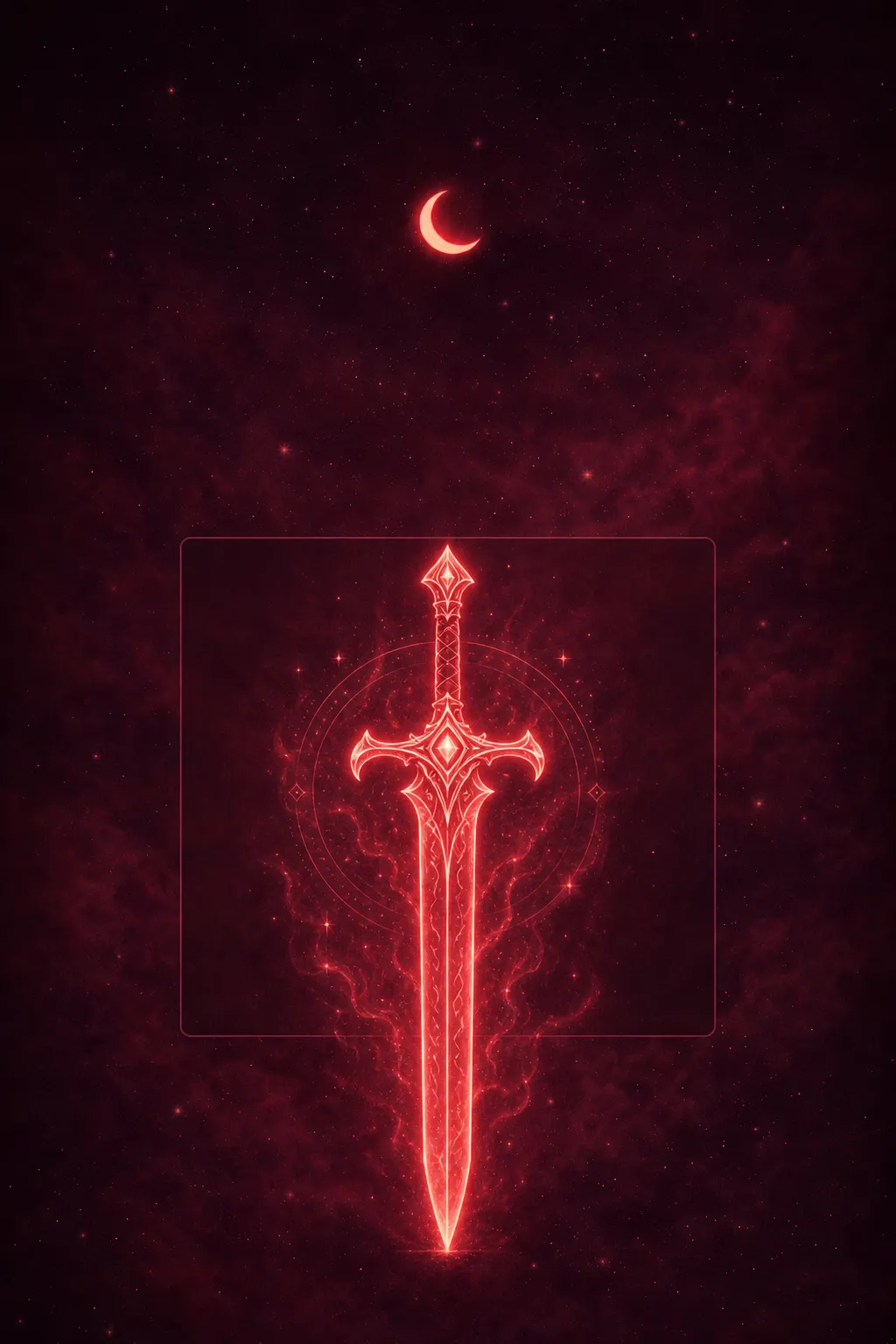

Dreaming of a sword meaning centers on power, conflict, and decisive action, as the sword symbolizes your inner strength, the need to cut through confusion or deception, a looming confrontation you must face with courage, or the authority and justice you seek to wield in your waking life.
In under a minute you could read what your exact dream means for you, and see a picture of it. Free.
A dream still on your mind? Get your personal reading.
Describe your dream in a line or two. In seconds you get a reading of your exact dream, a picture drawn from your own words, and every symbol explained.
Free. No sign-up. Takes 10 seconds. Your dream stays private.
0%
Analyzing your dream…
Something went wrong. Please try again in a moment.
Your dreams deserve more than a dictionary
Common Sword Dream Scenarios and What They Mean
The context in which a sword appears dramatically shifts its message. Holding or wielding a sword is the most frequent scenario and generally signals that you feel — or are trying to feel — in control of a difficult situation. You are claiming the authority to act decisively, whether that means ending a draining relationship, confronting a colleague, or simply drawing a firm boundary. By contrast, fighting or dueling with a sword reflects an active contest of wills in your waking life: a rivalry, a heated argument, or a negotiation where both sides are holding their ground. The outcome of the duel matters — winning suggests confidence in your position, while losing may point to real doubts about whether you can sustain the fight.
- Threatened or attacked by a sword: You feel exposed to someone else's aggression, harsh judgment, or a looming ultimatum — classic anxiety about a confrontation you sense coming but cannot yet control.
- Cut or wounded by a sword: Emotional injury is already underway — a cutting remark, a betrayal, or a decision that has caused real hurt. Dreams of seeing blood from the wound can deepen this reading toward lasting damage or sacrifice.
- Receiving a sword as a gift: Authority or responsibility is being handed to you — a promotion, a leadership role, or a moral call to take a stand you've been avoiding.
- A broken, rusted, or dull sword: You feel disarmed — stripped of the resolve, influence, or self-confidence you need to defend yourself or push forward.
- Sheathing or laying the sword down: A conscious choice toward de-escalation; you are restraining your own aggression or releasing a conflict that no longer serves you.
- A ceremonial or knighting sword: Points to a rite of passage, a formal commitment, or recognition of your earned authority — honor and duty rather than combat.
A bad dream isn't a bad sign.
Across all these variants, the sword asks the same underlying question: are you wielding your own power with intention, or is it controlling you? Modern stress dreams frequently cast the sword as a symbol of the impossible choices people face — cut ties and move forward, or hold on and keep fighting — making the dreamer's grip on the blade a vivid measure of their sense of agency.
What this dream could look like
Tap an image to open it full screen
Example images. Only you can see what you write in Dream Book.
What Your Subconscious Is Saying About Power and Control
From a psychological standpoint, a sword in a dream typically represents the mind's cutting faculty — the part of you that analyzes, judges, and separates what is true from what is noise. Carl Jung associated bladed weapons with the discriminating intellect, the capacity to make hard distinctions rather than let ambiguity fester. When modern life piles on pressure — a toxic relationship that won't end, a job that's bleeding you dry, a confrontation you keep postponing — the subconscious reaches for a symbol that embodies decisive force. The sword becomes a stand-in for the agency you feel you're missing or the boundary you're afraid to draw.
The shadow side, however, is just as telling. Like dreaming of a knife, a sword cuts in both directions: the same inner force you need to protect yourself can wound people you care about or turn inward as self-criticism and guilt. Dreams in which you drop a sword, find it rusted, or watch it shatter often surface when someone feels overwhelmed by a decision they can't bring themselves to make — anxiety about losing control masquerading as powerlessness. Suppressed anger is another common driver; the sword gives unconscious rage a shape and a name, urging the dreamer to acknowledge, rather than bury, that emotion.
- Need for control: The sword signals an urgent drive to take charge of an unresolved situation.
- Intellectual clarity: It may reflect a desire to cut through confusion and reach a clear, honest judgment.
- Unacknowledged anger: Recurring sword imagery can point to suppressed conflict seeking a healthy outlet.
- Double-edged risk: Watch for dreams where you injure yourself — these often reflect fear of harming others with blunt words or irreversible choices.
Every dream you log starts to connect.
Dream Book keeps your dreams in one place and reveals the threads between them over time — your private dream journal. Free to start.


Swords in Culture, Tradition, and Folk Belief
Western cultural tradition has long charged the sword with layered symbolic weight that shapes how dream interpreters — and ordinary dreamers — instinctively read its appearance. The most enduring image in Anglo literary heritage is the chivalric knight: think Excalibur drawn from the stone, conferring not just power but moral legitimacy. In this tradition, the sword belongs to those who earn the right to wield it through honor, duty, and the protection of the vulnerable. A sword dream touched by this archetype may reflect a felt need to act with integrity under pressure — to stand your ground because it is simply the right thing to do, not merely the expedient one.
But what does your version mean?
Justice imagery adds a second cultural register. Lady Justice carries both scales and a sword, and the pairing is deliberate: impartial judgment must ultimately have the authority to act. Dreaming of a sword in this light can signal an inner reckoning — a sense that a verdict has been reached and now demands follow-through. For many US Christian dreamers, this resonates with biblical ideas of divine discernment, where a sharp, two-edged blade divides truth from deception, connecting naturally to the cultural symbolism of bladed tools as agents of both clarity and consequence.
- "Double-edged sword" — a choice that cuts both ways, often surfacing when modern anxiety around irreversible decisions is highest.
- "Cross swords" — folk shorthand for unavoidable confrontation; the dream may be rehearsing a real conflict you have been avoiding.
- "Fall on one's sword" — self-sacrifice or accountability; the sword turned inward as an act of honor rather than aggression.
The Sword as Spiritual Truth and Divine Discernment
In the biblical tradition, a sword carries a meaning that cuts deeper than mere conflict. Hebrews 4:12 describes the Word of God as "sharper than any two-edged sword, piercing even to the division of soul and spirit" — a vivid image of truth that does not comfort so much as clarify, exposing what is real beneath what we tell ourselves. Dreaming of a sword through this lens invites reflection: are you being called to confront something you have been avoiding? The Ephesians 6 "sword of the Spirit" reframes the weapon entirely as a tool of discernment rather than destruction, suggesting that the power to cut through confusion is itself a spiritual gift.
Was yours a sign? Find out.
Jesus's striking statement in Matthew 10:34 — that he came to bring not peace but a sword — echoes the modern-anxiety experience of a dream that feels unsettling yet somehow necessary. Sometimes the sword signals that genuine growth requires an honest, even painful separation from false peace, unhealthy ties, or self-deception. This resonates with dreamers wrestling with hard decisions: the sword is not a threat but a prompt toward courageous clarity. In that sense it overlaps with dreams of a knife, though the sword's scale implies a weightier, more deliberate reckoning.
- Sword of the Spirit: a call to lean on discernment and prayer when anxiety about a major decision feels overwhelming.
- Two-edged quality: spiritually, truth that sets you free may also wound pride or illusion — both outcomes can be signs of growth.
- Difficult division: the dream may signal that maintaining false harmony is costing you spiritual integrity.
Related Dream Meanings
body health
Blood Dream Meaning: Loss, Vitality & Transformation
5 min read
nightmares
Knife Dream Meaning: Conflict, Fear & Cutting Ties
5 min read
nightmares
Being Chased Dream Meaning: Anxiety & Avoidance
5 min read
nightmares
Drowning Dream Meaning: Overwhelm, Fear & Hidden Stress
5 min read
nightmares
Dying Dream Meaning: Transformation, Fear & Change
5 min read
nightmares
Someone Dying Dream Meaning: Change & Fear of Loss
5 min read
nightmares
Dead Person Dream Meaning: Closure & Unresolved Loss
5 min read
nightmares
Dead Relative: Meaning and Interpretation
5 min read
Practical Takeaways: What to Do After a Sword Dream
A sword dream often lands at moments of real-life pressure — a decision you've been avoiding, a boundary you haven't enforced, or a confrontation you're dreading. Rather than letting that energy sit unresolved, treat the dream as a prompt to act with intention. Start by identifying the one situation in your waking life that feels like it needs a clear cut: a draining commitment, an unspoken resentment, or a choice you keep postponing. Writing it down briefly — even a single sentence — helps move it from vague anxiety into something you can actually work with.
- Name the decision. If the dream left you feeling powerful, ask what bold move you've been holding back. If it left you uneasy, consider where your words or actions may have been sharper than necessary lately.
- Check your anger honestly. The sword's double-edged quality is a useful warning: the same forcefulness that sets a healthy boundary can wound unnecessarily. Before confronting someone, draft what you want to say and read it back with fresh eyes — as if a trusted friend were checking your tone.
- Rehearse the hard conversation. Stress about standing your ground often spikes because the words feel unavailable. Practice saying the key sentence aloud; clarity reduces the fear that you'll either back down or go too far.
- Set one concrete boundary this week. Even a small act — declining a request, ending a recurring argument — builds the sense of agency the dream is pointing toward.
A bad dream isn't a bad sign.
If recurring dreams of being chased accompany your sword imagery, both patterns together may signal that you feel simultaneously threatened and capable of response — a tension worth exploring with a counselor if it persists.
If it keeps coming back, the app helps you understand the pattern.
Log each recurring dream and the free app shows you what's underneath — calmly, over time. Free to start.
People Also Ask
Spiritually, a sword represents truth, discernment, and the cutting away of negativity or illusion. Dreaming of one often signals a call to make clear decisions, defend your values, or sever harmful ties. Many traditions view the sword as a symbol of divine justice and the power of the awakened mind.
In the Bible, the sword often symbolizes the Word of God, divine judgment, and spiritual warfare. Dreaming of a sword in a biblical context may suggest God is equipping you for a spiritual battle, calling you to speak truth boldly, or warning you that a sharp, life-changing decision lies ahead.
Warning dreams from God tend to feel unusually vivid, emotionally intense, and deeply memorable upon waking. They often carry a clear moral message or sense of urgency. Recurring themes, symbolic imagery like swords or fire, and a lingering feeling of conviction after waking are common signs to pay careful attention.
Truly prophetic or precognitive dreams are considered among the rarest, where the dreamer sees a future event with striking accuracy. Shared or mutual dreams, where two people report identical dream content, are also exceptionally uncommon. Most sleep researchers acknowledge these experiences are reported but remain difficult to study scientifically.
Curious what your dream would look like?