
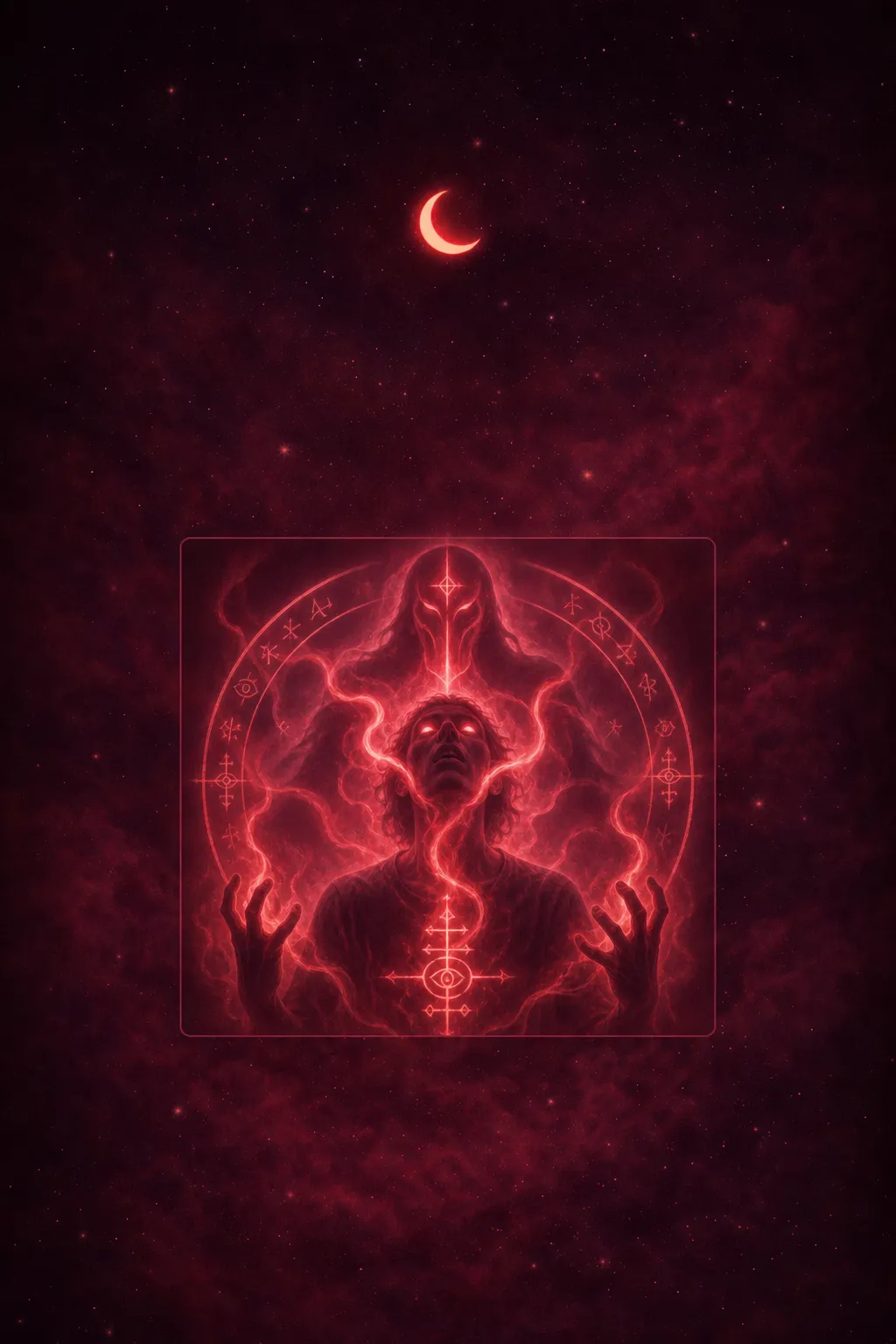

Dreaming about being possessed typically means you feel controlled by overwhelming emotions, habits, or outside influences that seem to override your own will, with your subconscious using the vivid imagery of spirit possession to signal an urgent need to reclaim personal power, set boundaries, or confront a force in your waking life that feels larger than yourself.
In under a minute you could read what your exact dream means for you, and see a picture of it. Free.
A dream still on your mind? Get your personal reading.
Describe your dream in a line or two. In seconds you get a reading of your exact dream, a picture drawn from your own words, and every symbol explained.
Free. No sign-up. Takes 10 seconds. Your dream stays private.
0%
Analyzing your dream…
Something went wrong. Please try again in a moment.
Your dreams deserve more than a dictionary
Common Spirit Possession Dream Scenarios
The specific shape the possession takes in your dream shifts its meaning considerably. When you are the one being possessed, the dream speaks most directly to loss-of-control anxiety — the sense that stress, a compulsive habit, or someone else's expectations has overridden your own will. If you feel your body moving or a voice speaking through you without your consent, pay attention: this often signals a dissociative tension between what you consciously want and a suppressed drive that is finally forcing its way to the surface. This paralysis of will shares ground with the raw helplessness many people describe in sleep paralysis dreams.
- A loved one or partner is possessed: You may be registering a real shift in their behavior — grief, addiction, burnout — that makes them feel like a stranger. The dream externalizes your helplessness about a change you cannot control in someone close to you.
- Resisting or fighting off the entity: A constructive sign. Your psyche is actively reasserting boundaries; the struggle itself reflects self-mastery in progress rather than defeat.
- Witnessing or performing an exorcism: A strong wish to purge a toxic influence, break a destructive pattern, or sever a draining relationship — a desire for a clean, definitive restoration of self.
- A child is possessed: Often reflects protective anxiety — fear that something corrupting is reaching someone vulnerable, or that your own sense of innocence is under threat.
- A house or object is possessed: The threat feels environmental rather than personal; domestic pressure or a sense of being haunted by your surroundings is being projected outward onto the space itself.
Was yours a sign? Find out.
Across all these variants, the central question the dream raises is the same: where have you felt least like yourself lately, and what — or who — has been occupying that space?
What this dream could look like
Tap an image to open it full screen
Example images. Only you can see what you write in Dream Book.
Psychological Meaning of Spirit Possession Dreams
From a psychological standpoint, dreaming of spirit possession is the unconscious mind staging a crisis of authorship. When the psyche can no longer contain a suppressed impulse — forbidden anger, buried desire, chronic guilt — it externalizes that pressure as an entity that "takes over," dramatizing what Jungian thought calls the shadow: the disowned parts of the self that return wearing a stranger's face. The sensation of being controlled from the outside is often the mind's most vivid way of saying that something inside has been denied a voice for too long, a dynamic that mirrors the helplessness found in dreams of being chased by a force you cannot reason with.
Modern life adds its own particular fuel to this imagery. Chronic overload — impossible deadlines, relentless social pressure, the blurring of personal boundaries by others' demands — registers in the dreaming mind as a hostile force colonizing your will. Identity-instability sits close by: when you are stretched across too many roles at once, the dream may ask the unsettling question who am I, really, underneath all of this? Intrusive self-reproach — the inner critic that speaks in a voice that feels almost alien — can also crystallize into a possessing presence, much like the experience that overlaps with sleep paralysis, where helplessness and an oppressive presence fuse at the boundary of consciousness.
Understood as a coping signal rather than a threat, the dream is an invitation to reclaim authorship. Key themes to reflect on include:
But what does your version mean?
- Loss of agency — whose expectations or habits are currently overriding your own choices?
- Repressed emotion — what feeling have you been refusing to acknowledge that may now be forcing its way through?
- Boundary erosion — where in waking life do you feel your sense of self being worn down by outside pressure?
- Reintegration — the possessing figure often represents a part of you that needs recognition, not exorcism.
Every dream you log starts to connect.
Dream Book keeps your dreams in one place and reveals the threads between them over time — your private dream journal. Free to start.


Cultural and Traditional Readings of Spirit Possession Dreams
In Anglo-American culture, the imagery of spirit possession arrives pre-loaded with decades of horror cinema — the spinning heads, rasping voices, and exorcism rituals of blockbuster films have given the unconscious a ready-made visual vocabulary for feeling overtaken. Halloween aesthetics and gothic pop culture have made this motif so familiar that it hovers between genuine dread and cultural shorthand, meaning a possession dream can carry real terror even when the dreamer consciously treats it as a cliché. This is worth noting: familiarity does not neutralize the anxiety the dream is processing — it simply gives it a costume.
Beneath the horror trappings lies a distinctly modern pressure point. Western, and especially American, culture places an extraordinarily high premium on individual autonomy — the idea that you are the sole author of your choices and identity. When that sense of authorship collapses under burnout, a toxic relationship, or relentless external demands, the psyche can stage the loss as an invasion, which overlaps closely with sleep paralysis experiences that carry a similar feeling of helpless intrusion. Wellness culture has developed its own secular language for the same crisis — "not being yourself," "triggered," "hijacked by anxiety" — which suggests that spirit possession dreams are the night-shift version of a very waking complaint.
- Horror media influence: film imagery shapes the dream's tone and sense of dread without necessarily pointing to the supernatural.
- Individualism anxiety: cultures that prize self-determination experience possession as a particularly acute symbol of lost control.
- Therapeutic vocabulary: "burnout," "not myself," and "triggered" are lay translations of the same core feeling the dream dramatizes.
- Folk and Christian tradition: older beliefs in literal spiritual warfare lend a moral weight to the imagery — being overtaken can feel, culturally, like a failure of character or faith as much as a failure of will.
Spiritual Meaning of Spirit Possession Dreams
Within a US-Christian frame, dreaming of possession carries echoes of the New Testament's expulsion-of-unclean-spirit narratives — not as a literal diagnosis, but as a vivid inner metaphor. The dream may be surfacing a sense of spiritual struggle: a feeling that temptation, a destructive habit, or a corrosive relationship has quietly displaced your own values and judgment. Understood this way, the possession image functions as a call to moral vigilance — an invitation to examine what influence has been allowed to take the wheel, and whether prayer, community, or honest self-examination might restore a clearer sense of direction.
The biblical contrast between unwilling possession and willing surrender is worth holding onto here. Scripture frames deliverance not as the suppression of all surrender, but as the redirection of it — yielding to what genuinely aligns with your conscience rather than what undermines it. A possession dream, then, can quietly ask: what have I been surrendering my will to, and is that something I would choose in full awareness? That question resonates whether your framework is explicitly religious or not. It shares something with the helplessness at the core of falling dreams — that gut-level sense of losing grip on your own trajectory.
A bad dream isn't a bad sign.
Modern anxiety supplies its own secular version of spiritual bondage. Many dreamers recognize the "taken over" sensation as a fairly accurate portrait of life under chronic stress, compulsive screen use, or addiction — forces that feel external even when they are internal. This overlap is worth noting:
- Stress and overwork — a schedule or expectation that has overridden your own rhythm
- Compulsive habits — behaviors that feel driven rather than chosen, a close secular cousin to the bondage imagery in possession narratives
- Toxic relational dynamics — someone else's anger, anxiety, or agenda colonizing your inner life, not unlike a haunting that never quite resolves
Related Dream Meanings
nightmares
Sleep Paralysis Dream Meaning: Helplessness & Anxiety
5 min read
nightmares
Haunting Dream Meaning: Guilt, the Past & Unresolved Fear
5 min read
nightmares
Being Chased Dream Meaning: Anxiety & Avoidance
5 min read
common dreams
Falling Dream Meaning: Insecurity, Fear & Loss of Control
5 min read
nightmares
Dead Wife: Meaning and Interpretation
5 min read
nightmares
Dead Baby Dream Meaning: Loss, Change & New Beginnings
5 min read
nightmares
Figure in Doorway Dream: Transition, Fear & the Unknown
6 min read
nightmares
Dream of Bugs Crawling on My Body: Meaning and Interpretation
5 min read
Practical Takeaways from a Spirit Possession Dream
Because this dream centers on feeling overtaken, the most useful first step is identifying what in your waking life is currently running on autopilot for you — a compulsive habit, a draining relationship, or a workload that has quietly swallowed your sense of choice. Naming the specific pressure is more productive than sitting with the dread of the imagery itself.
- Map the "possessing force." Write down what the entity felt like — cold authority, frantic energy, seductive pull. That emotional texture often mirrors a real-life dynamic: a controlling boss, an addictive behavior, or chronic anxiety. Matching the feeling to a concrete source gives you something actionable to address.
- Reclaim one small decision daily. Loss-of-control dreams tend to cluster during stretches when routine has narrowed your options. Deliberately choosing something minor — a different route, a creative outlet, a boundary you've been avoiding — can interrupt the pattern that fed the dream.
- Check for boundary fatigue. If the possession felt like an outside will overriding yours, treat it as a prompt to audit relationships or commitments where you consistently suppress your own preferences. Dreams of being haunted share this theme; both signal that something unresolved is demanding your attention.
- For faith-oriented readers, a short reflective practice — prayer, journaling, or a conversation with a pastor or counselor — can help distinguish healthy conviction from guilt that has grown disproportionate to any real wrongdoing.
Was yours a sign? Find out.
If the dream recurs or leaves you anxious into your waking hours, that persistence is itself data: it suggests the underlying tension hasn't yet been acknowledged in ordinary life, and speaking with a therapist is a straightforward, grounded next step.
Keep the ones that matter close.
The free app saves your most meaningful dreams and reads the signs across them — so a visit or a sign is never lost. Free to start.
People Also Ask
Warning dreams from God often feel vivid, urgent, and deeply symbolic. They tend to linger long after waking, leaving a strong sense of conviction or unease. Common signs include repeated imagery, a clear moral message, or an unmistakable feeling that the dream carried a purpose beyond ordinary nighttime storytelling.
These dreams are often triggered by stress, fear, trauma, or consuming disturbing media before sleep. Spiritually inclined dreamers may interpret them as internal battles between good and evil. Psychologically, they can reflect feelings of losing control, being manipulated by outside forces, or suppressing emotions that demand urgent attention — similar to dreams about <a href="/dream-dictionary/being-chased/">being chased</a>.
Recurring dreams, nightmares involving danger or loss, and dreams featuring vivid spiritual encounters deserve serious reflection. Dreams that leave you shaken, tearful, or profoundly moved upon waking often carry meaningful messages. Whether viewed spiritually or psychologically, these experiences point to unresolved conflicts, hidden fears, or important truths your subconscious is urgently communicating.
In dreams, spirit possession often manifests as loss of bodily control, speaking in unfamiliar voices, or watching yourself act against your own will. Waking with a feeling of heaviness, dread, or spiritual vulnerability may reinforce this theme. Reflect on areas of life where you feel powerless or strongly influenced by external pressures.
Curious what your dream would look like?