
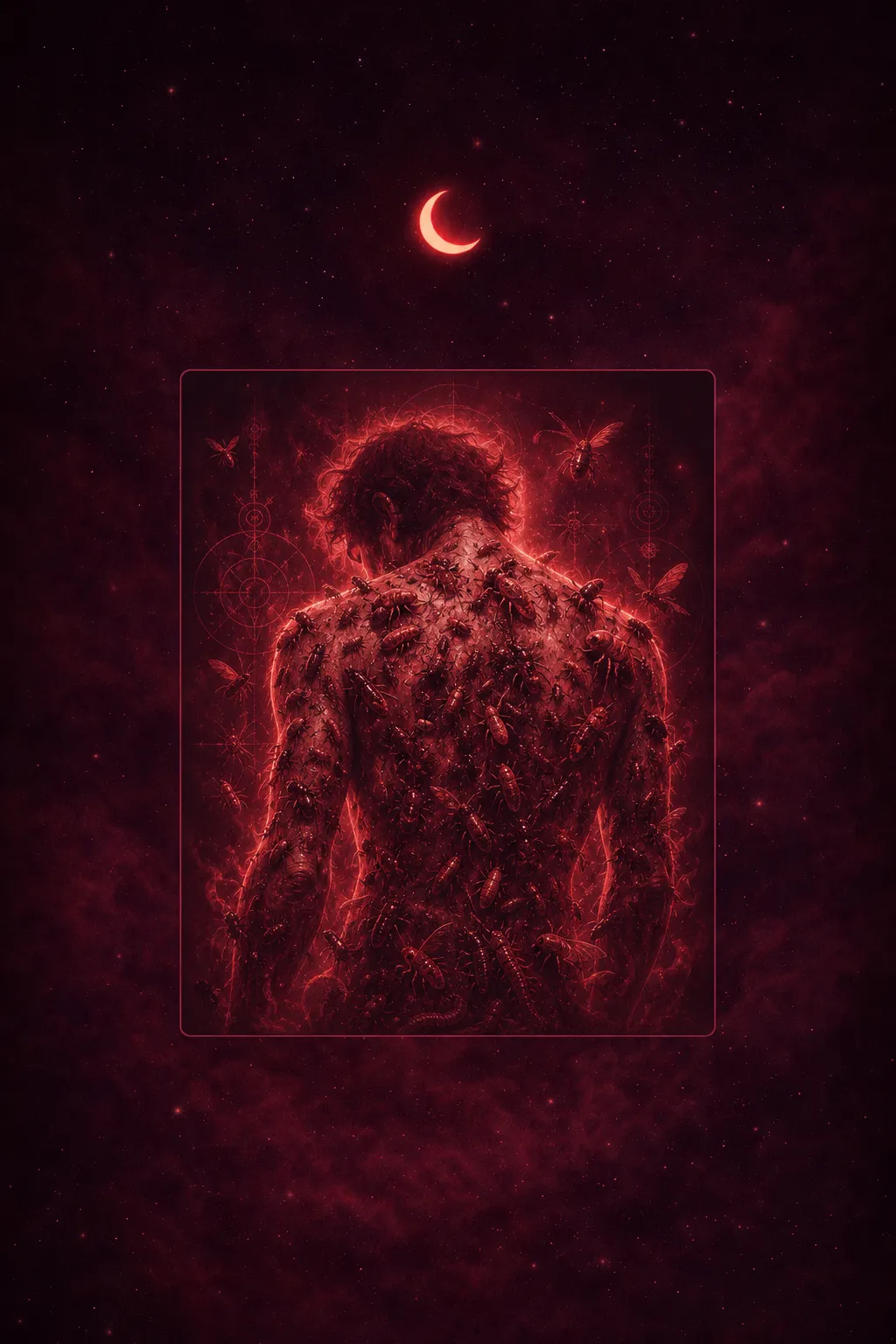

Dreaming of bugs crawling on your body typically signals feelings of anxiety, guilt, or irritation that are overwhelming you in waking life, as the crawling sensation symbolizes intrusive thoughts or burdens you cannot shake, urging you to confront what is festering beneath the surface before it consumes your sense of peace and well-being.
In under a minute you could read what your exact dream means for you, and see a picture of it. Free.
Bad dream? See exactly what you dreamed — turned into a picture.
Just describe it and Dream Book paints your dream as a real image, plus a reading of what it means for you. Free, and it takes under a minute.


A dream still on your mind? Get your personal reading.
Describe your dream in a line or two. In seconds you get a reading of your exact dream, a picture drawn from your own words, and every symbol explained.
Free. No sign-up. Takes 10 seconds. Your dream stays private.
0%
Analyzing your dream…
Something went wrong. Please try again in a moment.
Your dreams deserve more than a dictionary
Common Dream Scenarios and What They Mean
The specific details of a bug-covered-body dream shift its meaning considerably. The most intense version — bugs swarming every inch of your body — points to total overwhelm, the sense that stress has invaded every corner of your life simultaneously. If you dream of bugs crawling under or emerging from your skin, the imagery turns inward: something you have been suppressing or privately judging about yourself feels like it is breaking through, carrying a strong undercurrent of shame or self-disgust. A dream where biting or stinging insects cover you tends to map onto specific, painful stressors — critical comments, petty conflicts, or small but relentless demands that collectively feel like an attack from all sides.
- Brushing or picking the bugs off: A more agentive scenario. You are attempting to reclaim control and set limits, even if the effort feels endless. This variant often reflects active coping in waking life — exhausting, but purposeful.
- Others remain calm while you panic: A loneliness signal — your anxiety is invisible to those around you, or you fear that revealing it will earn disbelief rather than support.
- One identifiable insect type: Narrows the reading. Ants crawling over the body often connect to relentless work pressure or community friction; cockroaches suggest a problem that has been ignored too long; lice carry social shame or fear of contagion.
A bad dream isn't a bad sign.
Across all variants, the dream is essentially asking what you have allowed to accumulate without addressing it — and whether you feel equipped to brush it off or remain frozen under the swarm.
What this dream could look like
Tap an image to open it full screen
Example images. Only you can see what you write in Dream Book.
Psychological Meaning: Overwhelm, Control, and the Body as Battleground
From a psychological standpoint, dreaming of your body covered in bugs is a vivid dramatization of accumulated stress. Rather than a single, identifiable threat, this image reflects the way modern anxiety actually operates — not as one large crisis but as dozens of small, relentless pressures that collectively feel unbearable. Your subconscious converts that crawling mental load into a literal, sensory experience on the skin, making the invisible weight of daily worry impossible to ignore. In this sense the dream functions as an internal alarm: something you have been tolerating or minimizing has reached a tipping point.
Central to this imagery is the loss of bodily autonomy. The body is the most intimate territory a person controls, so when bugs overrun it in a dream, psychologists read that as a proxy for feeling powerless in waking life — boundaries crossed, personal space invaded, agency stripped away. Disgust, the dominant emotion in these dreams, is a hardwired signal that something feels morally or emotionally "unclean," often pointing to a relationship, habit, or self-perception the dreamer has not yet confronted directly. A similar dynamic appears in dreams about teeth falling out, where the body itself becomes the site of anxiety about control and self-image.
- Stress accumulation: many small worries fusing into one overwhelming sensation.
- Boundary violation: feeling that others — or circumstances — are encroaching on your personal space or decisions.
- Disgust as a signal: the mind flagging something unresolved that deserves honest attention.
- Somatic anxiety: real-life hypervigilance or skin sensitivity bleeding into the dream as tactile sensation.
General meanings end here. Read your own dream.
Describe your dream in a line or two. In seconds you get a reading of your exact dream, a picture drawn from your own words, and every symbol explained.
Free. No sign-up. Takes 10 seconds. Your dream stays private.
0%
Analyzing your dream…
Something went wrong. Please try again in a moment.
Your dreams deserve more than a dictionary
Every dream you log starts to connect.
Dream Book keeps your dreams in one place and reveals the threads between them over time — your private dream journal. Free to start.
Cultural and Folk Traditions: When Bugs Signal More Than Bad Dreams
Across Western folk tradition, insects swarming the body have long carried a sense of moral or spiritual contamination — the idea that an unseen wrongdoing, guilt, or unresolved conflict quite literally "gets under your skin." In older European superstition, such imagery was read as a warning sign: something in waking life had been left to fester. American frontier and revival-era Christian culture absorbed this framing, associating vermin-covered flesh with spiritual uncleanliness — echoing Old Testament passages that use plague and infestation as symbols of divine correction or a soul out of alignment. Within that tradition, the dream nudges the dreamer toward self-examination rather than fear.
But what does your version mean?
Modern popular culture has quietly updated these older readings. Where previous generations reached for spiritual explanations, today's mainstream interpretation leans on a language of overwhelm and loss of control — a reflection of contemporary anxieties around workload, social pressure, and the feeling that life's demands are multiplying faster than you can manage them. The dream of ants or other insects on the body is frequently discussed in self-help spaces as a signal that small, ignored problems have compounded into something that now feels uncontrollable. Folk wisdom across cultures tends to agree on one point: the crawling sensation is the psyche's way of forcing attention onto something the waking mind has been avoiding.
- European folk belief: insects on the body in dreams warned of hidden illness, moral impurity, or unresolved debts — something "unclean" demanding acknowledgment.
- US Christian tradition: infestation imagery links loosely to biblical plague motifs, read as a call to self-reflection and spiritual housekeeping.
- Contemporary folk psychology: the image is widely interpreted as accumulated minor stressors breaking through, a signal to reassert boundaries and reclaim personal control.
Spiritual Meaning: Trial, Impurity, and the Call to Cleanse
From a spiritual standpoint, a body swarmed by insects can resonate with the biblical imagery of plague — a condition visited upon those who have strayed, or simply a trial that refines the faithful. Much as locusts in Scripture signal divine disruption of ordinary life, this dream may surface when you sense that something in your inner world is out of alignment. It is less a punishment and more a prompt: something unresolved is demanding your attention, and it has grown loud enough to invade your sleep.
Was yours a sign? Find out.
Within a broadly Christian reading, the body is understood as a temple, and bugs overrunning that temple can feel like a vivid metaphor for allowing impurity — whether moral, relational, or habitual — to accumulate unchecked. The disgust the dream produces is not incidental; spiritually, disgust has historically functioned as a signal that a boundary has been crossed. A dream like this may be nudging you toward a form of interior housekeeping: examining which commitments, habits, or grievances you have let fester.
- Trial framing: The infestation may represent a season of adversity meant to surface what needs to change, not a verdict on your worth.
- Purification prompt: Consider whether unaddressed guilt or a strained relationship is feeding the sense of inner "uncleanliness."
- Reclaiming the temple: Spiritual practices centered on confession, prayer, or intentional rest can restore the sense of bodily and personal sovereignty the dream strips away — much like dreams of snakes often call for honest reckoning with what feels threatening beneath the surface.
Related Dream Meanings

animals
Ants Dream Meaning: Hard Work, Teamwork & Community
5 min read

body health
Teeth Falling Out Dream: Anxiety, Loss & Vulnerability
5 min read
animals
Snakes Dream Meaning: Fear, Change & Hidden Threats
5 min read

nightmares
Skeleton Dream Meaning: What It Reveals About Your Inner Self
5 min read

nightmares
What Does It Mean to Dream About Being Stalked
5 min read

nightmares
Dreaming About Serial Killer: Meaning and Interpretation
6 min read
nightmares
Being Chased by a Snake Dream: Anxiety & Hidden Fear
5 min read

nightmares
Being Chased by a Killer Dream Meaning
5 min read
Practical Takeaways: Reclaiming Calm and Control
When this dream surfaces, treat it as your mind's stress audit rather than a curse or dire omen. The imagery is uncomfortable by design — disgust is a powerful attention signal, and your psyche is using it to flag something that genuinely needs addressing. Your first practical step is a simple inventory: write down every recurring obligation, irritation, or unresolved tension in your life right now, no matter how trivial each one seems. Seeing them listed on paper strips the dream's "swarming" quality away — what felt like one crawling mass becomes a finite number of manageable items.
- Triage ruthlessly. Separate what you can act on this week from what you are simply carrying as background worry. Chronic low-level stressors — much like ants moving in a steady column — cause the most fatigue precisely because they feel endless yet individually minor.
- Audit your boundaries. Identify one relationship or commitment where your personal space or energy is being encroached on, and practice one small, clear limit this week.
- Ground the body deliberately. Because the dream is somatized — felt on the skin — counter it with physical grounding: cold water on your face, a short walk, or slow breathing to signal safety to your nervous system.
- Schedule a genuine break. Overwhelm accumulates when rest is always deferred. Block even thirty minutes of protected, obligation-free time daily.
A bad dream isn't a bad sign.
If the dream recurs frequently, consider whether a professional therapist or counselor could help you work through the underlying anxiety pattern — recurring body-horror imagery is often a sign that self-management alone is no longer enough.
If it keeps coming back, the app helps you understand the pattern.
Log each recurring dream and the free app shows you what's underneath — calmly, over time. Free to start.
People Also Ask
Bugs crawling out of your skin often signals that something deeply buried — guilt, anxiety, or a toxic situation — is forcing its way to the surface. Your subconscious is urging you to confront what you've been suppressing. It can also reflect feeling emotionally contaminated or overwhelmed by stress that's become impossible to ignore.
Bugs crawling on you typically represent irritations, worries, or people in your waking life that feel invasive and hard to shake off. The dream highlights a loss of personal boundaries or a creeping sense of anxiety. Pay attention to the bug type — ants suggest workload pressure, while lice often point to draining social relationships.
Dreaming of bugs crawling on your body usually reflects feeling overwhelmed, violated, or plagued by persistent problems. It may indicate that minor stressors have multiplied to the point of feeling unmanageable. This dream is a signal to address what's been nibbling away at your peace of mind before it consumes your emotional wellbeing entirely.
Spiritually, bugs in dreams are often seen as messengers of transformation and purification. Many traditions view them as symbols of the shadow self — aspects of your soul requiring healing or release. A body covered in bugs may signal a spiritual cleansing process, urging you to shed negative energies, karmic burdens, or attachments holding you back.
Curious what your dream would look like?