
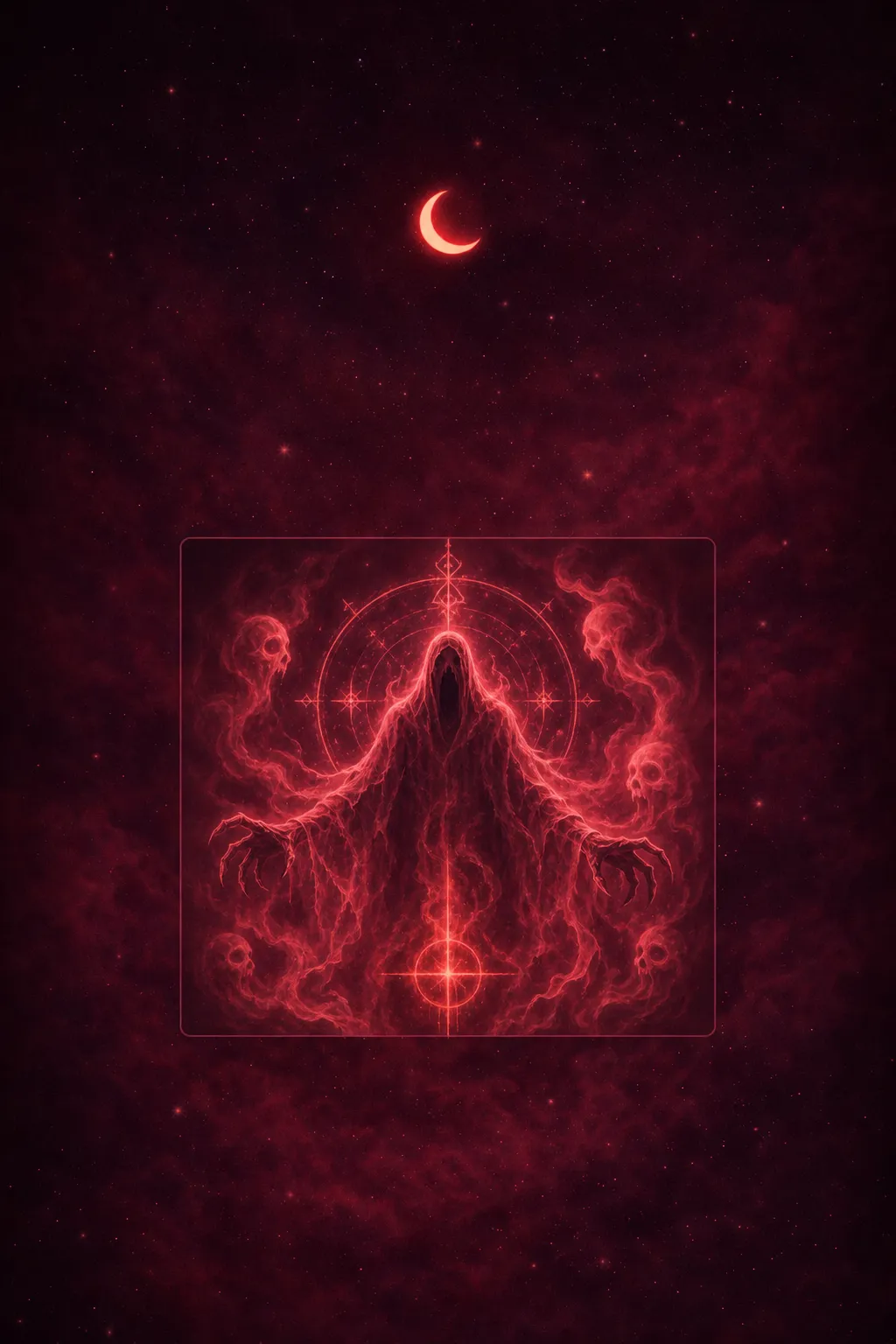

Dreaming of a haunting usually reflects unresolved emotions — guilt, grief, or fears you've been avoiding in waking life. The haunting presence often symbolizes a past experience or relationship that still holds emotional power over you. Your dream may be inviting you to acknowledge what lingers so you can finally move forward.
In under a minute you could read what your exact dream means for you, and see a picture of it. Free.
A dream still on your mind? Get your personal reading.
Describe your dream in a line or two. In seconds you get a reading of your exact dream, a picture drawn from your own words, and every symbol explained.
Free. No sign-up. Takes 10 seconds. Your dream stays private.
0%
Analyzing your dream…
Something went wrong. Please try again in a moment.
Your dreams deserve more than a dictionary
Common Haunting Dream Scenarios
Being Haunted by a Ghost or Presence
You feel it before you see it — that cold weight in the room, the certainty that something is watching you from just outside your line of sight. Dreams where an unseen presence in the room haunts you are among the most emotionally intense in the nightmare category. The figure doesn't need to appear for the fear to be total.
This scenario almost always connects to something you haven't grieved or confronted. The presence is rarely random — it carries a specific emotional texture, a feeling of accusation or longing that points directly at what's unresolved in your waking life. Pay attention to how the presence makes you feel, not just what it looks like.
A bad dream isn't a bad sign.
Being Haunted by a Dead Person
When the haunting has a face — a parent, an ex, a friend who died — the dream takes on a different weight entirely. This isn't just fear; it's unfinished business. Dreams of a deceased person visiting you in a haunting context often carry a message your waking mind has been too busy or too defended to receive.
The emotional tone matters enormously here. If the dead person seems angry or accusatory, you may be carrying guilt about something left unsaid. If they seem sad or lost, you might be the one who hasn't fully let go. The haunting is a loop — and you're the one keeping it running.
Being Haunted in an Old House
Houses in dreams are almost always maps of the self — rooms representing different aspects of your psyche, floors representing levels of consciousness. A haunted house dream places the source of your disturbance inside your own interior world. Something in your past, something structural, is making itself known.
If you recognize the house — your childhood home, a place you once lived — the haunting is almost certainly tied to a specific chapter of your life. The building itself is the clue. What happened there? What did you leave behind when you walked out the door?
Being Haunted by a Shadow Figure
The shadow person is one of the most reported and most unsettling dream figures — a silhouette with no features, no expression, but a presence that fills the entire room with dread. It follows you. It stands in doorways. It watches.
Unlike a ghost with a recognizable face, the shadow figure is pure archetype. It doesn't represent a specific person so much as a part of yourself — the version of you that you've rejected, suppressed, or refused to acknowledge. The shadow haunts because it belongs to you, and it isn't going anywhere until you look at it directly.
What this dream could look like
Tap an image to open it full screen
Example images. Only you can see what you write in Dream Book.
Psychological Interpretation
Freud would have read a haunting dream as the return of the repressed — the psyche's way of forcing suppressed desires, fears, or memories back into awareness. For Freud, what haunts us in dreams is exactly what we've worked hardest to keep out of conscious thought. The ghost isn't supernatural; it's psychological pressure finding the only exit available to it: the sleeping mind.
Jung took this further and made it personal in a different way. The haunting figure, for Jung, is often the Shadow — the disowned self, the parts of your personality you've deemed unacceptable and locked in the basement of your unconscious. The Shadow doesn't disappear just because you refuse to look at it. It haunts. Jung believed that integration — actually facing and acknowledging what the shadow represents — was the only way to stop the haunting. Running from it in the dream is running from yourself. If you've also been dreaming of being chased, the two dreams are almost certainly connected.
But what does your version mean?
Calvin Hall's content analysis of over 50,000 dream reports found that negative emotions — fear, anxiety, sadness — dominate nightmare categories far more than positive ones. Haunting dreams consistently registered high emotional intensity in his data, and the figures involved were almost always connected to real relationships or unresolved conflicts rather than purely fictional threats. Hall's work suggests that what haunts us in dreams is almost never random — it maps directly onto our emotional preoccupations. Ernest Hartmann, whose work on dreams as emotional memory processing changed how we think about nightmares, would add that the haunting dream is doing therapeutic work whether you want it to or not. The brain is replaying an emotionally charged scenario in a safe context, trying to process and integrate what waking life hasn't been able to metabolize. The recurring haunting dream, in Hartmann's framework, is a sign that the processing isn't complete yet.
Hobson and McCarley's activation-synthesis model offers a different lens: the brain during REM sleep is generating activity from the brainstem, and the cortex is frantically trying to construct a narrative that makes sense of it. The "haunting" feeling — that sense of dread, of being followed, of something just out of sight — may partly be the brain's interpretation of random neural activation filtered through your most emotionally charged memories. The content your brain reaches for when building that narrative, though, is anything but random. It grabs what matters most.
Every dream you log starts to connect.
Dream Book keeps your dreams in one place and reveals the threads between them over time — your private dream journal. Free to start.


Cultural & Spiritual Meaning
In Western folklore, to be haunted is to be chosen — ghosts return to those with whom they have unfinished business, not to strangers. The haunting dream carries this same logic into the personal: whatever is haunting you has a reason to be there. Medieval Christian tradition read haunting dreams as either divine warning or demonic interference, the soul being tested or besieged. The evil spirit framework wasn't metaphor — it was taken as literal spiritual reality, and the dreamer's response (prayer, confession, ritual) was meant to resolve what the dream had surfaced.
Ibn Sirin, the 8th-century Islamic scholar whose dream interpretations remain influential across the Muslim world, wrote that dreams of being followed or haunted by an unseen presence often signal a debt — not necessarily financial, but moral or relational. Something owed, something promised, something broken. His interpretations consistently linked haunting imagery to the state of the dreamer's conscience. A haunting dream, in his reading, was an invitation to examine where you had fallen short and to make it right before the matter escalated.
Was yours a sign? Find out.
In many Indigenous traditions across the Americas and Africa, the dead return in dreams not to frighten but to communicate. The haunting quality — the persistence, the inability to escape the figure — is understood as the spirit's urgency, not its malice. The dreamer is being sought because they are the right person to receive the message. Eastern traditions, particularly in Chinese and Japanese spiritual frameworks, hold similar ground: the dead person in your dream is not a threat but a messenger, and the haunting will continue until the living person hears what is being said.
Related Dream Meanings

nightmares
Feeling Someone in Room Dream Meaning
5 min read
nightmares
Deceased Visiting Dream: Closure, Guidance & Grief
5 min read
nightmares
Haunted House Dream Meaning: Fears, Trauma & Healing
5 min read
nightmares
Shadow Person in Dreams: What It Means When You See Them
5 min read

nightmares
Being Chased Dream Meaning: Anxiety & Avoidance
5 min read
nightmares
Evil Spirit Dream Meaning: Fear, Inner Conflict & Shadow
6 min read
nightmares
Dead Person Dream Meaning: Closure & Unresolved Loss
5 min read
nightmares
What Does It Mean to Be in a Coma in a Dream
5 min read
What to Do After This Dream
First, don't dismiss it. A haunting dream that wakes you with your heart pounding at 3am is not noise — it's signal. Write down everything you remember: the figure, the location, the emotional texture of the fear. The details are the interpretation.
Ask yourself what — or who — you've been avoiding. The haunting dream almost always has a real-world referent. An apology not made. A grief not fully felt. A version of yourself you've been pretending doesn't exist. The dream isn't punishing you; it's trying to get your attention.
If the haunting involves a specific person who has died, consider what was left unresolved between you. Sometimes writing a letter you'll never send — saying what you couldn't say — is enough to shift the dream. The psyche responds to symbolic gestures as readily as literal ones.
If this dream keeps returning, it's worth exploring with a personalized interpretation. Dream Book lets you describe your dream in detail and ask follow-up questions — so instead of a generic definition, you get something that actually maps onto your specific situation and the emotions the dream left behind.
A bad dream isn't a bad sign.
Understanding your haunting dream is the first step. The next is asking what it means for your life right now — that's where a personalized interpretation goes deeper than any dictionary.
If it keeps coming back, the app helps you understand the pattern.
Log each recurring dream and the free app shows you what's underneath — calmly, over time. Free to start.
People Also Ask
Being haunted in a dream usually points to something unresolved in your waking life — an old grief, a guilt, or a part of yourself you've been avoiding. The haunting figure or presence represents whatever your psyche refuses to let you ignore any longer. The more persistent the haunting, the more urgent the unresolved issue.
When a specific dead person haunts your dream, it typically signals unfinished emotional business with that individual — something left unsaid, unresolved, or ungrieved. The emotional tone of the haunting matters: anger or accusation often reflects guilt, while sadness may reflect your own grief that hasn't fully been processed.
Recurring haunting dreams are your psyche's way of insisting you pay attention to something you keep pushing aside. Ernest Hartmann's research on emotional memory processing suggests these dreams repeat because the underlying emotional wound hasn't been fully integrated yet. The repetition stops when the real-world issue is faced or the emotion is processed.
Most dream traditions — psychological and spiritual alike — don't read haunting dreams as omens of future harm, but as reflections of present unresolved tension. Ibn Sirin interpreted haunting imagery as a call to examine your conscience, not a prediction of disaster. Think of it less as a warning about what's coming and more as a message about what's already here.
Curious what your dream would look like?