
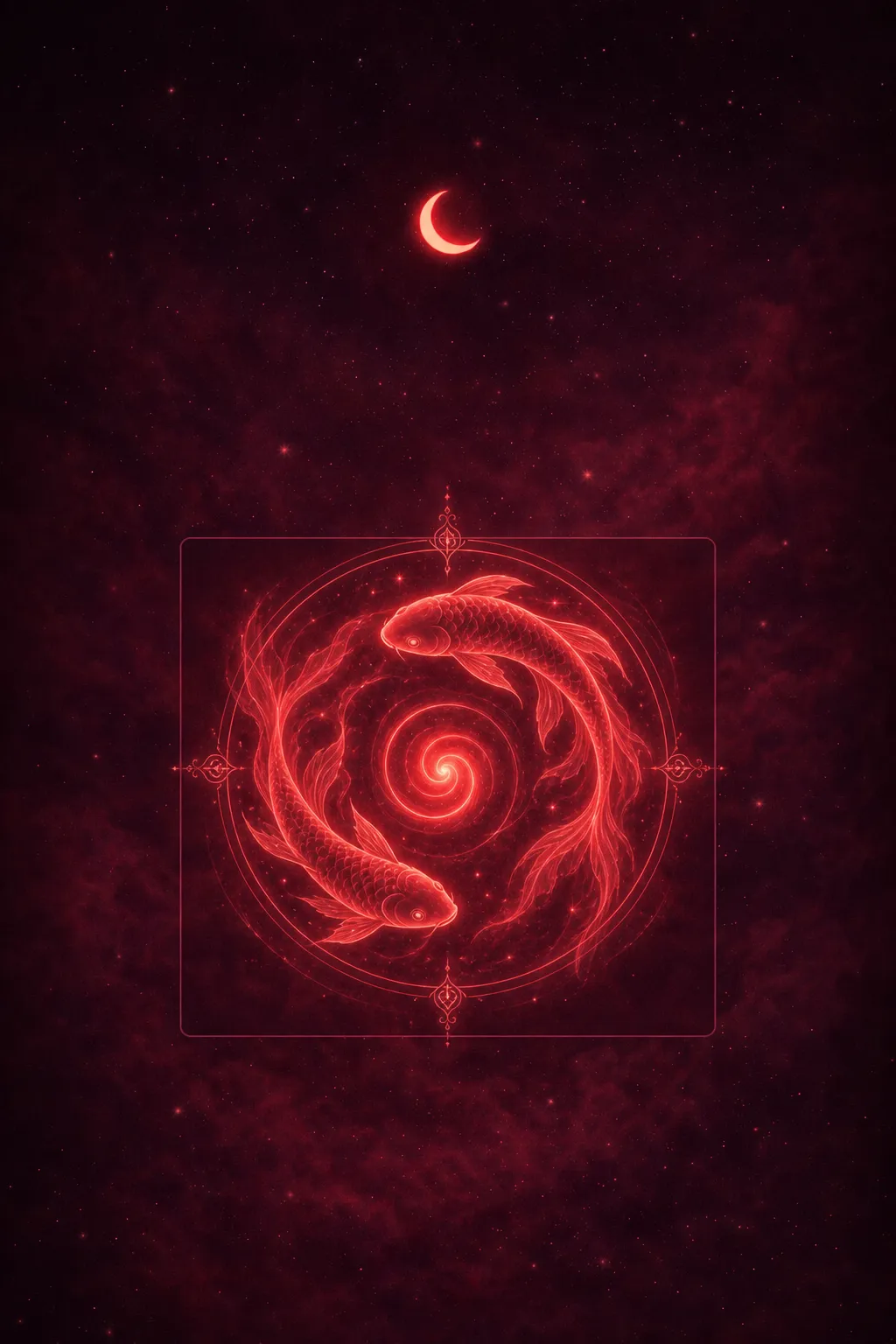

Dreaming about reincarnation means your subconscious is processing themes of personal transformation, second chances, or the desire to leave behind old habits and identities, often signaling that you are ready to shed a past version of yourself, embrace profound inner growth, and step into a renewed sense of purpose and identity.
In under a minute you could read what your exact dream means for you, and see a picture of it. Free.
Bad dream? See exactly what you dreamed — turned into a picture.
Just describe it and Dream Book paints your dream as a real image, plus a reading of what it means for you. Free, and it takes under a minute.


A dream still on your mind? Get your personal reading.
Describe your dream in a line or two. In seconds you get a reading of your exact dream, a picture drawn from your own words, and every symbol explained.
Free. No sign-up. Takes 10 seconds. Your dream stays private.
0%
Analyzing your dream…
Something went wrong. Please try again in a moment.
Your dreams deserve more than a dictionary
Common Reincarnation Dream Scenarios and What They Mean
The most frequently reported scenario — being reborn as a different person — typically signals that part of you feels your current identity has run its course. This can reflect genuine readiness for growth after a major life transition, though it is worth asking honestly whether the "new self" represents real change or simply an urge to escape present pressures. Closely related is the scenario of discovering or recalling a past life, where the dream surfaces emotion-laden memories or long-standing family patterns you cannot quite explain; the psyche is constructing a deeper origin story to make sense of who you are today. Dreams about death often accompany this theme, reinforcing the sense that something in your waking life must end before genuine renewal can begin.
- A deceased loved one returns reincarnated: Classic afterlife-adjacent grief-work — the mind imagines the bond persisting rather than ending, easing the pain of loss by writing a continuation.
- A repeating loop of dying and being reborn: Often a red flag for burnout or a stuck life pattern; the cycle itself is the message — something unresolved keeps resetting rather than resolving.
- Choosing or being assigned a next incarnation: Decision anxiety made vivid — you are weighing future paths, careers, or relationships and feeling the weight of getting the choice right.
- Returning as an animal or object: Points to how you currently value yourself; the specific form matters — a powerful animal suggests instinctual energy, while an inanimate object can signal feelings of powerlessness or invisibility.
A bad dream isn't a bad sign.
Across all these variants, notice where control sits in the dream. Being freely reborn suggests internal agency; being assigned a form or trapped in a loop reflects anxiety about how little control you feel over the direction your life is taking.
What this dream could look like
Tap an image to open it full screen
Example images. Only you can see what you write in Dream Book.
The Psychological Reading: Transformation, Control, and the Reinvented Self
From a psychological standpoint, dreaming of reincarnation is the mind's way of staging a symbolic death-and-renewal cycle when waking life demands more change than the ego feels ready to handle. Major losses — a marriage ending, a career collapse, a health crisis — can leave the psyche searching for a narrative that preserves continuity of the self while still allowing a genuine fresh start. The reincarnation dream offers exactly that: the comforting idea that the essential "you" survives the transition, even if everything external is shed. This maps closely onto the death dream as transformation archetype, though reincarnation adds the specific hope of a do-over rather than simply an ending.
Modern anxiety culture adds a sharper edge: when people feel stuck, overwhelmed by the pressure to perform or produce, or quietly convinced they have already "failed" their own life script, the fantasy of resetting rather than repairing is deeply appealing. The dream may be the subconscious flagging a desire for control — a way of imagining escape from conditions that feel inescapable. Emotionally, it can also serve a grief function, offering a wish-fulfilling sense that a lost loved one (or a lost version of yourself) has not simply vanished but continued somewhere. That same continuity anxiety often surfaces in afterlife dreams, where the psyche reaches for reassurance that meaning outlasts loss.
- Shadow integration: "Past life" figures appearing in the dream often represent disowned personality traits the psyche is pushing you to reclaim rather than actual prior lives.
- Unfinished business: A sense of karmic consequence in the dream usually reflects real guilt or regret that has gone unaddressed in waking life.
- Existential rumination: Recurring reincarnation dreams may signal genuine soul-searching around legacy, purpose, and mortality — worth exploring rather than dismissing.
General meanings end here. Read your own dream.
Describe your dream in a line or two. In seconds you get a reading of your exact dream, a picture drawn from your own words, and every symbol explained.
Free. No sign-up. Takes 10 seconds. Your dream stays private.
0%
Analyzing your dream…
Something went wrong. Please try again in a moment.
Your dreams deserve more than a dictionary
Every dream you log starts to connect.
Dream Book keeps your dreams in one place and reveals the threads between them over time — your private dream journal. Free to start.
Cultural and Folk Traditions: Reinvention, Reset, and the "New Chapter" Myth
In mainstream Anglo culture, literal belief in reincarnation sits at the skeptical fringe, yet the symbol carries enormous popular appeal — largely because it maps so neatly onto the self-help language of reinvention. Therapy culture, career-pivot podcasts, and wellness media have effectively secularized the concept: "past-life" has become shorthand for an old version of yourself you are trying to leave behind, and dreaming of rebirth tends to be read through that same metaphorical lens rather than as a theological statement. Where older folk traditions — Celtic ideas of soul migration, or loosely absorbed Eastern philosophy filtered through New Age publishing — once gave the image a spiritual weight, most contemporary dreamers encounter it through the softer vocabulary of afterlife symbolism and personal transformation narratives.
But what does your version mean?
A modern-anxiety layer sits just beneath that cultural surface. Reincarnation dreams spike in meaning during periods of burnout, economic instability, or identity crisis — moments when people quietly fantasize about pressing a hard reset on their lives. The dream becomes a coping image: if this self could simply end and a fresh one begin, the accumulated stress, regret, and obligation might dissolve with it. Folk wisdom across many traditions warns, however, that "unfinished business" follows the soul forward — a belief that translates psychologically into the recognition that reinvention without honest self-accounting rarely sticks. That anxiety about unresolved endings links reincarnation imagery to other classic dreams of death and finality, where the psyche is similarly wrestling with what must be released before anything new can take root.
- Secular reinvention: most Anglo readers interpret the dream as a "new chapter" prompt rather than a literal spiritual event.
- Anxiety reset fantasy: the desire to be reborn often mirrors waking feelings of overwhelm or burnout.
- Folk karmic caution: cross-cultural folk traditions suggest unresolved patterns resurface — change of circumstance alone is not the same as genuine growth.
The Spiritual Reading: Renewal, Rebirth, and the Soul's Unfinished Work
For dreamers who hold a Christian worldview, a reincarnation dream rarely demands a literal theological reading. The more resonant framework is the New Testament language of spiritual renewal — being "buried with Christ and raised to walk in newness of life" (Romans 6:4) or the call to be "born again" (John 3:3). Through that lens, the dream becomes less about transmigration of the soul and more about a profound interior reset: the old self surrendered, a renewed self emerging. Anxiety about whether that transformation is even possible — whether you are truly capable of becoming someone different — can quietly power such a dream, giving it an urgency that feels almost sacred.
Was yours a sign? Find out.
Outside explicitly Christian frameworks, many Anglo "spiritual but not religious" dreamers absorb reincarnation imagery from Hindu, Buddhist, or New Age sources, where the soul accumulates unfinished lessons across lifetimes. In this reading, the dream surfaces a sense of karmic consequence — the feeling that present struggles are not random but meaningful, even if their origin is obscure. That framing can be genuinely comforting when modern life feels chaotic and out of control, because it implies an underlying order. Dreams about the afterlife often carry a similar reassurance: that endings are not absolute, and that identity persists through loss. In the same vein, dreams about death frequently share this symbolic grammar of release and continuation rather than simple finality.
Across both traditions, the spiritual thread is the same: the dream invites reflection on what truly needs to be released and what is worth carrying forward — not in some future lifetime, but now.
Related Dream Meanings
nightmares
Death Dream Meaning: Transformation, Loss & Change
5 min read
nightmares
Afterlife Dream Meaning: Closure, Loss & the Unknown
5 min read
common dreams
Falling Dream Meaning: Insecurity, Fear & Loss of Control
5 min read
nightmares
What Does It Mean When Someone Is Following You in a Dream
6 min read
nightmares
Someone Breaking Into Your House: Meaning and Interpretation
5 min read
nightmares
Losing Control: Meaning and Interpretation
5 min read
nightmares
Sinking Dream Meaning: Insecurity & Loss of Control
5 min read
nightmares
Choking Dream Meaning: Anxiety, Control & Self-Expression
5 min read
Practical Takeaways: Acting on a Reincarnation Dream
When a reincarnation dream leaves a strong impression, the most useful first step is to write it down immediately and ask one focused question: what in my waking life feels like it needs to end so something better can begin? The dream is rarely a directive — it is a signal that your mind is already processing a transition, even if you haven't consciously named it yet. Identifying that pressure point gives you something concrete to work with rather than a vague sense of unease.
- Name the "old self" being left behind. Journal about the role, habit, or identity the dream seemed to shed. Specificity matters — "I'm burned out as a caretaker" is more actionable than "I want change."
- Check for avoidance vs. genuine readiness. Reincarnation imagery can signal healthy growth or a wish to escape responsibility. Honest self-reflection — or a few sessions with a therapist — helps you tell the difference.
- Identify one piece of unfinished business. The "karma-as-consequence" thread in these dreams often points to something left unresolved. Addressing it directly, rather than fantasizing about a clean slate, tends to quiet the recurring dream.
- Channel the energy into a small, real-world step. If the dream points toward reinvention, pair it with one concrete action — updating a résumé, starting a difficult conversation, or beginning a new routine — rather than staying in the planning stage indefinitely.
A bad dream isn't a bad sign.
Dreams of death and dying often accompany reincarnation imagery and are worth examining alongside it. So too can classic anxiety dreams — that sinking sensation of falling, for instance — which frequently share the same underlying fear of losing control during a life transition. Together these images usually map the full arc the psyche is processing: what must close, and what could open. The goal is not to decode a prophecy but to use the dream as a mirror that helps you move forward with a little more clarity and intention.
If it keeps coming back, the app helps you understand the pattern.
Log each recurring dream and the free app shows you what's underneath — calmly, over time. Free to start.
People Also Ask
Dreaming of reincarnation spiritually signals profound inner transformation. Your soul is shedding old patterns, beliefs, or identities to embrace a higher version of itself. It often reflects a desire for renewal, karmic resolution, or a fresh beginning — suggesting you are ready to release the past and step into a new chapter of growth.
Warning dreams from a divine source tend to feel unusually vivid, emotionally charged, and deeply memorable. They often carry a clear moral or urgent message, repeat themselves, or leave a lasting sense of conviction. If a reincarnation dream feels sacred and directive rather than random, many believers treat it as meaningful spiritual guidance.
Jesus never explicitly endorsed reincarnation in canonical scripture, though some interpret passages about being 'born again' symbolically. Dreaming of past lives or rebirth in a Christian context may reflect your subconscious wrestling with spiritual renewal, forgiveness, and resurrection — themes echoed in dreams of death and fire — rather than a literal belief in multiple lifetimes.
Verified mutual dreams — where two people share identical dream content — are considered among the rarest. Reincarnation dreams, featuring vivid past-life memories, unfamiliar historical settings, or unknown languages, also rank as uncommon. Their rarity makes them feel significant, often prompting dreamers to explore deeper questions about identity, purpose, and the continuity of the soul.
Curious what your dream would look like?