
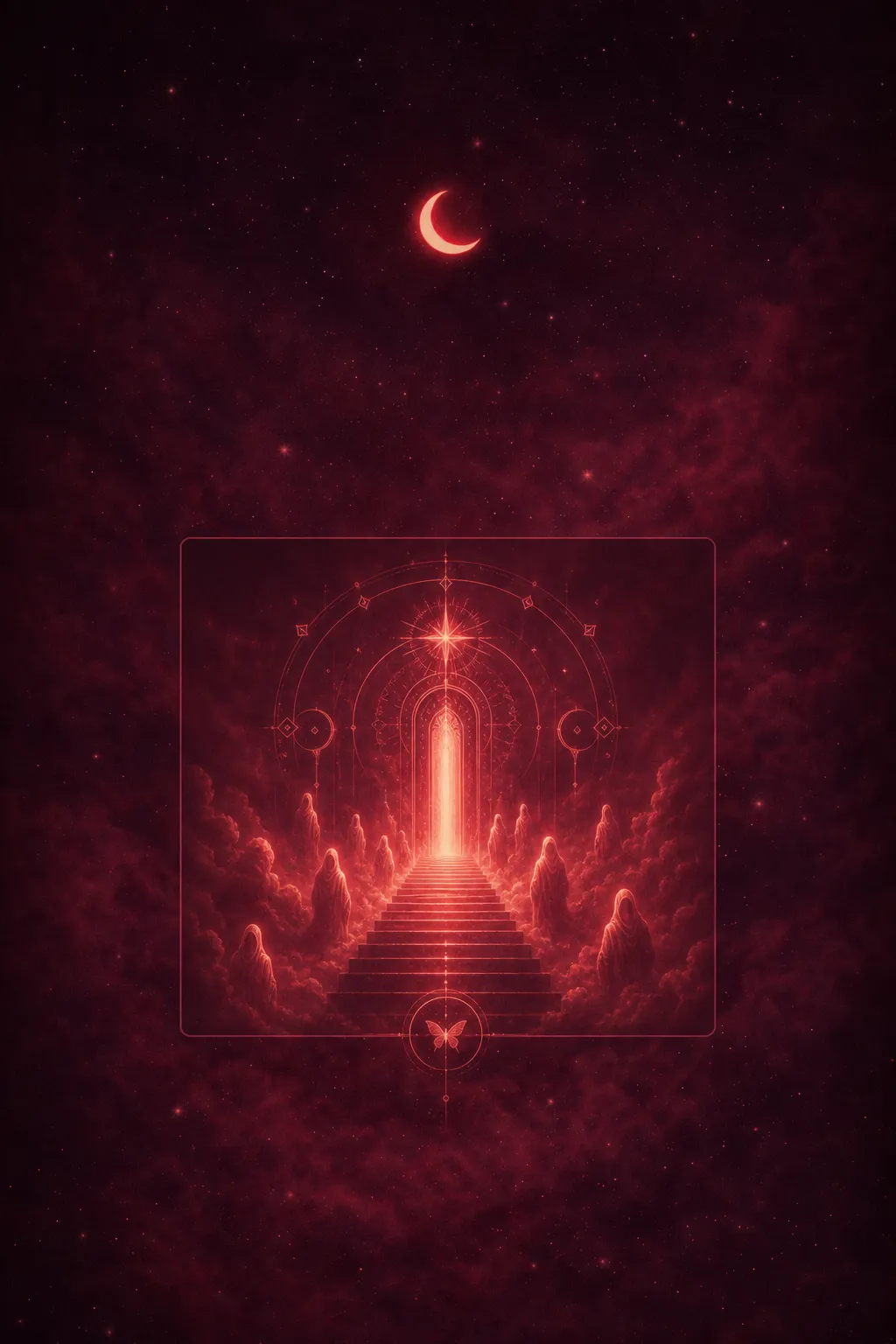

Afterlife dreams often symbolize a desire for closure or a connection to loved ones who have passed. They may reflect your feelings about mortality and the unknown.
In under a minute you could read what your exact dream means for you, and see a picture of it. Free.
A dream still on your mind? Get your personal reading.
Describe your dream in a line or two. In seconds you get a reading of your exact dream, a picture drawn from your own words, and every symbol explained.
Free. No sign-up. Takes 10 seconds. Your dream stays private.
0%
Analyzing your dream…
Something went wrong. Please try again in a moment.
Your dreams deserve more than a dictionary
Common Afterlife Dream Scenarios
Dreaming of a Funeral
Imagine standing in a dimly lit room, surrounded by the somber faces of loved ones. The atmosphere is thick with grief, and you feel a weight in your chest — it’s a dream where you attend a funeral. This scene often symbolizes your subconscious grappling with loss, whether it's the end of a relationship, a job, or a chapter in your life. The funeral can be a reflection of your fears about the unknown and the finality of death itself, resonating with the feelings of nostalgia and regret. If the person in the casket is someone you know, it might indicate unresolved feelings or an aspect of that person you miss. Alternatively, this dream could be about transformation. Just as funerals mark the end, they also signify new beginnings, urging you to reflect on what you need to let go of. If you find yourself at a graveyard in your dreams, it could reflect your contemplation of mortality and the legacy you wish to leave behind.Was yours a sign? Find out.
Talking to the Dead
In this surreal world of dreams, you might find yourself having a conversation with someone who's no longer living. Their voice is clear, their presence comforting, and you feel a flood of emotion. Dreaming about talking to the dead often points to unresolved issues or lingering emotions tied to that person. Perhaps there's something you wish you could say, or maybe they have wisdom to share that your waking mind has yet to grasp. These encounters can also serve as a bridge to the past, reminding you to honor the memories while encouraging you to embrace your current path. If you also dream of visiting deceased relatives, consider what lessons or messages they might be offering you in your waking life.But what does your version mean?
Dreaming of a Grave
Picture yourself standing before a solitary grave, the air heavy with unspoken words. Dreaming of a grave can be haunting, yet it often signifies the end of something significant in your life. Just as a grave marks a final resting place, this dream might indicate that you need to put a certain aspect of your life to rest, allowing for new growth and transformation. The grave could also represent your fears surrounding death and what lies beyond. It’s a nudge from your subconscious to confront these fears. If there's a recurring theme of death in your dreams, it's a signal to reflect on what changes are needed in your life to align with your true self.A bad dream isn't a bad sign.
Seeing Ghosts
Imagine wandering through an old house, its walls echoing with whispers of the past. Suddenly, you sense a presence — a ghostly figure appears before you. Dreams of ghosts often symbolize unresolved emotions or unfinished business. They might be manifestations of your fears, regrets, or even aspects of your personality you haven't fully accepted. This dream could be a call to confront what haunts you. Are there parts of your life that feel stagnant or unresolved? If you’re frequently dreaming of ghosts, consider what unresolved issues from your past may be affecting your present. Embracing these feelings can lead to a sense of closure and healing.What this dream could look like
Tap an image to open it full screen
Example images. Only you can see what you write in Dream Book.
Psychological Interpretation
Freud viewed dreams of the afterlife as rich with symbolism, often tied to repressed desires and fears surrounding death. He believed that these dreams reveal our hidden anxieties about mortality and the unknown, acting as a form of wish fulfillment that grapples with what we truly desire to understand about our fate. For Freud, confronting death in dreams is a way to process those fears, giving you a chance to confront your own mortality. Carl Jung expanded on Freud's ideas, suggesting that dreams about the afterlife connect to our collective unconscious, where archetypes of death and rebirth reside. He saw these dreams as an invitation to explore your own Shadow Self — the parts of you that are hidden or repressed. In Jung's view, dreaming of the afterlife can be a powerful moment of individuation, guiding you toward a deeper understanding of your psyche. Calvin Hall's extensive content analysis found that dreams involving death often reflect personal concerns about endings and transitions. He noted that individuals frequently dream of funerals or graves during times of significant life change, whether it be a new job, a breakup, or a major life event. Dreams of the afterlife can serve as a mirror, reflecting your emotional state and current life circumstances. Ernest Hartmann's emotional memory processing theory suggests that these dreams help you process your feelings about loss and change. He believed that dreams function as a form of therapy, allowing you to work through unresolved emotions related to death, whether it's the death of a loved one or the end of a significant phase in your life. If you're dreaming of the afterlife, it may be a cue from your subconscious to address these emotions head-on. If these feelings linger, consider exploring them further with tools like Dream Book to gain insight into your personal journey.Every dream you log starts to connect.
Dream Book keeps your dreams in one place and reveals the threads between them over time — your private dream journal. Free to start.


Cultural & Spiritual Meaning
In Western cultures, dreams of the afterlife often evoke a sense of fear and uncertainty, reflecting societal attitudes toward death as an end rather than a transition. Many see this as a time to reflect on one's life and the legacy left behind. In contrast, Eastern cultures often view death as a natural part of the cycle of life, where dreams about the afterlife may symbolize rebirth or reincarnation. These dreams can serve as reminders to embrace life's changes with openness and acceptance. From an Islamic perspective, Ibn Sirin emphasized that dreams about the dead can indicate a need for spiritual reflection or a sign of the deceased's well-being. He believed that such dreams might convey messages from the afterlife, urging you to connect with your faith and reflect on your own life choices. This cultural depth adds layers of meaning to your dreams, allowing you to explore how your beliefs shape your understanding of death and the afterlife. Indigenous cultures often celebrate the connection between the living and the spirits of the deceased. Dreams of the afterlife may be seen as a way to receive guidance or messages from ancestors. In these traditions, such dreams are cherished, offering a bridge between worlds, and they may encourage you to honor your heritage and the wisdom passed down through generations.Related Dream Meanings
nightmares
Dreaming About a Grave: Meaning and Interpretation
6 min read
nightmares
Dead Relative: Meaning and Interpretation
5 min read
nightmares
Death Dream Meaning: Transformation, Loss & Change
5 min read
nightmares
Ghosts Dream Meaning: Unresolved Emotions & the Past
5 min read
nightmares
Hell Dream Meaning: Fear, Guilt & Unresolved Issues
5 min read
nightmares
Graveyard Dream Meaning: Endings, Closure & New Starts
5 min read
nightmares
Intruder in House: Meaning and Interpretation
5 min read
nightmares
Dead Snake Dream Meaning: Transformation & Endings
5 min read
What to Do After This Dream
If you've experienced a dream about the afterlife, take a moment to reflect on what it might mean for you. Consider keeping a dream journal to capture your feelings and thoughts after waking. This practice can help you identify patterns and themes that arise, providing insight into your emotional landscape. Understanding your afterlife dream is the first step. The next is asking what it means for your life right now — that's where a personalized interpretation goes deeper than any dictionary. Tools like Dream Book can help you describe your dream and ask follow-up questions, guiding you toward a better understanding of your subconscious messages. As you navigate these feelings, remember that dreams can be a source of healing. Embrace the opportunity to confront what lies beneath the surface, allowing yourself to grow and transform.Keep the ones that matter close.
The free app saves your most meaningful dreams and reads the signs across them — so a visit or a sign is never lost. Free to start.
People Also Ask
Dreaming about death often symbolizes significant change or transformation in your life. It can reflect your feelings about mortality and the endings of certain aspects of your existence, urging you to embrace new beginnings.
Dreaming about talking to the dead frequently signifies unresolved emotions or messages from your subconscious. It may indicate a need for closure or a desire to reconnect with memories or lessons from those who have passed.
Seeing ghosts in your dreams often represents aspects of your past that are unresolved or emotions you have yet to confront. These dreams may serve as reminders to address lingering feelings or unfinished business.
To interpret your afterlife dreams, reflect on your emotions, the symbols present, and any significant events in your life. Keeping a dream journal and exploring personalized interpretations through tools like Dream Book can provide deeper insights.
Curious what your dream would look like?