
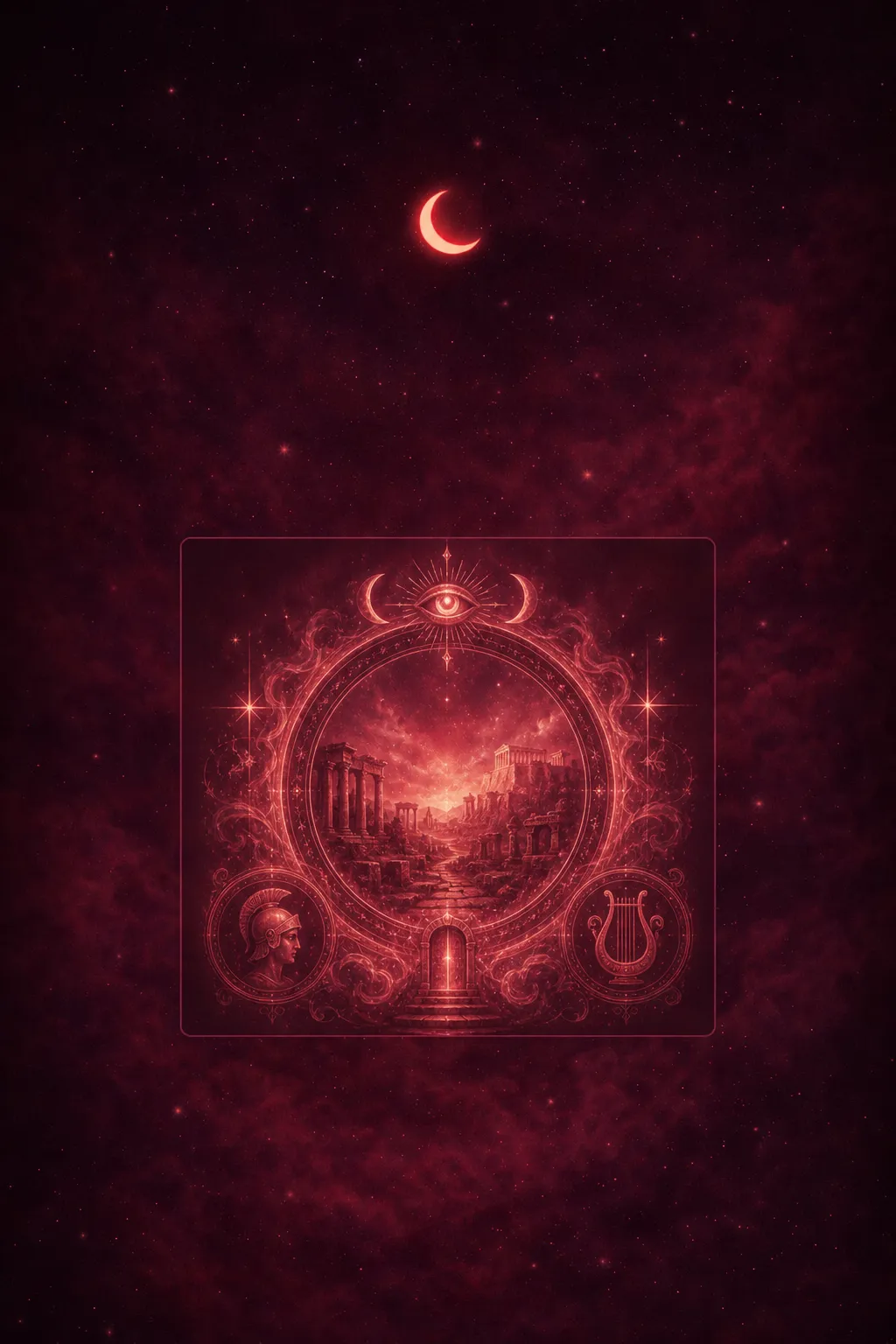

Dreaming about a past life typically means your subconscious is processing unresolved emotions, hidden fears, or deep personality traits by casting them in an unfamiliar historical setting, using symbolic strangers and distant eras to help you recognize patterns, relationships, or wounds that still quietly shape your waking thoughts and behaviors today.
In under a minute you could read what your exact dream means for you, and see a picture of it. Free.
A dream still on your mind? Get your personal reading.
Describe your dream in a line or two. In seconds you get a reading of your exact dream, a picture drawn from your own words, and every symbol explained.
Free. No sign-up. Takes 10 seconds. Your dream stays private.
0%
Analyzing your dream…
Something went wrong. Please try again in a moment.
Your dreams deserve more than a dictionary
Common Past-Life Dream Scenarios and What They Mean
The shape a past-life dream takes matters as much as its presence. The most frequently reported version — vividly recognizing yourself in another era — tends to surface during life transitions: a career shift, a relationship ending, a creeping sense that the current path no longer fits. Psychologically, the mind is doing identity consolidation work, trying on an alternative self to clarify what it actually values. Some dreamers hold this lightly as soul-memory; others simply note the uncanny familiarity and let it point toward unlived potential worth reclaiming now.
- Meeting someone you know in a past life: When a partner, friend, or rival appears as an ancient companion, the dream is encoding the felt depth of that bond — often signaling unfinished relational dynamics or an attachment that carries unusual intensity. This is the territory the soulmate dream also explores: the sense that a connection is older than its history.
- Witnessing your own death in a past life: More about transformation than literal mortality. The dream marks the end of an old identity or a chapter you are reluctant to close, and frequently carries loss-of-control anxiety underneath its dramatic surface.
- Possessing a skill or language you don't actually have: A prompt from the psyche to develop suppressed capacities — talents recognized but never pursued.
- Owing or being owed something: Present-day guilt, resentment, or unresolved moral tension displaced onto a mythic past. The real work is forgiveness or accountability in current relationships.
- Being guided or shown a past life by a figure: Reflects a need for external authorization during uncertainty — a search for something or someone to explain why life feels the way it does right now.
A bad dream isn't a bad sign.
Across all these variants, the shadow pattern is worth watching: when past-life dreams become a habitual escape from present stress, the psyche may be relocating real problems into an unreachable "before" rather than addressing them directly.
What this dream could look like
Tap an image to open it full screen
Example images. Only you can see what you write in Dream Book.
What Your Subconscious Is Really Doing
From a psychological standpoint, a past-life dream is the mind's way of dramatizing what feels unfinished, unfamiliar, or strangely inherited within the self. Jung would call it an encounter with the deeper layers of the psyche — portions of identity that were never fully lived or consciously claimed. When those unlived parts feel too threatening to examine directly, the subconscious clothes them in historical distance, staging them as another person in another century. The emotional residue — longing, inexplicable grief, an odd sense of familiarity — belongs to the present; only the costume belongs to the past.
Modern anxiety plays a significant role here. When life feels out of control or identity feels unstable, the psyche may rehearse an alternative self as a coping strategy — not escapism exactly, but a kind of emotional pressure valve. Persistent fears, recurring attractions, or talents that feel older than your actual experience often get recast as evidence of a former life because that framing feels more tolerable than sitting with present-day uncertainty. A dream about reincarnation in this sense is less a supernatural claim and more a narrative the mind builds to contain feelings it cannot yet explain.
- Unresolved grief or nostalgia — mourning a version of yourself that never fully materialized
- Control anxiety — trying on a different identity when the current one feels stuck or in transition
- Disowned potential — talents or values projected onto a "former self" to make them feel safer to explore
- Shadow avoidance — relocating present-day problems into a mythic "before" to sidestep accountability now
Every dream you log starts to connect.
Dream Book keeps your dreams in one place and reveals the threads between them over time — your private dream journal. Free to start.


Cultural and Traditional Readings of Past-Life Dreams
Across many Western folk traditions, dreaming of another life was historically treated as a genuine membrane between worlds — a moment when the soul briefly recalled its earlier journeys. While mainstream culture has largely set aside that literal belief, echoes of it persist in surprising places. Reincarnation, once the near-exclusive territory of Eastern religious thought, has been quietly absorbed into American spiritual life; surveys consistently show that roughly one in four U.S. adults believe in some form of soul continuity, cutting across denominational lines. Within that landscape, a reincarnation dream is often received not as fantasy but as meaningful signal — a nudge toward unresolved business the soul is still carrying.
But what does your version mean?
Christian folk tradition takes a more cautious but not dismissive stance. Rather than endorsing literal past lives, it tends to read such dreams as prompts toward self-examination — a reminder that patterns of fear, sin, or longing can be inherited spiritually and emotionally, passed down through family lines rather than sequential lifetimes. That framing quietly overlaps with the modern-anxiety reading: when life feels out of control or identity feels uncertain, the mind reaches for a broader story to explain why certain struggles feel older than they should.
- Folk continuity belief: vivid past-life dreams seen as the soul "remembering," prompting reflection on recurring patterns.
- Christian-adjacent reading: inherited spiritual burdens rather than literal reincarnation; an invitation to seek clarity and release.
- Modern-anxiety lens: the past-life frame offers a sense of depth and purpose when present identity feels thin or unstable.
Spiritual and Religious Perspectives on Past-Life Dreams
Within mainstream Christian thought, past-life dreams occupy uncertain ground. Most Protestant and Catholic traditions reject reincarnation as doctrine, yet many believers still find spiritual weight in these experiences — reading them not as literal soul-memories but as symbolic invitations toward inner renewal. Jesus's words in John 3:3, "You must be born again," are sometimes drawn on here as a frame: the dream becomes less about a previous existence and more about the parts of yourself still waiting to be transformed in this one. That reframing can be genuinely useful, especially when the dream arrives during a season of anxiety about who you are becoming.
Was yours a sign? Find out.
Popular spirituality in Anglo culture approaches these dreams more openly, drawing on ideas of karmic residue and soul continuity — the sense that certain fears, affinities, or recurring struggles feel older than a single lifetime. This is generally held as personal meaning-making rather than firm belief, a way of honoring the emotional depth of the experience without requiring a theological commitment. The longing or grief these dreams carry can feel spiritually significant regardless of one's doctrinal position.
- Christian lens: treat the dream as a call to spiritual self-examination and renewal, not a literal past-life record.
- Popular spirituality lens: consider what unresolved pattern or soul-level recognition the dream may be surfacing.
- Both frames converge here: the dream is asking you to look inward — not backward — for the insight you need in your present life.
Related Dream Meanings
people
Soulmate Dream Meaning: Love, Longing & Connection
5 min read
nightmares
What Does Dreaming About Reincarnation Mean
6 min read
nightmares
Being Chased by Dog Dream: Fear, Guilt & Conflict
5 min read
nightmares
Being Stabbed Dream Meaning: Betrayal, Pain & Change
6 min read
nightmares
Dreaming of a Dead Person Giving Me a Gift — What It Means
5 min read
nightmares
What Does It Mean to See a Dead Bird in a Dream
5 min read
nightmares
Being Buried Alive: Meaning and Interpretation
5 min read

nightmares
Dead Wife: Meaning and Interpretation
5 min read
Practical Takeaways: Working With a Past-Life Dream
Whatever your belief about reincarnation, the most grounded thing you can do after this kind of dream is treat it as feedback about your current life. Ask yourself what the other-era "you" had that you feel is missing right now — freedom, purpose, belonging, courage. That gap is the real message, and it points toward something actionable in the present rather than something buried in a mythic before.
- Journal the emotional residue first. Before analyzing the plot, write down the feeling you woke with — longing, unease, relief. Feelings outlast details and usually carry the sharper insight.
- Identify the pattern, not just the period. If the past-life figure kept secrets, struggled with authority, or sacrificed their needs for others, ask honestly whether that pattern is alive in your life today.
- Watch for avoidance. If the dream keeps recurring during stress, it may be pulling you toward a vivid elsewhere rather than helping you face a present-tense decision. Recurring reincarnation-themed dreams that spike during anxiety are worth discussing with a therapist.
- Use it as a values check. What did the other life represent that you admire? Naming it clearly gives you a concrete value to pursue — not in another century, but this week.
A bad dream isn't a bad sign.
The dream hands you a mirror, not an escape route. Treating it practically means extracting its emotional intelligence and letting it inform a choice, a conversation, or a boundary you have been putting off.
If it keeps coming back, the app helps you understand the pattern.
Log each recurring dream and the free app shows you what's underneath — calmly, over time. Free to start.
People Also Ask
Dreaming about a past life often reflects your subconscious exploring deep memories, unresolved emotions, or recurring patterns in your current life. These dreams may symbolize lessons your soul is still processing. They can also represent a longing for a simpler time or a desire to understand who you truly are at your core.
Past life dreams tend to feel intensely real because they tap into deeply buried layers of the unconscious mind. The unfamiliar settings, faces, and emotions carry strong emotional charge, which makes them feel significant. This vividness is your mind's way of drawing urgent attention to themes that still need healing or acknowledgment in your present life.
Many traditions consider past life dreams a genuine spiritual signal, suggesting your soul is revisiting unfinished business or karma. Whether you hold spiritual beliefs or not, these dreams invite meaningful self-reflection. They often surface during periods of major change, pointing toward personal growth, forgiveness, or the release of long-held fears and behavioral patterns.
Write down every detail immediately upon waking — people, places, emotions, and symbols. Reflect on how the dream's themes mirror your current relationships or fears. Journaling regularly helps you spot recurring patterns. Some people find meditation or therapy useful for exploring the deeper meaning these vivid, emotionally charged dreams carry into their waking life.
Curious what your dream would look like?