
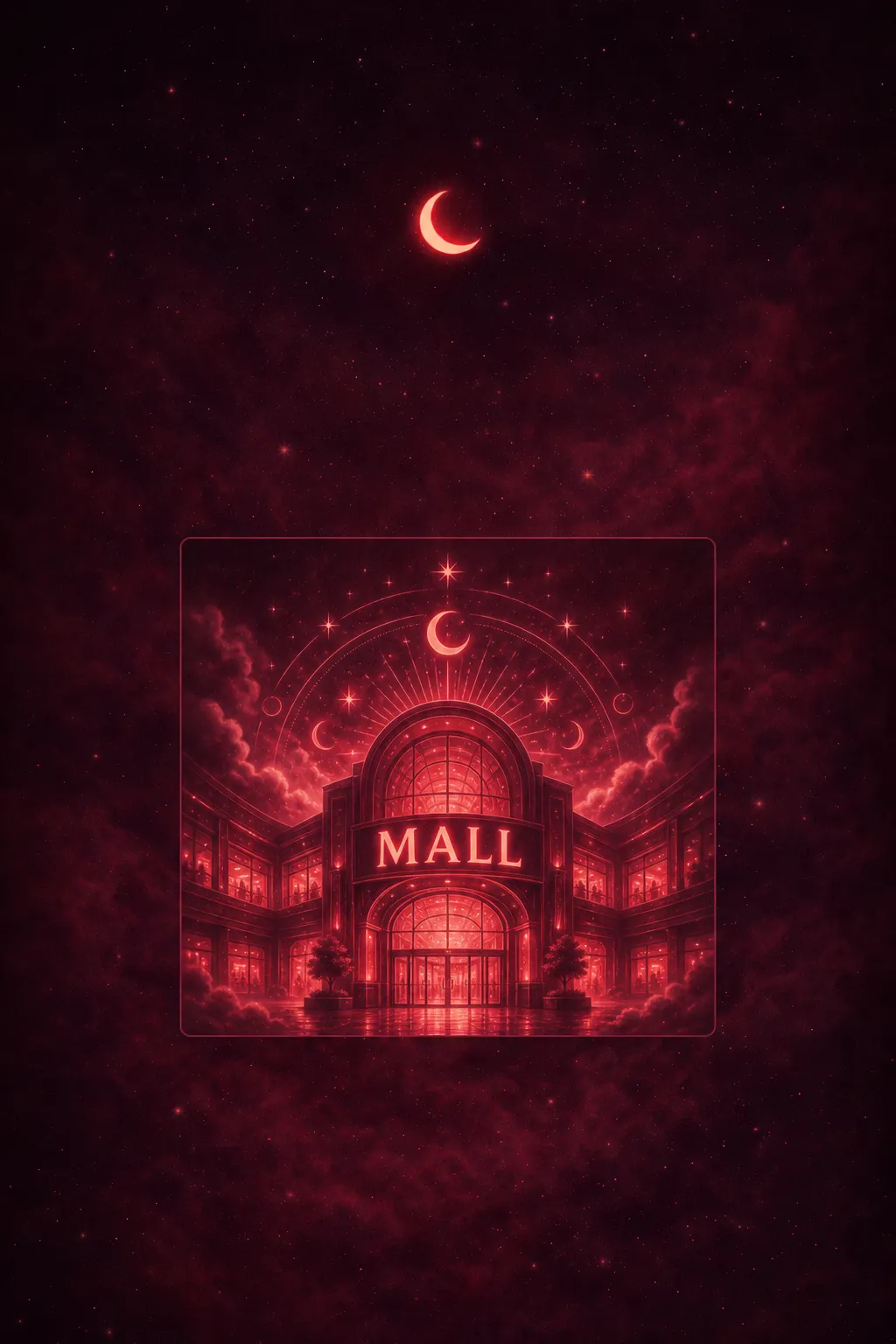

Dreaming about a mall typically reflects your search for identity, choices, and fulfillment in waking life, as the mall's many stores symbolize the options and decisions you face—whether in relationships, career, or personal values—and the emotions you feel while navigating it reveal how confident or overwhelmed you are by life's abundance of possibilities.
In under a minute you could read what your exact dream means for you, and see a picture of it. Free.
You read what it can mean. But what did yours mean?
General meanings stop here. In the free app, tell Dream Book your exact dream and get a reading that actually makes sense for you.


A dream still on your mind? Get your personal reading.
Describe your dream in a line or two. In seconds you get a reading of your exact dream, a picture drawn from your own words, and every symbol explained.
Free. No sign-up. Takes 10 seconds. Your dream stays private.
0%
Analyzing your dream…
Something went wrong. Please try again in a moment.
Your dreams deserve more than a dictionary
Common Mall Dream Scenarios and What They Mean
The most frequently reported mall dream — and arguably the most unsettling — is being lost or unable to find the exit. Corridor after corridor leads nowhere familiar, and every store looks the same. This maps directly onto decision fatigue: when waking life presents too many equally valid paths, the psyche stages the overwhelm as a labyrinth. If you wake from this dream feeling frantic, it's worth asking which real-life choice you've been avoiding or which priority you haven't yet named.
Dreaming of being lost and unable to find the exit
When every corridor loops back and no exit appears, the dream is mirroring real-world disorientation about goals or priorities. Too many options without a clear hierarchy triggers this labyrinth effect. The frantic feeling on waking is itself useful data: it points directly to whichever decision you've been postponing or whichever priority you haven't yet named.
But what does your version mean?
Dreaming of actively shopping or buying items
Reflects the ongoing work of identity construction. What you pick up — or put back — often mirrors what you're weighing in yourself: a worthwhile investment versus a guilty indulgence. The items on the shelves can stand in for real options, relationships, or values you are currently evaluating.
Dreaming of wanting something but having no money or a declined card
A classic anxiety dream tied to financial stress or a deeper sense of inadequacy; desire outpacing perceived resources, whether material or emotional. The gap between what you want and what you can reach is the core image your mind is processing.
Dreaming of overwhelming crowds and chaos in the mall
Social overload made literal. The dream is processing comparison pressure and the exhaustion of being seen and judged in public life. Personal space dissolves, individuality feels threatened, and the noise mirrors the mental clutter of too many competing social demands.
Dreaming of an empty or abandoned mall
The eerily quiet counterpart to the crowded mall. Where crowds signal overload, the deserted mall signals hollowness — a nagging suspicion that material pursuits aren't delivering the fulfillment they promised, or that a significant life chapter is closing.
Dreaming of meeting someone you know at the mall
The neutral mall ground signals a relationship being negotiated on equal, low-stakes terms. Your subconscious may be rehearsing connection or reconciliation in a space that carries no heavy symbolic weight of home or work.
Was yours a sign? Find out.
Dreaming of danger, a chase, or an emergency in the mall
Anxiety erupting inside a space coded as safe and recreational. Vulnerability feels especially sharp precisely because you weren't supposed to be at risk here — the contrast between expected leisure and sudden threat amplifies the underlying fear the dream is surfacing.
Dreaming of working a job or running a store in the mall
Points to feelings of being defined by your role or by transactional relationships, serving others in a space where you'd otherwise be a free agent. It can reflect a sense that your identity has become inseparable from what you produce or provide.
Across all these variants, the controlling question is the same: how much agency do you feel inside the dream? Moving through the mall with purpose and calm suggests confidence in your real-world decision-making, while confusion, scarcity, or threat signals that your sense of control deserves a closer look.
What this dream could look like
Tap an image to open it full screen
Example images. Only you can see what you write in Dream Book.
Psychological Meaning of a Mall Dream
From a psychological standpoint, the mall functions as the subconscious mind's preferred stage for working through questions of identity and desire. Browsing store after store without buying anything often signals that the dreamer is in an exploratory phase — trying on possible versions of themselves without committing to any one direction. This mirrors the real tension between genuine need and manufactured want, a conflict the psyche surfaces when waking-life choices feel either superficial or overwhelming. The emotional axis running through most mall dreams sits somewhere between desire and guilt, reflecting the very human discomfort of wanting things — whether material, relational, or vocational — while quietly questioning whether those wants are truly yours.
Modern anxiety sharpens these themes considerably. Crowds in the dream space often represent social comparison and the exhausting sense of being evaluated in public, triggering performance anxiety and a fear of losing individuality in the noise. The sheer abundance of options in a mall mirrors the decision fatigue that defines contemporary life — too many equally valid paths, too little clarity about personal values to filter them effectively. A sense of control, or the loss of it, tends to be the hidden emotional engine: the dreamer who moves purposefully through the mall is processing a growing confidence in their priorities, while one who feels rushed or watched may be processing stress around external judgment.
- Browsing without buying: unmet desires or identity options being quietly auditioned
- Crowds and social pressure: performance anxiety, fear of judgment, loss of selfhood
- Empty or closing mall: grief over a past self, or anxiety about obsolescence and change
- Purposeful navigation: emerging clarity about life direction and personal values
General meanings end here. Read your own dream.
Describe your dream in a line or two. In seconds you get a reading of your exact dream, a picture drawn from your own words, and every symbol explained.
Free. No sign-up. Takes 10 seconds. Your dream stays private.
0%
Analyzing your dream…
Something went wrong. Please try again in a moment.
Your dreams deserve more than a dictionary
Every dream you log starts to connect.
Dream Book keeps your dreams in one place and reveals the threads between them over time — your private dream journal. Free to start.
Cultural and Traditional Readings of the Mall Dream
The shopping mall is a distinctly modern American invention, and its appearance as a dream symbol carries the cultural weight of post-war consumer optimism. In mainstream Western culture, the mall long represented aspiration and abundance — a place where choice itself felt like freedom. Dreaming of a thriving, bustling mall can tap into that inherited association, reflecting a sense that opportunities are available and social life is humming. Conversely, the "dying mall" — a recurring image in contemporary American consciousness — has become a powerful folk metaphor for obsolescence and lost community, and dreams featuring empty corridors and shuttered storefronts often echo collective anxieties about economic decline and a changing social landscape.
A bad dream isn't a bad sign.
From a US Christian cultural perspective, the mall dream can carry a quiet moral undertone. Proverbs cautions against chasing vanity, and many believers intuitively read a dream of compulsive or guilt-laden shopping as a prompt to examine whether material pursuits are crowding out deeper values. This is rarely a fire-and-brimstone reading — more often it surfaces as a gentle nudge toward self-knowledge and intentionality about what one truly needs versus what culture insists one should want.
- Consumer culture pressure: The mall encodes society's message that identity is built through purchase, making it fertile ground for dreams about self-worth and belonging.
- Loss of control: Modern anxiety around financial stress and overspending finds a natural stage in the mall's tempting, overwhelming layout.
- Nostalgia and change: For many dreamers, the mall represents a specific era of community life — its decline in dreams can signal grief over personal or cultural transitions.
Spiritual Meaning of a Mall Dream
From a spiritual standpoint, the mall in a dream can serve as a quiet but pointed reminder to examine where you are placing your deepest investments. Two passages from Matthew speak directly to this tension: Jesus warns against storing up earthly treasures that moth and rust destroy (Matthew 6:19–21), and his cleansing of the temple marketplace (Matthew 21:12–13) raises the uncomfortable question of what has been allowed to crowd out what truly matters. When a mall appears in your dream, it may be the spirit nudging you to ask whether the relentless pursuit of more — more options, more things, more status — is filling space that was meant for something deeper.
That nudge often arrives during seasons of modern anxiety, when decision fatigue and spending pressure already feel overwhelming in waking life. The spiritual interpretation doesn't condemn desire outright; rather, it invites discernment. Are you browsing endlessly because you genuinely don't know what you need, or because you've been taught to equate acquiring with becoming? A dream set inside a vast, glittering consumer space can function as a kind of soul audit — an invitation to distinguish authentic need from conditioned want.
- Misplaced priorities: A crowded, dazzling mall may signal that external noise is drowning out inner values.
- Spiritual disorientation: Getting lost in the mall can reflect a loss of moral or purposeful direction, not just practical confusion.
- Invitation to simplify: An empty or closing mall sometimes carries a liberating spiritual message — that an era of chasing the wrong things is mercifully ending.
Related Dream Meanings

common dreams
What Does Dreaming About a Road Trip Mean
6 min read

common dreams
a Bible Verse: Meaning and Interpretation
5 min read

common dreams
Books: Meaning and Interpretation
5 min read
common dreams
Dream Within a Dream Meaning: Layers of Consciousness Explained
5 min read
common dreams
Winning Money: Meaning and Interpretation
5 min read

common dreams
Sunset: Meaning and Symbolism
5 min read

common dreams
Cooking: Meanings and Interpretations
6 min read
common dreams
Dream of House Flooding: Meaning and Interpretation
5 min read
Practical Takeaways: What to Do After a Mall Dream
The most useful first step is a quick audit of where you feel overwhelmed by options in waking life — career paths, relationships, financial decisions, or even smaller daily choices. Mall dreams tend to surface when decision fatigue has quietly built up. Writing down the two or three decisions you have been postponing can help you move from vague anxiety to something you can actually address.
- Name the pressure point. Ask yourself: where do I feel like I am "browsing" without committing? Identifying that area is half the work.
- Simplify your options deliberately. If the dream featured crowded aisles or too many stores, consider narrowing real-life choices to your top two before deciding — decision science consistently shows fewer options produce better satisfaction.
- Check your spending stress. Mall dreams frequently coincide with financial tension. A brief review of your budget — not a deep overhaul, just a clear look — can reduce the low-level dread that feeds these dreams.
- Set one small, concrete goal for the week. Dreams of wandering corridors signal a need for direction. A single achievable target restores a sense of forward motion and self-control.
But what does your version mean?
If the dream left you feeling judged or watched by the crowd, take it as a prompt to check how much of your current decision-making is driven by external expectations rather than genuine need. Even a short journaling session — asking "what do I actually want here, separate from what looks good?" — can reset that compass and reduce the likelihood the dream keeps recurring.
One dream is never the whole picture.
The free app remembers your dreams, draws them, and connects the threads over time — so the next one means even more. Free to start.
People Also Ask
In a biblical context, a mall can symbolize worldly temptation, materialism, or the pursuit of earthly desires over spiritual ones. It may reflect a warning to examine your priorities and whether you are placing too much value on possessions or social status rather than faith and inner growth.
Warning dreams often carry a strong emotional weight, vivid imagery, and a lingering sense of urgency upon waking. Recurring themes, symbolic messages that align with your current life decisions, and a deep inner conviction that the dream carries meaning beyond the ordinary are common signs to pay attention to.
Dreaming about a mall generally reflects choices, opportunities, or desires in your waking life. The mall represents a space of possibilities — emotionally, socially, or materially. Your experience inside the dream, whether you feel overwhelmed, excited, or lost, reveals how you truly feel about the decisions currently facing you.
Stores in dreams typically symbolize options, resources, or aspects of yourself available for exploration. Browsing suggests you are weighing life choices, while being unable to afford something may reflect feelings of inadequacy. A closed store can signal missed opportunities, and an overwhelming store may indicate decision fatigue or anxiety about abundance.
Curious what your dream would look like?