
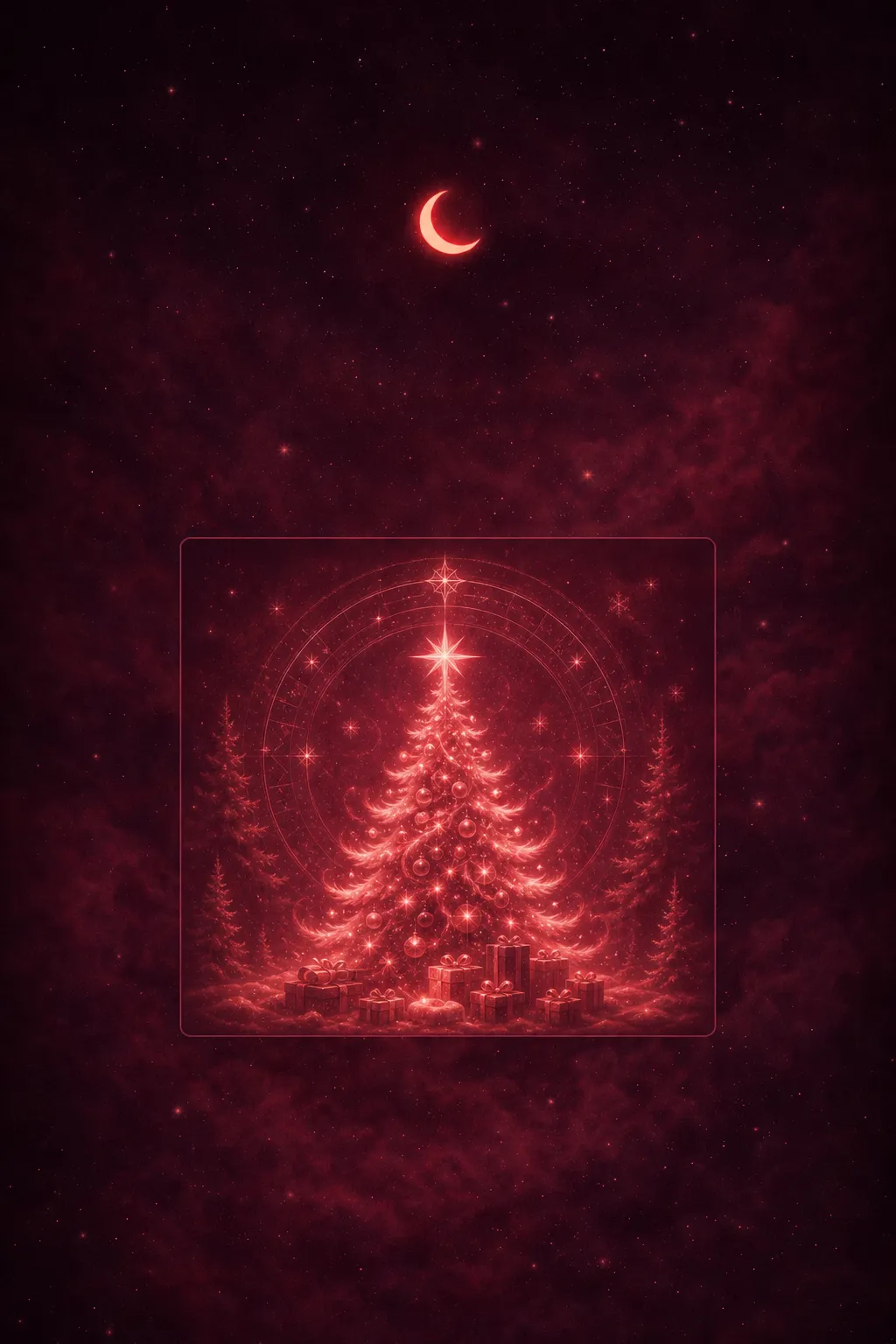

Dreaming about Christmas typically symbolizes joy, nostalgia, family togetherness, and a longing for warmth and connection, but it can also reflect feelings of stress, unmet expectations, or childhood memories resurfacing as your subconscious processes themes of giving, celebration, and the emotional weight of the holiday season.
In under a minute you could read what your exact dream means for you, and see a picture of it. Free.
You read what it can mean. But what did yours mean?
General meanings stop here. In the free app, tell Dream Book your exact dream and get a reading that actually makes sense for you.


A dream still on your mind? Get your personal reading.
Describe your dream in a line or two. In seconds you get a reading of your exact dream, a picture drawn from your own words, and every symbol explained.
Free. No sign-up. Takes 10 seconds. Your dream stays private.
0%
Analyzing your dream…
Something went wrong. Please try again in a moment.
Your dreams deserve more than a dictionary
Common Christmas Dream Scenarios and What They Mean
The scenario playing out in your Christmas dream often pinpoints exactly where your inner life is under pressure.
Dreaming of a warm, joyful Christmas with family or loved ones
This typically reflects wish-fulfillment — your mind compensating for real distance or affirming how deeply you value secure connection. It can also signal emotional satisfaction already present, reinforcing attachments you may take for granted in waking life.
But what does your version mean?
Dreaming of spending Christmas alone or being left out
This scenario shines a spotlight on unmet relational needs, a fear of being forgotten, or grief over bonds that have loosened over time. The exclusion felt in the dream is rarely literal; it more often mirrors a deeper worry about belonging.
Dreaming of Christmas going wrong or descending into chaos
Gifts not wrapped, dinner burning, nothing ready — this is a classic anxiety dream. Your waking obligations and fear of failing other people's expectations are bleeding straight into sleep, flagging a real need to examine how much pressure you are absorbing.
Dreaming of Christmas arriving at the wrong time or out of season
This suggests feeling out of sync with your own life's timeline, or a quiet longing for a reset moment you haven't allowed yourself. It can also signal surprise renewal — an unexpected readiness for change.
Dreaming of giving or receiving Christmas gifts
This scenario touches on reciprocity and self-worth — whether you feel adequately seen, or secretly doubt the value of what you offer others. Anxiety about the gifts themselves often mirrors wider feelings of adequacy.
Dreaming of a deceased loved one present at Christmas
Among the most emotionally weighted scenarios, this often reflects grief still being processed or an unfinished sense of farewell at a gathering that once included them. Many find it comforting rather than distressing — a form of continued bond.
Was yours a sign? Find out.
Dreaming of reliving a childhood Christmas
This points to a comparison your mind is quietly running between past security and present-day pressures. Vivid trees, lights, and decorations in such dreams generally signal hope and the reassuring structure of tradition — a counterweight to darker or more anxious feelings.
Across all these variants, the through-line is control and belonging: how much of either you feel you currently hold, and where the gap between expectation and reality is widest.
What this dream could look like
Tap an image to open it full screen
Example images. Only you can see what you write in Dream Book.
The Psychological Reading: Attachment, Anxiety, and Inner Stocktaking
From a psychological standpoint, dreaming of Christmas is rarely just about the holiday itself — it is the mind using a culturally loaded symbol to process unmet attachment needs and the gap between idealized memory and lived reality. The subconscious reaches for Christmas because it carries an enormous emotional charge: childhood associations, felt safety, and the warmth of belonging. When adult life falls short of that internalized picture, the dream surfaces as a quiet audit, measuring where you are against where part of you still expects to be.
Modern life layers considerable performance pressure onto the season — gift expectations, hosting duties, family roles you feel obligated to maintain — and the dreaming mind absorbs all of it. Themes of control tend to emerge here: anxiety about not doing enough, not giving enough, or failing to hold the moment together. This is the subconscious flagging stress around self-worth and social obligation rather than the holiday itself. For those who hold a Christian faith, Christmas also carries a spiritual weight of renewal and grace, which can deepen the emotional contrast when the season feels hollow or strained.
- Grief activation: absent or deceased loved ones feel most conspicuous at bonding milestones, and dreams may be processing unresolved loss.
- Inner-child reconnection: nostalgia pulls you back to formative emotional states, inviting reflection on how your core needs have or have not changed.
- Year-end stocktaking: the dream often signals a subconscious review of relationships and personal growth as one chapter closes.
General meanings end here. Read your own dream.
Describe your dream in a line or two. In seconds you get a reading of your exact dream, a picture drawn from your own words, and every symbol explained.
Free. No sign-up. Takes 10 seconds. Your dream stays private.
0%
Analyzing your dream…
Something went wrong. Please try again in a moment.
Your dreams deserve more than a dictionary
Every dream you log starts to connect.
Dream Book keeps your dreams in one place and reveals the threads between them over time — your private dream journal. Free to start.
Cultural and Traditional Readings: Expectation, Performance, and the Weight of the Season
In mainstream Anglo-American culture, Christmas carries an almost mythological emotional charge built up over generations of seasonal media, advertising, and shared ritual. Folk wisdom long held that dreaming of Christmas foretold reunion and good fortune — a winter-dark world briefly illuminated by warmth and generosity. That optimistic folk reading still lingers, but modern life has layered something heavier on top of it: the social-performance norms around hosting, gift-giving, and projecting the "perfect" holiday. When Christmas appears in a dream today, it often mirrors that pressure — the unspoken obligation to orchestrate joy for everyone around you, even at personal cost.
The year-end timing amplifies this. Christmas sits at a cultural hinge point, a moment when society collectively takes stock, and dreams tap into that shared energy. Many people unconsciously audit the year — what was gained, what was lost, what fell short of January's resolutions — and the holiday becomes the symbol through which that reckoning plays out at night. From a broadly Christian-inflected tradition, the season also carries themes of grace, renewal, and the quiet hope that something new is coming, which can soften what might otherwise feel like a purely anxious dream.
A bad dream isn't a bad sign.
- Consumer pressure: Gift culture and spending anxiety frequently surface as crowded shops, forgotten presents, or empty boxes in the dream imagery.
- Hosting and reciprocity: Dreams of a chaotic or failed gathering often reflect real fears about meeting others' expectations rather than your own needs.
- Year-end stocktaking: The holiday as a cultural deadline can prompt dreams that are less about Christmas itself and more about unfinished personal goals.
- Winter symbolism: Cold and darkness giving way to interior warmth is a folk signal of resilience — finding light precisely when the outer world offers least of it.
The Spiritual Reading: Hope, Grace, and the Season's Inner Call
Within a Christian framework, Christmas centers on the Incarnation — light entering darkness, hope arriving in an unlikely, humble form. When this symbol surfaces in a dream, it can carry that same quiet theological weight: a prompt to ask where renewal is genuinely possible in your life right now, rather than simply longing for a past that felt more certain. The biblical resonance is less about prophecy and more about orientation — are you open to grace, or have anxiety and obligation crowded it out entirely?
The season's core moral call — generosity, goodwill, peace — also works as a mirror for the dreamer's inner state. A dream heavy with gift-giving pressure or fractured family tables may be surfacing a spiritual tension between authentic giving and performance-driven obligation. The question the dream quietly poses is whether the generosity you extend flows from a genuine place or from a need to manage others' expectations and maintain control over how you are perceived.
- Light in darkness: A joyful Christmas dream may signal that hope and renewal are available to you even in a difficult season of life.
- Generosity as self-examination: Notice whether the giving in your dream feels free or forced — that contrast often reflects an honest audit of your real emotional boundaries.
- Peace as aspiration: The "goodwill toward others" theme can point toward unresolved reconciliation — a relationship or inner conflict quietly asking for your attention.
Related Dream Meanings

common dreams
Forest Dream Meaning: Growth, Fear & Hidden Desires
5 min read
common dreams
Missing a Flight Dream: Anxiety, Fear & Missed Chances
5 min read
common dreams
Dreaming of Basement Meaning: What Your Subconscious Reveals
5 min read

common dreams
Desert Dream Meaning: Isolation, Clarity & Inner Journey
5 min read

common dreams
Dreaming of an Island Meaning
6 min read
common dreams
Airport Dream Meaning: Transitions, Change & Anxiety
5 min read

common dreams
Hotel Dream Meaning: Transition, Change & Security
5 min read
common dreams
What Does It Mean to Dream About an Abandoned Building
5 min read
Practical Takeaways: What to Do With a Christmas Dream
Before the dream fades, jot down the emotional temperature — not just the plot. Were you relieved, anxious, grieving, or warmly content? That feeling is your clearest signal. Christmas dreams tend to surface when seasonal or family-related stress is quietly building in waking life, often before you have consciously registered it. Treating the dream as an early-warning system rather than a random replay gives you something useful to act on.
Once you have named the dominant emotion, ask yourself where you actually hold control. Holiday pressure frequently spirals because expectations — yours and other people's — go unexamined until everyone is already overwhelmed. A few honest questions can cut through that:
- What am I actually obligated to do, versus what I feel guilty not doing? Draw that line clearly before commitments pile up.
- Which relationships is this dream pointing at? If isolation or conflict appeared, consider reaching out or setting a low-key plan before the season peaks.
- Am I mourning a version of Christmas that no longer exists? If so, building one small, intentional new tradition can redirect nostalgia into something workable.
- Where can I reduce load rather than optimize performance? Scaling back one obligation often restores more genuine connection than adding a curated event.
But what does your version mean?
The practical goal is modest but meaningful: use the dream as a prompt for one concrete decision — a conversation, a boundary, or a realistic reset of expectations — rather than letting the emotional charge it carries simply bleed into your waking days unexamined.
One dream is never the whole picture.
The free app remembers your dreams, draws them, and connects the threads over time — so the next one means even more. Free to start.
People Also Ask
Christmas in dreams often symbolizes joy, family connection, generosity, and new beginnings. It can reflect a longing for warmth and togetherness or signal that a rewarding period is approaching. Depending on the dream's mood, it may also highlight unmet expectations or emotional pressure surrounding holidays and family relationships.
Spiritually, dreaming of Christmas can represent hope, renewal, and divine blessing. It may signal a time of inner healing or a call to reconnect with your deeper values and sense of purpose. Many traditions view such dreams as reminders to embrace gratitude, compassion, and the sacred gift of love in your daily life.
Warning dreams often feel unusually vivid, emotionally intense, and linger long after waking. They may repeat or carry a strong sense of urgency. Many people discern divine warnings by reflecting prayerfully on the message, seeking wise counsel, and noticing whether the dream aligns with scripture, moral guidance, or a persistent inner conviction.
Santa in a dream typically symbolizes generosity, abundance, and wish fulfillment. He can represent a nurturing authority figure or the hopeful part of yourself that believes good things are coming. If Santa appears withholding or absent, the dream may reflect fears of disappointment, feeling undeserving, or unresolved childhood memories around gifts and approval.
Curious what your dream would look like?