
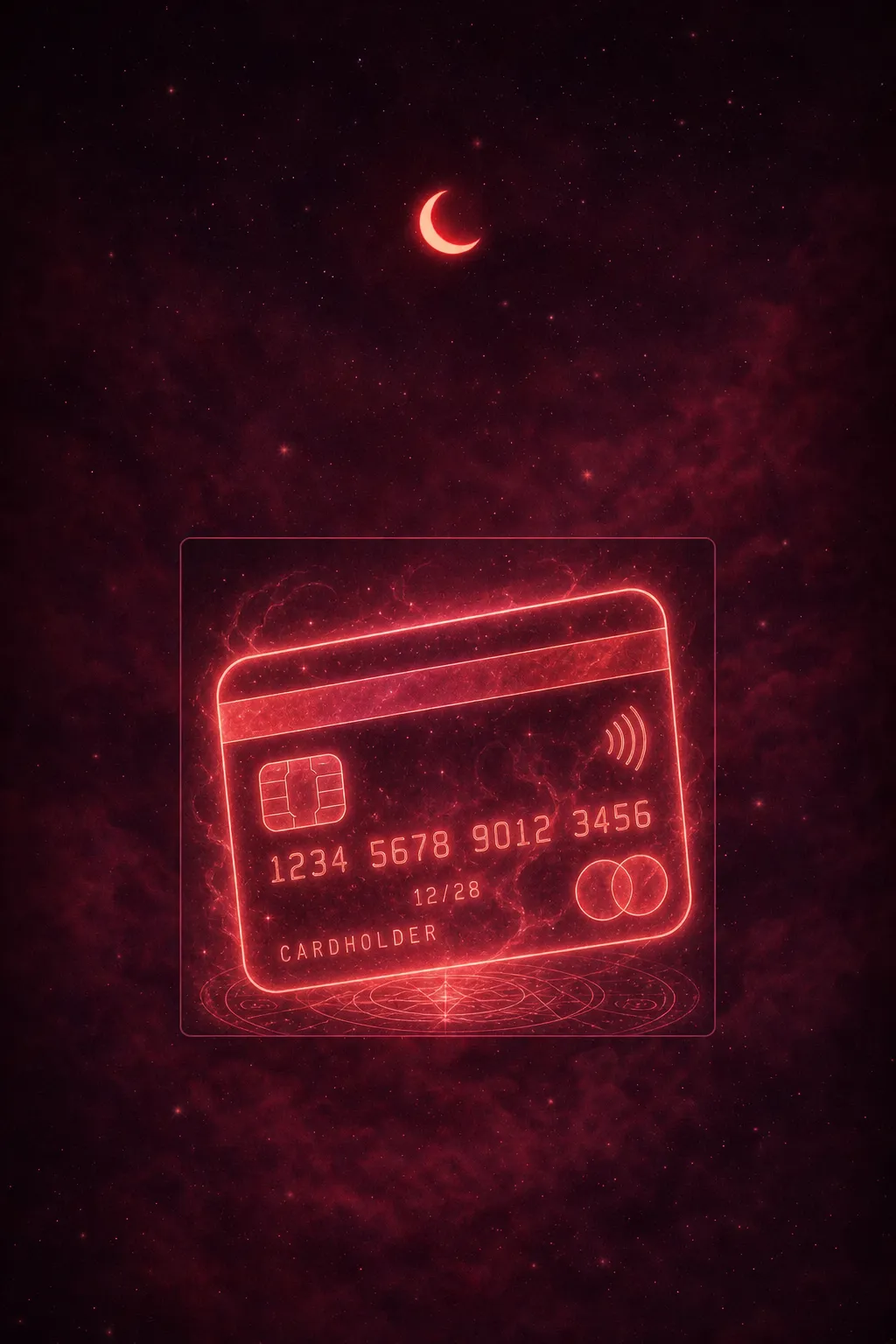

Dreaming about a credit card typically reflects your relationship with financial responsibility, personal power, or borrowed confidence, suggesting you may be weighing future opportunities against present risks, feeling indebted in a relationship, or seeking greater control over resources and decisions in your waking life.
In under a minute you could read what your exact dream means for you, and see a picture of it. Free.
You read what it can mean. But what did yours mean?
General meanings stop here. In the free app, tell Dream Book your exact dream and get a reading that actually makes sense for you.


A dream still on your mind? Get your personal reading.
Describe your dream in a line or two. In seconds you get a reading of your exact dream, a picture drawn from your own words, and every symbol explained.
Free. No sign-up. Takes 10 seconds. Your dream stays private.
0%
Analyzing your dream…
Something went wrong. Please try again in a moment.
Your dreams deserve more than a dictionary
Common credit card dream scenarios and what they mean
The specific details of a credit card dream shift its meaning considerably — whether the card works, disappears, or overflows with debt, each points to a distinct anxiety or aspiration worth examining. At Dream Book we explore this symbol in depth.
Dreaming of your credit card being declined
A declined card is one of the most common financial anxiety dreams, and its message tends to be about shame and self-worth as much as money. Being rejected at the register — especially in public — mirrors a waking fear of being exposed as inadequate, unprepared, or simply not enough. It often surfaces during high-pressure periods when you feel your resources, emotional or practical, are stretched thin.
But what does your version mean?
Dreaming about your credit card being stolen
Theft in this context strikes at identity and security simultaneously. Your card carries your name, your access, your financial standing — losing it to someone else suggests a felt loss of control over your own life or boundaries. It can also signal distrust of someone close, a quiet worry that another person is draining your energy or taking more than they are entitled to. Dreams of snakes can carry a similar undercurrent of hidden threat and betrayal.
Dreaming of a maxed-out card or mounting debt
This scenario maps almost directly onto dreams about debt — a creeping sense that past choices are finally catching up. A maxed-out card reflects emotional or practical overextension: you have given, spent, or promised more than you can currently sustain, and the dream is pressing you to reckon with that imbalance before it worsens.
Dreaming about a carefree spending spree
Not every credit card dream is a warning. Freely spending without worry can signal genuine feelings of empowerment, or a healthy desire to reward yourself after a period of restraint. The shadow side, however, is denial — the dream may expose an impulse to enjoy now while ignoring the bill that will eventually arrive.
Dreaming of receiving or activating a new credit card
A new card arriving in a dream tends to feel hopeful. It represents extended trust — from an institution, a relationship, or life itself — and signals that a fresh phase of opportunity or responsibility is opening up. The key question the dream poses is whether you feel ready to use that access wisely.
Was yours a sign? Find out.
Dreaming about paying off your credit card balance
Clearing a balance in a dream delivers a distinct emotional release: obligation lifted, slate wiped clean. This scenario often follows a period of prolonged stress and reflects a deep desire to regain control and move forward without the psychological weight of unresolved commitments hanging over you.
What this dream could look like
Tap an image to open it full screen
Example images. Only you can see what you write in Dream Book.
What Your Subconscious Is Really Spending
From a psychological standpoint, a credit card in a dream is rarely about money in a literal sense — it is the mind's shorthand for control, self-worth, and the quiet dread of consequences catching up. Modern life runs on deferred cost: buy now, pay later. The subconscious picks up on that tension acutely, and dreaming of a credit card often surfaces waking anxiety about whether you are living within your true emotional or financial limits. Much like dreams about debt, the card can represent burdens you have agreed to carry but have not yet fully reckoned with.
The specific condition of the card matters enormously as a psychological signal. A card that works smoothly reflects a sense of agency and competence — the feeling that you can meet the moment. A maxed-out or rejected card, by contrast, tends to mirror felt inadequacy, a loss of autonomy, or the fear that your resources (emotional as much as financial) are running dangerously thin. Psychologists link this to self-regulation conflict: the dream stages the internal debate between impulse and discipline, between what you want now and what future-you will have to absorb. This kind of pressure dream shares DNA with classics like teeth falling out or falling — the subconscious broadcasting a loss of grip before the waking mind is ready to admit it.
- Loss or theft of the card — points to identity anxiety, fear of exposure, or a sense that someone is undermining your autonomy or trust.
- Reckless spending in the dream — may reflect guilt around self-worth tied to consumption, or unresolved tension between desire and responsibility.
- Opening or closing an account — often mirrors a life-stage transition, a reassessment of priorities, or a subconscious nudge toward financial self-knowledge.
General meanings end here. Read your own dream.
Describe your dream in a line or two. In seconds you get a reading of your exact dream, a picture drawn from your own words, and every symbol explained.
Free. No sign-up. Takes 10 seconds. Your dream stays private.
0%
Analyzing your dream…
Something went wrong. Please try again in a moment.
Your dreams deserve more than a dictionary
Every dream you log starts to connect.
Dream Book keeps your dreams in one place and reveals the threads between them over time — your private dream journal. Free to start.
Credit Cards, Consumer Culture, and the Weight of Borrowed Power
In Anglo consumer culture, receiving your first credit card carries genuine ritual weight — it signals adulthood, independence, and entry into the economy as a trusted participant. Your credit score functions almost like a social grade, quietly shaping what you can access, where you can live, and how institutions perceive you. When that symbol shows up in a dream, it arrives loaded with those cultural expectations. Dreaming of effortlessly swiping a card can reflect a sense of belonging and competence, while a maxed-out or stolen card taps into the broader cultural anxiety that comfort is always one crisis away from collapse — not unlike the freefall sensation explored in falling dreams.
There is also a long-standing moral undercurrent in Western — particularly Protestant-influenced — attitudes toward debt. Folk wisdom warns that borrowed money is borrowed trouble, and many families still pass down an almost visceral suspicion of spending beyond your means. This tradition frames the credit card dream as a conscience check: are you living within your values, or letting impulse quietly outpace responsibility? A dream of reckless spending may carry a faint cultural guilt that has less to do with actual finances and more to do with inherited beliefs about frugality and virtue.
A bad dream isn't a bad sign.
- Creditworthiness as identity: culturally, a good credit history signals reliability — dreaming of a high-limit card may reflect a desire for social recognition.
- Consumerism vs. restraint: the card can symbolize the tension between enjoying life now and honoring future obligations.
- Modern anxiety: in an era of one-click purchases, the credit card dream often mirrors a waking sense that self-control feels harder to hold onto than ever.
A Spiritual Reckoning With Borrowed Power
From a spiritual standpoint, a credit card in a dream can surface as a quiet prompt from the conscience — an invitation to examine whether the life you are building is truly yours or quietly mortgaged to forces outside your control. The biblical wisdom of Proverbs 22:7, that "the borrower is servant to the lender," frames dreams about debt as more than financial anxiety; they become a question of freedom and integrity. Is the dreamer living in alignment with their values, or spending — emotionally and spiritually — what they do not yet have?
Within a Christian stewardship framework, the credit card represents the ancient tension between desire and consequence, the sowing-and-reaping principle applied to modern life. A dream in which the card feels powerful and unlimited may gently challenge the dreamer to ask whether abundance is being received as gift or pursued as identity. A dream of mounting debt or a frozen account, by contrast, can read as the soul registering a cost that the waking mind has deferred — a call to live with greater intentionality and within honest means.
- Stewardship check: Are your resources — time, money, energy — being used in ways that reflect your deeper commitments?
- Bondage vs. freedom: The card as symbol may point to an area of life where obligation has quietly become control.
- Moral accounting: Dreams of overspending or fraud can signal an inner reckoning — the conscience tallying choices the waking self has not yet fully faced.
Related Dream Meanings
animals
Snakes Dream Meaning: Fear, Change & Hidden Threats
5 min read
common dreams
What Does It Mean to Dream About Debt? Interpretation and Meaning
5 min read

body health
Teeth Falling Out Dream: Anxiety, Loss & Vulnerability
5 min read
common dreams
Falling Dream Meaning: Insecurity, Fear & Loss of Control
5 min read
common dreams
Dream of Suitcase: Meaning and Interpretation
5 min read

common dreams
Mansion: Meaning and Interpretation
5 min read

common dreams
Dream House Meaning: What It Symbolizes in Your Dreams
5 min read
common dreams
Dream of Shopping: Meaning and Interpretation
5 min read
Turning the Dream Into a Financial Reality Check
Whatever emotional charge the dream carried — anxiety, relief, shame, or confidence — the most grounded thing you can do is treat it as an unsolicited nudge toward self-auditing. Modern life makes it dangerously easy to lose track of where borrowed money ends and your own resources begin, and the subconscious often flags that blur before your waking mind admits it. Set aside fifteen minutes after a credit card dream to open your actual statements: check balances, upcoming due dates, and whether your spending patterns over the past month reflect your stated priorities or just your impulses.
- Declined card dream? Review your credit utilization ratio and confirm you have a small buffer for unexpected costs — financial vulnerability often registers in dreams before it registers in your budget app.
- Lost or stolen card dream? Update passwords on financial accounts and check recent transactions; the dream may be mirroring a vague real-world worry about exposure or debt you have been avoiding — much the way dreams about teeth falling out often signal a nagging fear of losing control or credibility.
- Maxed-out card dream? Identify one area of lifestyle spending that is outpacing your income and set a concrete weekly cap — if recurring falling dreams accompany this theme, both may point to the same underlying anxiety about losing your footing financially.
- Dream of effortlessly paying with a card? Use that confidence as motivation — map out a specific short-term savings goal to anchor the feeling in reality.
But what does your version mean?
The practical takeaway is simple: the dream is not a prophecy, but it is rarely random. Treating it as low-stakes data about your relationship with control, spending, and financial identity can make one uncomfortable hour of honest bookkeeping genuinely worthwhile.
One dream is never the whole picture.
The free app remembers your dreams, draws them, and connects the threads over time — so the next one means even more. Free to start.
People Also Ask
Cards in dreams often represent identity, access, and personal power. They can reflect how you manage resources, relationships, or opportunities in waking life. A card may symbolize the tools you have available to navigate challenges, or it may highlight feelings of being prepared — or unprepared — for upcoming decisions.
A bank in a dream typically symbolizes security, resources, and self-worth. It can reflect your relationship with financial stability or emotional reserves. Dreaming of a bank may suggest you are evaluating what you have saved, what you owe, or whether you feel protected and supported in your current life circumstances.
Dreaming your credit card is stolen often signals feelings of vulnerability, loss of control, or fear that someone is exploiting your trust. It may reflect anxiety about finances, identity, or personal boundaries being violated. This dream encourages you to examine who or what in your life may be draining your energy or resources.
Seeing money in a dream is commonly linked to self-value, power, and opportunity. It does not always predict financial gain; instead, it may reflect your confidence, ambitions, or fear of lack. Abundant money can signal optimism and potential, while losing money may point to insecurity or unresolved stress about stability.
Curious what your dream would look like?