
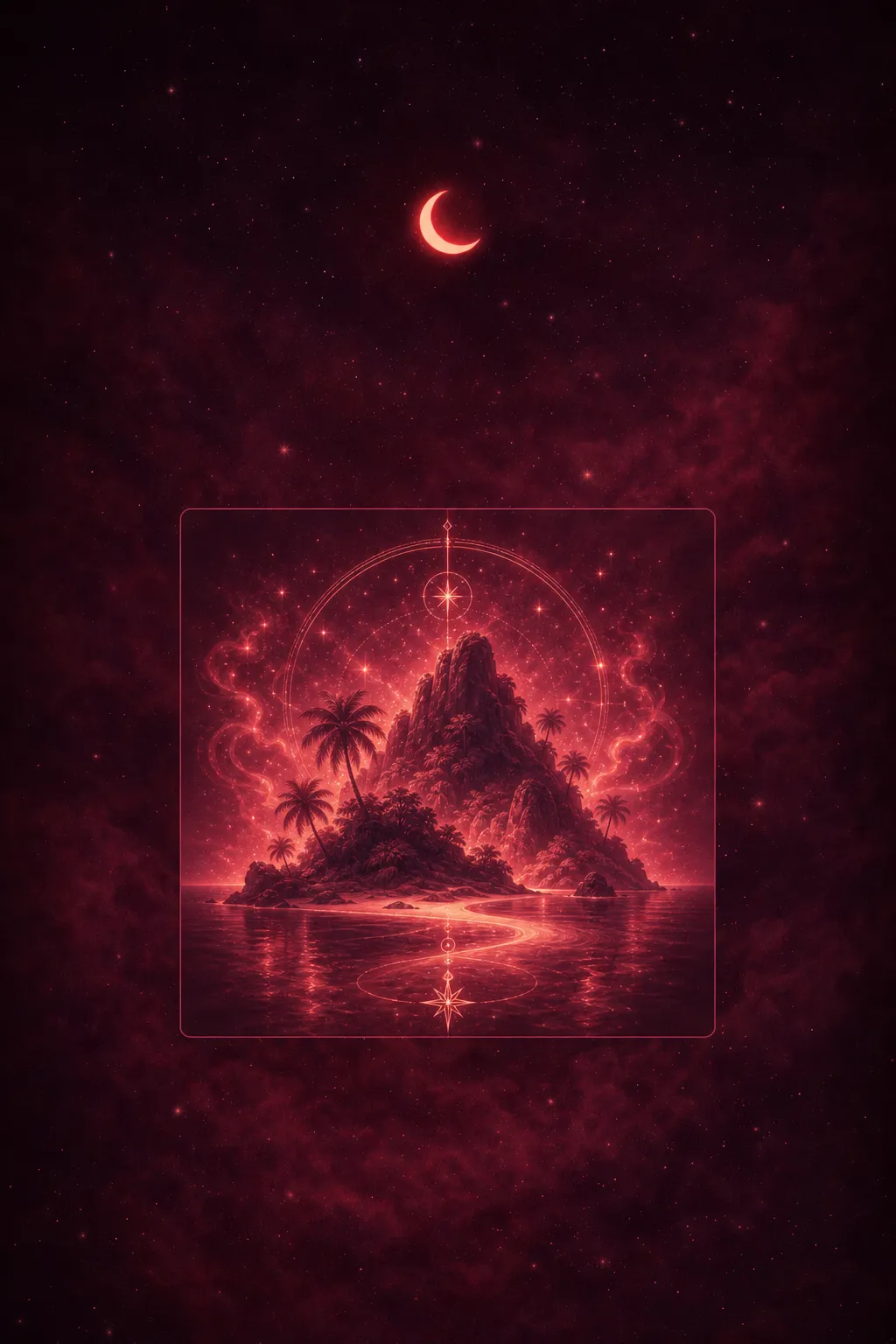

Dreaming of an island meaning centers on isolation, self-reliance, and emotional refuge, as your subconscious uses the image of land surrounded by water to reflect a deep longing for escape, inner peace, or independence from the pressures, relationships, and responsibilities that feel overwhelming in your waking life.
In under a minute you could read what your exact dream means for you, and see a picture of it. Free.
You read what it can mean. But what did yours mean?
General meanings stop here. In the free app, tell Dream Book your exact dream and get a reading that actually makes sense for you.


Common Island Dream Scenarios and What They Mean
The emotional tone of your island dream shifts dramatically depending on the details — whether you feel stranded or serene tells you almost everything about what your mind is working through. At Dream Book we explore this symbol in depth.
- Stranded or marooned alone: Waking up anxious after this scenario often signals that you feel unsupported in waking life — cut off from colleagues, friends, or family with no clear way back. It reflects a loss of control over your circumstances, the modern pressure of being overwhelmed with no rescue in sight.
- A beautiful tropical retreat: Dreaming of a lush, peaceful island is the psyche's request for a time-out. It points to a genuine need for rest, simpler living, and firmer personal boundaries — a healthy signal that you're running low on inner reserves.
- Living alone by choice, self-sufficiently: This scenario blends pride in autonomy with a quiet warning. Self-reliance is a strength, but the dream may be asking whether your independence has hardened into a wall that keeps others out.
- On the island with a group: Shared isolation creates a tight in-group. This can feel like belonging, but it may also reveal that you — or your social circle — are operating inside a closed bubble, cut off from broader perspectives.
- Seeing an island but unable to reach it: The island shimmers in the distance while you tread open water, getting no closer. This is a classic frustration dream tied to goals or peace that feel perpetually out of reach, and to a sense that change or progress is beyond your control.
- The island shrinking or flooding: When the ground erodes beneath your feet, the dream reflects anxiety about losing a source of stability — a relationship, a role, or a personal safe space that feels threatened by external forces. Dreams of falling away from solid ground carry a strikingly similar undercurrent of lost footing.
- Leaving or escaping the island: A hopeful sign. Departing the island suggests readiness to reconnect, grow past self-imposed limits, and re-enter the flow of community and change.
But what does your version mean?
Across all these variants, pay attention to whether the water surrounding the island feels calm or threatening — that detail alone often reveals whether your current need for separation feels like healthy self-care or fearful withdrawal.
What this dream could look like
Tap an image to open it full screen
Example images. Only you can see what you write in Dream Book.
The Psychological Reading: Isolation, Autonomy, and the Divided Self
From a depth-psychology perspective, an island in a dream functions as a vivid map of the ego's relationship with its social world. The surrounding water acts as an emotional boundary — the psychic moat you have placed, consciously or not, between yourself and others. Dreaming of an island can signal a genuine need for solitude and healthy self-containment, or it can expose a fear that connection has quietly slipped away. The ambivalence is the message: your subconscious is asking whether you chose this distance or whether it chose you.
In a modern-anxiety context, the island dream surfaces frequently during periods of burnout, social overload, or major life transitions. When everything feels out of control, the mind conjures a bounded, manageable space — somewhere the demands of others simply cannot reach. That impulse toward retreat is not pathological; it often reflects a legitimate need to reassert personal limits. The psychological risk arises when the island stops feeling like a refuge and starts feeling like a sentence — a sign that self-protective withdrawal has tipped into emotional disconnection. This mirrors the anxiety captured in falling dreams, where loss of control becomes the central emotional experience.
- Refuge seeker: You may be processing a genuine need for boundaries or recovery time after prolonged stress.
- Control and self-knowledge: The island's condition — lush or barren, mapped or unknown — mirrors how resourceful or depleted you feel in managing your inner life.
- Abandonment undercurrent: A desolate island can surface unresolved fears of being overlooked or left behind by your support network.
- Transformation signal: Choosing to leave the island — perhaps by boat — often marks a readiness to re-engage, a subconscious green light for personal growth.
General meanings end here. Read your own dream.
Describe your dream in a line or two. In seconds you get a reading of your exact dream, a picture drawn from your own words, and every symbol explained.
Free. No sign-up. Takes 10 seconds. Your dream stays private.
0%
Analyzing your dream…
Something went wrong. Please try again in a moment.
Your dreams deserve more than a dictionary
Cultural and Traditional Readings of the Island Dream
Across Western folklore and literary tradition, islands have long carried a double charge: they are places of both paradise and punishment. From the castaway myths of ancient seafaring cultures to Robinson Crusoe and the shipwreck tales that shaped Anglo-American popular imagination, the island stands as a space where a person is stripped of social role and forced back on their own resources. That enduring archetype filters directly into how many people instinctively feel when they wake from an island dream — a gut sense that something about belonging, or the loss of it, is being worked out. Dreams of water surrounding that island often deepen this feeling, marking the boundary between the self and the wider social world.
Was yours a sign? Find out.
Within US Christian-influenced folk belief, wilderness and desert island imagery echoes the biblical motif of the forty days apart — a season of testing, clarity, and self-examination before returning to community. From this angle, dreaming of an island need not signal crisis; it may point toward a necessary period of spiritual stocktaking. The surrounding ocean, vast and beyond personal control, reinforces the sense that some forces in life must simply be waited out rather than managed.
Modern anxiety culture adds its own layer to these older readings. In an era defined by hyper-connectivity, the island dream often surfaces when someone is quietly craving disconnection — a mental retreat from the relentless pressure to be available and responsive. Folk wisdom across many traditions recognises this tension between community duty and the need for solitude, often framing chosen withdrawal as wisdom rather than failure. Key cultural themes woven through island dreams include:
A bad dream isn't a bad sign.
- Paradise lost or found — whether the island feels Edenic or desolate shapes its traditional meaning sharply.
- The exile motif — being sent away versus choosing to leave, a distinction folk tales treat very differently.
- Self-reliance as virtue — the castaway who survives is a cultural hero; the one who despairs is a cautionary figure.
- Sacred retreat — monastic and indigenous traditions alike mark islands as liminal, set-apart spaces for renewal.
The Spiritual Reading: Exile, Encounter, and the Set-Apart Self
Within a Christian framework, dreaming of an island can carry a quietly powerful resonance. The apostle John wrote the book of Revelation while exiled on Patmos — a literal island — and that enforced solitude became the setting for his most vivid divine encounter. Your dream may be echoing that same paradox: the place that feels like exile can also be the place where clarity breaks through. If modern life has left you overstimulated and spiritually depleted, the island may appear as an invitation rather than a punishment — a set-apart space where, stripped of noise and obligation, something essential can finally be heard.
This connects to the broader biblical wilderness motif, in which figures from Moses to Jesus withdraw from community not to escape but to be renewed, tested, and redirected. Dreaming of an island during a season of stress or transition may reflect a soul-level need for that kind of intentional retreat — a hunger for stillness that your daily schedule refuses to allow. The anxiety of feeling emotionally cut off from others and the longing for sacred solitude are not opposites here; they are two sides of the same spiritual restlessness. Dreams set near a shoreline or boundary between land and sea often intensify this tension, placing the dreamer at the threshold between connection and withdrawal.
- Peaceful island: may suggest your spirit is genuinely calling for rest, prayer, or self-examination — not avoidance.
- Stranded island: could reflect a fear that setting boundaries will lead to spiritual or relational abandonment.
- Island with a clear horizon: often signals that time apart will yield perspective and renewed sense of direction.
Related Dream Meanings
common dreams
Water Dream Meaning: Emotions, Intuition & Growth
5 min read
common dreams
Falling Dream Meaning: Insecurity, Fear & Loss of Control
5 min read

common dreams
What Does It Mean to Dream About a Boat
5 min read
common dreams
Ocean Dream Meaning: Emotions, Change & the Subconscious
5 min read

common dreams
Beach: Meaning and Interpretation
6 min read
common dreams
Bridge Dream Meaning: Transition, Change & New Starts
5 min read

common dreams
Storm Dream Meaning: Turmoil, Anxiety & Change
5 min read

common dreams
Exam Dream Meaning: Anxiety, Self-Doubt & Pressure
5 min read
What to Do After an Island Dream: Practical Steps
Before the dream fades, jot down the single strongest feeling it left you with — calm, trapped, relieved, or panicked. That emotional residue is your most honest data point. If the feeling leaned toward relief, your mind may be signaling a genuine need for more protected downtime; if it leaned toward dread, it's worth asking honestly whether a habit of self-reliance has quietly tipped into isolation you didn't choose.
But what does your version mean?
- Audit your boundaries. List two or three relationships where you feel either overexposed or completely walled off. Island dreams often surface when that balance has drifted without you noticing.
- Schedule deliberate solitude — and deliberate connection. Modern life rarely offers true quiet, so a recurring island dream can be your mind lobbying for it. Block time to recharge alone, but also book one low-stakes social contact you've been postponing.
- Check your stress load around control. Feeling adrift on a vast ocean in the same dream amplifies the island's anxiety charge — a signal that circumstances feel beyond your grip. Identify one area of daily life where you can take a small, concrete action to restore a sense of agency.
- Notice what connects you to the mainland. If a bridge or crossing appeared in the dream, or was conspicuously absent, that detail points directly to which relationships or resources you sense are — or aren't — available to you right now.
- Revisit the dream in a week. If the island keeps returning, treat it as a persistent prompt rather than a one-off image, and consider whether a counselor or trusted friend could help you name what the psychic distance is protecting you from.
One dream is never the whole picture.
The free app remembers your dreams, draws them, and connects the threads over time — so the next one means even more. Free to start.
People Also Ask
Dreaming of an island typically represents isolation, self-reliance, or a longing for escape and peace. It can signal a need for solitude to recharge emotionally, or reflect feelings of being cut off from others. The surrounding water and the island's mood offer important clues about your current emotional state.
Fully lucid, controllable dreams where the dreamer consciously shapes every detail are considered among the rarest experiences. Recurring prophetic dreams that later match real events are also exceptionally uncommon. Dreaming of a deserted island with complete sensory clarity — smell, temperature, sound — falls into this rare, vivid dream category.
Biblically, the ocean often symbolizes chaos, the unknown, and God's vast power. In scripture, waters can represent nations, turmoil, or divine testing. An island rising from that ocean may symbolize a place of refuge or divine provision — a safe space God sets apart amid life's overwhelming circumstances and spiritual challenges. Dreams involving water frequently carry layered meaning worth exploring.
Warning dreams from God often feel unusually vivid, repeat themselves, and linger emotionally upon waking. They typically carry a clear moral urgency or a strong sense of conviction. If an island dream leaves you feeling spiritually alert or unsettled rather than peaceful, it may be worth prayerful reflection and seeking wise counsel.
Never ignore dreams featuring urgent warnings, recurring symbols, or strong emotional intensity upon waking. Dreams of being stranded alone on an island, unable to signal for help, often reflect real feelings of isolation or unaddressed crisis. Dreams tied to health anxieties, broken relationships, or persistent fear deserve conscious reflection and honest self-examination.
Curious what your dream would look like?