
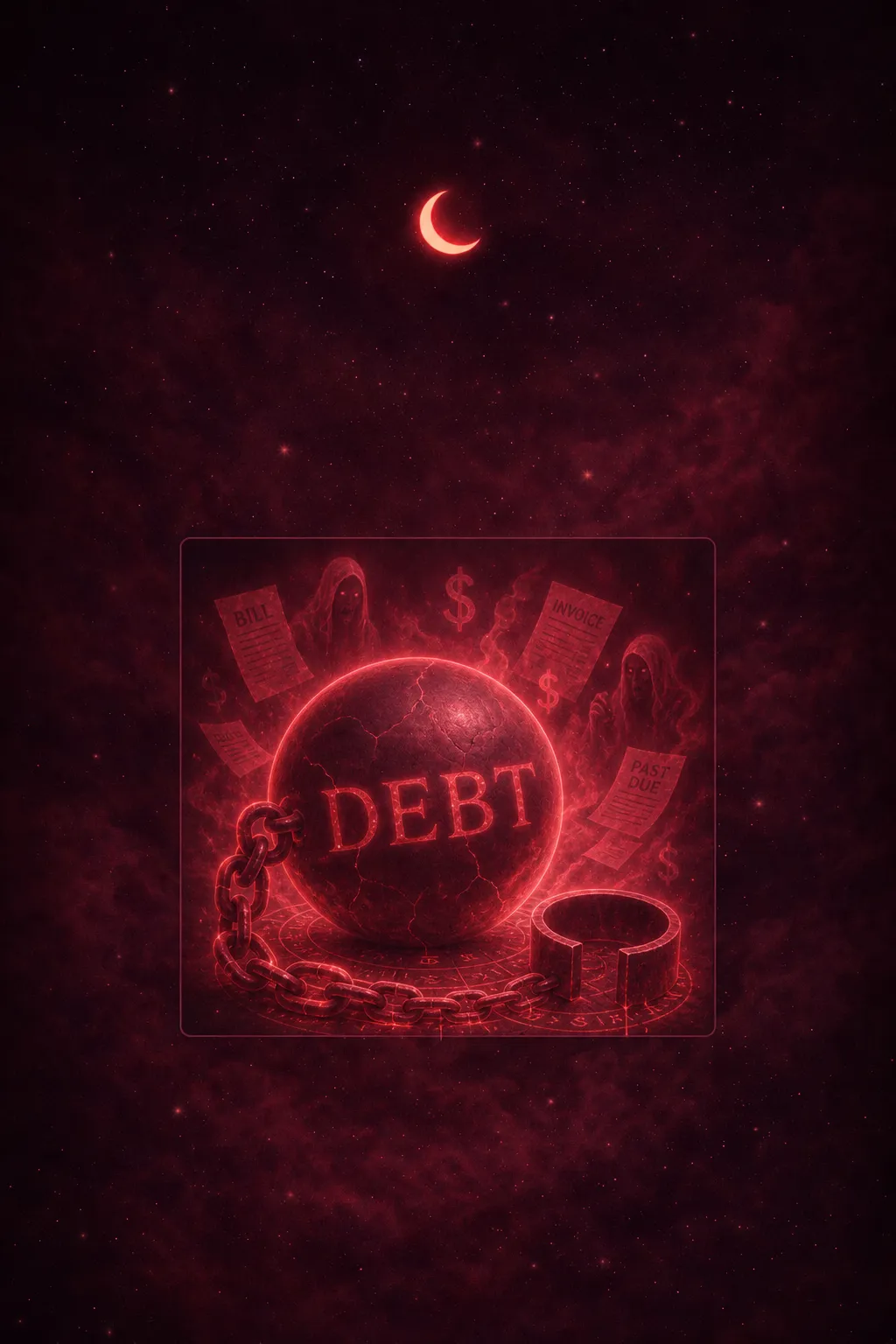

Dreaming about debt typically reflects feelings of stress, obligation, or guilt in waking life, suggesting you feel overwhelmed by responsibilities, fear financial insecurity, or sense that you owe something emotionally to others, urging you to examine unresolved burdens and take practical steps toward restoring balance and peace of mind.
In under a minute you could read what your exact dream means for you, and see a picture of it. Free.
You read what it can mean. But what did yours mean?
General meanings stop here. In the free app, tell Dream Book your exact dream and get a reading that actually makes sense for you.


A dream still on your mind? Get your personal reading.
Describe your dream in a line or two. In seconds you get a reading of your exact dream, a picture drawn from your own words, and every symbol explained.
Free. No sign-up. Takes 10 seconds. Your dream stays private.
0%
Analyzing your dream…
Something went wrong. Please try again in a moment.
Your dreams deserve more than a dictionary
Common Debt Dream Scenarios and Their Meanings
The shape a debt dream takes shifts its message considerably. Being overwhelmed by an unpayable debt — numbers climbing, no way out — is one of the psyche's loudest anxiety signals, reflecting a waking life where demands have outpaced capacity. It is a prompt to audit your obligations honestly and ask where you need to ask for help. By contrast, paying off or clearing a debt carries relief and forward motion; emotionally, it can mirror a release of guilt or the quiet satisfaction of restoring balance with yourself or someone else.
- Pursued by a debt collector or creditor: an avoided responsibility is catching up with you — or an inner voice is playing the role of accuser. Much like dreams of being chased, facing the figure often matters more than running from it.
- Owing money to a friend or family member: points to relational imbalance, a give-and-take dynamic that feels unequal or emotionally loaded.
- Someone owes you: suggests unmet reciprocity — a sense of being shortchanged or waiting, perhaps too long, to be repaid in kind.
- Discovering a debt you never knew about: hidden consequences surfacing; like dreams of teeth falling out, this scenario often reflects a fear that the past is quietly catching up with the present.
- Inheriting another person's debt: raises a boundary question — are you carrying obligations that genuinely belong to someone else, perhaps within a family pattern?
- Having a debt forgiven or cancelled: a grace note; the dreaming mind granting permission to release guilt and move forward without the full ledger being settled.
What this dream could look like
Tap an image to open it full screen
Example images. Only you can see what you write in Dream Book.
What Your Mind Is Really Processing
From a psychological standpoint, dreaming of debt is the brain's way of metabolizing stress it hasn't fully resolved during waking hours. When financial pressure, mounting responsibilities, or unmet promises crowd your conscious mind, sleep gives the psyche a private space to rehearse those tensions — and debt becomes the shorthand it reaches for. Much like dreams about teeth falling out, debt imagery often signals a bruised sense of personal control: the feeling that life's demands have quietly outpaced your resources, leaving you exposed.
But what does your version mean?
The emotional weight rarely stays confined to money alone. Psychologically, the "debt" in your dream may stand in for unpaid emotional labor, unacknowledged favors, or promises you've quietly shelved. The creditor-debtor dynamic that shows up in these dreams can mirror real-world power imbalances — situations where you feel owned by an obligation or dependent on someone else's goodwill. That suffocating sense of being trapped by what you owe shares psychological ground with dreams of being chased, where something you cannot outrun closes in regardless of effort. Many people also carry an internalized moral narrative in which financial trouble equals personal failing; when that belief runs deep, a debt dream can surface sharp feelings of inadequacy or shame that deserve honest examination rather than dismissal.
- Avoidance signals: Dreams of unopened bills or fleeing collectors often mirror active denial of a waking problem that needs direct attention.
- Delayed reckoning: A sense that past choices are quietly accruing interest reflects anxiety about accountability and the fear that future costs are inevitable.
- Self-worth check: If the dream leaves you feeling morally diminished — not just financially pressured — your subconscious may be challenging a belief that your value as a person depends on perfect solvency.
General meanings end here. Read your own dream.
Describe your dream in a line or two. In seconds you get a reading of your exact dream, a picture drawn from your own words, and every symbol explained.
Free. No sign-up. Takes 10 seconds. Your dream stays private.
0%
Analyzing your dream…
Something went wrong. Please try again in a moment.
Your dreams deserve more than a dictionary
Every dream you log starts to connect.
Dream Book keeps your dreams in one place and reveals the threads between them over time — your private dream journal. Free to start.
Debt as a Cultural Mirror: Shame, Pressure, and the Weight of Owing
In Anglo-American culture, debt has long carried a moral charge that goes far beyond balance sheets. The Protestant work ethic — still deeply embedded in everyday attitudes — frames borrowing as a personal failing, a sign that someone has lived beyond their means or lacked the discipline to manage what they earned. Phrases like paying your dues, settling scores, and being in the red reveal how thoroughly financial language bleeds into moral language. When debt appears in a dream, it can activate that inherited sense of shame just as readily as it signals practical worry.
Was yours a sign? Find out.
The tension is sharpened by modern credit culture, which quietly normalizes carrying debt while simultaneously stoking chronic low-grade anxiety about it. Cost-of-living pressures, housing affordability, and the relentless comparison enabled by social media mean many people hold a background hum of financial dread even when their accounts are technically stable. Dreams about debt in this context often reflect that gap — the disconnect between a world that says borrowing is ordinary and a gut instinct that insists it is dangerous. Much like dreams of teeth falling out, debt dreams tend to surface when a person's sense of control or self-sufficiency feels quietly threatened, and like being-chased dreams, they often intensify when avoidance — rather than confrontation — has become the default response to a pressing problem.
- Anglo work ethic: owing money reads as a character flaw, amplifying dream-guilt beyond the financial facts
- Moralized idioms: everyday language frames debt as something to be atoned for, not merely resolved
- Comparison culture: seeing others appear financially secure intensifies the perceived shame of one's own shortfall
- Precarity anxiety: cost-of-living stress keeps financial fear close to the surface, making it dream-ready material
Debt as Spiritual Burden: Accountability, Forgiveness, and the Soul's Ledger
In the biblical tradition, debt and sin are deeply intertwined — the Lord's Prayer itself asks God to "forgive us our debts, as we forgive our debtors," using financial language to capture the weight of moral failing. When debt surfaces in a dream, many believers find it worth asking whether the symbol points beyond the bank account to something unresolved in the conscience: a broken promise, a relationship where you feel you've taken more than you've given, or a quiet guilt that daylight keeps at arm's length. Dreams of money and obligation can function as a kind of inner reckoning — the soul surfacing what the busy mind suppresses.
The stewardship theme runs alongside this. Scripture frames earthly resources — time, talent, finances — as things entrusted rather than owned outright, and dreaming of debt can stir a genuine spiritual audit: Am I managing what I've been given with integrity? That question isn't meant to deepen shame but to redirect anxiety into accountability, which is a healthier form of control. The suffocating, inescapable quality that debt dreams often share with dreams of being chased suggests the same underlying spiritual pressure: something unresolved is gaining on you and asking to be faced.
A bad dream isn't a bad sign.
- Unresolved guilt: The dream may be naming a spiritual or relational debt you've been avoiding — forgiveness owed or needed.
- Stewardship check: A prompt to honestly review how you're using the resources and relationships in your care.
- Grace as release: The redemptive thread in this symbolism is real — debt in scripture is always the prelude to the possibility of forgiveness and a fresh start.
Related Dream Meanings

nightmares
Being Chased Dream Meaning: Anxiety & Avoidance
5 min read

body health
Teeth Falling Out Dream: Anxiety, Loss & Vulnerability
5 min read
common dreams
Money Dream Meaning: Wealth, Worth & Anxiety
5 min read

common dreams
Football: Meaning and Interpretation
5 min read

common dreams
Prom: Meaning and Interpretation
5 min read

common dreams
Credit Card: Meaning and Interpretation
6 min read

common dreams
Camping: Meaning and Interpretation
5 min read

common dreams
What Does Dreaming About a Courtroom Mean? Dream Interpretation
6 min read
Turning the Dream into Action: Practical Steps for the Debt Dreamer
When a debt dream jolts you awake, the most useful first move is a straightforward life audit. Pull out a notebook and list every obligation weighing on you right now — financial, yes, but also emotional and relational. Who do you feel you owe time, energy, or an apology? Naming these concretely strips them of the shapeless dread they carry in dreams and puts them in a space where you can actually do something about them.
- Triage ruthlessly. Separate obligations you can act on this week from those that are genuinely out of your hands. Anxiety spikes when the mind treats everything as equally urgent and equally solvable — it isn't.
- Set one boundary. If the dream points to overextension, identify a single commitment you can scale back, delegate, or decline. One concrete "no" does more for your sense of control than a dozen good intentions.
- Have the conversation you've been avoiding. Recurring debt dreams often trail an unresolved tension with another person — an unpaid favor, a promise left hanging. A direct, low-stakes check-in can dissolve the psychological weight faster than any amount of internal rehearsal — much like the trapped feeling behind dreams of being chased eases only when you turn and face what is pursuing you.
- Ground your finances in reality. If money stress is the driver, even a rough budget sketch reduces the anxiety that money worries create by replacing vague fear with specific numbers you can actually respond to.
But what does your version mean?
The dream is not a verdict — it is a prompt. Treat it as your mind's way of flagging that something needs attention, and let that signal move you toward one small, deliberate action rather than spiraling rumination.
One dream is never the whole picture.
The free app remembers your dreams, draws them, and connects the threads over time — so the next one means even more. Free to start.
People Also Ask
Spiritually, dreaming of debt often signals a sense of imbalance or unresolved obligation — not necessarily financial. It can reflect feelings of guilt, karmic duty, or emotional burdens you feel you owe others. Your subconscious may be urging you to acknowledge and release what weighs heavily on your soul.
The Bible doesn't address dream symbolism directly, but money in scripture often represents stewardship, trust, and responsibility. Dreams involving money — much like dreams about fire — may spiritually reflect how you value your gifts and blessings. Proverbs 13:11 warns against dishonest wealth, suggesting money dreams can prompt reflection on integrity and wise living.
Romans 13:8 instructs believers to owe nothing to anyone except love. Dreaming of paying off debts can spiritually mirror a call to settle unresolved matters — financial, emotional, or moral. It suggests your inner spirit is ready to restore balance, honor commitments, and move forward with a clear conscience.
Paper money in dreams typically symbolizes energy, opportunity, and perceived self-worth. Because paper currency has value only through shared trust, dreaming of it may highlight anxieties about security or status. It can also represent potential — resources available to you — encouraging you to recognize and use your personal power wisely.
Curious what your dream would look like?