
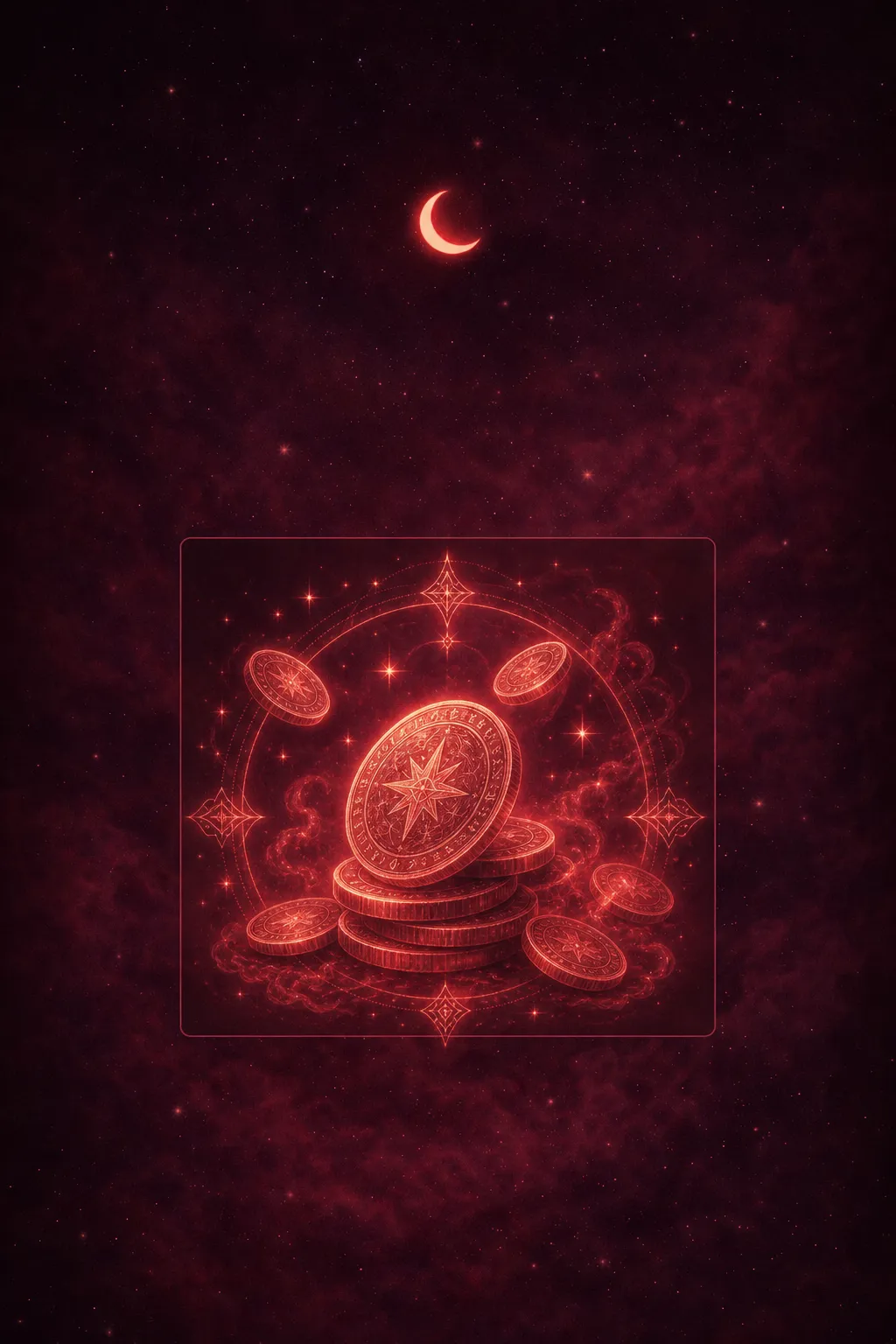

Dreaming about coins meaning centers on wealth, value, and self-worth, as coins in dreams typically symbolize opportunities, personal resources, or hidden potential, with finding coins suggesting incoming luck or recognition, losing them reflecting financial anxiety, and their condition—shiny or tarnished—hinting at how confidently you perceive your own abilities and future prospects.
In under a minute you could read what your exact dream means for you, and see a picture of it. Free.
You read what it can mean. But what did yours mean?
General meanings stop here. In the free app, tell Dream Book your exact dream and get a reading that actually makes sense for you.


A dream still on your mind? Get your personal reading.
Describe your dream in a line or two. In seconds you get a reading of your exact dream, a picture drawn from your own words, and every symbol explained.
Free. No sign-up. Takes 10 seconds. Your dream stays private.
0%
Analyzing your dream…
Something went wrong. Please try again in a moment.
Your dreams deserve more than a dictionary
Common Coin Dream Scenarios and Their Meanings
The specific action surrounding coins in a dream shifts the meaning considerably. Finding coins on the ground is one of the most common variants — psychologically it points to a boost in self-worth or the recognition of an overlooked opportunity. During periods of financial stress, this scenario often functions as reassurance, a subconscious reminder that small gains still matter. By contrast, losing or dropping coins reflects anxiety about slipping control, whether over a budget, a relationship, or personal security — closely related to the wider fear of loss explored in dreams about losing money. Counting coins suggests a waking preoccupation with resources and worth; the dream mind is essentially running the numbers, often signaling that you need to take honest stock of where you stand.
- Collecting coins in a jar or piggy bank: patience, incremental progress, and a coping response to uncertainty — the desire to store up security against an unpredictable future.
- Gold or especially valuable coins: aspiration and hidden worth, though a greedy or hoarding tone in the dream may flag ambition tipping into anxiety about status — themes that overlap with dreaming of gold more broadly.
- Giving or receiving coins: the emotional weight of an exchange — generosity if the feeling is warm, or a sense that a relationship has become transactional if the mood feels cold.
- Fake or worthless coins: deception, disappointment, or imposter feelings — questioning whether a recent gain or compliment is genuine, much like the vulnerability that surfaces in teeth-falling-out dreams.
- Flipping a coin to decide: conscious ambivalence, a reluctance to own a choice, and the temptation to surrender control to chance rather than commit.
- Old or foreign coins: unresolved history, inherited values, or unfamiliar dimensions of self-worth still waiting to be examined.
But what does your version mean?
Across all these variants, the emotional tone is the most reliable guide: the same pile of coins feels like abundance in one dream and like a pitiful remainder in another, reflecting how firmly your waking sense of security — financial or personal — is holding up at the time.
What a dream about coins could look like
Tap an image to open it full screen
Example images. Only you can see what you write in Dream Book.
The Psychological Reading: Worth, Anxiety, and Inner Accounting
In psychological terms, dreaming of coins often reflects how you privately measure your own value. Unlike paper money — which tends to symbolize large, sweeping ambitions — coins speak to incremental self-worth: the quiet, daily tallying of whether you are doing enough, earning enough, or simply being enough. Jung would frame this as the ego's attempt to quantify the self, and modern stress research echoes that framing: when cost-of-living pressures mount, the unconscious frequently translates financial anxiety into tangible, countable objects. A handful of coins in a dream may be the mind's shorthand for a waking fear that resources — emotional as much as financial — are running dangerously low, much like the helpless free-fall sensation captured in dreams about falling, where control slips away entirely.
Coins also carry a strong decision-making charge rooted in the heads-or-tails archetype. When you dream of flipping, counting, or hoarding coins, your subconscious may be wrestling with a choice you feel you cannot fully control — chance versus deliberate action, fate versus agency. This connects naturally to broader anxieties about financial security and the modern pressure to measure personal worth by productivity or income. From a Christian psychological perspective, the parable of the lost coin resonates here: the compulsive need to search and recount can signal a fear of losing something essential about yourself, not merely material goods — a vulnerability that surfaces in waking life much like the exposure anxiety seen in dreams of teeth falling out.
Was yours a sign? Find out.
- Scarcity anxiety: Counting or losing coins may mirror feelings of emotional depletion or a fear that your efforts go unrecognized.
- Control and agency: Hoarding coins suggests a desire to stabilize an unpredictable situation; spending them freely can signal emotional release or reckless avoidance.
- Incremental transformation: Accumulating coins one by one points to a slow but genuine inner shift — growth that feels modest yet compounds over time.
General meanings end here. Read your own dream.
Describe your dream in a line or two. In seconds you get a reading of your exact dream, a picture drawn from your own words, and every symbol explained.
Free. No sign-up. Takes 10 seconds. Your dream stays private.
0%
Analyzing your dream…
Something went wrong. Please try again in a moment.
Your dreams deserve more than a dictionary
Every dream you log starts to connect.
Dream Book keeps your dreams in one place and reveals the threads between them over time — your private dream journal. Free to start.
Cultural Traditions and Folk Beliefs Around Coins in Dreams
Across Western folk tradition, a coin has long carried a double charge: it is both a practical token of exchange and a loaded symbol of fate. In old European custom, dreaming of finding coins was widely read as a sign of coming good fortune, while losing them pointed to waste or misplaced trust — an anxiety not unlike the unsettled feeling that accompanies dreams of teeth falling out, where something small but symbolically loaded slips beyond your grip. These beliefs fed directly into everyday superstition — the habit of keeping a coin in a new purse, or placing one heads-up on a doorstep — practices that treated coins as small anchors of luck and protection. Within the US Christian tradition, coins carry a specific moral weight drawn from scripture: the parable of the lost coin speaks to the value of what is overlooked or underestimated, lending the dream image a sense that something of genuine worth is waiting to be recovered rather than chased.
In broader American folk culture, coins in dreams are often linked to money anxieties that go beyond simple greed — the dread of small shortfalls, the nagging sense that each decision either adds to or chips away at long-term security. That framing has sharpened in an era of rising costs and economic uncertainty, where even loose change carries psychological weight. Folk tradition also placed coins alongside gold as markers of divine favor or cosmic reward, so a dream rich in gleaming coins could feel less like a financial fantasy and more like a reassurance that your efforts hold real, lasting value. Culturally, the coin's two-sided nature — heads or tails, chance or choice — has made it a recurring folk metaphor for crossroads moments, reinforcing the idea that a coin dream may signal a life decision where the outcome feels uncomfortably uncertain.
- European folk belief: dreaming of coins promised material luck or warned of petty losses, depending on whether you held or dropped them.
- US Christian reading: the lost-coin parable frames the symbol as recovered worth — something valuable that self-doubt caused you to overlook.
- Modern folk anxiety: coins represent incremental control — the budget line, the small sacrifice — reflecting today's cultural pressure to account for every dollar.
Spiritual and Biblical Meanings of Coins in Dreams
From a biblical perspective, coins carry a striking range of moral weight. The widow's two small coins in Mark 12:41–44 remind us that genuine offering is measured by sacrifice and sincerity, not amount — a dream of modest coins may therefore signal that your true worth lies in what you give wholeheartedly rather than what you accumulate. The parable of the lost coin in Luke 15:8–10 adds another layer: a diligent search followed by joy over what is recovered suggests that dreaming of finding or counting coins can reflect a spiritual longing to reclaim something of deep personal value that felt misplaced — whether that is faith, integrity, or a sense of purpose. On the darker end, the thirty pieces of silver in Matthew 26:14–16 stand as scripture's sharpest warning about the moral cost of placing money above conscience — a dream haunted by coins exchanged under guilt or pressure may be surfacing an anxiety about compromise and the slow erosion of your values, much as dreams of teeth falling out often surface a fear of losing something irreplaceable, or as dreams touched by death can signal a reckoning with what truly matters.
A bad dream isn't a bad sign.
In a broader spiritual reading, coins in dreams often speak to the question of stewardship: how responsibly are you managing the small, daily gifts — time, attention, energy — entrusted to you? Modern life intensifies this tension, pressing people to measure personal worth almost entirely through income and productivity. A spiritually oriented reading gently pushes back, inviting the dreamer to ask whether the inner accounting system driving their anxiety is truly their own, or simply a reflection of external pressure. The dream may be less about finances and more about realigning what you genuinely consider valuable.
Related Dream Meanings
common dreams
Money Dream Meaning: Wealth, Worth & Anxiety
5 min read

common dreams
Gold Dream Meaning: Wealth, Success & Self-Worth
5 min read

body health
Teeth Falling Out Dream: Anxiety, Loss & Vulnerability
5 min read

common dreams
Falling Dream Meaning: Insecurity, Fear & Loss of Control
5 min read

nightmares
Death Dream Meaning: Transformation, Loss & Change
5 min read

nightmares
Being Chased Dream Meaning: Anxiety & Avoidance
5 min read

common dreams
Dreaming of Salt Meaning: Symbolism and Interpretation
6 min read

common dreams
Dreaming About Honey Meaning - Dream Interpretation Guide
6 min read
Practical Takeaways: Turning the Dream Into Action
When coins surface in a dream, treat it as a prompt to pause and do a quick, honest audit — not just of your bank balance, but of where you feel undervalued or stretched thin. Modern life makes it easy to measure personal worth almost entirely through income or productivity, and that pressure tends to surface at night. Ask yourself: Are you making small, steady progress toward a goal, or has financial anxiety quietly taken the wheel? A dream about coins rarely demands a dramatic overhaul — it usually signals that your relationship with money and security needs a modest, deliberate check-in. Dreams rooted in scarcity and loss — coins slipping through your fingers, for instance — belong to the same family of anxiety dreams as dreams about losing teeth, where the subconscious flags a felt loss of control or confidence.
- Track incremental wins. If the dream felt positive, start a brief daily record of small achievements or savings, however minor. Recognizing micro-progress reduces the sense that nothing is moving forward.
- Name the specific stressor. Coin dreams tied to anxiety often point to a concrete, manageable worry rather than a vague financial dread. Writing it down narrows it to something actionable.
- Review one decision you've been avoiding. The heads-or-tails quality of coins maps onto real choices being postponed. Identify one pending decision about resources, time, or commitments and set a date to resolve it.
- Check the self-worth equation. If the dream left you feeling depleted or empty-handed, ask honestly whether you are consistently undercharging — financially, emotionally, or in terms of effort given without return. This depletion can also feed dreams of being chased, where unresolved pressure becomes a pursuer.
But what does your version mean?
None of these steps need to be large. That, ultimately, is the coin's message: meaningful change accumulates in small denominations.
One dream is never the whole picture.
The free app remembers your dreams, draws them, and connects the threads over time — so the next one means even more. Free to start.
People Also Ask
Spiritually, coins in dreams often represent value, exchange, and divine provision. Many traditions see them as symbols of inner worth, karmic balance, or messages from ancestors. Finding a coin can signal that the universe is affirming your path, reminding you that your efforts hold real spiritual and material significance.
Generally, yes. Dreaming of coins is widely considered a positive omen linked to prosperity, opportunity, and fortunate change. Gold or shiny coins amplify this luck — explore what <a href='/dream-dictionary/gold-coins/'>gold coins</a> mean specifically — while old or tarnished ones may urge caution. Overall, the dream encourages optimism about financial or personal matters unfolding in your waking life.
Seeing money in dreams is usually a good sign, reflecting confidence, abundance, or upcoming opportunity. However, context matters greatly. Dreams about <a href='/dream-dictionary/finding-money/'>finding money</a> suggest reward, while losing it signals anxiety or insecurity. Stealing money may point to guilt. Pay attention to how the money feels in the dream to understand whether the message is encouraging or cautionary.
In many numerology and dream-lottery traditions, coins or money in dreams are commonly linked to the numbers 6 and 8, both associated with abundance and financial flow. Some folk systems also connect coin dreams to number 4, representing stability and earthly reward. Dreams of <a href='/dream-dictionary/finding-treasure/'>finding treasure</a> share similar numeric associations. Local dream-number guides may vary these associations slightly.
Curious what your dream would look like?