
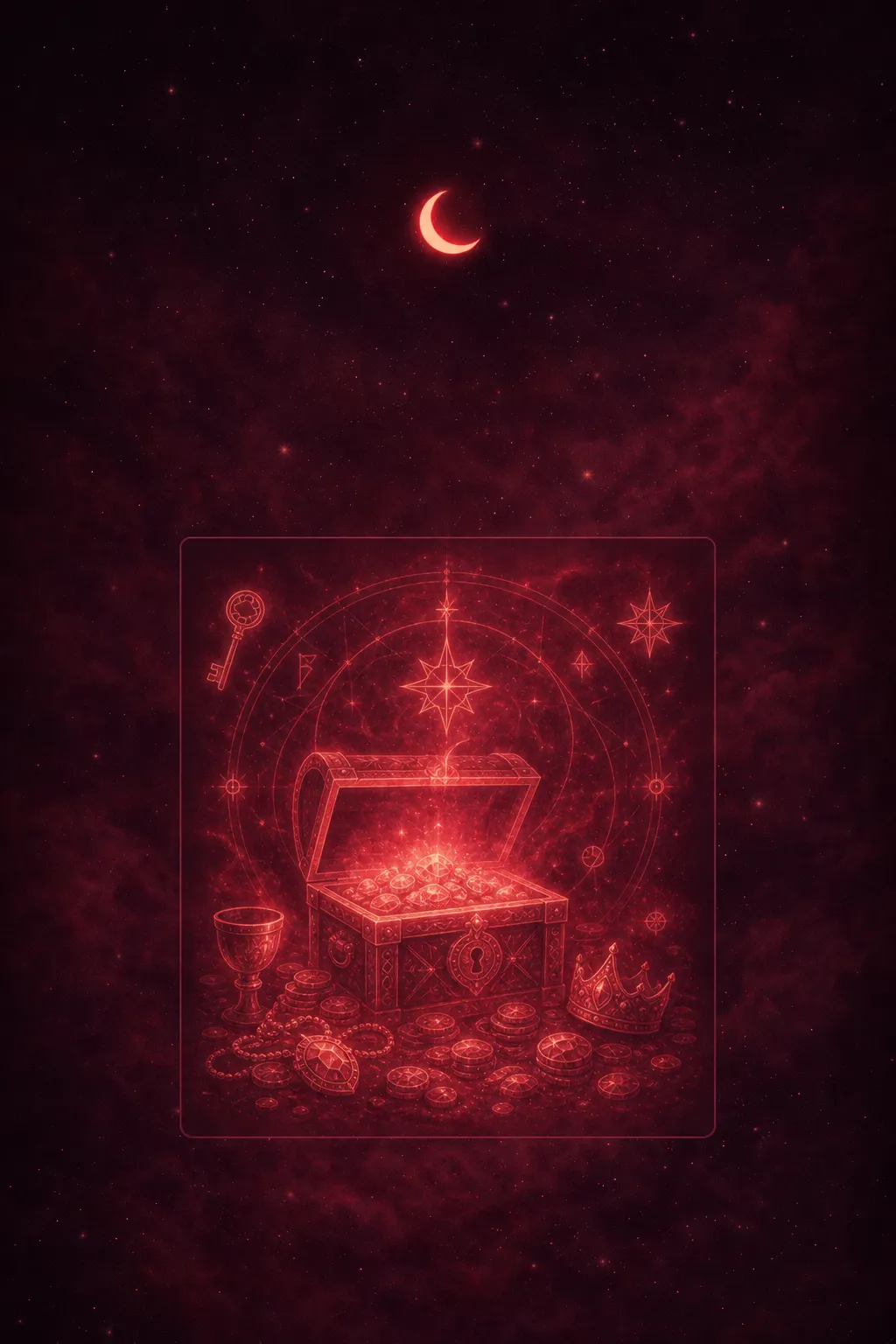

Dreaming of finding treasure often reflects a growing awareness of your own untapped potential, self-worth, or an opportunity finally coming to light. It may signal that something meaningful — a relationship, talent, or turning point — is closer than you think. The emotion you felt during the discovery can reveal whether this is about confidence, relief, or readiness for change.
In under a minute you could read what your exact dream means for you, and see a picture of it. Free.
You read what it can mean. But what did yours mean?
General meanings stop here. In the free app, tell Dream Book your exact dream and get a reading that actually makes sense for you.


A dream still on your mind? Get your personal reading.
Describe your dream in a line or two. In seconds you get a reading of your exact dream, a picture drawn from your own words, and every symbol explained.
Free. No sign-up. Takes 10 seconds. Your dream stays private.
0%
Analyzing your dream…
Something went wrong. Please try again in a moment.
Your dreams deserve more than a dictionary
Common Finding Treasure Dream Scenarios
Discovering a Buried Chest or Hidden Cache
You're digging — maybe in a garden, maybe in the dark earth of a forest — and your hands hit something solid. You pry open a chest and there it is: gold coins, jewels, objects that seem to glow from within. This version of the dream carries a specific emotional signature: the thrill isn't just about wealth, it's about the moment of recognition. Something hidden has finally been found.
This scenario almost always points inward. The buried treasure is rarely about money in the waking world. It's about gifts, abilities, or truths you've been sitting on top of without realizing. If you've been feeling underestimated — by others or by yourself — this dream is your subconscious filing a formal protest. Dreams about finding money share this energy, but buried treasure goes deeper: the hiding was intentional, and so is the uncovering.
But what does your version mean?
Finding Gold or Coins in an Unexpected Place
Sometimes the treasure isn't in a chest — it's scattered. You find gold coins in a drawer, tucked inside an old coat, glinting at the bottom of a fountain. The randomness matters here. You weren't looking. The discovery found you.
This variation tends to appear during periods of quiet transformation, when something valuable is entering your life without fanfare. A relationship deepening slowly, a skill you didn't know you had, an opportunity assembling itself in the background. Your dreaming mind is clocking it before your waking mind has caught up. Pay attention to where the gold appears — an old house suggests the value is rooted in your past; an open field suggests something entirely new.
Finding Treasure But Being Unable to Keep It
You find it. You feel the weight of it in your hands. And then something goes wrong — someone takes it, it slips away, you wake up before you can secure it. This is one of the more frustrating dream experiences, and it carries its own distinct message.
The treasure here represents something you can see clearly but can't quite claim: a goal that keeps receding, a version of yourself you're reaching for, a relationship you want but feel unworthy of. It can also reflect a fear of success itself — the subconscious belief that good things are meant for other people. If this dream recurs, it's worth sitting with the question: what do you believe you don't deserve? Dreams about winning the lottery carry a similar undercurrent of "too good to be true."
Finding Treasure in a Secret Room or Hidden Space
The dream gives you a door you've never seen before. You open it and find a room full of riches — art, artifacts, light. The secret room itself is already significant, but what's inside doubles the meaning. This is one of the most psychologically loaded treasure scenarios.
Finding treasure in a secret room points directly to unexplored potential. There are parts of yourself you haven't given permission to exist yet. The room was always there; you just needed to open the door. This dream often visits people at crossroads — career changes, the end of one chapter, the terrifying beginning of another.
What this dream could look like
Tap an image to open it full screen
Example images. Only you can see what you write in Dream Book.
Psychological Interpretation
Freud would have looked at this dream with particular interest. For him, discovering hidden treasure was a form of wish fulfillment — the dreaming mind staging what the waking mind craves but suppresses. But Freud also saw buried things as repressed content: desires, memories, aspects of the self pushed underground. Finding treasure, in this reading, is the psyche's way of surfacing what you've tried to keep buried. The gold isn't just gold. It's everything you've locked away that still has value.
Jung took the symbolism somewhere more expansive. For him, treasure in dreams was one of the clearest expressions of the Self — the integrated, whole version of a person that individuation is always moving toward. The treasure you find in a dream is the treasure of your own unlived potential. Jung would also note the hero's journey embedded in this image: in myth after myth, the hero descends, faces the dragon, and returns with gold. Your subconscious is drawing on that same archetypal structure. If your dream placed the treasure in a dark or dangerous space, that's not incidental — it's the psyche insisting that what's most valuable requires courage to reach.
Was yours a sign? Find out.
Calvin Hall spent decades analyzing over 50,000 dream reports and found that dreams about finding valuable objects appear most frequently during periods of low self-esteem or unrecognized ability. His content analysis revealed that the dreamer rarely interacts with the treasure passively — they work for it, search for it, stumble upon it with a jolt of recognition. Hall's research suggests this dream is the mind's cognitive rehearsal for self-worth: a kind of internal audit that says "you have more than you think." Ernest Hartmann, whose work focused on how dreams process emotional experience, would add that treasure dreams often spike after periods of loss or depletion. The dream isn't predicting future riches — it's restoring emotional equilibrium, reminding the dreamer of their own resources when the waking world has made those feel scarce.
Hobson and McCarley's activation-synthesis model offers a different angle. Their neuroscientific framework proposes that dreams emerge from the brain synthesizing random neural signals into coherent narrative. But even within that framework, the emotional weight of finding treasure isn't random — the brain reaches for images that carry the strongest emotional charge. The fact that your sleeping brain chose gold, chose discovery, chose abundance, tells you something about the emotional needs driving your neural activity right now. The image of coins or jewels lights up the brain's reward circuitry even in sleep — and that activation is meaningful data about where your waking desires are focused.
General meanings end here. Read your own dream.
Describe your dream in a line or two. In seconds you get a reading of your exact dream, a picture drawn from your own words, and every symbol explained.
Free. No sign-up. Takes 10 seconds. Your dream stays private.
0%
Analyzing your dream…
Something went wrong. Please try again in a moment.
Your dreams deserve more than a dictionary
Every dream you log starts to connect.
Dream Book keeps your dreams in one place and reveals the threads between them over time — your private dream journal. Free to start.
Cultural & Spiritual Meaning
In Western traditions, treasure dreams have long been read as omens of coming fortune — but the older, more nuanced interpretation is about earned reward rather than windfall luck. Medieval dream lore held that finding gold in a dream meant hidden virtue would be recognized. The treasure was always already yours; the dream was simply the announcement. This connects naturally to how dreams about finding a new room are interpreted in contemporary psychology — both are about discovering capacity that was always present.
Ibn Sirin, the 8th-century Islamic scholar whose dream interpretations remain influential across the Muslim world, wrote specifically about treasure dreams. For Ibn Sirin, finding buried treasure in a dream could signal the uncovering of beneficial knowledge or the receipt of a great trust — but he cautioned that treasure found in a graveyard carried a different weight, pointing to knowledge or wealth extracted from something that should remain undisturbed. The location of the treasure, for Ibn Sirin, was never incidental. It carried moral and spiritual context. Finding treasure in a clean, open space was auspicious; finding it in a place of decay required reflection on whether the dreamer was pursuing something at another's expense.
A bad dream isn't a bad sign.
In many Indigenous and Eastern traditions, treasure dreams are understood as ancestral communication — the dream is a gift passed down, a reminder of lineage and inherited strength. In Chinese dream interpretation, gold and jewels found in dreams are associated with wisdom and spiritual merit accumulated across lifetimes. The treasure isn't earned in this life alone; it's the compound interest of generations. This reading gives the dream a weight that purely psychological interpretations sometimes miss: you are not discovering yourself in isolation. You are discovering yourself as part of something longer and larger than your own story.
Related Dream Meanings

common dreams
Finding Money Dream Meaning: Luck, Wealth & Hidden Talents
5 min read
common dreams
Dream of Finding Gold Coins: Meaning and Interpretation
6 min read

common dreams
Gold Dream Meaning: Wealth, Success & Self-Worth
5 min read

common dreams
Old House Dream Meaning: Past, Nostalgia & Unresolved Issues
5 min read

common dreams
Dreaming About Winning the Lottery: Meaning and Interpretation
5 min read

common dreams
Dream of Secret Room Meaning: What Your Subconscious Reveals
5 min read
common dreams
Coins Meaning - What Coins Symbolize in Dreams
6 min read
common dreams
Finding a New Room Dream: Growth & Hidden Potential
5 min read
What to Do After This Dream
Start by writing down exactly what you found, where you found it, and how it felt in your hands. The sensory detail matters more than you'd think. Was the gold heavy or light? Were the jewels familiar or strange? Did you feel joy, or did you feel a complicated mix of excitement and dread? Those emotional textures are the actual message — the treasure is just the envelope.
Then ask yourself what area of your life feels undervalued right now. Where are you sitting on something without recognizing its worth? This dream almost never arrives without a specific referent in your waking life. It might be a creative project you've been dismissing, a relationship you've been taking for granted, or a version of yourself you haven't given yourself permission to become yet. The dream is pointing there.
If this dream keeps returning — especially if you're finding the treasure but losing it before you wake — it's worth exploring with a personalized interpretation. Dream Book lets you describe your dream in detail and ask follow-up questions, so you can understand what your subconscious is actually working through rather than settling for a one-size-fits-all answer.
Finally, don't wait for the treasure to arrive from outside. This dream is almost never about external luck. It's about internal recognition. Whatever you found in that chest — that's already in you. The dream just knows it before you do.
But what does your version mean?
Understanding your finding-treasure dream is the first step. The next is asking what it means for your life right now — that's where a personalized interpretation goes deeper than any dictionary.
One dream is never the whole picture.
The free app remembers your dreams, draws them, and connects the threads over time — so the next one means even more. Free to start.
People Also Ask
Finding treasure in a dream typically points to undiscovered potential, self-worth, or hidden resources within yourself. It often appears during periods of low confidence or major life transitions, when your subconscious is surfacing what you've overlooked about your own value. The specific location and type of treasure in the dream add important context to the meaning.
Generally, yes — finding treasure in a dream is considered a positive symbol across most psychological and cultural traditions. It signals recognition of inner gifts, approaching reward for past effort, or the emergence of something valuable that's been hidden. The exception is when the dream ends with losing the treasure, which may point to fears around deserving success.
This scenario often reflects a fear of success or a deep-seated belief that good things aren't meant for you. It can also point to a goal or opportunity you can clearly see but feel unable to claim — whether due to self-doubt, external obstacles, or timing. If this dream recurs, it's worth examining what you believe you're not allowed to have.
Gold coins in dreams combine the symbolism of treasure with the more immediate energy of money and exchange. They often represent concrete value — skills, relationships, or opportunities that are ready to be used, not just admired. Finding them unexpectedly, rather than searching for them, suggests something valuable is entering your life without you having to force it.
Curious what your dream would look like?