
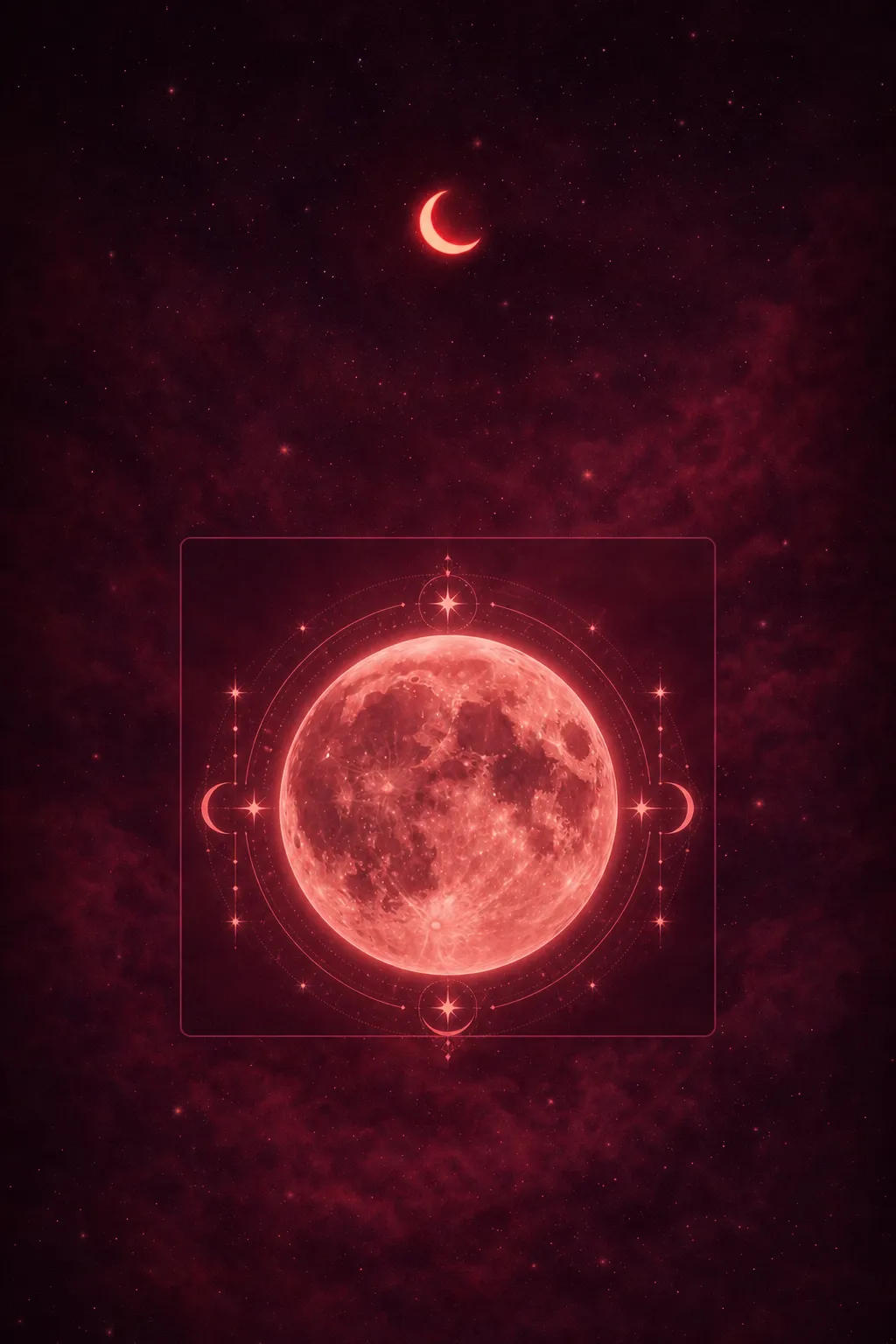

Dreaming about a full moon typically means you are experiencing a peak of emotional awareness, clarity, or completion in some area of your life, as the full moon symbolizes illumination, heightened intuition, and the fulfillment of a cycle, often urging you to release what no longer serves you and embrace transformation.
In under a minute you could read what your exact dream means for you, and see a picture of it. Free.
You read what it can mean. But what did yours mean?
General meanings stop here. In the free app, tell Dream Book your exact dream and get a reading that actually makes sense for you.


A dream still on your mind? Get your personal reading.
Describe your dream in a line or two. In seconds you get a reading of your exact dream, a picture drawn from your own words, and every symbol explained.
Free. No sign-up. Takes 10 seconds. Your dream stays private.
0%
Analyzing your dream…
Something went wrong. Please try again in a moment.
Your dreams deserve more than a dictionary
Common Full Moon Dream Scenarios
The specific way the full moon appears in your dream shapes its meaning considerably. A bright, clear full moon is the most common variant, pointing to a moment of peak clarity — something in your waking life has reached completion or is finally coming into full awareness. If the moon appears unusually large or uncomfortably close, the dream amplifies that signal: an event or emotional wave feels imminent and almost too big to manage, blending awe with a creeping sense of overwhelm that mirrors real-life anxiety about things spiraling beyond your control.
- Red or blood-colored full moon: Intense emotion or a felt warning; psychologically it flags fear of upheaval, while a biblical undertone lends it the weight of portent or reckoning.
- Full moon reflected over still water: Conscious awareness meeting emotional depth — intuition illuminating feelings that normally stay below the surface.
- Moon obscured by clouds: Blocked clarity or partial understanding; something is reaching its peak but you cannot yet see it fully, suggesting withheld information or emotions not yet ready to surface.
- Feeling physically changed or compelled under the moon: The classic "lunacy" association surfaces here — a fear of losing composure or being driven by forces outside rational control, often tied to accumulated stress.
- Two or more full moons: Competing emotional peaks or conflicting priorities pulling in opposite directions, with an unsettling sense that the normal order of things has broken down.
But what does your version mean?
Across all these variants, the central question the dream raises is one of self-knowledge and control: what has quietly been building to fullness, and are you ready to face it now that the light is at its strongest?
What this dream could look like
Tap an image to open it full screen
Example images. Only you can see what you write in Dream Book.
What Your Mind Is Working Through
From a psychological standpoint, dreaming of a full moon typically signals that an emotional or developmental cycle has reached its peak. Mainstream dream psychology, drawing on Jungian lunar symbolism, treats the full moon as the illuminated unconscious — the part of yourself that usually operates in shadow is suddenly flooded with light. This mirrors waking moments when feelings you have been quietly carrying finally surface and demand attention, much like the experience of dreaming of teeth falling out, where the body becomes a stage for suppressed anxiety.
In a modern-anxiety frame, the full moon can represent the sense that things are "coming to a head" — deadlines, relationships, or personal pressures that have been building until they can no longer be ignored. The dreamer may feel a loss of control as emotions run high, or a restless unease about standing at a peak that must eventually tip into decline. For those with a faith background, this moment of maximum illumination can also carry a quietly biblical resonance: a call to honest self-examination, to let what is hidden be seen and honestly assessed.
- Fulfillment and clarity: a project, relationship, or inner process reaching meaningful completion.
- Emotional volatility: heightened feelings that feel difficult to contain or direct.
- Fear of exposure: anxiety about what the "light" might reveal to yourself or others.
- Cycle awareness: an unconscious recognition that an ending is also a beginning.
General meanings end here. Read your own dream.
Describe your dream in a line or two. In seconds you get a reading of your exact dream, a picture drawn from your own words, and every symbol explained.
Free. No sign-up. Takes 10 seconds. Your dream stays private.
0%
Analyzing your dream…
Something went wrong. Please try again in a moment.
Your dreams deserve more than a dictionary
Every dream you log starts to connect.
Dream Book keeps your dreams in one place and reveals the threads between them over time — your private dream journal. Free to start.
Cultural and Traditional Readings of the Full Moon
Across Western folk tradition, the full moon has long carried a reputation for stirring things up — restless sleep, heightened emotion, and erratic behavior were all routinely blamed on the lunar peak, giving us words like "lunacy" and "moonstruck." This cultural inheritance still quietly shapes how modern dreamers feel when a full moon dominates their dream: an instinctive sense that something is cresting, that feelings or situations have built to a point where they can no longer be contained. In that sense, the folk belief and the modern-anxiety reading reinforce each other neatly — the full moon becomes a symbol of a moment just before things spill over.
Was yours a sign? Find out.
Within broadly Christian cultural memory in the United States, the moon carries a more orderly resonance — a light appointed to govern the night, marking seasons and sacred times. Dreaming of a luminous moon at its fullest can feel, through this lens, like reassurance that a larger rhythm is in motion: cycles have their ordained completion, and what feels overwhelming is simply a peak, not a permanent state. That framing gently repositions the dreamer from anxious passenger to someone moving through a purposeful, if demanding, phase.
- Harvest associations: The harvest moon tradition links the full moon to the culmination of long effort — folk culture treated it as the right moment to gather what had been slowly grown, a natural deadline rather than a crisis.
- Exposure and visibility: Folk sayings across Anglo-American culture warn that the full moon "hides nothing" — a belief that maps directly onto dreams where hidden feelings or unresolved tensions are suddenly lit up and impossible to ignore.
- Turning point: Popular superstition held that decisions made under a full moon carried extra weight, reinforcing the dream's core theme of a peak moment demanding awareness and, ultimately, a choice about how to move forward.
The Full Moon as Spiritual Signal
In a biblical frame, the moon is consistently portrayed as a God-given marker of times and seasons — Psalm 104:19 places it at the center of divine order. Dreaming of a full moon can therefore carry a sense of appointed moment: something in your life has arrived at the time it was always moving toward. For many faith-oriented dreamers, this feels less like coincidence and more like a quiet nudge toward reflection — a prompt to acknowledge what has been completed and to release it with gratitude rather than anxiety.
A bad dream isn't a bad sign.
Where espiritismo and broader folk-spiritual traditions intersect with everyday American spiritual life, the full moon is often treated as a thin place — a moment when the boundary between the visible and the unseen feels unusually permeable. Dreams set under a full moon may surface in this light as invitations to pay attention to what your spirit already knows but your waking mind resists. If modern anxiety has you gripping tightly for control, the spiritual reading here is pointed: the full moon's light cannot be managed or dimmed, and the dream may be nudging you toward surrender rather than struggle. Much like dreaming of darkness, the full moon asks you to trust what is revealed rather than fear the exposure.
- Completion as sacred timing: the dream marks a divinely ordered turning point, not a random peak.
- Illumination as invitation: what is brought to light is meant to be seen and addressed, not suppressed.
- Release over control: spiritually, the full moon counsels yielding to a cycle larger than personal will.
Related Dream Meanings
common dreams
Water Dream Meaning: Emotions, Intuition & Growth
5 min read
body health
Teeth Falling Out Dream: Anxiety, Loss & Vulnerability
5 min read
common dreams
What Does It Mean to Dream About the Moon
5 min read
nightmares
Darkness Dream Meaning: Fear, Uncertainty & Hidden Self
5 min read
common dreams
Beach: Meaning and Interpretation
6 min read
common dreams
Pool Dream Meaning: Emotions, Relaxation & Reflection
5 min read
common dreams
Bathroom: Meaning and Interpretation
6 min read
common dreams
What Does It Mean to Dream About Lightning
6 min read
Practical Takeaways: Working With Your Full Moon Dream
Because the full moon marks a peak — something cresting rather than still building — the most useful first step is identifying what in your waking life feels like it has "come to a head." That might be a relationship tension, a work deadline, or a decision you've been postponing. Your dream is essentially flagging that the window for clarity is open right now; acting on that awareness, rather than drifting past it, is where the real value lies.
- Name what's fully lit up. Write down one situation that currently feels exposed or unavoidable. The dream is pointing there.
- Check your stress load. If the moon felt overwhelming rather than beautiful, treat that as a signal that accumulated pressure needs a concrete outlet — a conversation, a boundary set, a task completed.
- Respect the cycle's timing. Peaks pass. If you've been waiting for the "right moment" on something, this dream may be telling you the moment is now, not later.
- Notice emotional volatility without judging it. Heightened feeling after this dream is normal. Journaling or a brief reflective practice involving stillness can help you process rather than react.
- Distinguish clarity from urgency. Illumination doesn't always demand immediate action — sometimes it simply asks you to see something honestly before deciding your next move.
But what does your version mean?
The overarching takeaway is one of self-knowledge over control: the full moon in a dream rarely commands you to fix everything at once. It invites you to look clearly, acknowledge what has reached its peak, and choose a deliberate next step rather than either forcing an outcome or avoiding it entirely.
One dream is never the whole picture.
The free app remembers your dreams, draws them, and connects the threads over time — so the next one means even more. Free to start.
People Also Ask
Generally, yes. Seeing the moon in a dream is considered a positive omen linked to intuition, feminine energy, and emotional clarity. A full moon especially suggests completion, illumination, and inner wisdom coming to light. However, context matters — a blood-red or ominous moon may signal unresolved tension or emotional overwhelm in your waking life.
Dreaming of multiple moons often reflects inner conflict, divided loyalties, or confusion about which path to follow. It can suggest that different aspects of your personality are competing for attention. Alternatively, it may symbolize abundance of creative energy or a heightened sense of spiritual awareness, urging you to find harmony among life's competing demands.
Many people believe divinely sent warning dreams carry an unusually vivid, peaceful yet urgent quality that lingers long after waking. They often contain clear symbolic imagery — like a full moon fading to darkness — paired with a strong emotional conviction. Recurring themes and a felt sense of moral guidance are commonly reported signs of spiritually significant dreams.
Lucid dreams in which the dreamer fully controls the narrative are considered among the rarest experiences. Shared or mutual dreams — where two people report identical imagery, such as the same full moon scene — are even rarer and deeply debated. Prophetic dreams that accurately foreshadow real events are also cited as uncommon and particularly memorable.
Curious what your dream would look like?