
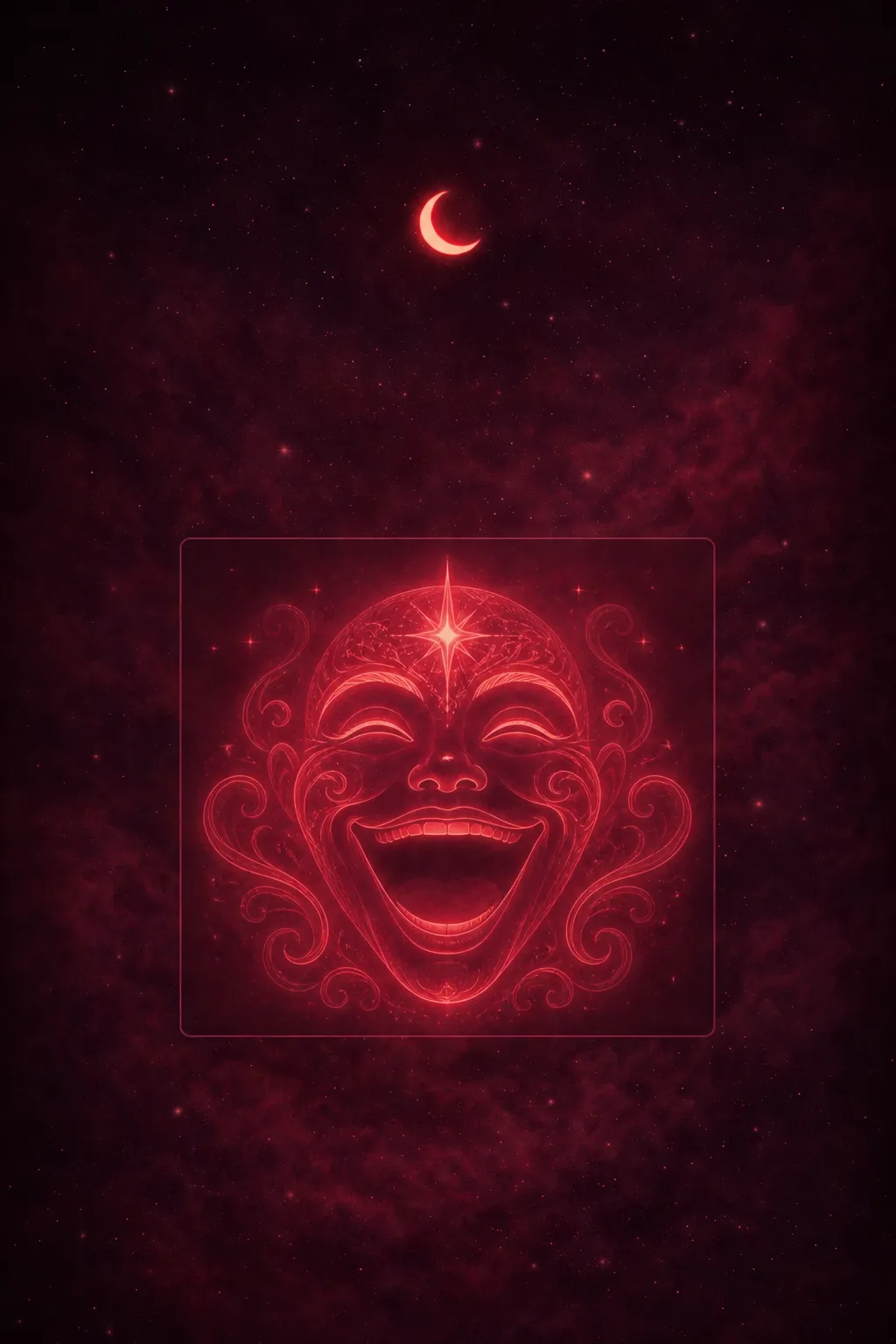

Dreaming about laughing typically signals joy, relief, or a release of tension in your waking life, though it can also reflect nervousness, hidden anxiety, or a desire to mask deeper emotions, so the true meaning depends on whether the laughter felt genuine and warm or forced and uncomfortable within the dream.
In under a minute you could read what your exact dream means for you, and see a picture of it. Free.
You read what it can mean. But what did yours mean?
General meanings stop here. In the free app, tell Dream Book your exact dream and get a reading that actually makes sense for you.


A dream still on your mind? Get your personal reading.
Describe your dream in a line or two. In seconds you get a reading of your exact dream, a picture drawn from your own words, and every symbol explained.
Free. No sign-up. Takes 10 seconds. Your dream stays private.
0%
Analyzing your dream…
Something went wrong. Please try again in a moment.
Your dreams deserve more than a dictionary
Common laughing dream scenarios and what they mean
The context and tone of laughter in a dream shift its meaning dramatically — shared warmth reads very differently from hollow performance or a menacing cackle heard in the dark.
Dreaming of laughing together with friends or family
Shared laughter in a dream almost always reflects a genuine need for connection or confirms that existing bonds feel secure. If waking life has been isolating or strained, the dream may be compensating — your mind rehearsing the belonging it craves. Take it as a prompt to invest more intentionally in those relationships.
But what does your version mean?
Dreaming of being laughed at or mocked
This is one of the most common anxiety-driven scenarios. Being the butt of the joke surfaces shame, a fear of public failure, or nagging insecurity about how others evaluate you. It often peaks during high-stakes periods — a new job, a presentation, a social transition — when the pressure to perform feels relentless.
Dreaming of uncontrollable or hysterical laughter
When laughter tips into something you cannot stop, it rarely signals pure delight. More often it points to emotional overwhelm that has nowhere clean to go — stress, grief, or tension finding a release valve. The sensation mirrors what psychologists call flooding: feeling overtaken by an emotion you have been working hard to manage.
Dreaming of laughing alone
Laughing by yourself carries a dual charge. In a warm, sunlit tone it suggests healthy self-acceptance and inner contentment — a sign you are comfortable in your own company. In a hollow or eerie tone, though, it can hint at emotional detachment or a creeping disconnection from the people around you.
Dreaming of forcing fake laughter
Performing laughter you do not feel is a telling sign that waking life is demanding a positivity you cannot honestly access. Social pressure, a difficult workplace, or a relationship where you feel unseen can all generate this scenario. The dream is nudging you toward greater self-knowledge — quietly asking whose approval you are actually performing for.
Was yours a sign? Find out.
Dreaming of a deceased loved one laughing
Hearing or seeing someone who has passed away laughing warmly is widely experienced as comforting rather than unsettling. Psychologically, it reflects unresolved grief finding a gentler outlet — the mind offering reassurance that the relationship, though changed, still carries meaning. Many people wake from this scenario feeling unexpectedly at peace.
What this dream could look like
Tap an image to open it full screen
Example images. Only you can see what you write in Dream Book.
What Psychology Sees in Laughing Dreams
From a psychological standpoint, laughter in a dream most often functions as a pressure valve — the mind's way of discharging stress that waking life has not had the chance to process. Modern schedules leave little room for genuine emotional release, so the subconscious compensates overnight, letting suppressed tension escape through spontaneous, sometimes inexplicable laughter. When the feeling is warm and freeing, it can also work as wish fulfillment: the dreaming mind conjures joy precisely because the waking day has felt heavy or relentless.
The picture grows more complex when dream laughter tips into something forced or hollow. Psychologists recognize humor as a classic defense mechanism — a way to keep grief, anxiety, or a sense of inadequacy at arm's length. If you wake unsettled despite having "laughed" all night, the dream may be pointing to emotions you are managing rather than truly feeling. Uncontrollable, hysterical laughter carries a related but distinct signal: a fear of losing composure or emotional regulation, particularly relevant for anyone who feels pressure to stay in control at work or at home. In that sense it mirrors the vulnerability exposed in dreams about teeth falling out, where the anxiety is about suddenly losing the grip you normally maintain.
- Joyful, shared laughter — compensatory wish fulfillment; a prompt to seek genuine connection.
- Forced or performative laughter — a coping defense; unacknowledged grief or anxiety beneath the surface.
- Uncontrollable laughter — fear of losing emotional regulation or social composure.
- Being laughed at — surfaces insecurity, shame, or a fear of being judged inadequate.
General meanings end here. Read your own dream.
Describe your dream in a line or two. In seconds you get a reading of your exact dream, a picture drawn from your own words, and every symbol explained.
Free. No sign-up. Takes 10 seconds. Your dream stays private.
0%
Analyzing your dream…
Something went wrong. Please try again in a moment.
Your dreams deserve more than a dictionary
Every dream you log starts to connect.
Dream Book keeps your dreams in one place and reveals the threads between them over time — your private dream journal. Free to start.
Cultural and Traditional Readings of Laughing Dreams
In mainstream Anglo-American culture, humor carries a weight beyond simple entertainment — it signals resilience, likability, and social ease. The phrase "laughing it off" captures a deeply held folk belief that the ability to find lightness in difficulty marks genuine strength of character. When laughter appears in a dream, many people instinctively read it through this lens: a sign that they are coping well, staying adaptable, or holding stress at arm's length. Folk wisdom has long treated a good laugh as medicine, and dreaming of it can feel like the psyche endorsing that same remedy during periods of sustained pressure or change.
Yet Anglo culture carries an equally strong current of individual dignity, which creates real ambivalence around the idea of being laughed at. Being ridiculed — even in a dream — touches a deep nerve around humiliation and loss of standing. This tension is worth sitting with: dreaming of laughter directed at you may reflect a modern-anxiety fear of exposure, of being seen as inadequate in a competitive or performative social environment. The dream becomes less about humor and more about the feeling of being pursued by judgment you cannot outrun.
A bad dream isn't a bad sign.
- Resilience marker: spontaneous, warm laughter in a dream aligns with the cultural ideal of someone who handles adversity without falling apart.
- Social-lubricant signal: laughter shared in a group setting can reflect a desire for belonging or a prompt to reconnect with community.
- Dignity threat: being mocked or unable to stop laughing awkwardly often mirrors waking anxieties about self-control and how others perceive you.
What a Laughing Dream Might Mean Spiritually
From a biblical perspective, laughter is rarely frivolous — it carries the weight of answered longing. Sarah's laughter in Genesis 21:6, erupting after years of waiting, frames the emotion as evidence of a burden finally lifted rather than a mood casually stumbled into. If your dream laughter felt that deep and almost surprised, a US Christian reading might invite you to consider whether you have been carrying quiet anxiety about something you have quietly surrendered hope for — and whether relief, not just happiness, is what your spirit is processing overnight.
Proverbs 17:22 reinforces this with its familiar image of a merry heart as medicine, suggesting that genuine inner joy is itself a form of spiritual wellness rather than a distraction from serious faith. Dreaming of that quality of laughter — warm, unhurried, unforced — can be read as a quiet signal that your inner life is in better alignment than your waking stress might lead you to believe.
- Hollow or anxious laughter in the dream may point to a spiritual invitation to examine what burdens you are still performing cheerfulness around.
- Deep, releasing laughter echoes the biblical pattern of joy arriving after a season of strain — a nudge toward trust rather than control.
- Laughter shared with others carries a broadly spiritual reading of communal grace and restored connection, a lightness that no amount of self-management alone can manufacture.
Related Dream Meanings

body health
Teeth Falling Out Dream: Anxiety, Loss & Vulnerability
5 min read

nightmares
Being Chased Dream Meaning: Anxiety & Avoidance
5 min read

common dreams
Joy Dream Meaning: Fulfillment, Hope & Inner Peace
5 min read

common dreams
White Dress Dream Meaning: Purity, Change & New Starts
5 min read
common dreams
Lottery Numbers: What It Really Means
5 min read

common dreams
Halloween: Masks, Fear & What It Really Means
5 min read

common dreams
the Rapture: What It Really Means
6 min read

common dreams
a Mall: Meanings and Interpretations
5 min read
Practical Takeaways: What to Do After a Laughing Dream
Start by noting the emotional quality of the laughter when you wake up. Ask yourself honestly: did it feel free and genuine, or forced and uneasy? That distinction is your first data point. If the laughter felt hollow or anxious, treat it as a signal that stress is accumulating faster than you are releasing it — and look for low-barrier outlets in your daily routine, whether that is a short walk, a candid conversation, or simply watching something genuinely funny rather than scrolling through news.
If the dream left you with a warm, joyful aftertaste, use that as useful feedback too: your mind may be pointing you toward relationships or activities that deserve more of your waking time. Either way, a laughing dream is rarely random noise — it is a nudge toward self-awareness about where your emotional pressure stands right now.
But what does your version mean?
- Journal the tone, not just the plot. Write down whether the laughter felt shared, solitary, nervous, or mocking — patterns across several entries reveal recurring emotional needs.
- Check your release outlets. If laughing dreams are frequent, ask whether your waking life has enough room for genuine levity and unguarded moments with people you trust.
- Notice the control angle. Laughter that felt out of control in the dream may mirror a situation in waking life where you feel you have little say — identifying that situation is the first step toward addressing it.
One dream is never the whole picture.
The free app remembers your dreams, draws them, and connects the threads over time — so the next one means even more. Free to start.
People Also Ask
Spiritually, laughter symbolizes joy, liberation, and alignment with your higher self. It suggests you are releasing old burdens and embracing life's positive energy. Many traditions view genuine laughter as a sign of spiritual health, inner freedom, and a deep connection to gratitude and the present moment.
Laughing in dreams often reflects your subconscious processing happiness, relief, or emotional release. It may signal that your waking life holds genuine joy, or conversely, that you need more lightness and fun. Sometimes it represents nervous energy or anxiety being discharged in a safe, symbolic way during sleep.
Dreaming of happiness and laughter together is a deeply positive sign. It suggests emotional well-being, contentment, and optimism about the future. Your subconscious may be affirming that you are on the right path, celebrating personal growth, or encouraging you to seek more joy and connection in your daily life.
Laughing aloud during sleep is often seen spiritually as your soul experiencing pure joy or receiving uplifting energy. It may indicate that your spirit is healing, that protective and loving presences surround you, or that you are processing positive emotions at a deeper, unconscious level beyond ordinary waking awareness.
Curious what your dream would look like?