
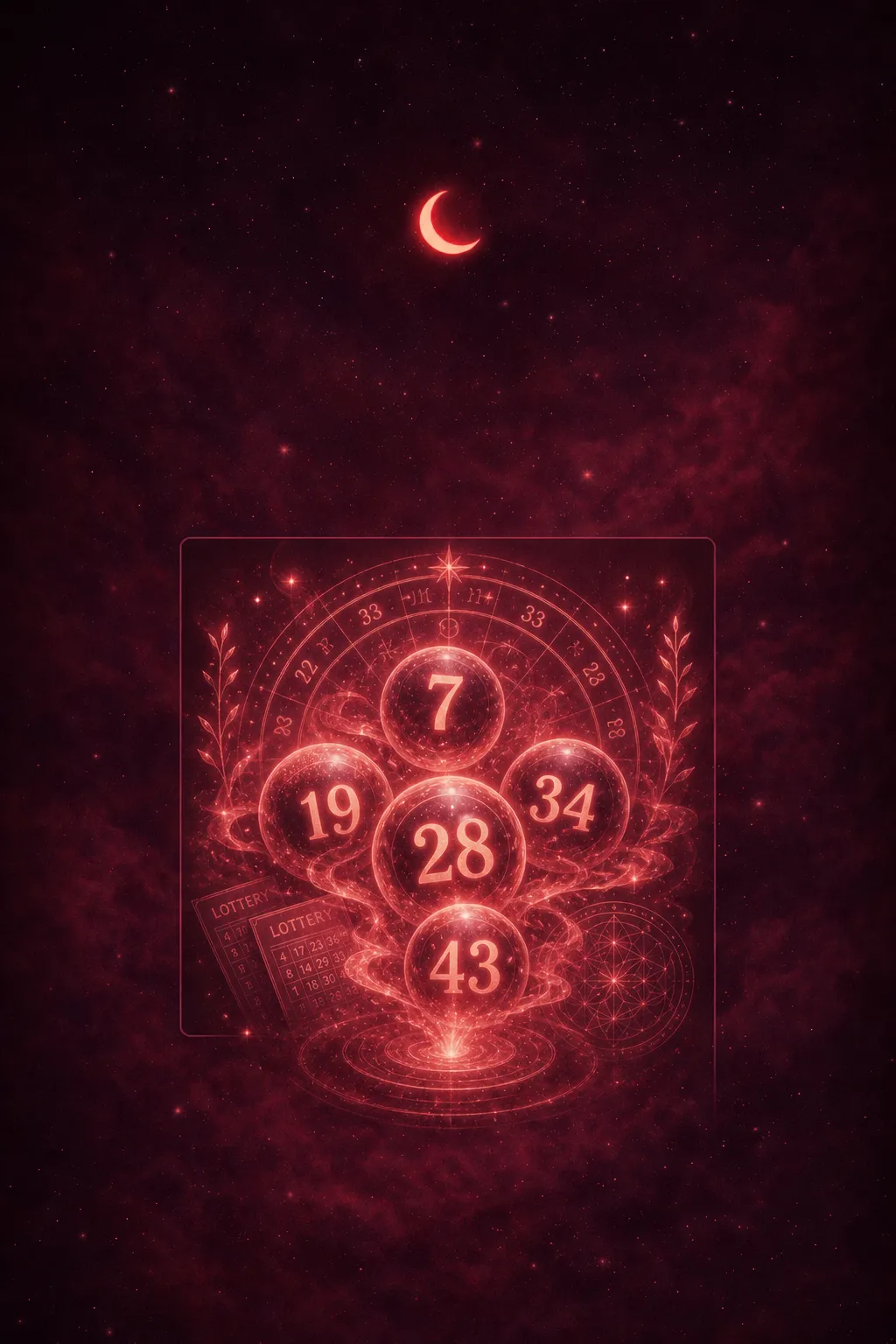

Dreaming about lottery numbers reflects a deep psychological tension between hope and anxiety — your sleeping mind staging a fantasy of sudden relief from financial or life pressure while exposing real worry about control, scarcity, and whether luck can solve what effort alone cannot.
In under a minute you could read what your exact dream means for you, and see a picture of it. Free.
You read what it can mean. But what did yours mean?
General meanings stop here. In the free app, tell Dream Book your exact dream and get a reading that actually makes sense for you.


A dream still on your mind? Get your personal reading.
Describe your dream in a line or two. In seconds you get a reading of your exact dream, a picture drawn from your own words, and every symbol explained.
Free. No sign-up. Takes 10 seconds. Your dream stays private.
0%
Analyzing your dream…
Something went wrong. Please try again in a moment.
Your dreams deserve more than a dictionary
What Different Lottery Number Dreams Actually Mean
Not all lottery dreams carry the same weight. The specific scenario that played out for you matters enormously, so start here before drawing any broader interpretation.
You Saw Specific Numbers Clearly
This is the most vivid — and most misunderstood — version of the dream. When a sequence of numbers appears with sharp, almost photographic clarity, the mind is doing something precise: it's highlighting a decision or answer you desperately want to make certain. The numbers themselves often echo something meaningful from waking life — a birth year, an address, an age tied to a deadline you're quietly dreading. The felt certainty of the numbers is the real message: you want clarity in a situation that stubbornly refuses to give you any.
But what does your version mean?
You Won the Lottery
Winning in the dream is classic wish-fulfillment — but it's richer than simple fantasy. Pay attention to how winning felt. Pure, flooding relief points to genuine financial or emotional pressure that has reached a tipping point. Unease, guilt, or a hollow sense that something is still wrong after you "win" is your deeper self questioning whether money is really what's missing. A dream about winning the lottery often surfaces during periods of billing stress, overwork, or the quiet exhaustion of feeling like effort alone will never be enough. Related dreams about money carry a similar emotional fingerprint and are worth exploring alongside this one.
You Forgot, Lost, or Watched the Numbers Change
You had them — and then you didn't. Numbers slipping away, morphing mid-dream, or vanishing the moment you reached for a pen is one of the most frustrating dream experiences people report. This scenario belongs to the family of stress dreams: it reflects anxiety about missed opportunity and the fear that the "right answer" will always escape you just before you can act on it. It often correlates with perfectionism and decision paralysis in waking life.
You Checked Your Ticket and Didn't Win
Surprisingly, this dream isn't purely negative. It can represent healthy self-talk — your realistic side processing the long odds of the quick-fix fantasy and nudging you toward acceptance. If it felt resigned rather than devastated, the dream may be pointing you toward agency: away from luck, toward what you can actually control. Dreams about finding money sometimes appear in the same emotional cluster as a counterbalance, representing an unexpected but earned discovery rather than a gamble.
Someone Else Wins
Watching another person hold the winning ticket while you stand to the side carries the sting of comparison. This dream invites honest reflection on social envy and the painful sense of being left behind in what feels like life's lottery of opportunity — not just financial, but professional, relational, or creative.
Was yours a sign? Find out.
You Were Actively Choosing Numbers
The ritual of picking numbers — deliberating, second-guessing, committing — rehearses a real-life moment of risk and agency you may be facing. The dream here isn't about gambling so much as the act of choosing when the outcome isn't guaranteed. You're working something out.
What this dream could look like
Tap an image to open it full screen
Example images. Only you can see what you write in Dream Book.
The Psychology Behind the Dream
At its core, the lottery number dream is a locus-of-control dream. Psychologically, it surfaces when the gap between what you need and what effort seems able to deliver feels unbridgeable. Wishing for a random windfall is the mind's most honest admission that it feels stuck.
There's also a pattern-seeking dimension. Numbers are the mind's attempt to impose order on pure uncertainty — to convert chaos into something legible and actionable. When waking life feels uncontrollable, the sleeping brain reaches for structure, even if that structure is ultimately random.
Wish-fulfillment dreams like this one aren't signs of weakness or delusion; they're stress signals. They tell you the pressure has been building longer than you've consciously acknowledged. The guilt that sometimes trails the dream — a vague sense that magical thinking is a form of giving up — is worth sitting with. It often points to a belief that you should be solving the problem through sheer will, and that hope itself feels like cheating.
A bad dream isn't a bad sign.
If recurring financial anxiety is threading through your dream life, broader dream patterns about being rich may reveal what you believe wealth would actually change about your identity, not just your bank balance.
General meanings end here. Read your own dream.
Describe your dream in a line or two. In seconds you get a reading of your exact dream, a picture drawn from your own words, and every symbol explained.
Free. No sign-up. Takes 10 seconds. Your dream stays private.
0%
Analyzing your dream…
Something went wrong. Please try again in a moment.
Your dreams deserve more than a dictionary
Every dream you log starts to connect.
Dream Book keeps your dreams in one place and reveals the threads between them over time — your private dream journal. Free to start.
Cultural Echoes: Folk Luck and Dream Numbers
The idea that dream numbers carry literal predictive power is a widespread folk tradition — deeply embedded in communities across the English-speaking world, from Caribbean number-game culture to informal superstition in the American South and British working-class neighborhoods. The practice of playing a sequence seen in a dream treats the dreaming mind as a conduit to fortune, a kind of private oracle.
Dream Book respects this tradition as a living part of many people's relationship with hope and chance, while being honest that no peer-reviewed evidence supports dream numbers as reliable predictors of lottery outcomes. What's genuinely valuable in the tradition is the attention it draws to the dream — it encourages people to remember, record, and sit with their nighttime experiences in ways that can reveal real psychological content, even when the numbers themselves don't match Saturday's draw.
Modern instant-success culture has turbocharged lottery symbolism. When viral stories of overnight millionaires share timelines with headlines about cost-of-living crises, the lottery becomes a culturally loaded image for the impossible fix — and the dream brain absorbs that tension directly.
A Spiritual Angle Worth Considering
For those who approach dreams through a Christian framework, lottery imagery invites a particular kind of reflection. Scripture returns repeatedly to the relationship between contentment and the love of money — not as a condemnation of financial struggle, but as a gentle audit of what we're really chasing. Proverbs 13:11 contrasts wealth gathered hastily with wealth built through steady labor. First Timothy 6:9-10 frames the eager pursuit of quick gain as a source of harm, not because money is evil, but because the frantic wanting corrupts. Hebrews 13:5 points toward contentment as a practice, not a reward.
From this angle, the lottery dream isn't a sin to confess — it's an invitation. What would you actually do if the pressure were lifted overnight? What does the intensity of the wish reveal about where your trust currently sits? These aren't rhetorical questions; they're genuinely productive ones to journal through after a vivid lottery dream.
Related Dream Meanings
common dreams
Dreaming About Winning the Lottery: Meaning and Interpretation
5 min read
common dreams
Money Dream Meaning: Wealth, Worth & Anxiety
5 min read
common dreams
Finding Money Dream Meaning: Luck, Wealth & Hidden Talents
5 min read
common dreams
Being Rich: Meaning and Interpretation
5 min read

common dreams
Rainbow Dream Meaning: Hope, Change & New Beginnings
5 min read

common dreams
Roses Dream Meaning: Love, Passion & Emotions
5 min read

common dreams
What Does It Mean to Dream About Airplanes
5 min read

common dreams
What Does It Mean to Dream About Meat
6 min read
What to Do After This Dream
Whether the dream leaves you energized, unsettled, or somewhere in between, a few grounded steps tend to extract the most meaning from it.
But what does your version mean?
- Name the specific pressure. Lottery dreams almost always have a financial or life-stability stressor behind them. Write it down plainly: the bill, the job situation, the relationship, the decision you've been postponing.
- Audit the feeling, not the numbers. The emotional residue — relief, guilt, envy, frustration — is the real data. That feeling reveals more than any sequence of digits.
- Ask what "winning" would actually solve. If you imagine the problem disappearing overnight, what changes? Freedom from debt, or freedom from a job that's draining you? Clarity about that question often points toward realistic action steps that don't require luck.
- Notice if the dream is recurring. A one-off lottery dream is a normal stress response. A recurring one is your psyche flagging that the underlying pressure needs direct attention, not fantasy.
- Treat superstition lightly. If you feel the pull to play the numbers, do so for fun if that brings comfort — but hold that impulse gently, and don't skip the reflection step.
One dream is never the whole picture.
The free app remembers your dreams, draws them, and connects the threads over time — so the next one means even more. Free to start.
People Also Ask
No dream reliably predicts lottery numbers — there's no documented evidence that dream figures translate into winning combinations. That said, many people choose numbers tied to meaningful dates or sequences from vivid dreams as a personal ritual. Play them for fun if it brings joy, but don't stake important decisions on the result.
Numbers in dreams generally reflect the mind's attempt to find order in uncertainty. They often echo meaningful figures from waking life — dates, ages, addresses — and signal that you're seeking clarity or a definitive answer in a situation that feels ambiguous or out of your control.
Dreaming of winning typically signals wish-fulfillment: your mind is processing financial or life pressure by staging the ultimate relief. The feeling after winning matters most — pure relief suggests real stress, while unease or guilt can point to deeper questions about self-worth, deserving, and what you believe money would actually fix.
Anecdotal stories of people winning after dreaming of numbers exist and get wide coverage precisely because they're extraordinary — but statistically, confirming lottery wins from dream numbers is survivorship bias. For every reported case, millions of dream-number plays yield nothing. The dream is psychologically meaningful; treat any lucky outcome as coincidence.
Curious what your dream would look like?