
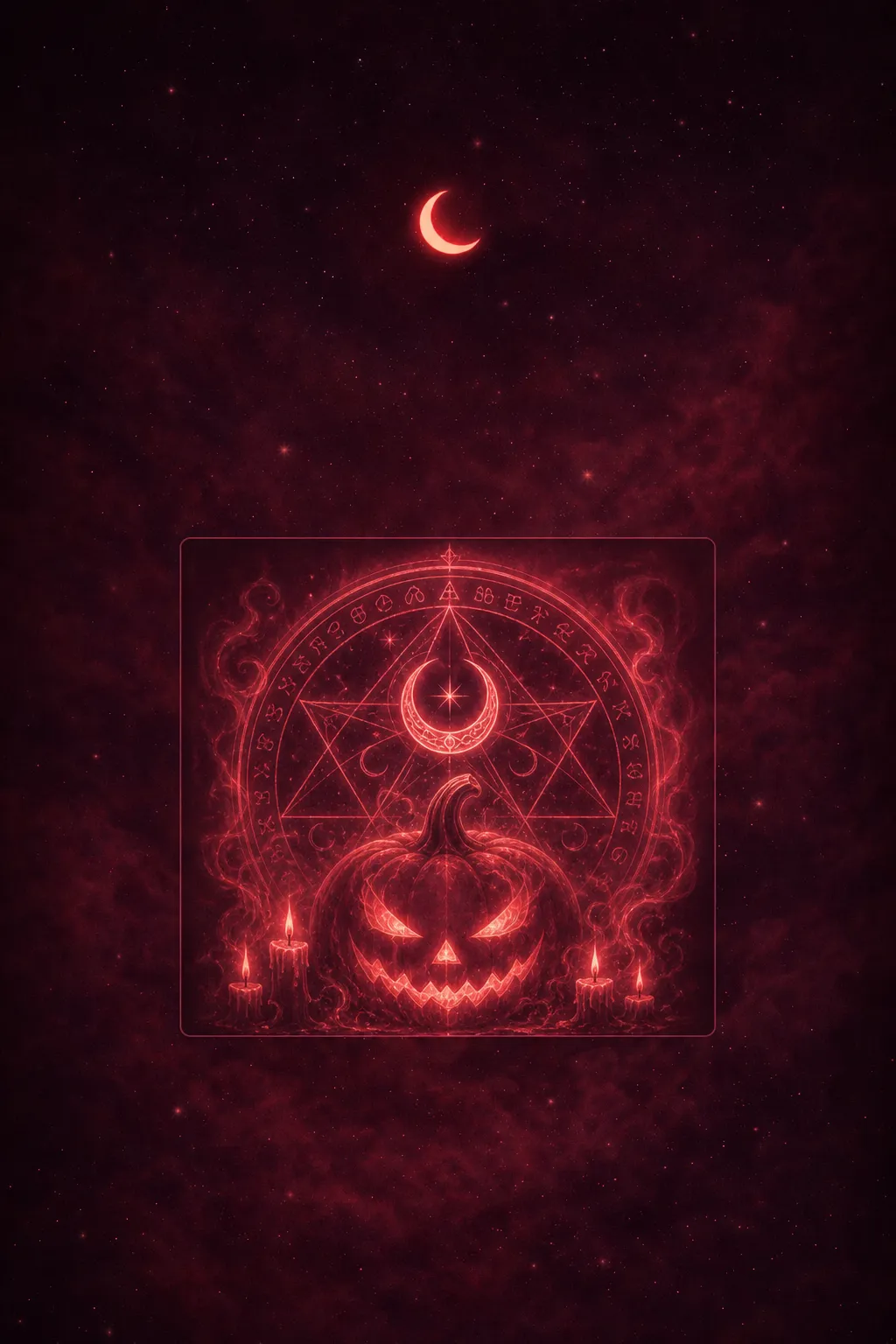

Dreaming about Halloween typically signals a tension between your true self and the mask you wear for others, while also offering your mind a safe container to rehearse fear, process nostalgia, or navigate a life transition. The specific details — costume, haunted house, trick-or-treating — each sharpen the interpretation considerably.
In under a minute you could read what your exact dream means for you, and see a picture of it. Free.
You read what it can mean. But what did yours mean?
General meanings stop here. In the free app, tell Dream Book your exact dream and get a reading that actually makes sense for you.


A dream still on your mind? Get your personal reading.
Describe your dream in a line or two. In seconds you get a reading of your exact dream, a picture drawn from your own words, and every symbol explained.
Free. No sign-up. Takes 10 seconds. Your dream stays private.
0%
Analyzing your dream…
Something went wrong. Please try again in a moment.
Your dreams deserve more than a dictionary
Common Halloween Dream Scenarios and What They Mean
Wearing a Costume or Mask
This is the most frequently reported Halloween dream, and it carries the most personal weight. When you dream of putting on a costume, your mind is exploring the gap between the self you present publicly and the self you know privately. The costume isn't necessarily deceptive — it may represent a role you're trying on, a new identity you're testing, or a version of yourself you're not yet sure is real. Ask yourself: did the costume feel empowering, uncomfortable, or ridiculous? Empowerment suggests healthy identity growth; discomfort often signals impostor feelings or social anxiety you're processing beneath the surface.
But what does your version mean?
Trick-or-Treating and Collecting Candy
Trick-or-treating dreams almost always carry a warm undercurrent of nostalgia. Your mind is revisiting a time when the world felt safer and manageable — when small risks (knocking on a stranger's door) led to sweet, reliable rewards. If you're under pressure in waking life, this scenario is your psyche's way of reminding you that small wins are still worth chasing. It's also an inner-child signal: something in you needs permission to play and indulge without guilt.
Being Chased or Scared by Costumed Figures
Being chased in a dream is already one of the most common dream experiences, and the Halloween version carries a specific twist: the thing pursuing you is very likely wearing a mask. Psychologically, this is a key detail. The threat may feel overwhelming, but your dreaming mind is hinting that what frightens you isn't as real or as powerful as it appears. The monster has a costume — peel it back and there's something far more ordinary underneath. This scenario often surfaces when you're dealing with a fear at work or in a relationship that feels larger in your imagination than in reality.
A Haunted House
Houses in dreams reliably represent the self — different rooms symbolize different aspects of your psychology or your life. A haunted house dream during Halloween imagery suggests that something unresolved is rattling around inside you: an old memory, an unexpressed emotion, or a chapter of your past that hasn't been properly closed. The haunting isn't malevolent so much as persistent. It's the psyche's way of saying, there's something in here you haven't looked at yet.
Others Wearing Masks You Can't Read
When everyone around you is masked and you cannot tell who anyone really is, the dream is usually about trust. You may be navigating a situation in waking life where people's motives feel opaque — a workplace dynamic, a new relationship, or a social group where you're unsure of the rules. The Halloween frame turns a real anxiety into visual metaphor: everyone's playing a role, and you can't find a single honest face.
Was yours a sign? Find out.
Halloween Out of Season
Dreaming of Halloween in July or some other clearly wrong time points to a feeling of being out of step with the world around you. You may be ending something before the people around you are ready, or you may be clinging to a past phase while life has already moved on. This low-frequency scenario almost always relates to timing anxiety — a quiet fear that you're either too early or too late for something that matters.
Witches, Dark Rituals, or Occult Imagery
When witch imagery or dark ritual elements appear in a Halloween dream, the psychological reading centers on taboo curiosity. You're brushing up against something forbidden — an idea, a desire, or a part of yourself that your waking life code of values keeps firmly at arm's length. The dream rarely endorses the imagery; it's simply holding up a mirror to something you've been avoiding looking at.
What this dream could look like
Tap an image to open it full screen
Example images. Only you can see what you write in Dream Book.
The Psychology Behind Halloween Dreams
Halloween is psychologically unique because it is the one cultural moment when fear is treated as entertainment. Carl Jung's concept of the persona — the social mask we present to the world — maps almost perfectly onto Halloween's central symbol. When this holiday enters your dreams, your unconscious is almost certainly working through questions of authenticity: which version of you is real, and which is performance?
Dream researchers and therapists frequently note that anxiety dreams tend to spike during periods of transition. Halloween, sitting at summer's end and the onset of winter, has always been a seasonal boundary — a night when one phase ends and another begins. Your psyche may borrow its imagery when you are undergoing a similar personal transition: a career shift, the end of a relationship, or the closing of a life chapter.
The candy and trick-or-treat element speaks directly to reward psychology and the inner child. If this thread dominates your dream, you may be craving recognition or simple, uncomplicated pleasure in a life that has grown overly serious.
General meanings end here. Read your own dream.
Describe your dream in a line or two. In seconds you get a reading of your exact dream, a picture drawn from your own words, and every symbol explained.
Free. No sign-up. Takes 10 seconds. Your dream stays private.
0%
Analyzing your dream…
Something went wrong. Please try again in a moment.
Your dreams deserve more than a dictionary
Every dream you log starts to connect.
Dream Book keeps your dreams in one place and reveals the threads between them over time — your private dream journal. Free to start.
Cultural Layers: Why This Holiday Holds So Much Dream Power
Halloween's roots stretch back to the ancient Celtic festival of Samhain, observed in the Anglo world as the night when the boundary between the living and the dead grew thin. This liminal quality never fully disappeared from popular culture — it's why ghost imagery feels so native to Halloween, and why the holiday still carries a distinct emotional weight even for people who celebrate it in an entirely secular way.
A bad dream isn't a bad sign.
Dream Book's interpretive framework honors this cultural depth without overstating it. When ancestral or ghost-like figures appear in a Halloween dream, they most commonly represent unresolved grief, a longing for connection with someone no longer present, or a memory you haven't fully integrated. The holiday simply provides the stage set.
Costume culture adds another layer. In the modern Anglo world, Halloween is also deeply tied to social performance — choosing what to be, being seen in that role, and navigating a crowd of other performing selves. Dreams that replay social Halloween scenes often process exactly this: the exhaustion or excitement of being seen, and the fear of being judged.
Spiritual Readings for Those Who Seek Them
For dreamers who hold Christian beliefs, a Halloween dream — especially one heavy with occult or dark imagery — sometimes prompts a question about discernment. The biblical thread here is genuinely resonant: Ephesians 5:11-13 speaks to exposing what is hidden and bringing it to light, while 1 Samuel 16:7 reminds that God looks at the heart rather than outward appearance. If this framework is meaningful to you, a Halloween dream involving masks or concealment may be an invitation to examine what you are hiding from yourself or others — not a supernatural warning, but a question about inner integrity.
The liminal, boundary-crossing quality of the night also holds spiritual significance in folk tradition: it is the thinning of the veil, the moment when what is normally hidden becomes briefly visible. Whether or not you hold that tradition literally, the metaphor is psychologically rich — this dream may be your mind's way of surfacing what it normally keeps just below awareness.
Related Dream Meanings
nightmares
Faceless Person Dream: Anxiety, Identity & Uncertainty
5 min read
nightmares
Being Chased Dream Meaning: Anxiety & Avoidance
5 min read
nightmares
Haunted House Dream Meaning: Fears, Trauma & Healing
5 min read
nightmares
What Does It Mean to Dream About a Witch
6 min read
nightmares
Ghosts Dream Meaning: Unresolved Emotions & the Past
5 min read
common dreams
Garden Dream Meaning: Growth, Peace & Inner Potential
5 min read
common dreams
Space Dream Meaning: Freedom, Aspiration & the Unknown
5 min read
common dreams
Underwater Dream Meaning: Emotions & Self-Exploration
5 min read
What to Do With a Halloween Dream
The single most useful question after any Halloween dream is: what was I wearing, and how did it feel? Your relationship to the costume — chosen freely, forced on you, comforting, or suffocating — tells you almost everything you need to know about your current relationship with your own identity and the roles your waking life asks you to play.
If the dominant feeling was fear, sit with what the frightening element actually looked like without its costume on. Fear rarely survives that level of inspection intact. If the dream was warm and nostalgic, take it seriously as a signal that you need more play, rest, or connection to simpler pleasures. If a haunted space was the central image, consider journaling about what unresolved experience might be haunting your present.
But what does your version mean?
When the dream leaves you genuinely unsettled — particularly if recurring — it's worth tracking the specific imagery across several nights. Patterns reveal meaning that isolated dreams can obscure.
One dream is never the whole picture.
The free app remembers your dreams, draws them, and connects the threads over time — so the next one means even more. Free to start.
People Also Ask
Researchers consider fully lucid dreams with stable, self-directed control to be among the rarest — only about 20% of people report experiencing one even occasionally. Dreams of genuine joy with no anxiety present are also surprisingly uncommon. Most people's dreams cluster around familiar stress themes like being chased, losing teeth, or missing an important event.
Within Christian interpretive tradition, a warning dream typically carries an unusually vivid emotional weight that persists well into the waking day, and often involves a clear, specific message rather than symbolic imagery. Most dream interpreters advise weighing such a dream alongside prayer, scripture, and counsel from trusted community before treating it as directive.
Spiritually, Halloween draws on the ancient liminal tradition of the veil thinning between the living and the dead — a night when what is hidden becomes briefly visible. In a dream context, this translates to your psyche surfacing unresolved grief, concealed truths, or life-phase transitions you haven't fully acknowledged yet. It is more often a call to inner honesty than a dark omen.
Dreams that recur over multiple nights, carry intense emotion that lingers into the day, or feature a clear symbolic pattern worth examining deserve attention. Dreams involving people who have passed, vivid images of your own death or transformation, and dreams where you feel you're being shown something specific also tend to carry meaningful psychological material worth sitting with.
Curious what your dream would look like?