
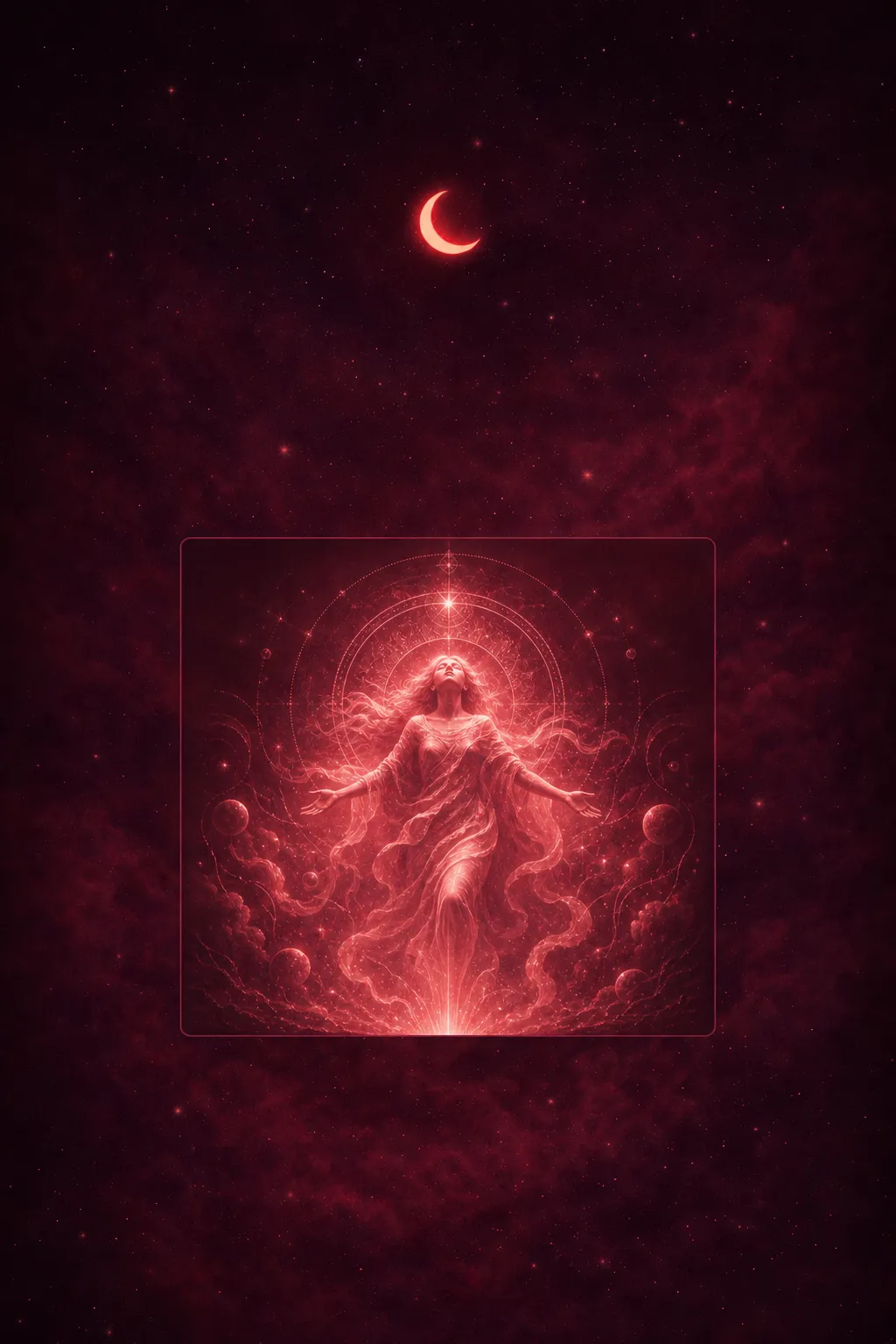

Dreaming about the rapture typically signals anxiety about being left behind, fear of sudden irreversible change, or a deep longing for release from overwhelming pressure — not literal prophecy. The dream's emotional tone, whether panic or peace, is the most reliable guide to its personal meaning.
In under a minute you could read what your exact dream means for you, and see a picture of it. Free.
You read what it can mean. But what did yours mean?
General meanings stop here. In the free app, tell Dream Book your exact dream and get a reading that actually makes sense for you.


A dream still on your mind? Get your personal reading.
Describe your dream in a line or two. In seconds you get a reading of your exact dream, a picture drawn from your own words, and every symbol explained.
Free. No sign-up. Takes 10 seconds. Your dream stays private.
0%
Analyzing your dream…
Something went wrong. Please try again in a moment.
Your dreams deserve more than a dictionary
Common Rapture Dream Scenarios and What They Mean
Being Left Behind While Others Are Taken
This is the most frequently reported rapture dream, and its emotional fingerprint is hard to miss: you look around and everyone is gone. A hollow, sinking dread sets in. In waking life, this scenario almost never signals a theological verdict on your soul. Instead, it surfaces a very human fear — the fear of exclusion. Ask yourself whether you have recently felt passed over at work, distanced from a social group, or quietly worried that people you love are moving on without you. The feeling of being abandoned is one of the oldest emotional wounds we carry, and the sleeping mind will dramatize it in whatever imagery feels most total and irreversible. The rapture is the mind's ultimate metaphor for that kind of loss.
But what does your version mean?
Being Lifted or Caught Up Into the Sky
When you are the one ascending — rising peacefully above the rooftops, pulled upward in a rush of light — the dream shifts register entirely. This version often carries a quality closer to relief than dread. Psychologically, it can express a genuine wish to be rescued from a situation that has become suffocating. Dreams of flying upward frequently carry themes of freedom and release, and a rapture-flavored ascension adds a layer of validation to that impulse: I am worthy of being carried out of this. If you have been grinding through chronic stress, burnout, or a season of life that feels relentless, this dream may simply be your unconscious exhaling.
Family Members or Loved Ones Suddenly Disappearing
Watching your children, partner, or parents vanish in an instant while you remain is its own category of nightmare. The terror here belongs less to theology than to attachment. Separation anxiety — the primal fear that the people who anchor our world will simply cease to be present — finds no image more extreme than the rapture. This dream tends to emerge during real-life transitions: a child leaving home, a relationship in quiet crisis, a parent's declining health. It is anticipatory grief wearing apocalyptic clothes.
Witnessing End-Times Chaos and Signs
Sometimes the rapture dream is less about being taken and more about witnessing: blood moons, collapsing skies, cities emptying, sirens that mean something final. This variety functions as a container for generalized modern anxiety. The world does feel unstable; the future is uncertain. When the waking mind cannot find an appropriate scale for its worry, the sleeping mind reaches for the largest possible canvas — an end-of-world scenario that externalizes an internal feeling of things being out of control and beyond repair.
Scrambling to Get Ready Before It Happens
In this scenario you know the event is imminent and you are frantically trying to fix something — apologizing to someone, finishing a task, resolving a conflict — before the moment arrives. This is one of the most practically useful rapture dreams because it maps almost directly onto a real-life deadline, unfinished obligation, or unspoken guilt. Something in your waking world is pressing you with a before it is too late urgency. The dream is asking you to name it.
A Calm, Joyful, or Ecstatic Rising
A minority of rapture dreams are simply beautiful — luminous, peaceful, suffused with a sense of arrival. If this was your experience, the reading leans toward readiness, acceptance, and genuine spiritual longing satisfied. You may be approaching an ending in your life — a career chapter, a relationship, a long season of struggle — with more grace than you consciously realize. The dream is not a prediction; it is a reflection of your own inner readiness to let go.
What this dream could look like
Tap an image to open it full screen
Example images. Only you can see what you write in Dream Book.
The Psychology Behind Rapture Dreams
Rapture dreams operate across several overlapping psychological axes. At the core is the intolerance of sudden, irreversible change — the cognitive discomfort of an event that happens to you without your participation, consent, or preparation. The dreaming brain finds this scenario in the rapture because few cultural images capture total loss of control more completely.
Was yours a sign? Find out.
Directly beneath that is the theme of conditional worth: Am I good enough to belong? This is not exclusively a religious question. People who have never set foot in a church dream about being left behind because the underlying anxiety — am I measuring up to the standard, whatever the standard is — is universal. Performance anxiety, imposter syndrome, and chronic self-doubt all feed this dream's imagery.
Attachment dynamics play an equally large role. Fear of abandonment is one of the earliest emotional templates human beings develop. The rapture dream activates it at maximum intensity. If you grew up in an environment where belonging felt conditional or where people left without warning, this dream may revisit that template repeatedly during stressful adult seasons.
Common real-world triggers include major life transitions, grief or fear of mortality, social rejection or exclusion, exposure to apocalyptic media, and periods of chronic stress where escape begins to feel appealing. The apocalypse dream in general serves as a pressure valve for anxiety that has run out of everyday containers.
General meanings end here. Read your own dream.
Describe your dream in a line or two. In seconds you get a reading of your exact dream, a picture drawn from your own words, and every symbol explained.
Free. No sign-up. Takes 10 seconds. Your dream stays private.
0%
Analyzing your dream…
Something went wrong. Please try again in a moment.
Your dreams deserve more than a dictionary
Every dream you log starts to connect.
Dream Book keeps your dreams in one place and reveals the threads between them over time — your private dream journal. Free to start.
Cultural Context: Why This Symbol Hits So Hard
In the English-speaking world — and especially in North America — the word rapture carries an enormous cultural charge that goes well beyond purely religious circles. Decades of end-times literature, film, and evangelical discourse have embedded the imagery of sudden mass disappearance into mainstream pop culture. Even people raised in entirely secular households know the basic story: some people are taken, others are not, and the ones left behind must reckon with what that means.
That cultural familiarity is precisely why the symbol is so effective as a dream vehicle. The sleeping mind does not need to explain it; the entire emotional architecture — sudden separation, judgment, finality, the question of worthiness — arrives pre-loaded. What changes from person to person is which strand of that architecture the dream is pulling on.
The rapture also intersects with broader dreams about heaven and divine encounter. But where a heaven dream tends to resolve in peace, a rapture dream characteristically holds tension — someone is chosen, someone is not, and the dreamer is rarely certain which side of that line they occupy.
Spiritual Dimensions of the Dream
For dreamers with active Christian faith, a rapture dream often prompts immediate self-examination: Is this a warning? Am I spiritually ready? The biblical imagery behind the concept — drawn largely from 1 Thessalonians 4 — carries genuine weight for believers, and it would be dismissive to flatten that into pure psychology. For this audience, the dream can function as a meaningful prompt toward prayer, reflection, and renewed attention to faith practice. It is far more likely to be an invitation to self-examination than a literal prophecy.
A bad dream isn't a bad sign.
For dreamers with a more general spiritual orientation, the rapture dream touches something equally real: the soul-level longing for transcendence, for release from the ordinary grind, for the sense that there is a larger order to which you belong and which will not forget you. Dreams of angelic presences often carry a similar comfort — a felt sense of being seen and held by something greater. The rapture dream, in its peaceful form, offers that same reassurance.
Whether your frame is explicitly Christian or more broadly spiritual, the most grounded approach is the same: treat the dream as a mirror, not a verdict. It is showing you something true about your interior life — your longing, your fear, your sense of belonging — and inviting you to engage with it consciously rather than dismiss it or catastrophize it.
Related Dream Meanings

people
Being Abandoned Dream Meaning: Insecurity & Fear
5 min read

common dreams
Flying Dream Meaning: Freedom, Ambition & Escape
5 min read
nightmares
End of World Dream Meaning: Anxiety, Change & Fear
5 min read

nightmares
Apocalypse Dream Meaning: Fear, Change & Inner Turmoil
5 min read
common dreams
What Does It Mean to Dream About Heaven
5 min read

people
Angel Dream Meaning: Guidance, Protection & Insight
5 min read

common dreams
Treasure Chest Dream Meaning: Hidden Potential & Worth
6 min read

common dreams
What Does Dreaming About Watermelon Mean? Dream Interpretation Guide
5 min read
What to Do After a Rapture Dream
The first and most useful step is to sit with the emotional residue before analyzing the imagery. Were you terrified, relieved, guilty, or strangely calm? That emotional tone is the most reliable key. Fear and panic amplify the left-behind and control-loss readings; peace and joy shift the meaning toward release and readiness; guilt almost always points directly to an unresolved real-life situation that deserves your waking attention.
Once you have the emotion, try these reflective prompts:
- Where in waking life do you fear being excluded or not measuring up? Name it specifically — a relationship, a role, a community.
- What feels like it is ending or changing beyond your control? The rapture dream often arrives at the edge of major transitions.
- Is part of you longing to be rescued or released from pressure? If so, what would genuinely healthy relief look like in your actual circumstances?
If the dream is recurring or leaving you significantly distressed, it is worth exploring with a therapist, particularly if there are underlying themes of abandonment, grief, or chronic anxiety. Recurring end-times dreams are rarely random — they are persistent knocks on a door the waking mind has not yet opened.
But what does your version mean?
Finally, if the dream emerged from a season of heavy media consumption — news cycles, apocalyptic films, online end-times content — consider a deliberate reduction. The sleeping mind processes everything it takes in, and a steady diet of catastrophe imagery will find its way into your nights.
One dream is never the whole picture.
The free app remembers your dreams, draws them, and connects the threads over time — so the next one means even more. Free to start.
People Also Ask
Visions of rapture in a dream typically represent the dreamer's internal sense of an impending major change — something sudden, total, and beyond their control. The imagery can reflect spiritual longing, anxiety about being left behind socially or morally, or a deep wish for release from overwhelming pressure. The emotional tone of the vision is the best guide to its specific meaning.
No scientifically verified ranking of dream rarity exists, but research suggests that fully lucid dreams — where the dreamer knows they are dreaming and can direct the experience — are among the least commonly reported. Vivid end-times dreams like rapture scenarios are actually relatively common, particularly during periods of high personal stress or cultural uncertainty.
Most faith traditions suggest that spiritually significant dreams carry a quality of clarity, peace, and moral direction rather than simple fear or confusion. If a dream consistently nudges you toward a specific change, relationship repair, or prayerful reflection — and that feeling persists after waking — many believers take that as worth attending to, ideally discussed with a trusted spiritual mentor.
Periods of collective uncertainty — economic instability, global conflict, rapid social change — reliably increase the frequency of apocalyptic and end-times dreams across populations. The rapture is one of the most culturally familiar end-of-world images in the English-speaking world, so anxious minds naturally reach for it as a container for fears that feel total and uncontrollable.
Curious what your dream would look like?