
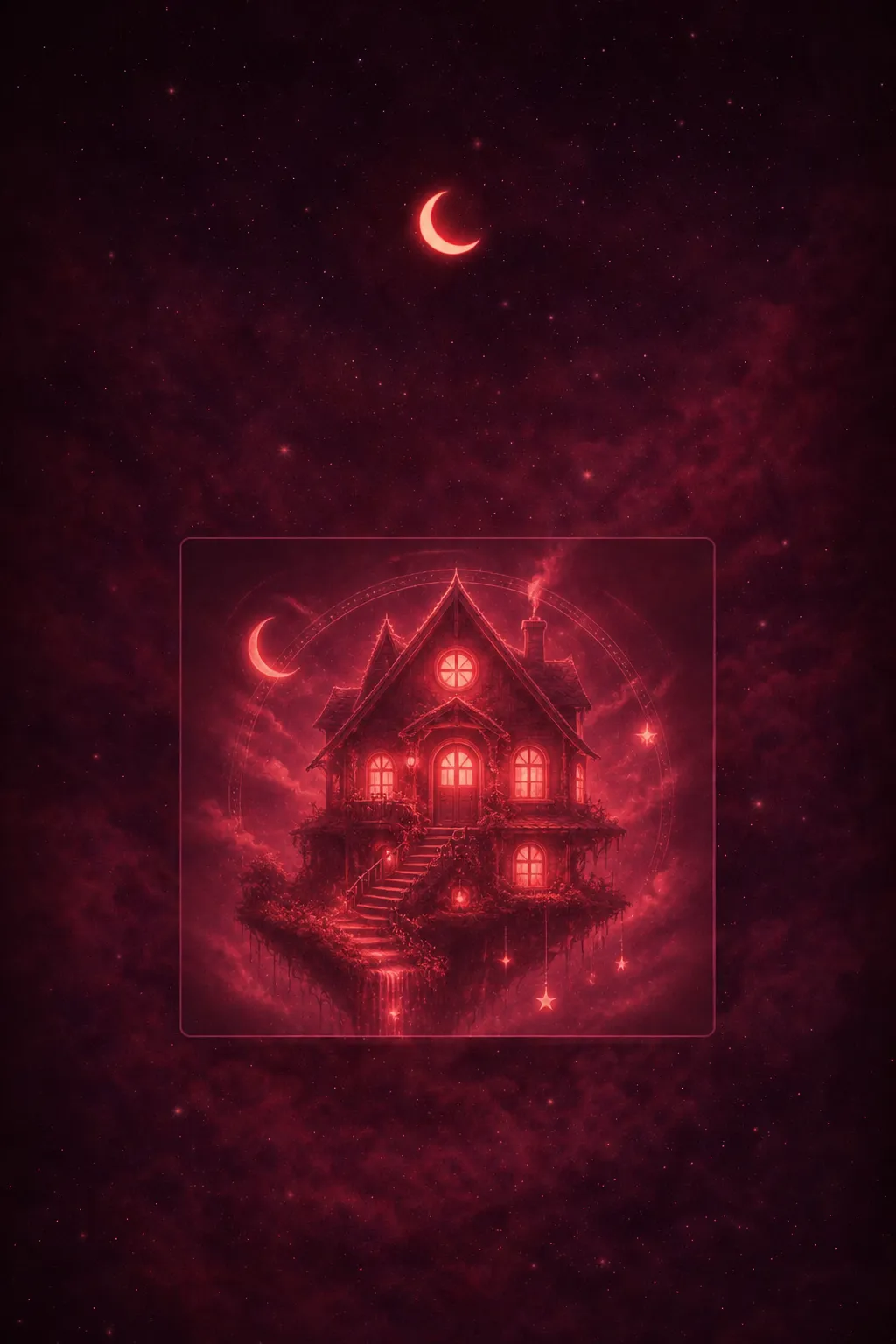

A dream house meaning centers on the self, with each room reflecting a different aspect of your personality, emotions, or life situation—an unfamiliar house may signal personal growth, a crumbling one may warn of inner instability, and a grand, welcoming home often points to confidence, security, and a strong sense of identity.
In under a minute you could read what your exact dream means for you, and see a picture of it. Free.
You read what it can mean. But what did yours mean?
General meanings stop here. In the free app, tell Dream Book your exact dream and get a reading that actually makes sense for you.


A dream still on your mind? Get your personal reading.
Describe your dream in a line or two. In seconds you get a reading of your exact dream, a picture drawn from your own words, and every symbol explained.
Free. No sign-up. Takes 10 seconds. Your dream stays private.
0%
Analyzing your dream…
Something went wrong. Please try again in a moment.
Your dreams deserve more than a dictionary
Common Dream House Scenarios and What They Mean
The condition and circumstances of your dream house shift the meaning considerably. Dreaming of owning a beautiful, ideal home often reflects genuine confidence in your life direction — or, just as often, a wish-fulfillment response to real-world insecurity about housing, finances, or status. If you are searching for or buying a house in the dream, your mind is likely working through an identity transition: weighing options, testing readiness for commitment, or rehearsing a major life change. A house still under construction signals that goals or aspects of your character are genuinely in progress — the anxiety of incompleteness is real, but so is the potential waiting inside those unfinished walls. At Dream Book we explore this symbol in depth.
- Discovering hidden or extra rooms: a widely reported scenario pointing to untapped abilities or overlooked parts of yourself — an encouraging nudge toward self-knowledge.
- Damaged, decaying, or dirty house: a clear signal that self-care has slipped or emotional strain has gone unaddressed; the dream is pressing you to tend to inner needs before the damage spreads.
- Losing or being unable to afford the house: taps directly into modern financial anxiety and fear of losing status, identity, or relational stability.
- Returning to a childhood home: connects you to unresolved memories or an earlier version of yourself — often appearing under stress as a form of psychological regression.
- Haunted house or intruder: unresolved fears or a felt violation of personal boundaries breaking through into conscious imagery.
- House flooded or on fire: flood points to emotions threatening to overwhelm your sense of control; fire suggests transformation, rage, or a situation forcing disruptive change.
But what does your version mean?
Across all these variants, the central question your dreaming mind is asking is the same: how secure, whole, and in control do you feel within yourself right now?
What this dream could look like
Tap an image to open it full screen
Example images. Only you can see what you write in Dream Book.
The Dream House as a Psychological Self-Portrait
Mainstream psychology, drawing heavily on Jungian tradition, treats the house in dreams as a direct map of the psyche — its architecture mirroring how you have organized your inner life. Each room corresponds to a distinct mental or emotional domain: the attic holds memory and intellect, the basement surfaces repressed feelings and unconscious material, the bedroom speaks to intimacy and the need for rest, and the kitchen points toward nourishment and relational bonds. The overall condition of the structure is equally telling — a well-kept, welcoming home suggests healthy integration and a stable sense of self, while crumbling walls, leaking roofs, or rooms you are afraid to enter often signal stress, unmet emotional needs, or a pattern of self-neglect that waking life has not yet forced you to confront.
Through a modern-anxiety lens, dreams of an unstable house — one that is perpetually unfinished, shifting in layout, or unsafe — frequently mirror fears about losing control during periods of transition: a career change, a relationship shift, a move, or a major life decision. The subconscious uses the familiar language of shelter to ask whether your inner foundations are solid enough to weather external change. Dreaming of a childhood home can deepen this further, pulling forward unresolved emotional patterns that still quietly shape adult behavior.
Was yours a sign? Find out.
- Idealized future home: often projects an aspirational self — who you want to become, not only where you want to live.
- Locked or hidden rooms: suggest aspects of identity being avoided or suppressed.
- Stranger in the house: may represent an unacknowledged part of the self demanding recognition.
- Renovating or repairing: reflects active psychological work — a conscious effort toward growth and self-integration.
General meanings end here. Read your own dream.
Describe your dream in a line or two. In seconds you get a reading of your exact dream, a picture drawn from your own words, and every symbol explained.
Free. No sign-up. Takes 10 seconds. Your dream stays private.
0%
Analyzing your dream…
Something went wrong. Please try again in a moment.
Your dreams deserve more than a dictionary
Every dream you log starts to connect.
Dream Book keeps your dreams in one place and reveals the threads between them over time — your private dream journal. Free to start.
The Dream House in Cultural and Folk Tradition
In Anglo-American culture, homeownership has long been far more than a financial transaction — it is a defining milestone of adult success, stability, and self-worth. The phrase "a home of one's own" carries enormous cultural weight, linking personal identity to property in a way that few other symbols do. This makes the dream house a uniquely charged image: when you dream of a home, you are not simply picturing four walls but invoking an entire cultural script about who you are supposed to be and whether you have arrived there yet.
That cultural pressure becomes especially pointed in an era of housing-market stress and affordability anxiety. For many dreamers, a recurring house dream reflects a very real, waking tension — the gap between the life they were told to expect and the one economic realities have delivered. Folk wisdom has long read a grand, well-kept dream home as an omen of prosperity and social standing, while a crumbling or unfinished house signals instability ahead. These traditional readings resonate because they map so neatly onto modern anxieties about control and security.
- Home as sanctuary: Anglo folk tradition treats the home as a protected, private world; dreaming of its boundaries being breached — doors left open, walls missing — is widely read as a sign of feeling exposed or overextended in waking life.
- Status and aspiration: Cultural lore often interprets a dream of a grander house than the one you live in as ambition asserting itself, a prompt to examine whether your current life structure matches your deeper goals.
- The childhood home as anchor: In popular belief, returning to a former home in a dream signals unfinished emotional business — unresolved identity questions that the present self has not yet settled.
The Dream House as a Spiritual Foundation
Within a Christian framework, the house carries deep scriptural resonance. Jesus's parable of the wise and foolish builders in Matthew 7:24–27 — one house standing firm on rock, the other collapsing on sand — speaks directly to what kind of foundation you have built your life upon. When anxiety about instability or loss of control surfaces in a dream house, this lens invites a quieter question: what core values or commitments are actually holding your life together right now? A crumbling dream house, in this reading, is less a prophecy and more a prompt toward honest self-examination.
A bad dream isn't a bad sign.
John 14:2 adds a warmer note — "In my Father's house are many rooms" — suggesting that a house can also symbolize belonging, acceptance, and a place prepared for you. Dreamers who feel rootless, overlooked, or uncertain of their worth sometimes encounter expansive or welcoming houses that function as reassurance rather than warning. The spiritual reading does not contradict the psychological one; it deepens it, framing the dream house as not only a self-portrait but a question about meaning and groundedness. Dreams of a childhood home in particular often carry this dual charge — nostalgia for a time when belonging felt unconditional, and a spiritual longing to recover that sense of security in present life.
- Solid vs. shaky structure: may reflect whether your current life feels spiritually grounded or built on uncertain priorities.
- Locked or hidden rooms: can signal areas of inner life you have avoided bringing into the light.
- A welcoming, spacious house: often points to a sense of spiritual belonging or hope about where life is heading.
Related Dream Meanings
common dreams
Childhood Home Dream Meaning: Nostalgia & Unresolved Past
5 min read
common dreams
Dreaming of Basement Meaning: What Your Subconscious Reveals
5 min read

common dreams
What Does the Color Red Mean in Dreams
5 min read

common dreams
Failing Exam Dream Meaning: Anxiety, Fear & Insecurity
5 min read

common dreams
Test Dream Meaning: Inadequacy & Self-Assessment
5 min read

common dreams
Big Waves Dream Meaning: Emotions & Loss of Control
5 min read

common dreams
Dreaming of Dark Water Meaning: What Your Dream Reveals
6 min read
common dreams
What Does Dreaming About a Maze Mean? Dream Interpretation Guide
6 min read
What Your Dream House Is Telling You — and What to Do About It
Because the dream house mirrors your current inner state, the most useful first step is simply to notice which part of the house stood out and what condition it was in. A crumbling foundation or a room you were afraid to enter is worth taking seriously as a signal — not a prophecy, but a prompt. Ask yourself honestly: where in waking life do you feel most out of control, most neglected, or most anxious about change? Journaling the specific details immediately after waking — layout, lighting, emotional atmosphere — gives you raw material to work with rather than a vague feeling that fades by noon.
But what does your version mean?
- Map the rooms to real domains. A chaotic kitchen may point to routines and self-care; a locked bedroom may flag intimacy or privacy concerns; a leaking roof often tracks financial or professional stress. Identify the life area and address it directly.
- Notice the dream's emotional tone, not just its imagery. Feeling proud and expansive suggests you are growing into yourself; feeling trapped or overwhelmed suggests a need to reclaim agency somewhere specific.
- Revisit the dream if it recurs. Recurring dreams set in a childhood home often signal unresolved patterns still shaping present-day decisions — a therapist or structured self-reflection exercise can help you move forward.
- Take one small, concrete action. If the dream exposed a sense of neglect or instability, respond in kind: tackle one overdue task, have one honest conversation, or build one new routine. Small moves rebuild the felt sense of control the dream may be flagging as missing.
One dream is never the whole picture.
The free app remembers your dreams, draws them, and connects the threads over time — so the next one means even more. Free to start.
People Also Ask
A dream house typically symbolizes the self — your mind, body, and overall sense of identity. Each room can represent different aspects of your life or personality. It often reflects your emotional state, personal boundaries, and how secure or unstable you feel in your waking life at that particular moment.
Dreaming of a dream home usually points to your deepest desires, aspirations, and emotional needs. It can signal a longing for security, comfort, or a fresh start. The home's condition matters greatly — a bright, welcoming space suggests contentment, while a crumbling or unfamiliar one may hint at inner turmoil or unresolved anxieties.
A dream house is often vivid and emotionally charged — it may feel familiar yet strange, with unexpected rooms or shifting layouts. Dreamers frequently describe warm lighting, hidden corridors, or grand spaces. These details carry meaning, reflecting unexplored potential, hidden memories, or aspects of yourself you have not yet fully acknowledged or understood.
Spiritually, a house represents the soul or inner temple — a sacred space housing your consciousness and higher self. Different floors can symbolize levels of spiritual awareness, from earthly instincts in the basement to higher wisdom in the upper floors. Encountering a house in dreams often signals a call toward deeper self-reflection and spiritual growth.
Curious what your dream would look like?