
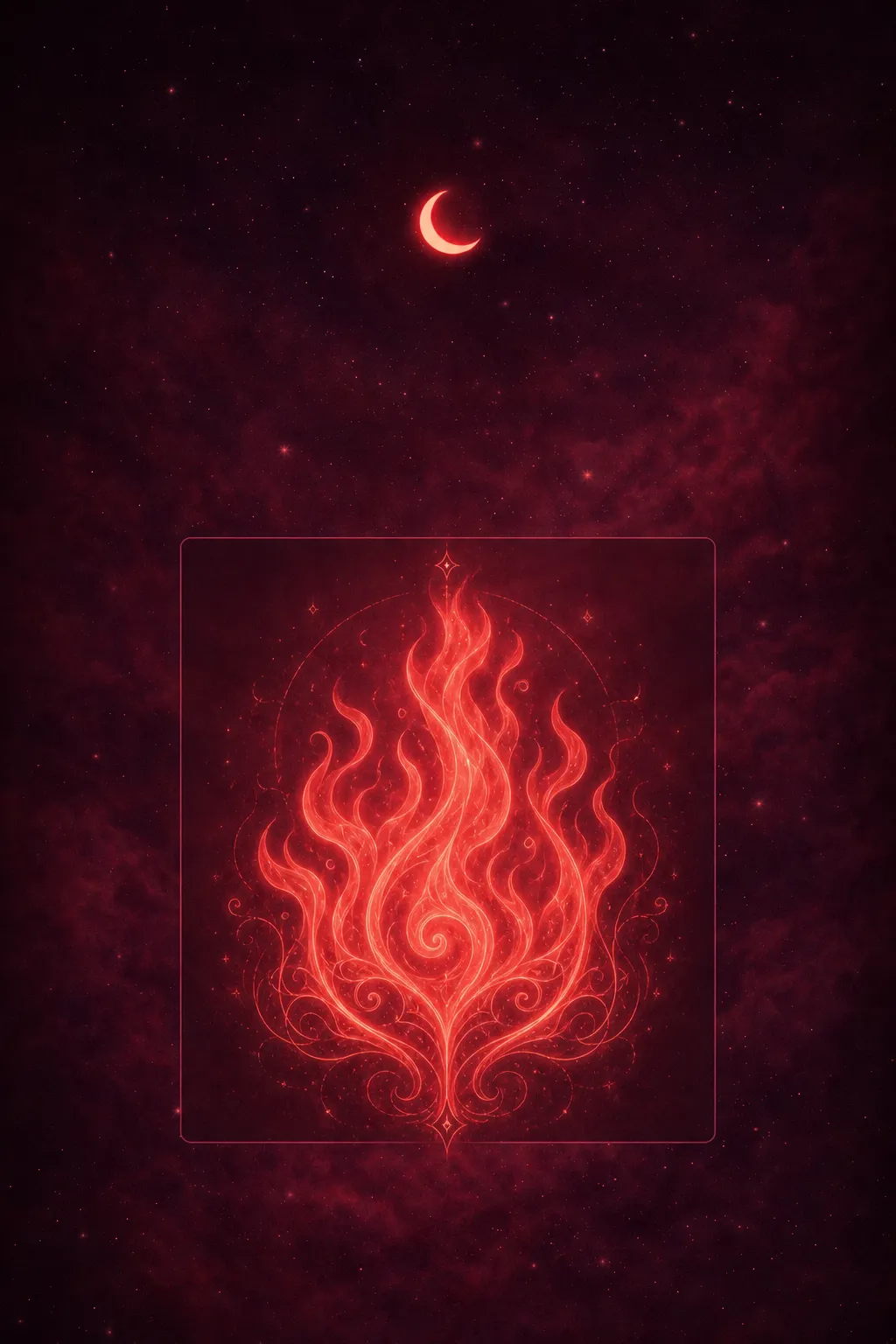

Dreaming about fire typically symbolizes intense emotion, transformation, or passion, reflecting either destructive anger and conflict in your waking life or a powerful drive to purge the old and ignite meaningful personal change.
In under a minute you could read what your exact dream means for you, and see a picture of it. Free.
You read what it can mean. But what did yours mean?
General meanings stop here. In the free app, tell Dream Book your exact dream and get a reading that actually makes sense for you.


A dream still on your mind? Get your personal reading.
Describe your dream in a line or two. In seconds you get a reading of your exact dream, a picture drawn from your own words, and every symbol explained.
Free. No sign-up. Takes 10 seconds. Your dream stays private.
0%
Analyzing your dream…
Something went wrong. Please try again in a moment.
Your dreams deserve more than a dictionary
Common Fire Dream Scenarios and What They Mean
The specific details of a fire dream shift its meaning considerably. A house or home burning is one of the most unsettling variants — since the home represents your sense of self and security, this scenario often surfaces when real-life pressures (financial strain, relationship tension, major life change) are making your foundation feel unstable. Similarly, a spreading wildfire you cannot contain mirrors flooding emotion or a situation that feels completely out of hand — the kind of overwhelm that constant connectivity and relentless demands can produce. On the calmer end of the spectrum, a campfire, fireplace, or single candle flame carries warmth and focus rather than threat, suggesting your passion or drive is currently channeled in a healthy, purposeful way.
- Being burned or hurt by fire: a warning signal — you may be "playing with fire" in a relationship or risk, and part of you already senses the cost.
- You start the fire: points to suppressed anger or a desire to forcibly end something; the dream may be giving that impulse a safe outlet.
- Fleeing or surviving a fire: highlights resilience and coping — your mind is rehearsing how to navigate a threatening emotion or crisis rather than face it directly.
- Putting a fire out: a reassuring scenario linked to regaining control, resolving conflict, and de-escalating intense feelings.
- Emerging from ash or ruin: the classic phoenix image — transformation completed, signaling that loss has cleared space for genuine renewal.
But what does your version mean?
Across all these scenarios, notice how much control you hold in the dream. The shift from helpless bystander to active participant — whether escaping, extinguishing, or even deliberately setting the blaze — is often the most telling detail for understanding where you feel empowered or overwhelmed in waking life.
What this dream could look like
Tap an image to open it full screen
Example images. Only you can see what you write in Dream Book.
Fire as a Psychological Mirror
From a psychological standpoint, dreaming of fire is rarely subtle — it tends to surface when the subconscious has reached a tipping point. Mainstream psychology reads fire as a direct expression of intense emotional states: suppressed anger looking for an outlet, passionate desire straining against self-restraint, or the kind of overwhelming drive that can tip from motivation into burnout. In a culture shaped by constant notifications and relentless performance pressure, fire dreams frequently serve as the mind's alarm system, signaling that inner pressure has built to a level the waking self has been unwilling to acknowledge.
The control axis is especially telling. If the fire in your dream feels manageable — a hearth, a candle — your subconscious may be affirming your sense of agency and vitality. But when flames spread beyond your ability to contain them, the dream often reflects a felt loss of control over circumstances or emotions in waking life. A Christian-informed reading adds a layer here: fire as refining force, the idea that what burns away is not what was meant to last — framing destruction not as failure but as necessary pruning. This blends naturally with Jungian notions of transformation, where an ending-of-a-phase clears ground for authentic renewal.
Key psychological themes to reflect on after a fire dream include:
Was yours a sign? Find out.
- Unexpressed emotion — particularly anger or passion that has been minimized in daily life
- Burnout signals — chronic stress reaching a point where the psyche demands acknowledgment
- Transformation readiness — an intuitive sense that an old identity, habit, or relationship has run its course
- Control anxiety — fear that a situation (or your own feelings) is escalating beyond management, much like the helplessness captured in dreams of being chased
General meanings end here. Read your own dream.
Describe your dream in a line or two. In seconds you get a reading of your exact dream, a picture drawn from your own words, and every symbol explained.
Free. No sign-up. Takes 10 seconds. Your dream stays private.
0%
Analyzing your dream…
Something went wrong. Please try again in a moment.
Your dreams deserve more than a dictionary
Every dream you log starts to connect.
Dream Book keeps your dreams in one place and reveals the threads between them over time — your private dream journal. Free to start.
Fire in Culture, Tradition, and Everyday Language
Long before psychology named it, Western folk tradition treated fire in dreams as a charged omen sitting squarely between blessing and warning. In broadly Christian Anglo-American culture, fire carries unmistakable biblical weight — think of the burning bush, the refiner's fire, or tongues of flame at Pentecost — suggesting that a fire dream can feel spiritually significant even to people who rarely set foot in a church. That inherited symbolism quietly frames fire as something that tests and purifies rather than simply destroys, which is why many people wake from a vivid fire dream with a sense that something in their life is being stripped down to what actually matters.
Everyday English idioms reinforce these readings in a surprisingly direct way. When you dream of fire, the phrases your waking mind already carries — playing with fire, trial by fire, fire in the belly, burned out — can serve as a rough first key. A roaring, uncontrolled blaze tends to echo the feeling of playing with fire or burning the candle at both ends; a steady, contained flame aligns more with fire in the belly, signalling drive and purpose. In a culture shaped by relentless performance pressure and the expectation of constant availability, the burned out reading has become especially common, making fire one of the clearest dream flags for modern overload — not unlike the way a candle flame signals the thin line between illumination and exhaustion.
A bad dream isn't a bad sign.
Anglo domestic tradition adds one softer layer: the hearth fire as the symbolic heart of home, warmth, and community. In that light, a welcoming fire in a dream can simply reflect a longing for safety, belonging, or a return to simpler rhythms — a quieter meaning that sits alongside the more dramatic imagery of transformation and loss of control.
Fire as a Spiritual Signal
Within a broadly Christian frame, a fire dream can carry a reassuring subtext that the psychological reading alone may miss: fire in Scripture is rarely only destruction. The apostle Peter describes faith being "proved genuine" through trial as gold is refined by flame (1 Peter 1:7), and Malachi's refiner's fire (Malachi 3:2–3) frames suffering not as punishment but as a purposeful process that removes what no longer belongs. If you are moving through a season of loss, burnout, or a situation that feels beyond your control, a fire dream may be quietly asking whether something outdated — a belief, a relationship pattern, an old identity — needs to burn away so something truer can emerge.
The burning bush of Exodus and the tongues of fire at Pentecost (Acts 2:3) add a second layer: fire as a sign of divine presence and empowerment rather than judgment. From this angle, dreaming of fire is not a warning to brace yourself but an invitation to pay attention — something significant is being illuminated. Many dreamers in more broadly spiritual (non-denominational) traditions interpret fire dreams as a prompt toward inner renewal, a cue to release what has been clutched too tightly. A steady candle flame appearing alongside a larger fire can soften this meaning further, suggesting that steady, intentional light — rather than consuming chaos — is what your spirit is reaching for.
Related Dream Meanings
common dreams
Candle Dream Meaning: Hope, Guidance & Inner Light
5 min read

nightmares
Being Chased Dream Meaning: Anxiety & Avoidance
5 min read
common dreams
Water Dream Meaning: Emotions, Intuition & Growth
5 min read
common dreams
Winning Money: Meaning and Interpretation
5 min read
common dreams
Sunset: Meaning and Symbolism
5 min read
common dreams
Cooking: Meanings and Interpretations
6 min read
common dreams
Dream of House Flooding: Meaning and Interpretation
5 min read

common dreams
Fruits: Meaning and Interpretation
5 min read
What to Do After a Fire Dream
Fire dreams rarely arrive without cause — they tend to cluster around periods of real pressure, unresolved emotion, or a life chapter that needs closing. Rather than brushing the image aside, treat it as a low-cost check-in with yourself. Jot down the dream immediately on waking, noting how the fire behaved: was it spreading out of control, burning steadily, or dying out? That detail alone can point you toward whether you're dealing with mounting overwhelm, sustained drive, or fading motivation — each of which calls for a different practical response.
If the dream carried an edge of panic or loss of control, it's worth auditing your current stress load honestly. Modern life stacks demands quietly until something internal sounds the alarm; a runaway fire dream may be that alarm. Consider whether a specific commitment, relationship, or workload has quietly crossed into burnout territory — the kind you can address through deliberate boundary-setting or by seeking out calming, restorative practices to counterbalance the heat.
But what does your version mean?
- Name the emotion first. Ask yourself what feels "on fire" in waking life — anger, urgency, passion, dread — before assuming the worst.
- Identify what needs releasing. If a phase of life has genuinely run its course, fire imagery may be prompting you to let go rather than hold on.
- Check your energy levels. Recurring fire dreams, especially chaotic ones, are a credible signal to slow down and reassess before real burnout sets in.
- Channel the energy constructively. If the fire felt empowering, lean into it — creative projects, bold decisions, or long-postponed conversations may be exactly what the dream is nudging you toward.
One dream is never the whole picture.
The free app remembers your dreams, draws them, and connects the threads over time — so the next one means even more. Free to start.
People Also Ask
Fire in dreams can be both positive and negative — it depends on context. A controlled, warm fire often signals passion, transformation, or new beginnings. A raging, destructive blaze may warn of anger, burnout, or loss of control. Pay attention to how the fire made you feel, as emotions are your clearest guide.
Spiritually, fire represents purification, divine energy, and awakening. Many traditions view it as a sacred force that burns away the old to make room for growth. Dreaming of fire may signal a deep inner transformation, a spiritual calling, or the presence of a powerful energy guiding you toward a higher purpose.
The spiritual message is often one of renewal and courage. Fire asks you to release what no longer serves you — old habits, fears, or relationships — and step boldly into change. It can also be a reminder to channel your inner passion and drive toward something meaningful and aligned with your soul's path.
Yes, color carries significant meaning. Golden or orange flames suggest vitality and creativity. Blue fire points to spiritual insight or rare, powerful energy. Red flames often reflect intense emotion, desire, or anger. Black or dark fire can symbolize danger, hidden fears, or destructive forces. Always consider color alongside the overall dream context.
Curious what your dream would look like?