
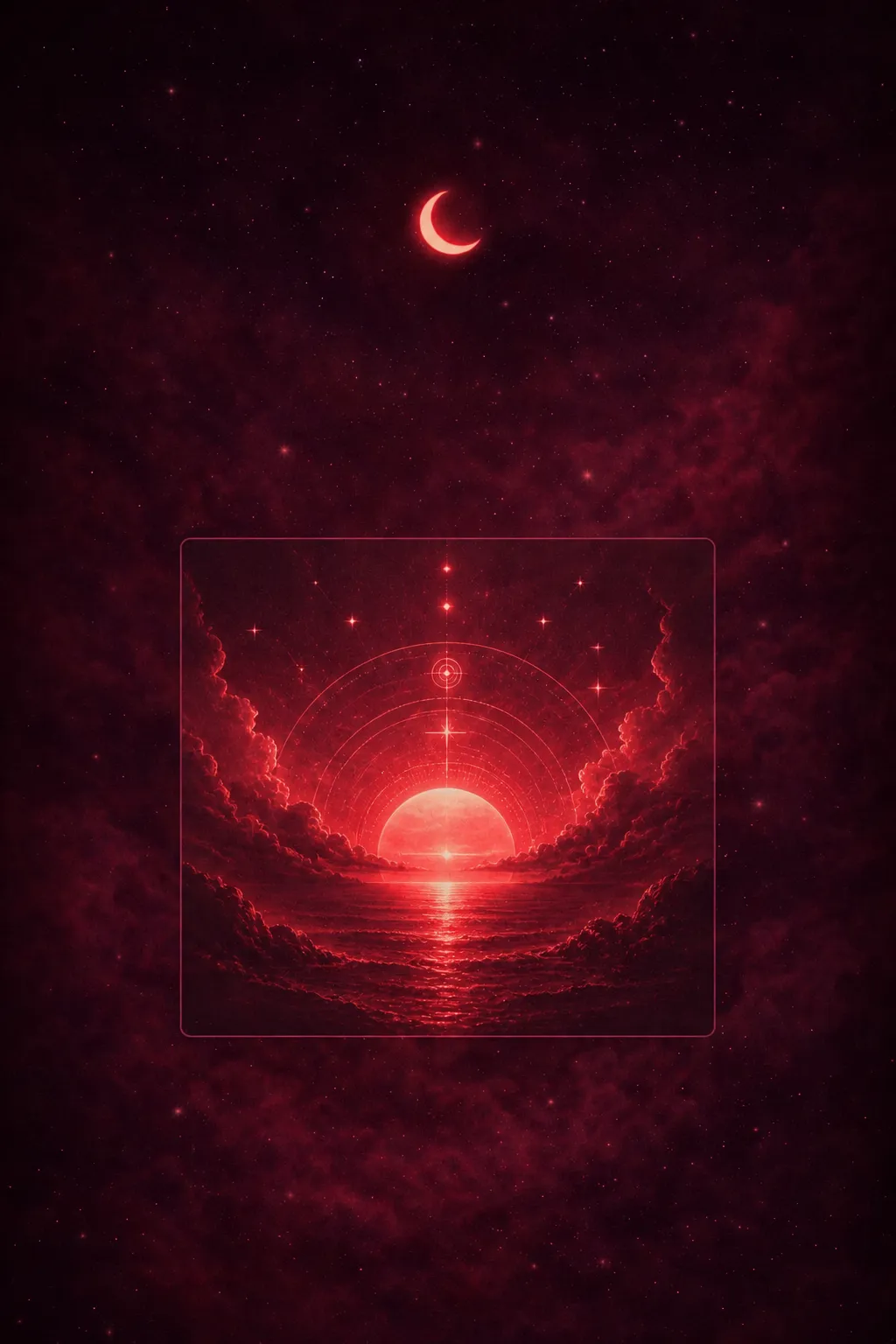

Dreaming about a sunset typically symbolizes endings, transitions, and the peaceful closure of a chapter in your life, reflecting your subconscious processing of change, release of the past, or a natural shift toward rest and reflection as one phase fades and another quietly awaits.
In under a minute you could read what your exact dream means for you, and see a picture of it. Free.
You read what it can mean. But what did yours mean?
General meanings stop here. In the free app, tell Dream Book your exact dream and get a reading that actually makes sense for you.


Common Sunset Dream Scenarios and What They Mean
The specific shape a sunset takes in your dream sharpens its message considerably. Watching a calm, breathtaking sunset in peace is among the most common variants, and it almost always signals genuine acceptance — your mind is quietly acknowledging that something (a job, a relationship, a season of life) has run its natural course, and you are, at some level, ready to let it go. If you are sharing that moment with another person, the dream likely reflects a relationship arriving at a significant turning point: a deepening of intimacy, a silent farewell, or a mutual recognition that things between you are shifting. Watching alone and feeling the weight of solitude, however, points toward grief or an ending you have not yet made peace with — the beauty is there, but so is the ache. At Dream Book we explore this symbol in depth.
- Blood-red or ominous sunset: Unresolved anxiety about an approaching change; a foreboding your waking mind may be suppressing.
- Chasing the sun or racing before it sets: A classic modern-anxiety signal — you feel time slipping out of your control, or fear missing a critical window of opportunity before it closes for good.
- Sunset over a vast open ocean: An invitation to surrender control and trust larger forces; perspective on how small your current worry actually is.
- Sun frozen at the horizon, never fully setting: A stalled transition — something in you is resisting closure, leaving you suspended between what was and what comes next.
But what does your version mean?
Across all these variants, the central question your dreaming mind is raising is the same: are you at peace with what is ending, or are you still holding on?
What this dream could look like
Tap an image to open it full screen
Example images. Only you can see what you write in Dream Book.
The Psychology Behind Dreaming of a Sunset
From a psychological standpoint, a sunset in dreams functions as the subconscious mind's preferred shorthand for closure — the quiet acknowledgment that a chapter is ending. It sits at the threshold between the conscious, active world of daylight and the deeper, restful domain of night, which psychologists often associate with the unconscious. When your dreaming mind stages a sunset, it is typically working through a transition: processing grief over something lost, integrating a change you haven't fully accepted in waking life, or simply marking the completion of a cycle. Much like dreaming of death, a sunset rarely signals literal loss — it signals transformation.
The emotional tone of the sunset is diagnostically important. A serene, golden sky points toward healthy emotional regulation — acceptance replacing resistance. A blood-red or stormy sunset, by contrast, often surfaces unresolved dread: something your waking mind is reluctant to confront. In a modern-anxiety context, the image of the sun slipping away maps directly onto time-scarcity stress — the nagging sense of "running out of daylight" whether that means deadlines, aging, or opportunities closing off. When control feels elusive in daily life, the fading light can amplify that pressure rather than soothe it.
Was yours a sign? Find out.
- Nostalgia and retrospection: Your mind is reviewing the past, weighing what mattered and what didn't.
- Letting go: The dream nudges you toward releasing something you may still be gripping too tightly.
- Life-cycle awareness: A sunset can mark aging, the end of a relationship, or a professional chapter winding down.
- Emotional integration: The subconscious is moving toward resolution — giving beauty to what once felt like loss.
General meanings end here. Read your own dream.
Describe your dream in a line or two. In seconds you get a reading of your exact dream, a picture drawn from your own words, and every symbol explained.
Free. No sign-up. Takes 10 seconds. Your dream stays private.
0%
Analyzing your dream…
Something went wrong. Please try again in a moment.
Your dreams deserve more than a dictionary
Cultural Traditions and Folk Beliefs About Sunset Dreams
In Anglo-American culture, the sunset carries a remarkably consistent symbolic weight that spills directly into how people interpret its appearance in dreams. The phrase "riding into the sunset" — borrowed from classic Western films — has become cultural shorthand for a clean resolution: the hero's work is done, and departure signals earned rest rather than defeat. When this imagery surfaces in a dream, many people instinctively read it as a hopeful sign of closure, a culturally conditioned cue that it's acceptable to let something go and move on.
The idiom "sunset years" adds another layer, quietly associating the image with life's final stage and the passage of time. In a culture increasingly anxious about productivity, aging, and losing control of the clock, dreaming of the sun's final light can tap into that undercurrent of unease — a subconscious reckoning with how much time feels left rather than how much has been lived. This mirrors the broader modern preoccupation with legacy and whether one's efforts have amounted to something meaningful. From a loosely Christian folk-wisdom perspective, the end of the day has long been treated as a natural invitation to reflection and surrender — "let the day's troubles be sufficient" — making the sunset a gentle cultural prompt toward acceptance rather than resistance. Golden-hour imagery in film and advertising reinforces this, training audiences to associate the fading sun with romance, idealized memory, and bittersweet but beautiful endings.
- Riding into the sunset: culturally signals resolution and a dignified, voluntary departure
- Sunset years: links the image to aging, legacy, and time's passage
- Golden-hour media aesthetics: condition the dreamer to feel nostalgia and tender closure
- Folk and Christian tradition: frames dusk as a moment for surrender, gratitude, and release of control
The Spiritual Meaning of a Sunset Dream
Within a Christian framework, a sunset dream can carry quiet but pointed significance. The Apostle Paul's instruction not to let the sun go down on your anger (Ephesians 4:26) gives the image a moral urgency — a closing day becomes a gentle deadline, a prompt from the unconscious to settle what is unresolved before a cycle ends for good. If you wake from a sunset dream with a lingering sense of unease, it may be worth asking honestly whether you are carrying a grievance or regret that you have been unwilling to release. The dream is not threatening; it is nudging.
A bad dream isn't a bad sign.
Beyond that specific verse, evening light has long held a quieter theological meaning: the close of day as an act of surrender, handing the hours back to something greater than yourself. In a culture quietly shaped by the rhythm of Sabbath rest, dreaming of the sun's final light can mirror an internal need to stop striving and trust that completion is enough. For anyone wrestling with modern anxieties about productivity or control, that spiritual reading lands with real weight — the sunset reminds the dreamer that not every ending requires intervention. Some cycles are simply meant to close, and acceptance, rather than management, is the spiritually mature response.
Related Dream Meanings
common dreams
Ocean Dream Meaning: Emotions, Change & the Subconscious
5 min read
nightmares
Death Dream Meaning: Transformation, Loss & Change
5 min read
common dreams
Sun Dream Meaning: Vitality, Clarity & Purpose
5 min read
common dreams
Water Dream Meaning: Emotions, Intuition & Growth
5 min read
common dreams
Childhood Home Dream Meaning: Nostalgia & Unresolved Past
5 min read
common dreams
Third Eye Dream Meaning: Intuition & Awakening
5 min read
common dreams
Being Fired Dream Meaning: Insecurity & Fear of Failure
5 min read
common dreams
Gold Dream Meaning: Wealth, Success & Self-Worth
5 min read
What to Actually Do After a Sunset Dream
The most useful first step is simple: treat the dream as a check-in prompt rather than a verdict. Ask yourself honestly what in your waking life feels like it is winding down — a project, a friendship, a personal goal — and whether you have been avoiding that reality. Modern life rewards constant forward motion, which makes it easy to outrun a necessary ending until your sleeping mind flags it for you.
- Name the ending. Write down in a few sentences what you sense is closing. Naming it on paper reduces the diffuse anxiety the dream may have stirred and gives you something concrete to work with.
- Distinguish grief from denial. If the sunset felt heavy or rushed, consider whether you are resisting a change rather than processing it. Resistance burns far more energy than going with the current of an inevitable transition.
- Set a closure action. Pick one small, practical gesture — send the message you have been putting off, have the honest conversation, or simply mark an end date on your calendar. Closure rarely arrives on its own; it usually needs a deliberate act.
- Build in a pause. Sunsets are brief by nature. Schedule a genuine rest period before your next big push — not as a reward, but as part of the cycle your dream is pointing toward.
But what does your version mean?
The goal is not to decode a hidden prophecy but to let the dream's emotional tone guide a grounded, honest look at where you are right now and what you are ready — or still reluctant — to release.
One dream is never the whole picture.
The free app remembers your dreams, draws them, and connects the threads over time — so the next one means even more. Free to start.
People Also Ask
Spiritually, a sunset in a dream signals the close of one chapter and the dawn of inner transformation. It invites you to release what no longer serves you, trust the natural flow of life, and prepare your soul for renewal. Many traditions see it as a reminder that endings carry their own sacred beauty.
A sunset symbolizes completion, transition, and the passage of time. Dreaming of one often reflects a major life phase drawing to a close — a relationship, career, or personal era. It can also represent wisdom gained through experience, a longing for peace, or an emotional need to pause and appreciate what you have.
Biblically, sunset marks the boundary between day and rest, echoing themes of divine order and Sabbath peace. In a dream, it may suggest God calling you to cease striving and trust His timing. It can also carry prophetic weight, hinting at judgment, humility before the Creator, or the promise of a faithful new morning.
A dream featuring a vivid green flash at the moment the sun dips below the horizon is considered exceptionally rare. This unusual vision is thought to signal a sudden spiritual insight or once-in-a-lifetime turning point. If you dream it, pay close attention — your subconscious may be delivering a uniquely powerful and timely message.
Curious what your dream would look like?