
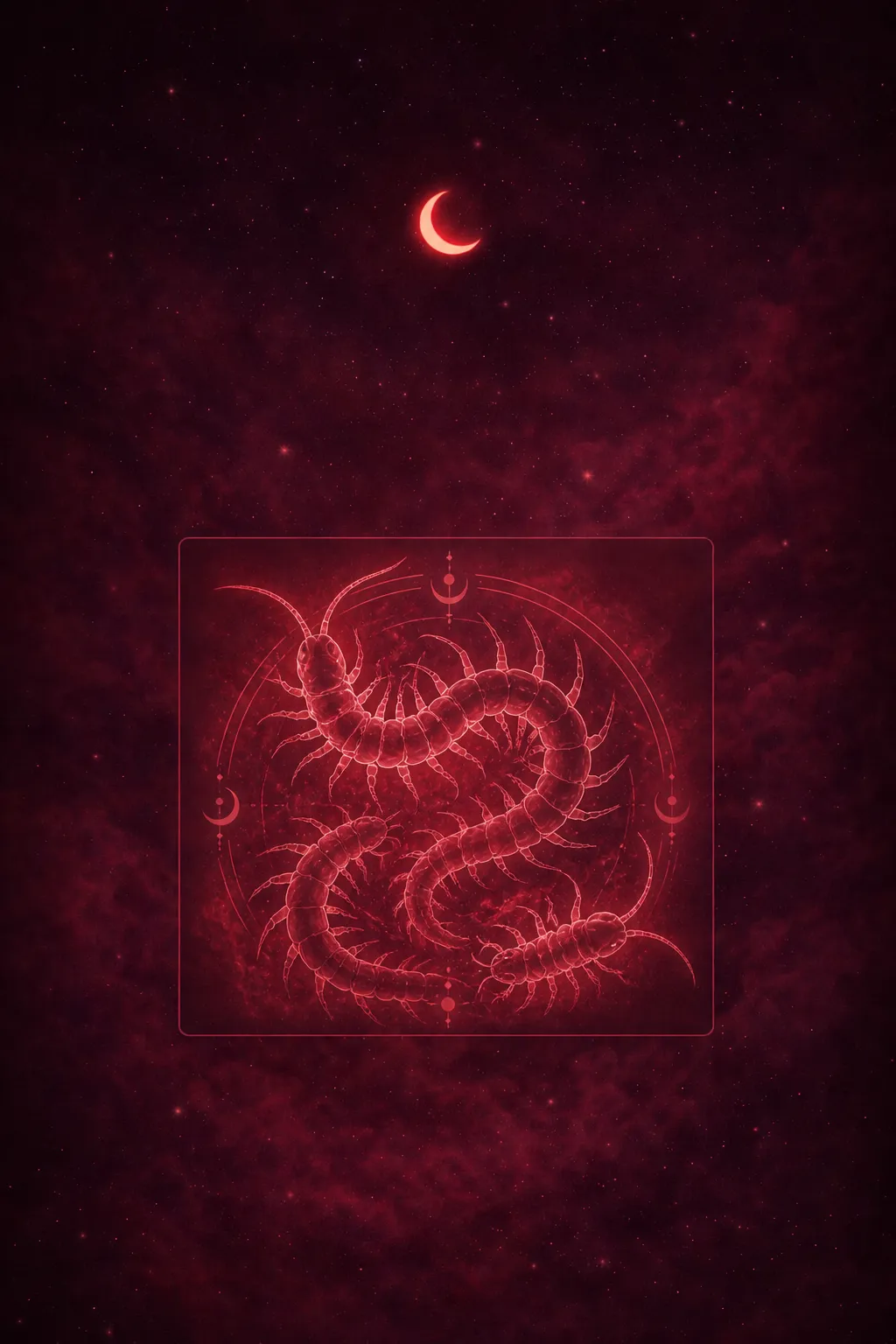

Dreaming of centipedes typically signals hidden fears, overwhelming challenges, or creeping anxieties working beneath the surface of your waking life, though these many-legged creatures can also represent resilience and the ability to navigate complex situations with surprising speed and adaptability, urging you to confront discomfort rather than avoid it.
In under a minute you could read what your exact dream means for you, and see a picture of it. Free.
You read what it can mean. But what did yours mean?
General meanings stop here. In the free app, tell Dream Book your exact dream and get a reading that actually makes sense for you.


Common Centipede Dream Scenarios
The setting and action surrounding the centipede shape the dream's message significantly. A few patterns appear most often: At Dream Book we explore this symbol in depth.
- Centipede crawling on your body: This is one of the most viscerally unsettling variants. It typically reflects a worry that has become impossible to ignore — something crossing a personal boundary or a stressor that feels physically intrusive rather than safely abstract.
- Centipede inside the home, walls, or bed: Home represents your inner life and your closest relationships. A centipede moving through that space suggests a hidden problem — domestic tension, a family concern, or an unresolved internal conflict — that you sense but haven't fully confronted yet.
- Killing or crushing a centipede: This scenario is rooted in the desire to regain control. Successfully killing it points to real agency over a nagging anxiety; struggling to kill it hints the worry is more persistent than you'd like to admit — much like dreams of being chased, where the threat refuses to be outrun.
- A swarm of centipedes: Multiple centipedes signal overwhelm — small obligations or fears multiplying faster than you can manage them, a hallmark of modern stress overload.
- A giant centipede: One fear has grown disproportionately large in your mind, dominating mental space far beyond what the actual situation warrants.
- Being bitten: A small hurt with a lingering sting — often reflecting a cutting remark, minor betrayal, or setback that wounds more deeply than its size should justify.
- Watching a centipede from a distance: You are aware of a lurking concern but haven't engaged it yet — anxious vigilance rather than outright dread.
But what does your version mean?
Across all these variants, the central question is one of control: how close is the threat, and what power do you have over it?
What this dream could look like
Tap an image to open it full screen
Example images. Only you can see what you write in Dream Book.
Psychological Meaning of Centipede Dreams
From a psychological standpoint, a centipede in a dream is a vivid portrait of anxiety that feels like it is closing in — a threat too fast and too many-limbed to pin down. The creature's dozens of legs map neatly onto the modern mind's tendency to fragment stress into countless smaller worries: a looming deadline, a fraying relationship, a financial uncertainty. None of those individual legs is catastrophic on its own, yet together they produce a sense of creeping dread that feels disproportionate to any single cause. This is the subconscious doing what it does best — compressing diffuse, hard-to-name tension into one startling image.
The psychological axis here is control versus intrusion. Centipedes move fast and vanish into cracks, which mirrors the way repressed anxiety operates: suppressed during waking hours, it re-emerges the moment conscious defenses relax in sleep. Carl Jung would recognize the centipede as a shadow figure — something pushed to the margins of awareness precisely because it is uncomfortable to examine. A faith-oriented perspective adds nuance: the dream may surface as a quiet prompt to surrender the illusion of total control, an acknowledgment that some burdens exceed individual willpower.
- Scattered obligations: each leg can represent a separate responsibility competing for your attention.
- Suppressed dread: the centipede emerging from a dark corner reflects feelings kept out of conscious thought.
- Transformation signal: killing or calmly observing the centipede often marks a readiness to confront what has been avoided.
- Hypervigilance pattern: recurring centipede dreams may indicate chronic stress that deserves conscious, waking attention.
General meanings end here. Read your own dream.
Describe your dream in a line or two. In seconds you get a reading of your exact dream, a picture drawn from your own words, and every symbol explained.
Free. No sign-up. Takes 10 seconds. Your dream stays private.
0%
Analyzing your dream…
Something went wrong. Please try again in a moment.
Your dreams deserve more than a dictionary
Cultural and Traditional Readings of Centipede Dreams
In Western folk tradition, crawling, many-legged creatures have long been associated with hidden trouble — things that lurk under floorboards or behind walls, out of sight until they suddenly are not. Centipedes occupy that same uneasy space in popular belief: they signal something creeping into your life before you have fully noticed it. Much like being-chased dreams, the centipede in folklore tends to represent a threat you feel in your body before your rational mind can name it — a warning to pay closer attention to what is moving beneath the surface of everyday routine.
Was yours a sign? Find out.
Within American Christian folk culture, creatures that swarm or multiply have sometimes been read as symbols of spiritual oppression or temptation spreading unchecked — small sins or small neglects accumulating until they become unmanageable. This reading is rarely dramatic; it is less about demonic imagery and more about the quiet biblical caution against letting little things go unaddressed until they multiply into something harder to contain.
- European folk belief: multi-legged insects near the home warned of unseen domestic trouble or financial strain arriving in pieces rather than all at once.
- Modern anxiety framing: the centipede has become an informal symbol for the experience of stacked obligations — each leg a separate task or worry, collectively overwhelming even when no single one is catastrophic.
- Self-knowledge angle: traditional interpreters often advised that spotting such a creature in a dream was a prompt to inventory what small fears you have been quietly tolerating rather than confronting.
Spiritual Meaning of Centipede Dreams
Within a broadly Christian frame, the Bible's references to "creeping things" carry a consistent undertone of spiritual uncleanness — creatures associated with what dwells in dark, neglected places. Dreaming of a centipede can prompt a similar kind of self-examination: is there a fear, a resentment, or a quiet moral compromise that has been allowed to multiply in the shadows of daily life? Some faith-oriented dreamers treat this image as a nudge toward prayer or honest reflection, a call to drag what is hidden into the light before it spreads further. In that sense the dream functions less as a warning of outside evil and more as an invitation to reclaim interior peace through honest self-knowledge.
A bad dream isn't a bad sign.
From a broader metaphysical perspective — one that many Americans hold alongside or independent of formal religion — the centipede signals something "crawling at the edge of awareness" that spiritual attention can address. This resonates with the same being-chased dream logic: the threat feels disproportionate because avoidance has let it grow. The many legs become a reminder that a single unacknowledged anxiety can multiply into many.
- Hidden influence: Something spiritually or emotionally unresolved may be gaining ground quietly.
- Call to self-examination: The dream invites honest inventory rather than continued avoidance.
- Reclaiming peace: Naming what creeps at the margins — through prayer, reflection, or honest conversation — is the spiritual corrective this symbol points toward.
Related Dream Meanings

nightmares
Being Chased Dream Meaning: Anxiety & Avoidance
5 min read
animals
Goats Dream Meaning: Determination, Resilience & Ambition
5 min read

animals
Deer Dream Meaning: Gentleness, Growth & Healing
5 min read

animals
Monkeys Dream Meaning: Playfulness, Mischief & Social Clues
5 min read

animals
What Does It Mean to Dream About Mushrooms
5 min read

animals
Chickens Dream Meaning: Abundance, Anxiety & Security
5 min read
animals
Cows Dream Meaning: Abundance, Fertility & Nurturing
5 min read
animals
Lizards Dream Meaning: Transformation, Instincts & Fear
5 min read
What to Do After a Centipede Dream
Because centipede dreams tend to mirror scattered, low-grade anxiety rather than a single clear threat, the most useful first step is a quick stress audit. Grab a notebook and list every obligation, unresolved conversation, or background worry currently taking up mental space — no matter how minor each one seems. Seeing them written out often exposes the pattern the dream was pointing to: not one overwhelming problem, but a cluster of small stressors that, left unchecked, create the same creeping unease the centipede represents. This exercise pairs well with the kind of reflection you might already do if the dream left you feeling watched or invaded — similar to the unsettled feeling behind being-chased dreams.
Once you have that list, prioritize ruthlessly. Choose one or two items you can act on this week, and consciously table the rest. The centipede's many legs are a strong signal that your attention is too fragmented — consolidating even slightly restores a sense of control.
But what does your version mean?
- Name the crawl: Identify which specific worry feels like it is moving toward you without your permission.
- Set a boundary: If the dream featured intrusion, ask where in waking life you have let a stressor cross a personal limit.
- Reduce input before sleep: Doom-scrolling and late-night task-switching feed exactly the kind of multiplying anxiety centipedes represent — a quieter wind-down routine can reduce the frequency of such dreams.
- Schedule a worry window: Contain free-floating dread by giving it a fixed 10-minute slot each day rather than letting it run in the background.
One dream is never the whole picture.
The free app remembers your dreams, draws them, and connects the threads over time — so the next one means even more. Free to start.
People Also Ask
Seeing centipedes in a dream often symbolizes hidden fears, overwhelming challenges, or feelings of discomfort in waking life. They can also represent resilience and adaptability, since centipedes navigate difficult terrain with ease. The meaning depends heavily on your emotional reaction during the dream and the context surrounding the creature.
In many Asian cultures, centipedes are considered powerful good luck symbols associated with wealth and protection. In Western traditions, however, they more often represent unease or lurking danger. In dreams, the centipede can swing either way — trust your gut feeling during the dream to determine whether its energy felt positive or threatening.
The Bible does not mention centipedes directly, but it classifies many crawling creatures as unclean. Biblically, creeping things often symbolize corruption, hidden sin, or spiritual impurity. Dreaming of centipedes through a biblical lens may suggest an invitation to examine areas of your life where unchecked habits or secret struggles are slowly multiplying.
Killing a centipede in a dream, viewed through a biblical lens, typically signals victory over sin, temptation, or spiritual enemies. It mirrors themes found throughout Scripture where believers overcome evil through faith and divine strength. This dream may encourage you that you have the spiritual authority to conquer whatever hidden struggle has been troubling you.
Curious what your dream would look like?