
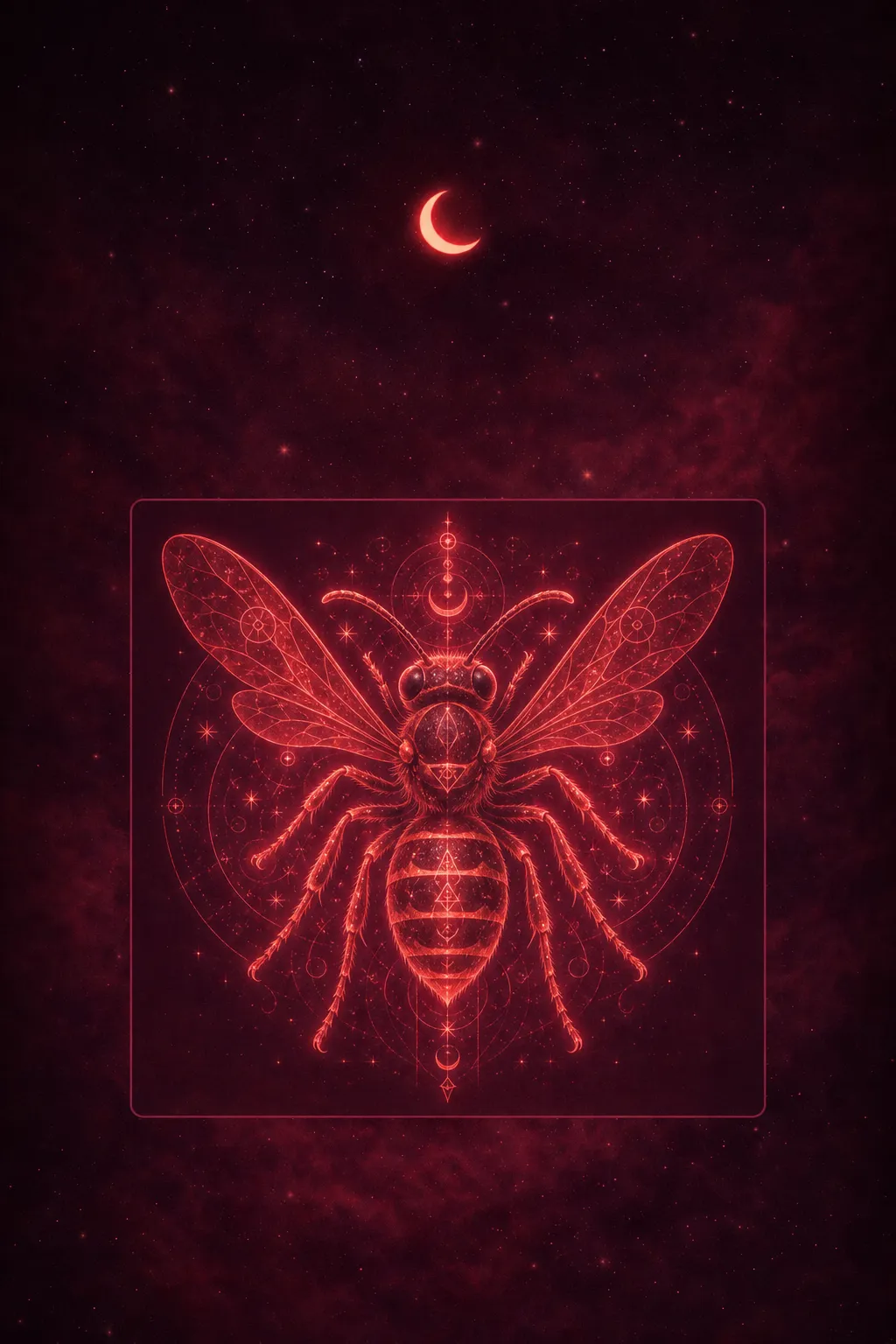

A wasp dream meaning centers on feelings of anger, aggression, or threat in your waking life, often warning you of toxic relationships, workplace tension, or suppressed rage that is building pressure and demanding your attention before it stings you unexpectedly.
In under a minute you could read what your exact dream means for you, and see a picture of it. Free.
A dream still on your mind? Get your personal reading.
Describe your dream in a line or two. In seconds you get a reading of your exact dream, a picture drawn from your own words, and every symbol explained.
Free. No sign-up. Takes 10 seconds. Your dream stays private.
0%
Analyzing your dream…
Something went wrong. Please try again in a moment.
Your dreams deserve more than a dictionary
Common Wasp Dream Scenarios and What They Mean
The specific details of a wasp dream shift its meaning considerably. Being stung points to a sharp, unexpected hurt — a cutting remark or sudden betrayal that felt entirely undeserved, leaving you replaying the moment long after it happened. A wasp chasing or hovering around you mirrors the modern experience of an unresolved conflict that follows you everywhere; the more you dodge it, the more persistently it pursues, suggesting that avoidance is only feeding the tension rather than dissolving it.
- Disturbing a wasp nest — signals a volatile situation you sense is better left alone; the nest represents a concentrated source of trouble, and your dream may be warning you to weigh the cost of "stirring things up."
- A swarm of wasps — reflects feeling overwhelmed by many small stressors compounding at once, or by collective hostility from a group; control feels out of reach.
- Killing or swatting a wasp — suggests an impulse toward assertiveness or the desire to eliminate a threat, though it can also surface anxiety about the fallout that confrontation might bring.
- A wasp inside your home — indicates that a conflict or hostile energy has breached your private sense of safety, often pointing to domestic or deeply personal tension.
- A wasp landing without stinging — a more reassuring sign: a feared threat passes without harm, reflecting an emerging capacity for restraint and de-escalation.
- Wasps emerging from your body or mouth — the most internalized scenario, suggesting anger or toxic words that have been suppressed and are now pressing outward for release.
But what does your version mean?
Across all these variants, the central question your psyche is posing is one of control: are you managing the irritants in your waking life, or are they managing you?
What a dream about a wasp could look like
Tap an image to open it full screen
Example images. Only you can see what you write in Dream Book.
Psychological Meaning of Dreaming About a Wasp
From a psychological standpoint, a wasp in a dream often surfaces as a symbol of unacknowledged anger — either your own suppressed irritation or hostility you are absorbing from someone close to you. The subconscious mind reaches for the wasp's unpredictable sting to represent those "stinging" remarks, festering resentments, or low-level tensions in waking relationships that you have not yet dealt with directly. When the anger is turned inward, the wasp can embody a sharp, relentless inner critic — a nagging guilt or self-directed hostility that refuses to quiet down no matter how busy you keep yourself.
Modern anxiety plays a significant role here. A single wasp escalating into a threat mirrors how a minor stressor at work or at home can spiral into a sense of complete helplessness — a disproportionate alarm response that feels hard to justify and even harder to switch off. The dreaming mind is signaling a loss of control over small but accumulating pressures. A swarm amplifies this: it typically reflects overwhelm from multiple simultaneous demands — professional deadlines, family conflict, social tension — converging into a feeling that you are being pursued from every direction at once.
- Boundary intrusion: The wasp entering your space uninvited points to someone or something violating your personal boundaries, pushing you into a defensive posture you feel ill-equipped to hold.
- Self-criticism: A sting you cannot locate or soothe may reflect guilt or a harsh internal voice that keeps resurging despite conscious efforts to move on.
- Control and restraint: How you respond in the dream — swatting, freezing, or calmly stepping away — often mirrors the coping style you default to under real-world provocation.
Every dream you log starts to connect.
Dream Book keeps your dreams in one place and reveals the threads between them over time — your private dream journal. Free to start.


Cultural and Folk Traditions: What a Wasp Has Long Represented
In Anglo-American folk tradition, the wasp occupies an uneasy place precisely because it lacks the redeemable qualities people assign to the bee — no honey, no obvious usefulness, just a sting that arrives without warning. That cultural framing bleeds directly into dream interpretation: a wasp is the quintessential unwelcome intruder, a symbol of nuisance and antagonism rather than industry or reward. Where the bee earns its keep, the wasp simply meddles, and folk belief has long treated it as an omen of petty conflict, gossip, or a troublemaker lurking in your circle.
Was yours a sign? Find out.
The English language itself encodes this anxiety. To call someone "waspish" is to mark them as sharply irritable and quick to wound with words, while the phrase stir up a hornet's nest warns against provoking a situation that will spiral beyond your control. When these idioms live in everyday speech, they shape the gut-level meaning most people bring to a wasp dream before they consciously analyze it at all — the dream taps a ready-made cultural script about provocation and restraint. Many folk readers connect the wasp specifically to a hostile figure in the dreamer's waking life: the cutting critic, the difficult authority, or the rival whose next move is unpredictable.
- Pest and intruder: folk tradition frames the wasp as something that does not belong and refuses to leave — mirroring feelings of invasion or unwanted pressure.
- Waspish personality: the dream may point to a sharp-tongued person whose words sting long after they are spoken.
- Provocation warning: culturally, encountering a wasp signals the need to tread carefully before a situation escalates into something harder to escape.
Spiritual Meaning of a Wasp Dream
Within a Christian-influenced reading, the wasp carries surprising scriptural weight. In Exodus 23:28 and echoed in Deuteronomy and Joshua, God promises to send hornets ahead of Israel to drive out its enemies — suggesting that a stinging, unwelcome force can serve a purposeful, even protective role. If a wasp feels threatening in your dream, this lens invites you to ask whether the disruption in your waking life might be clearing ground rather than simply causing harm. The symbol shifts from pure threat to an instrument of necessary change.
A bad dream isn't a bad sign.
More broadly, many spiritual traditions treat the sting as a moral prompt — a sharp nudge toward self-examination. The wasp's venom in a dream may reflect bitterness or resentment that has quietly built up inside you, and the spiritual challenge is to name it before it spreads. In this sense the dream functions less as a warning about outside danger and more as an inward call: where have you allowed anger or grievance to fester unchecked? Dreams of being chased by a wasp carry a similar urgency, pushing this question to the surface of consciousness.
- Purposeful adversity: the sting may signal a divinely permitted challenge meant to move you forward.
- Inner bitterness: unresolved anger can be the spiritual root the dream is surfacing.
- Call to restraint: spiritual growth here often means choosing a measured response over reactive defensiveness.
Related Dream Meanings
animals
Nest Meaning - Symbolism & Interpretation
5 min read
nightmares
Being Chased Dream Meaning: Anxiety & Avoidance
5 min read
animals
White Snake Dream Meaning: Transformation & Hidden Fears
5 min read
animals
Lions Dream Meaning: Strength, Courage & Leadership
5 min read
animals
Dreaming of Elephants Meaning: What Your Dream Reveals
5 min read
animals
Black Cat Dream Meaning: Intuition, Mystery & Bad Luck
5 min read
animals
Ants Dream Meaning: Hard Work, Teamwork & Community
5 min read
animals
Crows Dream Meaning: Transformation, Intuition & Messages
5 min read
Practical Takeaways: What to Do After a Wasp Dream
Before the dream fades, take two minutes to name the specific feeling it left behind — anxiety about a coworker's sharp tone, dread of a looming confrontation, irritation you have been swallowing at home. That pinpoint identification is the first real step, because wasp dreams tend to surface low-grade tension that your waking mind keeps smoothing over. Journaling the emotion rather than the plot gives you something concrete to act on.
- Locate the "sting" in your waking life. Ask yourself who or what you are currently walking on eggshells around. If the answer comes quickly, that relationship or situation likely needs a direct, calm conversation rather than continued avoidance.
- Check your own irritation levels. The wasp can represent your anger as much as someone else's. If you have been suppressing frustration — at work, in a relationship, or around a loss of control — find a structured outlet before it sharpens into something harder to manage.
- Build one small boundary. Dreams of being chased or threatened often signal that limits are overdue. Identify one situation where you can set a clear, respectful boundary this week and rehearse exactly what you will say.
- Reduce ambient stress inputs. Wasp dreams cluster around periods of overstimulation. A concrete audit — cutting one draining commitment or limiting late-night news — can lower the background vigilance that feeds these dreams.
But what does your version mean?
None of this requires grand self-reinvention. Small, specific actions — a single honest conversation, one firm boundary, a brief daily stress audit — chip away at the helplessness the wasp represents and put agency back in your hands.
One dream is never the whole picture.
The free app remembers your dreams, draws them, and connects the threads over time — so the next one means even more. Free to start.
People Also Ask
A wasp in a dream is generally a cautionary symbol rather than purely bad. It often signals hidden tensions, toxic relationships, or suppressed anger nearby. However, it can also reflect sharp focus and determination. Context matters — if the wasp leaves you unharmed, it may simply be a warning to stay alert.
Being chased by wasps suggests you are running from a conflict or emotion you have been avoiding. It often reflects anxiety about a person or situation that feels threatening. Your subconscious is urging you to stop fleeing and confront the source of stress before it escalates and causes greater harm.
Dreaming of a hornet carries a similar meaning to a wasp but with greater intensity. Hornets symbolize a more serious threat, deep-seated anger, or a powerful enemy. The dream may be warning you that a situation in your waking life is more dangerous than it appears and requires careful, measured handling.
A swarm of wasps in a dream often represents overwhelming stress, gossip, or multiple conflicts closing in at once. It can indicate a toxic social environment or feeling attacked from several directions. This dream urges you to set firm boundaries and identify which relationships or situations are draining your energy most.
Curious what your dream would look like?