
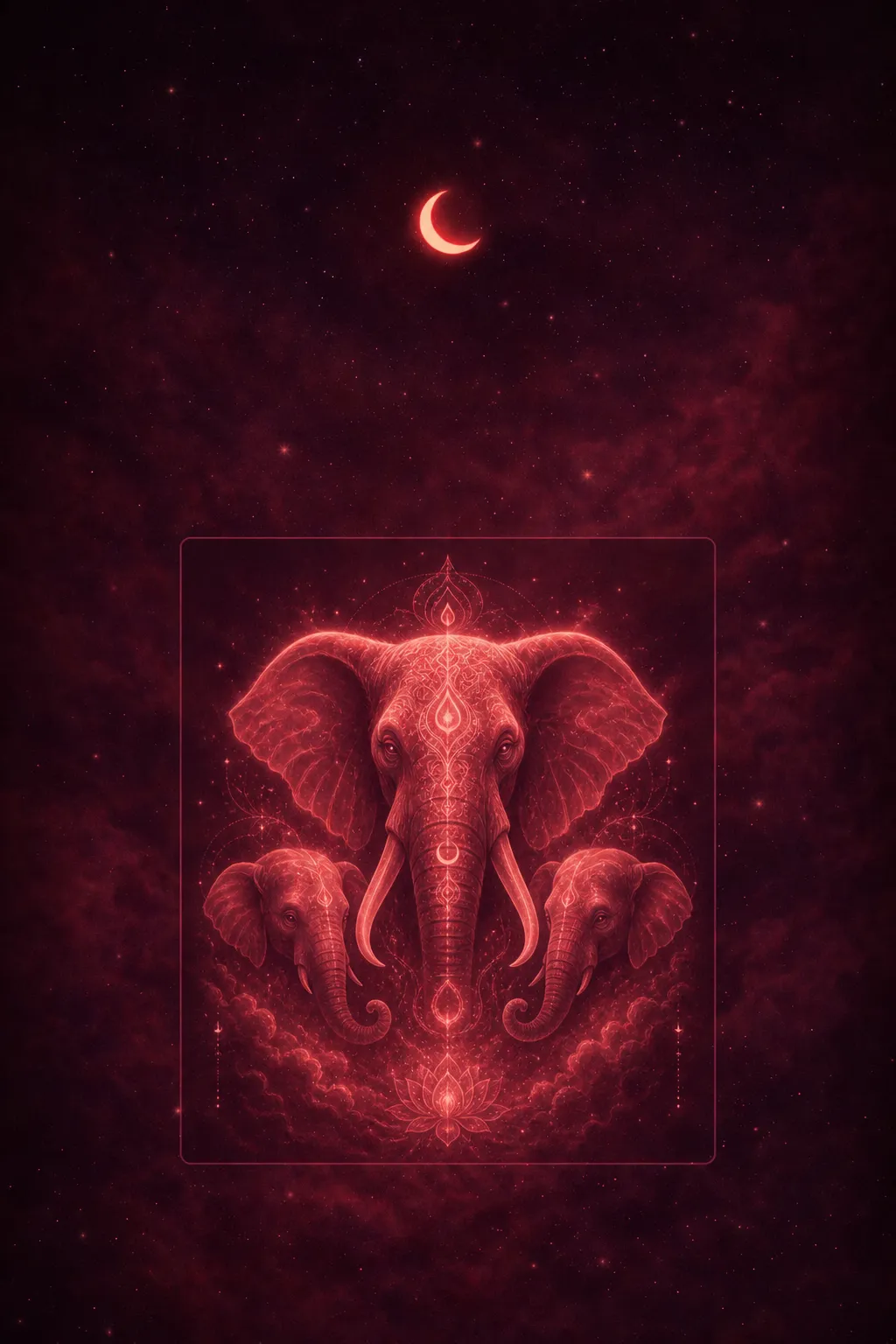

Dreaming of elephants meaning centers on strength, wisdom, and memory, as these majestic creatures symbolize resilience and loyalty in your waking life, often appearing in dreams to remind you of your own inner power, the importance of never forgetting vital lessons, or the presence of a steady, protective force guiding you through challenges.
In under a minute you could read what your exact dream means for you, and see a picture of it. Free.
You read what it can mean. But what did yours mean?
General meanings stop here. In the free app, tell Dream Book your exact dream and get a reading that actually makes sense for you.


A dream still on your mind? Get your personal reading.
Describe your dream in a line or two. In seconds you get a reading of your exact dream, a picture drawn from your own words, and every symbol explained.
Free. No sign-up. Takes 10 seconds. Your dream stays private.
0%
Analyzing your dream…
Something went wrong. Please try again in a moment.
Your dreams deserve more than a dictionary
Common Elephant Dream Scenarios and What They Mean
The specific way an elephant appears in your dream shifts its meaning considerably. A calm, gentle elephant standing near you typically signals inner stability — your mind is drawing on deep reserves of patience and wisdom, or a steady influence in your life is quietly holding things together. Contrast that with a large elephant dominating a room or enclosed space, one of the more telling variants: this almost always points to the classic "elephant in the room" dynamic, where something obvious — a strained relationship, a looming decision, a truth no one will say aloud — is demanding acknowledgment that waking life keeps deferring.
- Charging or aggressive elephant: A sign of feeling overwhelmed or out of control; a powerful person, workload, or circumstance feels like it could flatten you. Modern stress and anxiety often surface here.
- Riding or guiding an elephant: You are harnessing rather than fleeing a major challenge — a healthy signal of self-mastery and confidence in carrying heavy responsibility.
- Baby elephant: A new but significant undertaking is growing; it needs nurturing and carries real promise alongside vulnerability.
- Herd of elephants: Community, family loyalty, and collective strength — though it can also reflect the weight of group expectations pressing down on you.
- Injured or dying elephant: Grief over eroding support or a crumbling foundation; fear that something once solid is failing.
- White or unusually colored elephant: A costly commitment that brings more burden than reward — something prized on the surface but draining in practice.
But what does your version mean?
Across all variants, the central question your dreaming mind is posing is one of control and honesty: are you steering this enormous force, living alongside it in peace, or fleeing something you haven't yet faced? Identifying which scenario fits your dream is the first step toward understanding what your waking life is asking you to confront or embrace.
What this dream could look like
Tap an image to open it full screen
Example images. Only you can see what you write in Dream Book.
The Psychological Reading: What Your Mind Is Processing
From a psychological standpoint, dreaming of an elephant almost always signals that something large is pressing on your subconscious — something your waking mind may be sidestepping. The classic "elephant in the room" dynamic is deeply relevant here: the dreaming mind tends to surface what the conscious mind avoids. If the elephant in your dream feels imposing or inescapable, it may reflect a responsibility, relationship tension, or unresolved decision that you know demands attention but haven't yet confronted. Modern anxiety patterns make this especially common — in an era of information overload and competing demands, the psyche can externalize that overwhelming pressure as a creature too large to walk around.
The elephant also connects to memory and emotional weight. Psychologically, it can represent old grief, long-held resentment, or even deep-seated pride — feelings stored so long they've grown enormous. There's a meaningful tension here between strength and burden: the same quality that makes the elephant a symbol of inner resilience can, under stress, feel like a crushing load rather than a steady foundation. For those with a faith background, this may resonate with the biblical call to lay down heavy burdens — the dream functioning as an inner prompt toward surrender and trust rather than white-knuckled control.
- Avoidance signal: the elephant may represent a truth you're refusing to face directly
- Control anxiety: feeling small beside it can reflect fears about losing authority over a major life situation
- Emotional memory: it may point to old experiences — like a persistent feeling of being chased by the past — still shaping present behavior
- Latent strength: the dream may also be affirming untapped patience and wisdom already within you
General meanings end here. Read your own dream.
Describe your dream in a line or two. In seconds you get a reading of your exact dream, a picture drawn from your own words, and every symbol explained.
Free. No sign-up. Takes 10 seconds. Your dream stays private.
0%
Analyzing your dream…
Something went wrong. Please try again in a moment.
Your dreams deserve more than a dictionary
Every dream you log starts to connect.
Dream Book keeps your dreams in one place and reveals the threads between them over time — your private dream journal. Free to start.
Cultural and Traditional Readings of Elephant Dreams
Across many world traditions, the elephant has long been treated as a creature of profound symbolic weight. In South and Southeast Asian cultures it is a sacred emblem of wisdom, good fortune, and steady authority — qualities that have quietly filtered into Western popular consciousness through art, décor, and the broadly held belief that an elephant figurine facing a doorway invites luck into a home. Even in mainstream American and British culture, the elephant has settled into the folk imagination as a symbol of unshakeable memory and quiet power, summed up in the proverbial phrase "an elephant never forgets."
Was yours a sign? Find out.
From a US Christian perspective, dreams of large, awe-inspiring animals have traditionally been read as moments of divine nudging — an invitation to face what you have been reluctant to confront and to trust that you will be given the strength to carry it. This reading fits naturally with the elephant's core symbolism: something massive is present, and ignoring it is no longer an option.
- Folk wisdom: spotting an elephant in a dream has historically been treated as a prompt toward self-knowledge — a sign to take honest stock of responsibilities or relationships that have grown too large to manage quietly.
- Modern anxiety framing: in an era defined by information overload and decision fatigue, the cultural image of the elephant maps onto the stress of carrying problems alone — echoing the same unease that often surfaces in being-chased dreams.
- Control: folk traditions in many cultures also link elephant dreams to questions of leadership and self-mastery — whether you are guiding your circumstances or being overwhelmed by them.
The Spiritual Reading: Weight, Wisdom, and What Cannot Be Hidden
In a broadly Christian spiritual framework, the elephant's sheer unmissable scale carries a quiet moral message: some truths are placed in your path precisely because they demand acknowledgment. Proverbs consistently links wisdom with humility — the willingness to face what is heavy rather than walk around it. If anxiety about losing control is already coloring your waking life, a dream elephant may function as a spiritual nudge, reminding you that surrendering the need to manage everything is itself an act of faith. The creature's legendary memory mirrors the biblical idea that unconfessed or unresolved matters do not simply dissolve; they wait.
A bad dream isn't a bad sign.
Beyond the church tradition, many spiritually minded dreamers interpret a powerful animal presence as a visit from a protective or guiding energy — an ancestral force signaling steadiness during uncertain seasons. In this reading, the elephant is less a burden and more a sentinel: its weight is not meant to crush you but to anchor you. The core tension the dream surfaces — feeling supported by great strength versus feeling overwhelmed by it — becomes a spiritual question about trust. Are you leaning into the stability being offered, or resisting it out of a need for self-sufficiency?
- Unaddressed truth: Something significant may require honest, prayerful attention rather than continued avoidance.
- Ancestral or guiding presence: The elephant may represent protective energy watching over a difficult transition.
- Surrender as strength: Spiritually, acknowledging what you cannot carry alone is often the first step toward genuine peace.
Related Dream Meanings

nightmares
Being Chased Dream Meaning: Anxiety & Avoidance
5 min read
animals
Dragons Dream Meaning: Power, Fear & Transformation
5 min read
animals
Whales Dream Meaning: Emotion, Strength & Intuition
5 min read
animals
Crow Dream Meaning: Transformation & the Unknown
5 min read
animals
Owl Dream Meaning: Wisdom, Intuition & Change
5 min read
animals
White Cat Dream Meaning: Purity, Intuition & Independence
5 min read
animals
Turtles Dream Meaning: Patience, Wisdom & Healing
5 min read
animals
Eagle Dream Meaning: What It Means When You Dream of Eagles
6 min read
Practical Takeaways: What to Do After an Elephant Dream
Because elephant dreams almost always point to something large and undeniable in your waking life, the most useful first step is simply naming it. Grab a notebook and finish this sentence honestly: "The one thing I keep putting off dealing with is…" Often the answer arrives quickly — a difficult conversation, a growing financial pressure, a relationship dynamic no one is addressing out loud. Getting it out of your head and onto paper moves it from vague dread into something you can actually work with.
- Identify the load. Ask whether the elephant felt like a threat or a support. If it felt heavy or overwhelming, you may be carrying a responsibility that needs to be shared, broken into smaller steps, or handed off entirely.
- Check your avoidance patterns. If recurring chase dreams also feature in your sleep, the two together can signal a broader habit of postponing hard truths. Notice what you consistently scroll past, change the subject from, or leave on tomorrow's list.
- Use the memory angle. Elephants are universally linked to long memory. If someone from your past surfaced in the dream, consider whether old feelings — resentment, grief, gratitude — deserve some deliberate attention rather than quiet burial.
- Leverage the strength signal. If the elephant felt calm and protective, treat that as a prompt to trust your own steadiness. Identify one area where you have been second-guessing yourself and commit to a concrete next step this week.
But what does your version mean?
The practical gift of an elephant dream is clarity: your mind has already spotted what is too big to ignore. Your job is to stop walking around it.
One dream is never the whole picture.
The free app remembers your dreams, draws them, and connects the threads over time — so the next one means even more. Free to start.
People Also Ask
Yes, seeing elephants in dreams is generally considered very positive. Elephants symbolize strength, wisdom, good fortune, and protection. Dreaming of a healthy, calm elephant often signals that stability and success are coming your way, or that you possess the inner power needed to overcome current challenges in your life.
Spiritually, the elephant represents ancient wisdom, patience, loyalty, and a deep connection to higher consciousness. Many traditions view it as a sacred guardian that removes obstacles. Dreaming of an elephant may signal spiritual growth, a reminder to trust your intuition, or that a powerful protective energy is watching over you.
Elephants are not directly mentioned in the Bible, but biblical dream interpretation associates their qualities with virtues like strength, memory, and faithfulness. Dreaming of an elephant may biblically represent God's mighty power working in your life, a call to persevere with patience, or a reminder to honor your commitments and remain steadfast in faith.
Across most cultures, elephants are considered excellent omens. Dreaming of one typically forecasts prosperity, longevity, and good luck. A white elephant is especially auspicious, hinting at rare blessings ahead. Even a charging elephant can signal that you must confront obstacles directly rather than avoid them, ultimately leading to growth.
Curious what your dream would look like?