
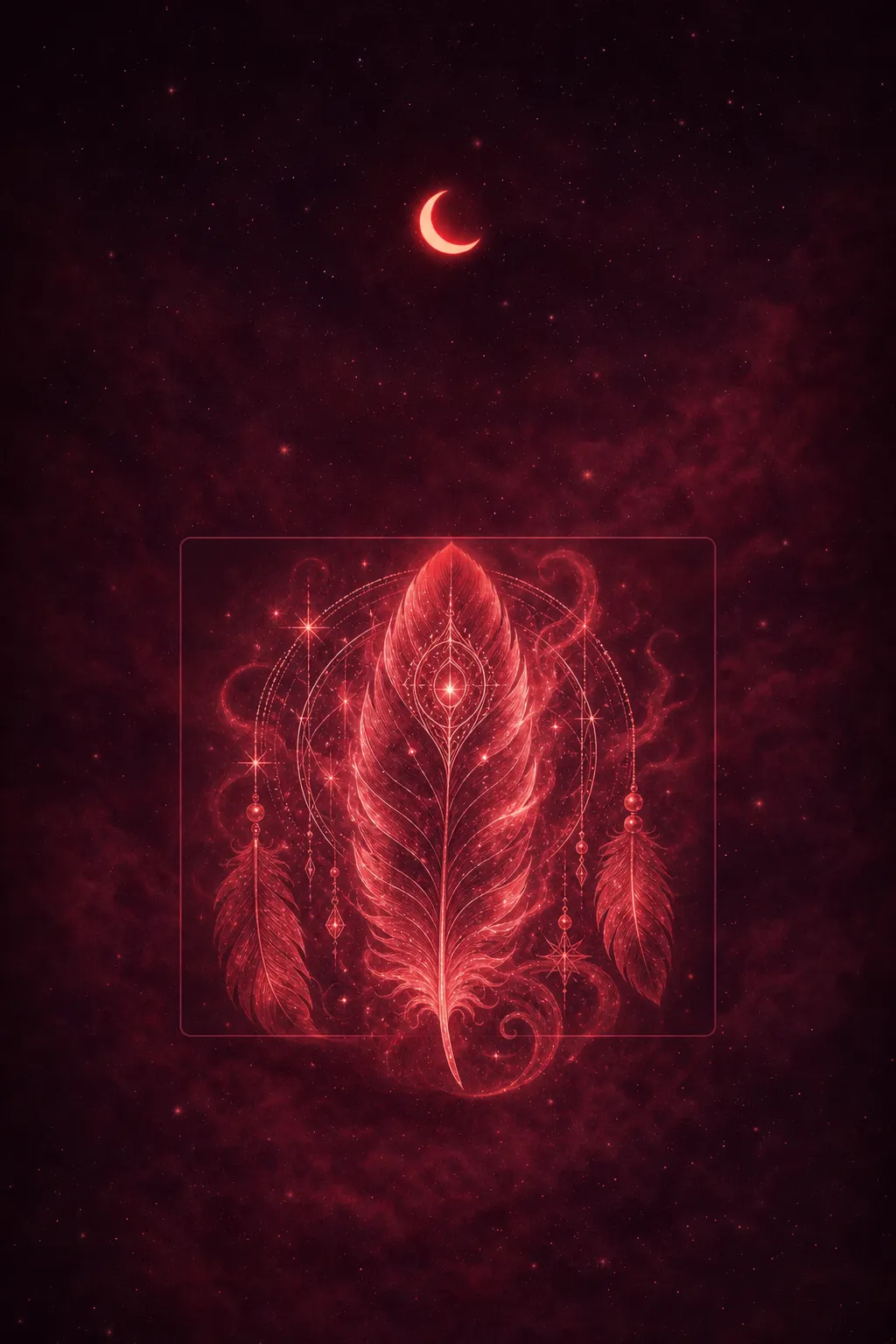

Dreaming about feathers typically symbolizes freedom, lightness, and spiritual elevation, suggesting your subconscious is processing a desire to rise above burdens or connect with higher wisdom, though the color and condition of the feathers refine the meaning—white feathers signal purity and peace, while dark or falling feathers may hint at lingering doubts or lost aspirations.
In under a minute you could read what your exact dream means for you, and see a picture of it. Free.
A dream still on your mind? Get your personal reading.
Describe your dream in a line or two. In seconds you get a reading of your exact dream, a picture drawn from your own words, and every symbol explained.
Free. No sign-up. Takes 10 seconds. Your dream stays private.
0%
Analyzing your dream…
Something went wrong. Please try again in a moment.
Your dreams deserve more than a dictionary
Common Feather Dream Scenarios and What They Mean
The specific details of a feather dream shift its meaning considerably. A single white feather found on the ground is one of the most emotionally charged variants — psychologically, it often surfaces as a self-soothing response when anxiety is running high, your mind generating a quiet reassurance that things will be okay. Many dreamers in the US Christian tradition interpret this intuitively as an angel's calling card or a signal from a lost loved one, and even outside that framework it carries a strong comfort charge. By contrast, feathers floating or gently falling through the air tend to reflect a conscious or unconscious desire to surrender control — a healthy nudge from your dreaming mind to stop gripping a situation so tightly and let change unfold at its own pace, much like a falling dream that resolves into calm rather than panic.
- Feathers scattered by wind: feeling at the mercy of outside forces; a sign that stress or scattered priorities are eroding your sense of direction.
- A black or dark feather: an attention-flag rather than a curse — often points to grief, an uncomfortable truth you are processing, or a warning from your own instincts.
- A bird losing or shedding feathers: vulnerability and exposure, but also natural renewal — shedding an old identity to make room for growth.
- Gathering or holding many feathers: collecting small reassurances or nurturing a fragile but growing ambition.
- A feather worn in hair or costume: a desire to stand out, express identity, or seek recognition from others.
- A pillow or bed bursting with feathers: domestic comfort and rest when peaceful; if the feathers spill chaotically, a comfortable arrangement in waking life may be coming undone.
But what does your version mean?
Across all these variants, ask yourself what felt most prominent — the lightness and ease, or the sense of things slipping beyond your grasp. That emotional texture is usually the clearest guide to which axis the dream is working on: release and freedom, or the modern anxiety of losing control.
What this dream could look like
Tap an image to open it full screen
Example images. Only you can see what you write in Dream Book.
What Feathers Reveal About Your Inner Life
From a psychological standpoint, dreaming of feathers is most often your subconscious broadcasting a wish to shed what feels too heavy — an overloaded schedule, a relationship that drains you, or the relentless pressure to stay in control. Modern life loads people with a near-constant background hum of stress, and the mind will reach for imagery of lightness and lift when that burden becomes too much to carry consciously. A feather, weightless and drifting, becomes the psyche's shorthand for the relief you haven't yet allowed yourself to feel while awake.
Feathers also tend to appear during genuine life transitions — a career shift, the end of a relationship, an emerging sense of self. Much like dreams of flying, a feather in motion can signal that part of you is ready to rise above a situation and gain fresh perspective, even if waking anxiety keeps you rooted. Pay attention to how you handled the feather in the dream: holding it gently suggests growing confidence, while watching it blow away may point to feelings of fragility or a fear that something meaningful is slipping beyond your reach.
Was yours a sign? Find out.
- Desire to release control: feathers appearing in clusters or falling freely often reflect a subconscious drive to stop micromanaging outcomes.
- Emotional resilience: a feather that bends without breaking mirrors the psyche exploring whether vulnerability and strength can coexist.
- Comfort-seeking: during periods of grief or uncertainty, the mind may summon a feather as a quiet internal signal that reassurance is possible — a soft, self-generated form of hope.
Every dream you log starts to connect.
Dream Book keeps your dreams in one place and reveals the threads between them over time — your private dream journal. Free to start.


What Feathers Have Meant Across Cultures and Traditions
Long before modern psychology gave us a vocabulary for stress and release, cultures around the world were already reading feathers as symbols of transition and spiritual communication. In many Indigenous North American traditions, feathers are treated as sacred objects carrying the energy of the bird they came from — and dreaming of one is understood as a message from an ancestor or a guiding force, marking a threshold moment in the dreamer's life. That framing maps surprisingly well onto the modern anxiety context: both readings recognize that feather dreams tend to cluster around periods of upheaval, when the need for reassurance or direction is sharpest.
Within mainstream Western folk belief, a white feather in particular has carried layered meaning for centuries — from the Victorian symbol of cowardice to the widely held contemporary comfort belief that a feather appearing unexpectedly signals the presence of a deceased loved one. This gentler reading has filtered into U.S. Christian popular culture, where feathers are loosely connected to angelic protection, echoing Psalm 91's image of sheltering wings. Neither tradition demands literal belief to be useful: even as metaphor, both traditions frame the feather as a prompt to pause and take stock — a self-knowledge check disguised as a folk sign. Dreaming of flying or rising effortlessly carries a related cultural charge, and the two symbols often overlap when the underlying theme is freedom from constraint.
A bad dream isn't a bad sign.
- Indigenous traditions: feathers as sacred messengers marking life transitions
- Victorian / wartime folk belief: feathers as moral or emotional signals tied to courage and burden
- Contemporary Western comfort belief: a found feather as a sign of angelic or ancestral presence
- U.S. Christian popular culture: feathers loosely linked to divine protection and reassurance
What Feathers Mean Spiritually and Religiously
Within a broadly Christian folk framework, a feather appearing in a dream is often received as a gentle nudge of divine reassurance rather than a dramatic revelation. The imagery in Psalm 91:4 — God covering you "with his feathers" — gives the symbol a quietly scriptural grounding, and many believers instinctively connect a white feather dream to the idea of angelic presence or protection during a difficult season. This is a low-key, experiential faith reading rather than strict doctrine: when anxiety is mounting and control feels out of reach, the dreaming mind may reach for exactly this kind of soft spiritual comfort to steady itself.
Beyond the church pew, there is a longstanding folk intuition — shared across many everyday Western households — that finding or receiving a feather signals a message is being delivered, whether from a loved one who has passed, a guiding force, or simply life itself nudging you toward a new direction. Color tends to shift the tone: white feathers lean toward peace and comfort, while darker ones may prompt a moment of honest self-examination. In either case, the spiritual undercurrent reinforces what the rest of your inner life may already be processing — that something needs releasing. If dreaming of birds broadly represents freedom and aspiration, a single feather distills that energy into something more intimate: not the full flight, but the quiet evidence that flight is possible.
Related Dream Meanings
common dreams
Falling Dream Meaning: Insecurity, Fear & Loss of Control
5 min read
common dreams
Flying Dream Meaning: Freedom, Ambition & Escape
5 min read
animals
Birds Dream Meaning: Freedom, Spirit & Perspective
5 min read
animals
Tiger Dream Meaning: Strength, Power & Hidden Fears
5 min read
animals
Bees Dream Meaning: Hard Work, Community & Anxiety
5 min read
animals
Cockroaches in Dreams: Meaning and Interpretation
5 min read
animals
Mice Dream Meaning: Anxiety, Worry & Vulnerability
5 min read
animals
Hawk Dream Meaning: Clarity, Vision & Intuition
5 min read
Turning Your Feather Dream Into Action
The most useful question to ask yourself after a feather dream is simple: what am I still carrying that I could put down? Modern life rarely gives us permission to release pressure voluntarily, so your dreaming mind may be doing the nudging for you. Treat the dream as a prompt rather than a prophecy — a signal to audit your current load and identify one concrete stressor you can either delegate, drop, or address directly this week.
But what does your version mean?
- Name the weight. Write down the two or three things that feel heaviest right now — a commitment, a worry, a grudge. The feather image is your mind flagging that at least one of them may be ready to let go.
- Check your control radius. Anxiety spikes when we grip things outside our actual control. For each item on your list, ask honestly whether acting on it is within your power. What isn't — practice releasing it, even symbolically.
- Build a lightness habit. If feather dreams recur, pair them with a small daily practice: a short walk, a breathing reset, or a moment of deliberate stillness. Recurring dreams about the sensation of flying or floating carry a similar message — your system is asking for more breathing room, not less.
- Notice the transition you may be resisting. Feathers often appear mid-change. If a life shift is underway, ask whether you are moving through it or stalling — then take one small, grounded step forward.
One dream is never the whole picture.
The free app remembers your dreams, draws them, and connects the threads over time — so the next one means even more. Free to start.
People Also Ask
In the Bible, feathers symbolize divine protection and shelter. Psalm 91:4 says God will cover you with His feathers, offering refuge under His wings. Dreaming of feathers may therefore reflect a sense of being spiritually guarded, comforted, or reassured during a difficult or uncertain period in your waking life.
Spiritually, feathers represent ascension, freedom, and connection to higher realms. Across many traditions they signal angelic presence, divine guidance, or a message from the universe. Dreaming of feathers often suggests your spirit is being uplifted, that you are releasing burdens, or that spiritual wisdom is becoming available to you right now.
Many people believe finding or dreaming of feathers is a sign from a deceased loved one or guardian angel. This belief spans numerous cultures and spiritual traditions. In dreams, a feather appearing unexpectedly can feel like reassurance that you are not alone and that loving, protective energy surrounds and watches over you.
White feathers are widely interpreted as divine signals of peace, purity, and angelic presence. Many believers feel God or angels use white feathers to offer comfort during grief or fear. Dreaming of a white feather may suggest you are receiving spiritual encouragement, a reminder that faith can carry you through whatever challenge you currently face.
Curious what your dream would look like?