
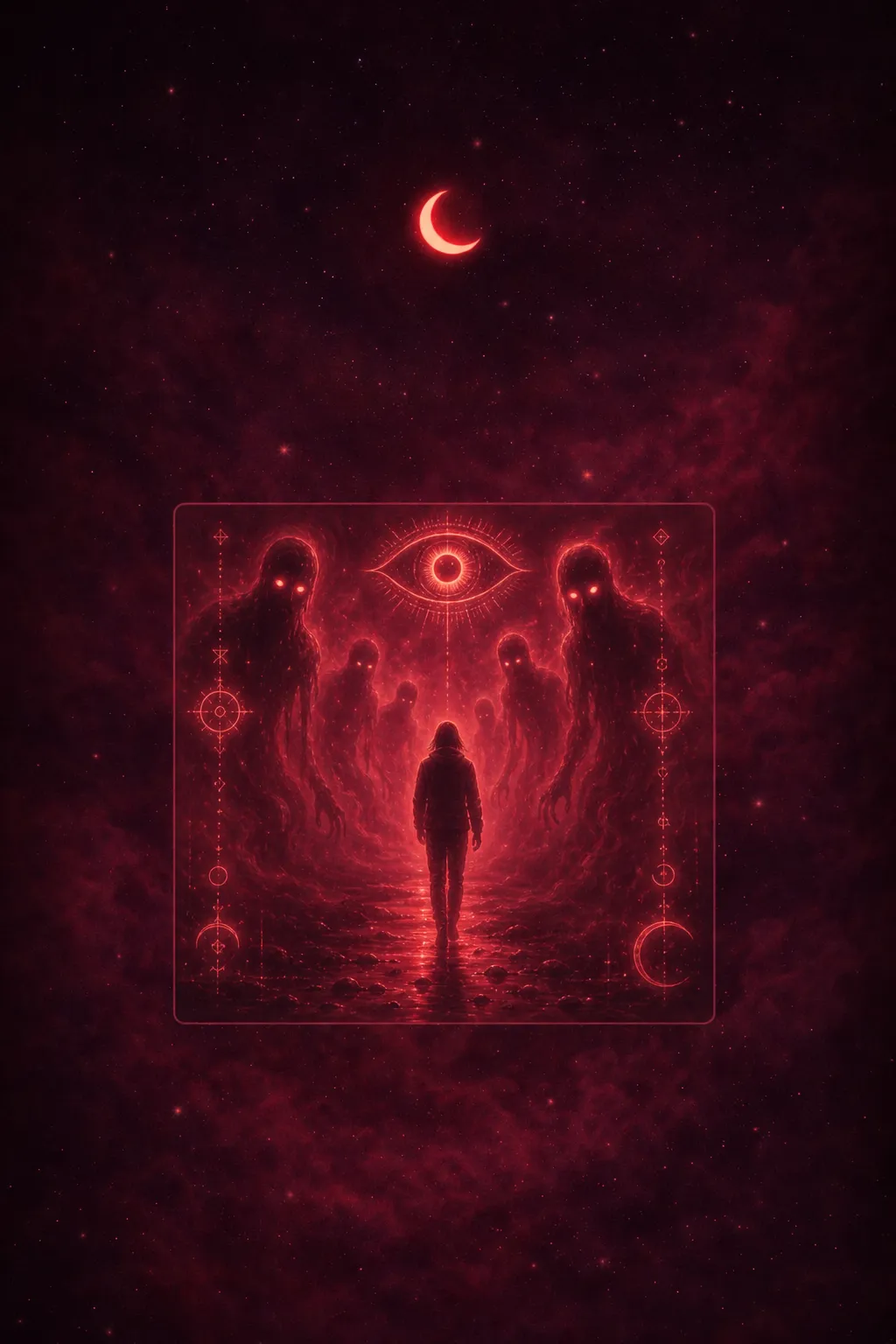

When someone is following you in a dream, it typically means you are avoiding a fear, guilt, or unresolved emotion in waking life that your subconscious is urging you to confront, as the pursuer often represents an aspect of yourself—or a real pressure—that you have been running from rather than facing directly.
In under a minute you could read what your exact dream means for you, and see a picture of it. Free.
Bad dream? See exactly what you dreamed — turned into a picture.
Just describe it and Dream Book paints your dream as a real image, plus a reading of what it means for you. Free, and it takes under a minute.


Common Dream Scenarios and What They Mean
The specific shape a pursuit dream takes carries real diagnostic weight — small details shift the meaning considerably. A few scenarios appear far more often than others, and each speaks to a distinct cluster of waking pressures. At Dream Book we explore this symbol in depth.
- Followed by an unknown or unseen figure. The pursuer has no face, no name, and often no clear form. This ambiguity is the point: the dream is flagging a threat or obligation you cannot yet put into words — the free-floating dread that modern life generates through financial pressure, career uncertainty, or relationship tension that hasn't fully surfaced yet.
- Trying to run but moving slowly or feeling frozen. This is the most classically frustrating variant. Your legs won't cooperate, your effort produces nothing. It maps almost directly onto feeling overwhelmed in a situation where you sense you should be making progress but aren't — a deadline, a difficult conversation, a decision you keep postponing.
- Followed by someone you recognize. A boss, an ex-partner, a parent — when the pursuer has a face you know, the dream is pointing to unresolved tension with that person or with what they represent: authority, expectation, guilt, or a standard you fear you aren't meeting.
- Being caught or cornered. Though alarming in the moment, being caught can signal that the psyche is ready to stop running. The avoided issue is demanding a hearing, and the dream may be nudging you toward confrontation rather than further avoidance.
- Pursued by an animal or creature. The non-human pursuer often stands in for a primal emotion — rage, desire, grief — that you have labeled dangerous and pushed aside rather than processed.
- A sense of being watched without seeing anyone. This variant carries a surveillance quality: you feel exposed, monitored, or quietly judged. It frequently surfaces during periods when privacy feels compromised or when you are acutely aware of others' opinions of you.
- A dark or faceless figure. Psychologically, this can represent repressed or unacknowledged aspects of your own character. From a Christian spiritual perspective, some readers interpret such figures as a prompt toward prayer and self-examination about hidden sin or fear.
- Turning to face the follower. This is the empowerment shift. When a dreamer stops fleeing and confronts the pursuer — however frightening — it often reflects growing readiness to reclaim control, address the underlying issue, and move out of avoidance mode.
A bad dream isn't a bad sign.
Across all these variants, the common thread is control: who has it, who has lost it, and whether the dreamer is moving toward or away from the moment of reckoning.
What this dream could look like
Tap an image to open it full screen
Example images. Only you can see what you write in Dream Book.
Psychological Meaning of Being Followed in a Dream
From a psychological standpoint, a pursuit dream is one of the clearest signals your subconscious can send: something unresolved is catching up with you. Psychologists link this dream type directly to waking anxiety — the sensation of being watched or chased mirrors the pressure of looming deadlines, unfinished conversations, or responsibilities you keep pushing to tomorrow. Rather than processing that stress consciously, the mind stages it at night as a literal chase, translating an internal sense of dread into a physical threat you can almost feel.
The identity of the pursuer is psychologically significant. A shadowy or faceless follower often points to what Jungian theory calls the shadow — the disowned traits, suppressed emotions, or uncomfortable truths you have not yet integrated. The dream is not punishing you; it is prompting you. Running harder only deepens avoidance, while turning to face the pursuer — even within the dream — tends to reduce its power over time.
- Avoidance coping: The chase maps directly onto a conflict, decision, or difficult emotion you are side-stepping in waking life.
- Loss of agency: Feeling rooted to the spot or unable to move fast enough reflects a genuine sense of helplessness or lack of control over circumstances.
- Hypervigilance: Persistent insecurity — in relationships, at work, or around personal safety — surfaces as an ever-present external threat.
But what does your version mean?
Recognizing which pressure the pursuer represents is the first step toward reclaiming a sense of control. Journaling the dream immediately after waking, then honestly asking what you have been avoiding, often brings the waking source into sharp focus.
General meanings end here. Read your own dream.
0%
Analyzing your dream…
Something went wrong. Please try again in a moment.
Your dreams deserve more than a dictionary
Cultural and Traditional Readings of Being Followed in Dreams
Across Western folk tradition, a dream of being followed has long been treated as a warning sign — an omen that unfinished business or a neglected duty is pressing in on the dreamer. In broadly Christian-influenced American culture, pursuit dreams are sometimes understood as a form of moral reckoning: the sense that conscience itself is in pursuit, echoing the biblical theme of no one outrunning accountability before God. This reading doesn't dominate, but it surfaces consistently in popular devotional writing and is worth acknowledging as part of the wider cultural landscape.
In modern mainstream culture, the framing has shifted toward self-help and popular psychology. Magazines, podcasts, and wellness platforms routinely interpret this dream as the mind's way of saying stop running and turn around — a message about avoidance rather than supernatural threat. That translation from folk omen to motivational prompt reflects just how thoroughly everyday anxiety now shapes dream interpretation: the pursuer becomes a deadline, a difficult conversation, or a habit you've been dodging rather than a ghost or a devil.
- Digital-age surveillance anxiety: Many people now associate the feeling of being followed in dreams with the constant monitoring of modern life — performance reviews, social media scrutiny, and the sense that someone is always watching.
- Loss of control: Folk readings across cultures broadly agree that being pursued signals a situation in waking life where the dreamer feels reactive rather than in charge.
- Self-knowledge prompt: Contemporary popular culture frames the pursuer as a mirror — something you carry rather than something hunting you from outside.
Spiritual Meaning of Being Followed in a Dream
Within a faith-informed reading, a dream of being followed invites a question that goes deeper than stress management: what are you running from, and does it have a claim on your soul? Many Christians recognize the pursuer as a symbol of temptation or spiritual pressure — something drawing you toward choices or habits you know are misaligned with your values. Scripture speaks directly to this tension. Second Timothy 1:7 reminds believers that God did not give a spirit of fear but of power and a sound mind, suggesting that chronic flight in a dream may signal a need to reclaim spiritual grounding rather than keep fleeing. James 4:7 goes further, urging believers to resist what opposes them with the promise that it will retreat — a posture of confrontation rather than avoidance.
Was yours a sign? Find out.
Modern anxiety sharpens this reading. When life feels out of control — mounting obligations, relentless digital noise, the sense that circumstances are always one step behind you — the spiritual interpretation frames the pursuer not as an outside threat but as a mirror: an unexamined part of the self, or a conviction long deferred. From this angle, the dream is less a warning and more an invitation to stop, turn, and take stock.
- Fear masking conviction: The pursuer may represent a moral call you have been avoiding rather than a genuine danger.
- Standing firm: Spiritually, turning to face what follows is an act of faith and self-knowledge, not recklessness.
- Prayer and reflection: Many believers find that naming what feels threatening — in prayer or honest journaling — dissolves its power in subsequent dreams.
Related Dream Meanings

nightmares
Witchcraft Dream Meaning: Power, Shadow & Transformation
6 min read

nightmares
Ouija Board Dream Meaning: Messages from the Subconscious
5 min read

nightmares
What Does Dreaming About Reincarnation Mean
6 min read

nightmares
What Does It Mean When a Zombie Chases You in a Dream
5 min read

nightmares
Everyone Dead Dream Meaning: Isolation, Loss & Change
5 min read
nightmares
Plague Meaning
6 min read
nightmares
What Does It Mean to Go Crazy in a Dream? Dream Interpretation
5 min read

nightmares
Losing Your Mind Dream: Overwhelm, Fear & Exhaustion
6 min read
Practical Takeaways: What to Do After a Pursuit Dream
Because being-followed dreams almost always point to something you are avoiding rather than something chasing you from outside, the most useful first step is a quick honest audit of your waking life. Ask yourself what feels unfinished, overdue, or emotionally shelved. Modern life piles on stressors — tight deadlines, difficult conversations, financial pressure — and the mind will stage a pursuit dream as a pressure valve long before you consciously register the strain. Treating the dream as useful data rather than a bad omen puts you back in control.
- Name the pursuer. Write down every quality the figure had — its size, speed, whether it felt angry or cold. Match those qualities to a real situation or person pressing on you right now.
- Identify your avoidance pattern. Are you delaying a hard conversation, ignoring a financial obligation, or suppressing a feeling? One small concrete action — sending the email, booking the appointment — can break the dream cycle.
- Reduce background anxiety. Pursuit dreams spike during high-stress periods. Basic sleep hygiene, limiting news intake before bed, and even short daily breathing exercises lower the arousal level that fuels these dreams.
- Journal the outcome. Did you escape, turn around, or wake before resolution? Tracking changes over several nights shows whether your waking efforts are shifting the underlying pressure.
A bad dream isn't a bad sign.
If the dreams recur despite these steps, that persistence is itself meaningful — it may be worth speaking with a therapist, since repeated pursuit imagery is a recognized marker of unprocessed stress or trauma that benefits from professional support.
If it keeps coming back, the app helps you understand the pattern.
Log each recurring dream and the free app shows you what's underneath — calmly, over time. Free to start.
People Also Ask
Dreaming about being followed usually reflects anxiety, stress, or unresolved issues you're avoiding in waking life. The pursuer often symbolizes a fear, guilt, or responsibility closing in on you. Pay attention to how you respond — running away suggests avoidance, while confronting the follower suggests growing readiness to face your challenges.
Being followed and stalked in a dream intensifies feelings of vulnerability and loss of control. It often points to a real-life situation where you feel watched, pressured, or threatened — perhaps by a toxic relationship or workplace tension. Your subconscious is urging you to recognize and address that source of unease directly.
Many people believe a divinely sent dream feels unusually vivid, peaceful, and morally clear, leaving a lasting impression upon waking. It often carries a specific, actionable message rather than confusion or fear. Praying for discernment, consulting scripture, and seeking counsel from a trusted spiritual leader can help you determine a dream's spiritual significance.
Yes. Sleep apnea disrupts normal sleep cycles, particularly REM sleep, which is when most vivid dreaming occurs. Repeated oxygen dips and micro-arousals can trigger intense, threatening, or bizarre dreams — including chase scenarios. If you frequently experience disturbing dreams alongside loud snoring or daytime fatigue, consulting a doctor about sleep apnea is worthwhile.
Curious what your dream would look like?