
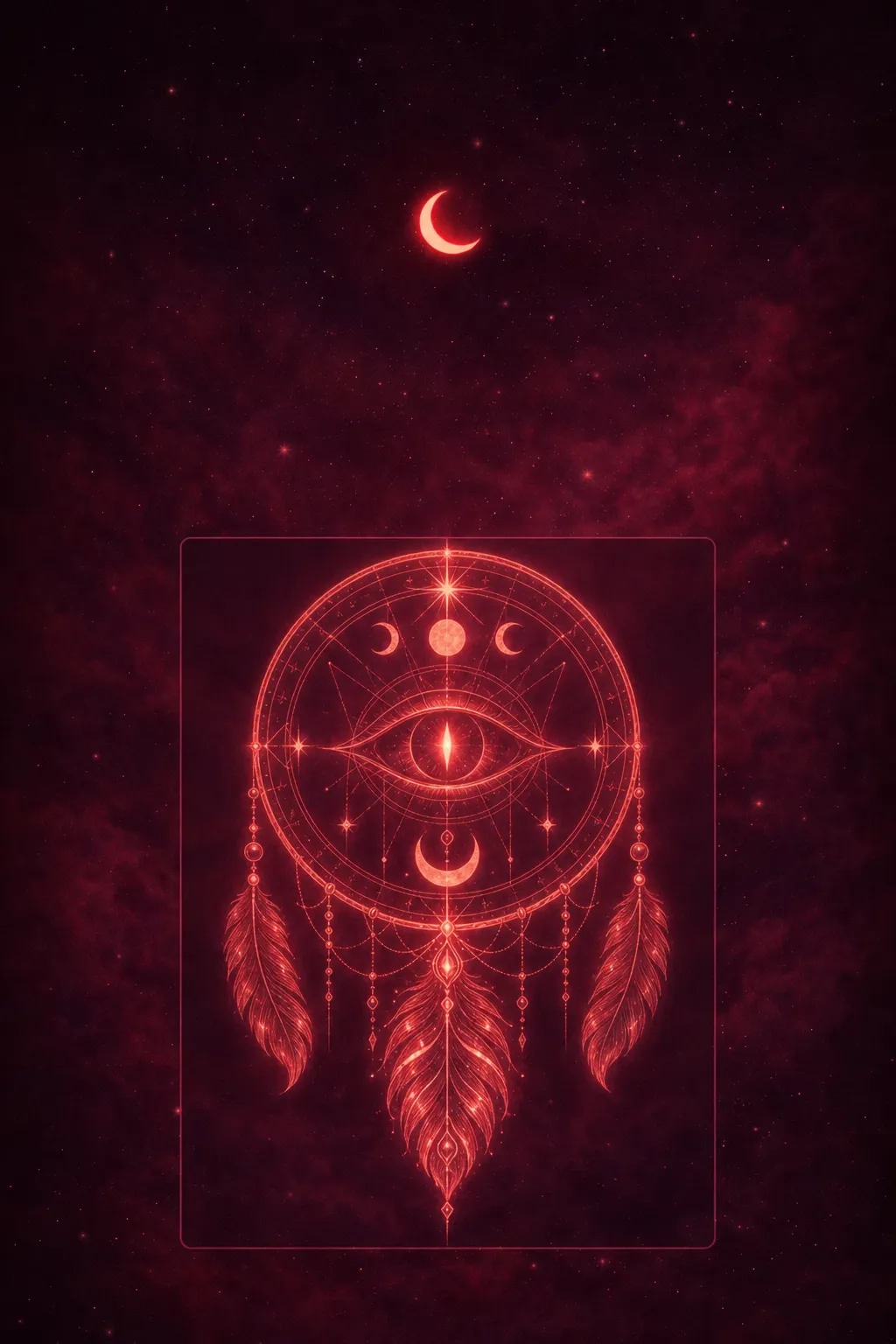

Dreaming of no reflection in a mirror signals a deep crisis of identity or self-worth, suggesting you feel invisible, unrecognized, or disconnected from who you truly are — your subconscious is urging you to rediscover your sense of self, rebuild confidence, and confront feelings of insignificance before they quietly erode your emotional foundation.
In under a minute you could read what your exact dream means for you, and see a picture of it. Free.
Bad dream? See exactly what you dreamed — turned into a picture.
Just describe it and Dream Book paints your dream as a real image, plus a reading of what it means for you. Free, and it takes under a minute.


A dream still on your mind? Get your personal reading.
Describe your dream in a line or two. In seconds you get a reading of your exact dream, a picture drawn from your own words, and every symbol explained.
Free. No sign-up. Takes 10 seconds. Your dream stays private.
0%
Analyzing your dream…
Something went wrong. Please try again in a moment.
Your dreams deserve more than a dictionary
Common Dream Scenarios and What They Mean
The most striking version — standing before a mirror and finding no reflection at all — points to a core rupture in self-recognition. This scenario tends to surface during major life transitions: a career loss, a breakup, or burnout that strips away the roles you relied on to know yourself. The dream is essentially asking, who are you when those labels are gone? The anxiety is real and often proportionate to how much your identity was tied to a single role or relationship.
- Others have reflections but you don't. You watch everyone else appear normally in the mirror while you remain invisible. This variant speaks directly to social belonging anxiety — a fear of being overlooked, excluded, or fundamentally unlike your peers. It is common during transitions into new workplaces, social circles, or life stages.
- Reflection distorts, then disappears. The image warps and fades rather than vanishing instantly. This suggests a gradual loss of self-clarity — an unstable self-image eroding under chronic stress, grief, or a decision that forces you to reimagine who you are.
- No reflection in water or other surfaces. When still water or glass fails to mirror you back, the dream often flags emotional suppression — inner feelings that are not being acknowledged or processed.
- Missing from photos or screens. A modern-anxiety variant tied to digital visibility and social comparison: a fear of being forgotten, replaced, or quietly edited out of others' lives.
A bad dream isn't a bad sign.
Across all these scenarios, the controlling thread is low perceived control over how you are seen and how you see yourself. The dream rarely predicts anything; instead it reflects a present-tense struggle to locate a stable, recognizable self amid change or pressure.
What this dream could look like
Tap an image to open it full screen
Example images. Only you can see what you write in Dream Book.
What Your Mind Is Working Through
From a psychological standpoint, dreaming of no reflection is a vivid expression of identity disturbance — the subconscious staging a moment where the self simply cannot be located. Mainstream psychology links this imagery to dissociation: a disconnect between who you feel you are internally and the version of yourself you can present to the world. Under chronic stress or prolonged burnout, the mind can slip into a low-grade depersonalization state, and the mirror with nothing in it is one of its most direct symbols. If you have been dreaming this way repeatedly, your inner life may be signaling that the pressure to perform, achieve, or conform has quietly eroded your sense of a stable self.
The emotional field surrounding this dream — alienation, emptiness, a quiet grief — often maps onto a loss of a defining role. When a relationship ends, a job disappears, or a long-held status shifts, the self-image built around that role goes with it. The new self has not yet taken shape, and the blank mirror captures that in-between state precisely. A Christian psychological reading would add that this void can also reflect a felt distance from one's deeper purpose or calling, an absence of meaning rather than simply an absence of identity. This connects closely to what psychologists describe in dreams about a faceless person — both point to unresolved questions about recognition and selfhood. That same dread of losing something essential to your identity also appears in the classic anxiety dream of teeth falling out, where the body itself becomes unreliable as a marker of self.
- Low self-worth: the dream may echo a fear of being invisible or unimportant to those around you
- Fear of change: the old self feels gone; the anxiety is that nothing coherent will replace it
- Control anxiety: the mirror is a tool for self-definition — its failure signals low perceived control over how you are seen and who you are becoming
General meanings end here. Read your own dream.
Describe your dream in a line or two. In seconds you get a reading of your exact dream, a picture drawn from your own words, and every symbol explained.
Free. No sign-up. Takes 10 seconds. Your dream stays private.
0%
Analyzing your dream…
Something went wrong. Please try again in a moment.
Your dreams deserve more than a dictionary
Every dream you log starts to connect.
Dream Book keeps your dreams in one place and reveals the threads between them over time — your private dream journal. Free to start.
Cultural and Traditional Readings
Across Western folk tradition, mirrors have long been treated as more than reflective glass — they were thought to capture a sliver of the soul, which is why breaking one was considered an omen of misfortune and why mirrors were covered in houses of mourning. Within that framework, dreaming of seeing yourself in a mirror and finding nothing there carries a quietly unsettling weight: the soul, or the essential self, has somehow gone missing. Vampire lore — deeply embedded in Anglo-American popular culture — made this image iconic, casting the soulless creature as one who casts no reflection. Whether or not you consciously think in those terms, the symbol lands with inherited cultural force.
But what does your version mean?
From a US Christian perspective, the image loosely echoes the idea of losing one's true identity — being unknown rather than known. It isn't a symbol of damnation so much as a prompt toward self-examination: who are you when all the external markers are stripped away? Folk wisdom across many traditions holds that an inability to see oneself clearly is a warning to slow down and take stock before life forces the reckoning. This theme of being unrecognizable to oneself also surfaces in dreams of a faceless person, where identity dissolves in a similarly unnerving way.
- Modern anxiety angle: In an era defined by personal branding and social visibility, having no reflection can feel like a very literal fear — that you are invisible to the world, that your identity holds no legible shape for others to recognize.
- Control thread: The dream often surfaces when circumstances — not personal choice — are rewriting who you are, reinforcing a felt loss of control over your own self-definition.
- Transitional omen: Many folk traditions treat such imagery as liminal rather than final — a sign of being between selves, not of having no self at all.
Spiritual Meaning of No Reflection
Across many spiritual traditions, the mirror has been understood as a window to the soul — not merely a surface that bounces back light, but a threshold where the inner self becomes visible. When that reflection disappears in a dream, a spiritually minded reading suggests something deeper than stress: a felt disconnection from one's own inner light, or a season in which the soul feels hidden even from itself. This resonates closely with the unsettling experience of dreaming of a faceless person, where identity dissolves at its most fundamental level.
Was yours a sign? Find out.
For dreamers with a Christian frame of reference, the image carries a quiet biblical echo. Paul's words in 1 Corinthians 13:12 — "now we see through a glass, darkly" — describe a state of partial, incomplete self-knowledge, a glimpse rather than a full seeing. A dream of no reflection may speak to exactly that moment: standing before God and one's own conscience without a clear sense of who you are. Theologians sometimes call this a crisis of imago Dei — the God-given worth and identity every person carries. The empty mirror, in this light, is not a verdict but an invitation to rediscover that worth rather than define yourself solely through roles, achievements, or others' approval.
Spiritually, the dream can also be read as a prompt toward honest self-examination. When modern life produces chronic stress and relentless self-reinvention, the soul can feel genuinely lost — not destroyed, but temporarily obscured. Much like the dream of teeth falling out, which many spiritual traditions treat as a sign of lost confidence and eroded self-image, the absence of your reflection may be signaling that the version of yourself you have been projecting no longer rings true, and that a quieter, more grounded sense of identity is waiting to be found.
Related Dream Meanings
nightmares
Faceless Person Dream: Anxiety, Identity & Uncertainty
5 min read

common dreams
Water Dream Meaning: Emotions, Intuition & Growth
5 min read

body health
Teeth Falling Out Dream: Anxiety, Loss & Vulnerability
5 min read
nightmares
Mirror Dream Meaning: Self-Reflection & Hidden Truths
5 min read

nightmares
Intruder in House: Meaning and Interpretation
5 min read

nightmares
Dead Snake Dream Meaning: Transformation & Endings
5 min read

nightmares
Talking to Dead: Meaning and Interpretation
6 min read

nightmares
Dog Biting Me in Dream Meaning: Interpretation and Symbolism
6 min read
What You Can Actually Do With This Dream
A no-reflection dream is uncomfortable precisely because it targets your sense of self — but that discomfort is useful data. Start by asking a simple grounding question: Which role or identity have I recently lost, or feel shaky about right now? Job title, relationship status, a reputation you worked hard to build — when any of these slip, the self can feel genuinely hard to locate. Naming the specific loss out loud (or in a journal) often deflates the anxiety the dream is amplifying. If the dream arrives alongside recurring images of teeth falling out, you may be processing a broader fear of losing control over how you appear to others.
- Audit your self-definition. List three qualities that are yours independent of any external role. If the list stalls, that is the work — rebuilding identity anchors that stress or change cannot strip away.
- Check your stress load. Chronic pressure can trigger depersonalization — a waking sense of feeling unreal — which the dreaming mind dramatizes as a missing reflection. If this dream recurs alongside day-to-day numbness, it is worth raising with a therapist rather than brushing off.
- Use a real mirror deliberately. Some people find a brief, intentional morning check-in — literally looking at themselves and stating one true thing about who they are — helps re-anchor self-recognition between recurring dreams.
- Explore what "being seen" means to you. If you also dream of a faceless figure, the theme of invisibility may run deeper and is worth tracing across multiple dreams as a pattern.
A bad dream isn't a bad sign.
The practical takeaway is this: the dream is not a verdict — it is a prompt. Treat it as your mind flagging an identity gap that deserves attention, then take one small, concrete step toward reconnecting with who you are outside of what you do or how others see you.
If it keeps coming back, the app helps you understand the pattern.
Log each recurring dream and the free app shows you what's underneath — calmly, over time. Free to start.
People Also Ask
Dreaming of a mirror showing no reflection often signals a crisis of identity or self-worth. You may feel invisible, lost, or disconnected from who you truly are. It can also suggest a period of transformation where your old self has faded but a new identity has not yet fully formed.
Spiritually, a mirror in a dream represents self-examination, truth, and the soul. It invites you to look honestly at your inner world. Many traditions view mirrors as gateways between realms, so a mirror in a dream may signal heightened self-awareness, spiritual awakening, or a call to confront hidden aspects of yourself — much like dreams of fire reveal buried emotional truths.
Mirrors appear in dreams more often than people expect, though many dreamers forget the detail upon waking. They tend to surface during times of major change, self-doubt, or emotional upheaval. When you do notice a mirror in a dream, it usually carries strong symbolic weight worth paying attention to.
Some traditions warn against mirror-gazing in dreams because reflections can appear distorted, monstrous, or absent, triggering deep psychological unease. Seeing an unexpected or frightening image can disturb sleep and leave lasting anxiety. Lucid dreamers also note that mirrors can destabilize dream control, making the dreamscape shift in unsettling and unpredictable ways.
Curious what your dream would look like?