
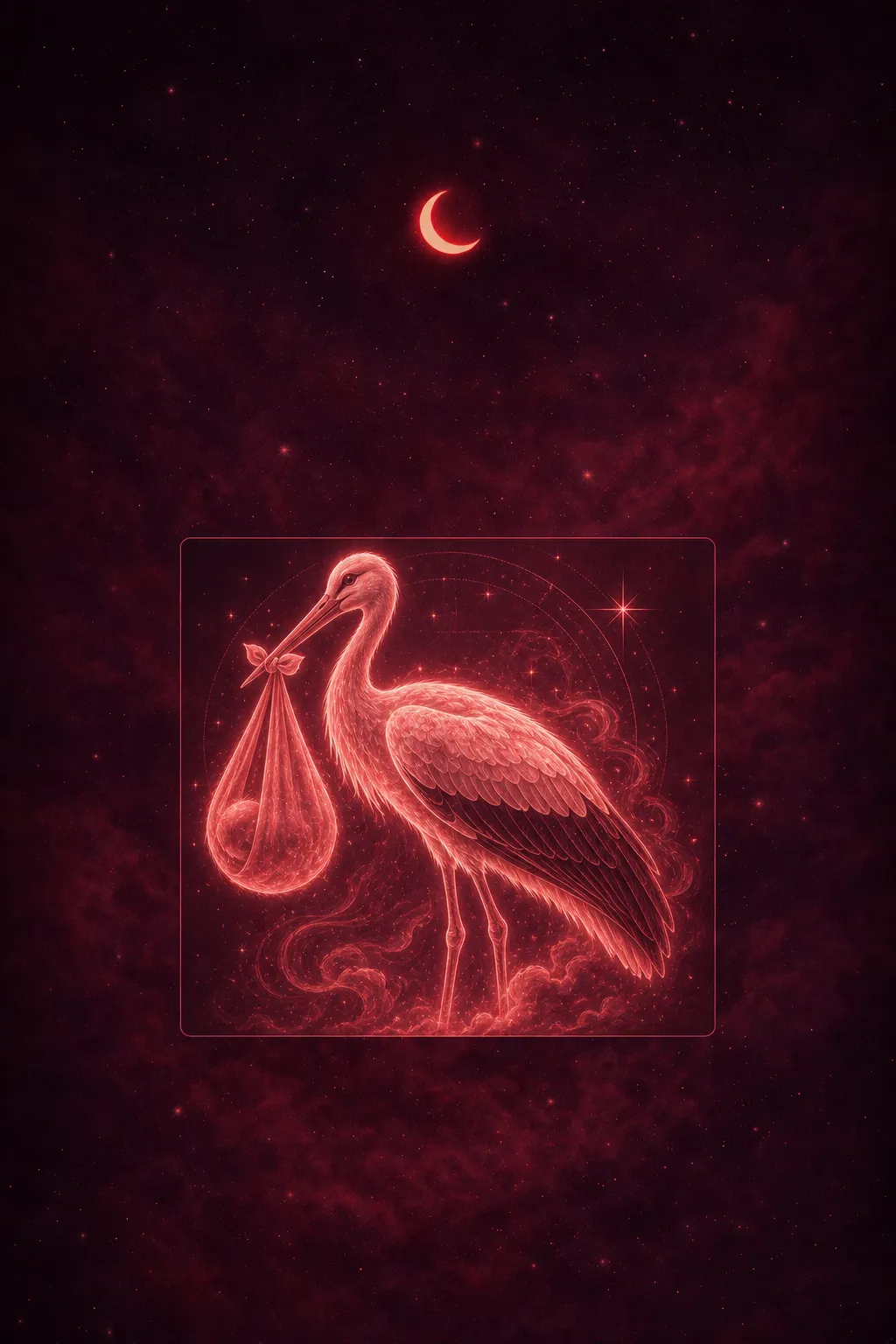

A stork in a dream meaning typically signals new beginnings, fertility, and the arrival of something precious, as this iconic bird has long symbolized birth and renewal, suggesting that a significant, life-changing event — such as a new relationship, creative project, or literal new life — may be approaching your waking world.
In under a minute you could read what your exact dream means for you, and see a picture of it. Free.
You read what it can mean. But what did yours mean?
General meanings stop here. In the free app, tell Dream Book your exact dream and get a reading that actually makes sense for you.


Common Stork Dream Scenarios and What They Mean
The scenario your dreaming mind constructs around the stork shapes its message considerably. A stork carrying a baby or bundle is the most recognizable image, pointing to a conscious or unconscious focus on pregnancy, family growth, or a longed-for fresh start that feels close at hand. If you are not literally expecting a child, the bundle often stands in for a creative project, a career move, or any new chapter you have been hoping will finally arrive. A stork flying overhead without landing carries a subtler charge — something is on its way, yet still out of reach, and the dream may be reflecting the low-grade tension of waiting on news or an outcome you cannot fully control. At Dream Book we explore this symbol in depth.
- Stork building or sitting on a nest: a settling instinct at work — your psyche is preparing the conditions for what's coming and craving domestic or emotional stability before the change lands.
- Stork standing still on one leg: a prompt toward patience; you are in a healthy holding pattern and do not need to force timing.
- Stork flying away empty: grief around delayed or missed expectation — this image often surfaces when fear of loss is louder than hope, and deserves gentle acknowledgment rather than alarm.
- Injured or dead stork: anxiety about a blocked new beginning, whether tied to fertility concerns, stalled plans, or dread that an anticipated outcome may not come through.
- A flock of migrating storks: a reminder that larger natural cycles are at work; some timing genuinely lies beyond personal control, and the dream may be encouraging you to release the pressure of forcing readiness.
What this dream could look like
Tap an image to open it full screen
Example images. Only you can see what you write in Dream Book.
The Psychological Meaning of Dreaming About a Stork
At its core, the stork is the psyche's shorthand for anticipation — the charged emotional space between wanting something and actually receiving it. Psychologically, it tends to surface when the dreaming mind is processing a major life transition: a new creative endeavor, a relationship shift, a career pivot, or the prospect of parenthood. The stork's arrival signals that part of you recognizes an irreversible change is approaching, and the emotional tone of the dream — hopeful, tender, or quietly anxious — usually reflects how ready you honestly feel for it.
But what does your version mean?
Modern life adds a particular edge to this symbol. In an era of fertility timelines, career planning, and the pressure to hit milestones on schedule, dreaming of a stork often expresses stress about outcomes that are simply outside your control. The bird's unhurried, deliberate flight can feel maddening when the waking mind is craving certainty. This waiting-period tension mirrors what therapists recognize as anticipatory anxiety: the discomfort of holding hope and fear simultaneously while a significant "delivery" — literal or metaphorical — remains unresolved. A pregnancy dream may share this emotional register, but the stork specifically foregrounds the gap between expectation and arrival.
- Creativity and self-renewal: Beyond literal birth, the stork can represent an idea or project gestating in the unconscious, surfacing a latent desire — or fear — around bringing something new into being.
- Responsibility ambivalence: The image may also reflect mixed feelings about a caretaking role — genuine longing alongside honest uncertainty about your capacity to provide.
- Control and surrender: From a self-knowledge standpoint, the dream invites reflection on what you are trying to force on a timeline versus what you may need to trust to unfold in its own time.
General meanings end here. Read your own dream.
Describe your dream in a line or two. In seconds you get a reading of your exact dream, a picture drawn from your own words, and every symbol explained.
Free. No sign-up. Takes 10 seconds. Your dream stays private.
0%
Analyzing your dream…
Something went wrong. Please try again in a moment.
Your dreams deserve more than a dictionary
Cultural and Folk Traditions Around the Stork
Few dream symbols carry as much collective cultural weight as the stork. Across Northern and Western European folk tradition, the stork has served for centuries as a herald of new arrivals — a belief so deeply embedded that it survived well into the modern era as a playful shorthand for pregnancy and birth. In a Christian cultural context, the bird's annual return from migration was read as a sign of divine providence and renewal, reinforcing the idea that good things arrive in their own time, beyond human control. That tension — between trusting the timing of life and anxiously trying to manage it — is exactly where the stork lands in the contemporary Anglo-American imagination.
Was yours a sign? Find out.
In mainstream Western culture today, the stork image is rarely taken literally, yet it persists as a recognizable symbol of hopeful expectation. Dreaming of one can tap into this shared cultural reservoir, especially for anyone navigating the pressures of family planning, career change, or any situation where a longed-for outcome feels just out of reach. The stork's connection to pregnancy and new beginnings also carries a subtler folk warning: the bird arrives uninvited and on its own schedule, reminding the dreamer that some deliveries cannot be forced.
- European folk belief: A stork nesting on your roof was considered a blessing and a promise of prosperity for the household.
- Christian framing: The stork's loyalty to its nest was cited in scripture-adjacent folk teaching as a model of faithfulness and natural order.
- Modern anxiety overlay: In today's culture of planning and self-optimization, the stork can surface as a symbol of the things that resist scheduling — a gentle cultural nudge toward acceptance over control.
The Spiritual Meaning of Dreaming About a Stork
In a biblical frame, the stork carries quiet but pointed significance. Jeremiah 8:7 notes that the stork knows its appointed seasons — a reminder that some arrivals operate on a timetable beyond human control. For dreamers wrestling with the modern anxiety of feeling behind schedule on life's milestones, that verse lands with particular weight: it reframes waiting not as failure but as alignment with a larger, divinely ordered rhythm. Psalm 104:17 places the stork in its nest as part of a creation sustained by providence, suggesting that the conditions for new life are being prepared even when you cannot see the process.
Spiritually, then, a stork dream can function as a gentle corrective to the need for control. Many people arrive at this symbol during seasons of deep longing — hoping for a pregnancy, a new chapter, or a breakthrough that stubbornly refuses to come on demand. The spiritual reading encourages a posture of receptive trust rather than anxious management, distinguishing between faithful preparation and the futile attempt to force divine timing.
A bad dream isn't a bad sign.
- Stork arriving unbidden: grace entering your life outside your plans — an invitation to surrender control.
- Stork delayed or circling: a call to examine whether fear, rather than circumstance, is holding you in place.
- Stork nesting nearby: reassurance that the conditions for growth are quietly being established around you.
Related Dream Meanings
animals
Nest Meaning - Symbolism & Interpretation
5 min read
body health
Pregnancy Dream Meaning: Creativity & New Beginnings
5 min read
animals
Caterpillar Dream Meaning: Transformation and Growth Symbolism
5 min read
animals
Puppies Dream Meaning: What Your Dreams About Puppies Reveal
5 min read
animals
Crabs: Meaning and Interpretation
5 min read
animals
Bears Dream Meaning: Strength, Courage & Introspection
5 min read
animals
Snakes Dream Meaning: Fear, Change & Hidden Threats
5 min read
animals
Spiders Dream Meaning: Fear, Creativity & Entrapment
5 min read
Practical Takeaways From a Stork Dream
When a stork appears in your dream, the most useful first step is a simple audit of where you are holding your breath in waking life. Ask yourself: what am I waiting for right now, and is the anxiety I feel about timing actually proportionate to the situation? Because the stork so often surfaces during transitions — a hoped-for pregnancy, a career shift, a creative project gestating in the background — the dream is essentially prompting you to get honest about whether you are preparing or just worrying.
- Name the arrival. Write down the one thing you are most anticipating or dreading right now. Putting it in concrete language strips away some of the free-floating anxiety the dream may be reflecting.
- Separate effort from outcome. Identify what is genuinely within your control — preparation, timing of decisions, conversations — and acknowledge what is not. This is where the dream's tension between hope and readiness becomes actionable.
- Check for stalled readiness. If the stork in the dream felt blocked or distant, ask whether you are unconsciously delaying action on something because you do not yet feel ready enough. Readiness is often built by starting, not waiting.
But what does your version mean?
Recurring stork dreams are worth tracking in a journal alongside your stress levels. If they cluster around specific deadlines or milestones, they are reliable signals that your mind is processing anticipatory pressure — and that a candid conversation, a concrete plan, or simply permission to release the need for perfect timing may be overdue.
One dream is never the whole picture.
The free app remembers your dreams, draws them, and connects the threads over time — so the next one means even more. Free to start.
People Also Ask
Spiritually, a stork represents new beginnings, renewal, and the arrival of blessings. Many traditions link it to the soul's journey and divine messages. Seeing one in a dream often signals spiritual awakening, a fresh chapter opening in your life, or the nurturing energy needed to bring a meaningful new purpose into being.
Yes, seeing a stork is widely considered a positive omen. Across many cultures it signals good fortune, fertility, and happy news on the horizon. In dreams it often forecasts a joyful arrival — whether a new baby, a promising opportunity, or a relationship blossoming — making it one of the most welcome dream visitors.
The stork symbolizes birth, fertility, loyalty, and safe homecoming. Its legendary devotion to its nest and young makes it a powerful emblem of family, protection, and parental love. In dreams it can also represent delivery — something long anticipated finally arriving — or a gentle reminder to nurture your own creative or personal ambitions.
In the Bible the stork is noted in Leviticus and Psalms, praised for its loyalty and described as knowing its seasons. Biblically it symbolizes faithfulness, timely action, and God-given instinct. Dreaming of a stork through a biblical lens may suggest you are being called to act faithfully, honor commitments, and trust divine timing in your life.
Curious what your dream would look like?