
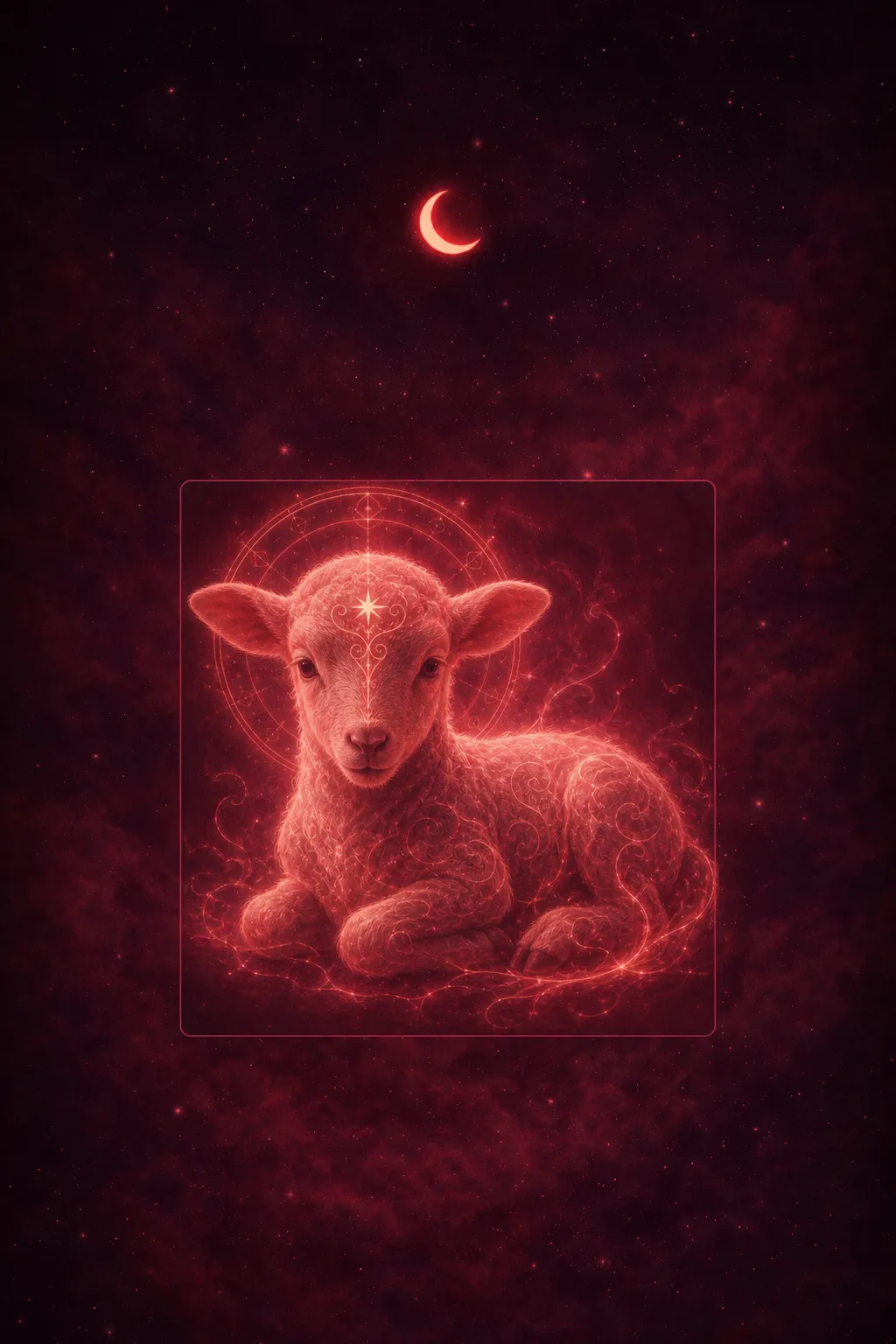

Dreaming about a lamb symbolizes innocence, gentleness, and new beginnings, often reflecting a pure or vulnerable aspect of yourself or a situation in your waking life that calls for patience, compassion, and careful nurturing to help it grow and flourish.
In under a minute you could read what your exact dream means for you, and see a picture of it. Free.
You read what it can mean. But what did yours mean?
General meanings stop here. In the free app, tell Dream Book your exact dream and get a reading that actually makes sense for you.


Common Lamb Dream Scenarios and What They Mean
The specific action unfolding around the lamb shapes the message significantly. A few of the most frequently reported variants include: At Dream Book we explore this symbol in depth.
- Holding or protecting a lamb: Your nurturing instinct is fully engaged. This scenario often points to a vulnerable part of yourself — your inner child, a fragile project, or a dependent relationship — that needs deliberate, gentle care. It reflects a healthy sense of responsibility, though it can also ask whether that caretaking role is becoming a burden.
- A lost or stray lamb: Feelings of being adrift, unguided, or cut off from security are close to the surface. You may be anxious about your own direction or worried that someone you care about is drifting away. This echoes the classic "lost sheep" motif — a longing to be found, or to find your footing again.
- A lamb led to slaughter or harmed: A distressing but telling image. It typically signals fear of exploitation, powerlessness, or the sense that you are being set up to lose something precious — much like the anxiety of being chased with no way out. Ask yourself where in waking life you feel pressured to stay compliant at great personal cost.
- A flock or field of lambs: The mood here is calmer, but the underlying question is whether you are leading or simply conforming. Community and belonging feel present, yet a quiet anxiety about losing individuality often runs beneath the pastoral image.
- A newborn or nursing lamb: Fresh starts, fragile ventures, and new responsibilities are signaled. Something in your life has just begun and requires patient, consistent attention before it can stand on its own.
- A glowing or otherwise symbolic lamb: When the lamb feels charged with light or significance beyond the ordinary, your dreaming mind is surfacing themes of conscience, moral clarity, or a call toward forgiveness and gentleness in some area of your life.
But what does your version mean?
Across all these variants, pay attention to your emotional state inside the dream. Feeling calm and capable while tending the lamb suggests confidence in your nurturing role; feeling overwhelmed or helpless points to a pressing need to reclaim a sense of control before that vulnerability becomes exploitation.
What this dream could look like
Tap an image to open it full screen
Example images. Only you can see what you write in Dream Book.
The Psychological Reading: Vulnerability, Control, and the Inner Child
From a depth-psychology perspective, a lamb appearing in your dream almost always signals that your subconscious is drawing attention to a tender, unguarded part of yourself. This may be your inner child — the part that still craves unconditional acceptance — or an aspect of your waking life where you feel exposed and without adequate defense. Modern life is saturated with pressures to perform, compete, and stay in control, and the lamb surfaces precisely when that armor starts to crack. If you have been suppressing genuine vulnerability under a layer of competence, the dream may be your psyche's way of asking you to acknowledge what lies beneath.
The innocence-versus-exploitation axis is especially revealing. Ask yourself honestly: are you being too compliant in a relationship or workplace situation, going along with others' agendas to avoid conflict? Psychologists link this pattern to anxiety dreams rooted in helplessness, where the dreamer cannot assert boundaries. The lamb, gentle by nature, can embody that fear of being "led" — of surrendering self-direction to someone else's will. A Christian-inflected reading adds a layer of sacrificial meaning here: the sense that you are giving more than is sustainable, perhaps out of duty or a deep-seated belief that self-sacrifice is virtuous.
On the transformative side, the lamb is not purely a symbol of weakness. Dreaming of one can mark the beginning of a healing cycle — an invitation to approach yourself and others with more softness and less judgment. Key psychological questions worth sitting with after this dream include:
Was yours a sign? Find out.
- Where in my life am I choosing compliance over honest self-expression?
- Is there a person or project I am nurturing at the cost of my own wellbeing?
- Am I confusing gentleness with helplessness — or mistaking assertiveness for cruelty?
- What would it look like to protect my own vulnerability rather than hide it?
General meanings end here. Read your own dream.
Describe your dream in a line or two. In seconds you get a reading of your exact dream, a picture drawn from your own words, and every symbol explained.
Free. No sign-up. Takes 10 seconds. Your dream stays private.
0%
Analyzing your dream…
Something went wrong. Please try again in a moment.
Your dreams deserve more than a dictionary
Cultural and Traditional Readings of the Lamb in Dreams
Across Western folk tradition, dreaming of a lamb has long been considered a favorable omen tied to innocence, new beginnings, and spiritual protection. In pastoral European communities, a lamb appearing in a dream was read as a sign of domestic harmony and forthcoming blessings — a quiet reassurance that gentleness would be rewarded. This hopeful reading persisted into American folk belief, where the lamb retained its association with purity and God's watchful care, echoing the biblical image of the Good Shepherd without reducing the symbol to a strictly religious one.
The Christian strand of this tradition adds meaningful depth: the lamb as a sacrificial figure carries overtones of selfless giving and redemption. In everyday dream lore shaped by that heritage, seeing a lamb can prompt the question of whether you are giving too much of yourself — whether your compliance is a genuine virtue or a vulnerability others are quietly exploiting. That tension between willing sacrifice and naive helplessness runs through centuries of folk interpretation and maps closely onto modern anxieties about control and self-determination.
- Folk omen of peace: A calm, grazing lamb traditionally signaled that a period of conflict was drawing to a close.
- Warning of naivety: Older dream almanacs cautioned that a lone, wandering lamb could reflect a fear of being pursued or manipulated by those with stronger intentions.
- Seasonal renewal: Because lambs are born in spring, cultural tradition ties them to fresh starts — a timely symbol when you are navigating major life change.
The Spiritual Reading: Sacrifice, Shepherding, and Sacred Vulnerability
Within a Christian framework, the lamb carries perhaps the most concentrated symbolic weight of any dream animal. The image of the Lamb of God (John 1:29) connects directly to themes of willing sacrifice and atonement — if a lamb appears at a moment of personal guilt, grief, or moral reckoning in your waking life, the dream may be quietly invoking the possibility of forgiveness and release. This is less a directive and more a reassurance: something redemptive is at work beneath the surface of your anxiety.
The pastoral imagery of Luke 15 and Psalm 23 adds a second spiritual layer. To dream of a lamb being found, led, or sheltered can reflect a felt sense of being sought and restored — spiritually located after a period of feeling lost or directionless. For dreamers navigating burnout, major life transitions, or the unsettling feeling that circumstances are beyond their control, this imagery can register as genuine spiritual comfort rather than passive surrender.
A bad dream isn't a bad sign.
- Lamb of God imagery: Points to themes of atonement, meekness accepted willingly — not weakness imposed from outside.
- Lost-sheep restoration: Suggests being spiritually guided or returned to a grounded sense of purpose.
- Purity and rebirth: Seasonal associations with Easter frame the lamb as a symbol of renewal — something within you is being made fresh, not simply left vulnerable.
Across broader spiritual traditions, the lamb's gentleness is rarely read as passivity; it is understood as chosen meekness — a posture of trust rather than defeat. If your dream lamb felt peaceful rather than threatened, your deeper self may be signaling that surrender to a process larger than yourself is, in this moment, the wiser form of strength.
Related Dream Meanings

nightmares
Being Chased Dream Meaning: Anxiety & Avoidance
5 min read
animals
Dogs Dream Meaning: Loyalty, Protection & Friendship
5 min read
animals
Cats Dream Meaning: Independence, Intuition & Mystery
5 min read
animals
Fish Dream Meaning: Emotions, Abundance & Creativity
5 min read
animals
Horses Dream Meaning: Freedom, Power & Ambition
5 min read
animals
Wolves Dream Meaning: Instincts, Loyalty & Inner Power
5 min read
animals
Birds Dream Meaning: Freedom, Spirit & Perspective
5 min read
animals
Alligators Dream Meaning: Hidden Fears & Danger
5 min read
What to Do After a Lamb Dream: Grounded Takeaways
Before the image fades, pause and identify exactly how the lamb felt in the dream — protected, threatened, lost, or at peace. That emotional snapshot is your most useful data point. If anxiety colored the scene, your waking life may be asking a direct question: where are you feeling exposed or pressured into compliance right now? Naming the specific relationship or situation — a demanding boss, a one-sided friendship, a decision you've been avoiding — moves the dream from vague symbol to actionable self-knowledge.
- Map your vulnerability. Write down one area of life where you feel you're "going along" without genuine choice. The lamb's helplessness often mirrors quiet people-pleasing or fear of conflict that's built up under stress.
- Check your boundaries. If the lamb was in danger, treat it as a prompt to audit who has unchecked influence over your time, energy, or self-esteem — and where firmer limits are overdue.
- Protect without over-sheltering. If you were guarding the lamb, ask whether a person or project in your care actually needs more room to grow rather than more protection from you.
- Revisit your intentions. A calm, healthy lamb can be a quiet endorsement — reassurance that a gentle or idealistic approach you've been second-guessing is worth keeping.
But what does your version mean?
Dreams about being chased sometimes cluster with lamb imagery when anxiety about control is running high; if both themes appear close together, the pattern is worth paying attention to in your waking life rather than dismissing as coincidence.
One dream is never the whole picture.
The free app remembers your dreams, draws them, and connects the threads over time — so the next one means even more. Free to start.
People Also Ask
Spiritually, a lamb represents purity, innocence, and divine protection. Across many traditions it symbolizes gentleness, sacrifice, and spiritual renewal. Dreaming of a lamb often signals that your soul is entering a period of peace, that you are being guided or watched over, or that you need to embrace a more compassionate, open-hearted approach to life.
A baby lamb in a dream amplifies themes of new beginnings, vulnerability, and untainted potential. It often reflects a tender part of yourself that needs nurturing, or the arrival of something fresh and hopeful in your waking life. It can also represent a child, a new project, or a relationship still in its most delicate early stage.
Dreaming of a flock of sheep often points to community, belonging, or the pull of conformity. It may suggest you are following the crowd rather than forging your own path. Alternatively, a peaceful flock signals harmony and abundance. Pay attention to how the flock behaves — a calm group brings reassurance, while a scattered one hints at inner confusion.
Seeing meat in a dream typically relates to primal desires, physical strength, or material gain. Raw meat can warn of hidden conflict or unresolved aggression, while cooked meat often points to rewards and nourishment. If the meat specifically comes from a lamb, the dream may suggest that something innocent or precious is being sacrificed for worldly benefit.
Curious what your dream would look like?