
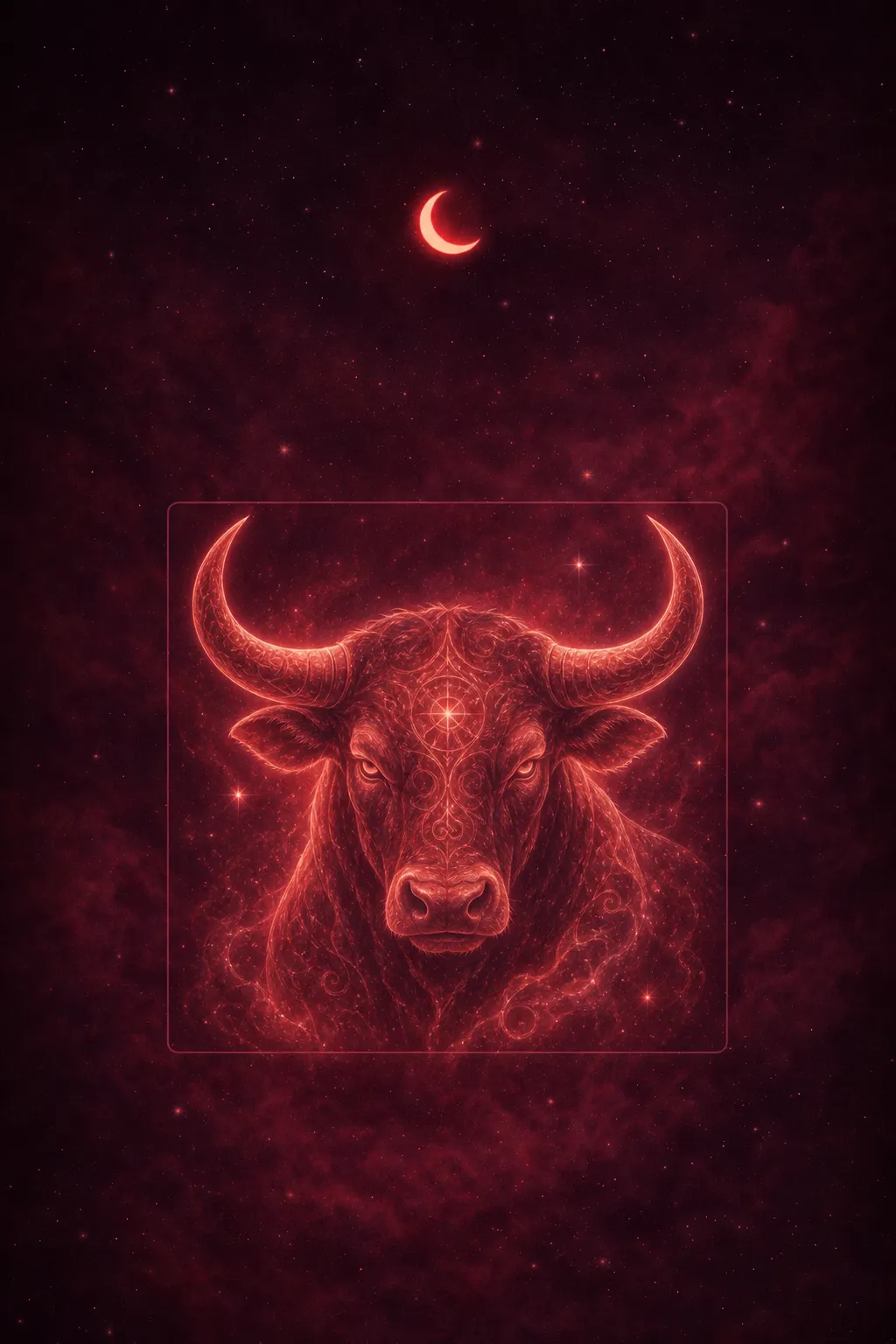

Dreaming about a bull typically symbolizes raw strength, stubbornness, and untamed power within yourself, often reflecting a situation in waking life where you must decide whether to harness your determination and charge forward boldly or risk being overwhelmed by uncontrolled aggression, primal urges, or an imposing force beyond your current ability to manage.
In under a minute you could read what your exact dream means for you, and see a picture of it. Free.
A dream still on your mind? Get your personal reading.
Describe your dream in a line or two. In seconds you get a reading of your exact dream, a picture drawn from your own words, and every symbol explained.
Free. No sign-up. Takes 10 seconds. Your dream stays private.
0%
Analyzing your dream…
Something went wrong. Please try again in a moment.
Your dreams deserve more than a dictionary
Common Bull Dream Scenarios and What They Mean
The scenario unfolding around the bull shapes its meaning considerably. A bull charging directly at you is one of the most urgent variants — it typically mirrors a real-life pressure bearing down fast, whether that's a confrontation you've been putting off, a boss pushing hard, or your own bottled-up anger finally demanding attention. A bull chasing you carries a similar charge but with an evasion twist: much like being chased in a dream, it often signals that you're running from a problem rather than facing it — avoiding an aggressive person, an uncomfortable truth, or impulses you haven't owned yet.
- Calm, grazing, or penned bull: Power is present but contained. This is a reassuring sign that raw drive or anger is being held in check — latent strength available when you need it.
- Riding or taming the bull: You're wrestling control over a difficult force — a volatile situation, a risky opportunity, or a strong personal impulse. It's a test of whether you can steer momentum rather than be swept away by it.
- Being gored or injured: A dominant force has already broken through your defenses. This warns of consequences from ignored aggression — yours or someone else's — or of feeling overpowered in waking life, not unlike the alarm that runs through dreams of teeth falling out.
- Black bull: Shadow energy; unconscious anger or a threatening drive you haven't acknowledged yet.
- White bull: Instinctual power in a purified or integrated form — strength working with you, not against you.
- Bull leading a herd: Themes of leadership, group dominance, or a provider role — often reflecting how you see yourself, or someone else, within a social or professional hierarchy.
But what does your version mean?
Across all these variants, the central question your dreaming mind is asking is the same: are you channeling this force, or is it running you?
What a dream about a bull could look like
Tap an image to open it full screen
Example images. Only you can see what you write in Dream Book.
The Bull as a Mirror of Inner Power and Control
From a psychological standpoint, a bull in a dream is rarely just an animal — it's a projection of raw, instinctual energy that the waking mind struggles to manage. Jung would frame it as shadow vigor: the forceful, driven part of the self that society trains people to suppress. When that energy surfaces in a dream, it signals that something primal — ambition, anger, desire, or sheer willpower — is pressing for acknowledgment. Ignoring it doesn't dissolve it; like a bull in a pen, contained pressure only builds.
Modern anxiety adds another layer. Many dreamers report bull imagery during periods of intense workplace stress, financial uncertainty, or major life transitions — moments when change feels less like a choice and more like an unstoppable charge. The bull then represents forces perceived as beyond personal control: a demanding authority figure, a mounting deadline, or a situation that seems to move with its own momentum regardless of resistance. Psychologically, the impulse to flee something overwhelming and the bull's forward charge are two sides of the same coin — one external, one internal. Dreams of suddenly losing grip or control carry a similar undercurrent of helplessness, suggesting the subconscious is working through the same core fear.
- Unresolved aggression: The bull may embody anger held in the body — feelings that haven't found a constructive outlet.
- Willpower or stubbornness: Are you driving forward with purpose, or refusing to yield when flexibility would serve you better?
- Masculine or paternal energy: A bull can represent a dominant figure in waking life — or the assertive side of your own personality seeking expression.
- Self-knowledge prompt: The key question isn't whether the bull is dangerous, but whether you are guiding that power or being ruled by it.
Every dream you log starts to connect.
Dream Book keeps your dreams in one place and reveals the threads between them over time — your private dream journal. Free to start.


What Culture and Tradition Say About the Bull
In the Anglo-American folk imagination, the bull has always stood for something bigger than one person can easily handle. Everyday idioms carry that weight quietly: to "take the bull by the horns" praises the person bold enough to seize a dangerous situation, while calling someone "bull-headed" signals stubborn refusal to budge. "Like a bull in a china shop" captures the anxiety many dreamers feel — raw power loose in a space that demands delicacy, a near-perfect shorthand for the modern dread of losing control at work or in relationships. These phrases suggest that, culturally, the bull is a force to be mastered rather than fled.
Was yours a sign? Find out.
Rodeo and cattle-drive imagery, deeply embedded in American cultural memory, adds another layer: the cowboy who stays on the bull earns respect precisely because mastery over brute strength is seen as a measure of character. Dreaming of riding or calming a bull can tap into this tradition — an unconscious signal that self-knowledge and steady nerves may matter more than sheer force. On the biblical side, the bull appears as a symbol of strength and sacrifice throughout the Old Testament, lending the image a solemn, almost sacred gravity that lingers in the background of many Western dreamers' associations, even secular ones. That tension between raw instinct and willed control is something dreamers also recognize in dreams centered on anger, where suppressed force finds its own dramatic outlet.
- "Take the bull by the horns" — cultural praise for confronting a threat head-on rather than waiting for it to charge.
- "Red rag to a bull" — a reminder that what triggers overwhelming force is often small; worth asking what provocation you may be overlooking in waking life.
- Bull market imagery — financial culture has fused the bull with unstoppable momentum, so dreaming of a charging bull can also reflect economic pressure or the feeling of being chased by forces beyond your control.
The Bull's Spiritual Weight: Power, Worship, and Misdirected Trust
In the Hebrew scriptures that anchor much of Western spiritual imagination, the bull occupies a striking dual role. On one hand, it appears as the appointed offering animal — in Exodus 29, a bull is presented as a sin offering, linking the creature to atonement and the surrender of self-will before something greater. Psalm 22:12 reaches for "strong bulls of Bashan" as a vivid image of encircling threat, the same suffocating pressure a modern dreamer might recognize in a dream of being pursued by a force that feels unstoppable. The bull's raw power, in this frame, is never neutral — it either serves a higher purpose or becomes a danger.
A bad dream isn't a bad sign.
The cautionary edge cuts deeper with the golden calf episode of 1 Kings 12:28, where bull imagery becomes a symbol of misplaced trust — elevating strength, wealth, or momentum to the level of devotion. For a dreamer already anxious about finances or workplace pressure, a bull dream can carry that same spiritual warning: ask honestly whether you are worshipping force itself, grinding forward through sheer willpower while ignoring the cost. That unexamined fury — the kind that tightens the chest and shortens the breath — is something the symbolism of anger in dreams explores in its own right. The biblical tradition gently insists that raw drive untempered by wisdom becomes its own form of idolatry.
Spiritually, then, the bull in a dream invites a question of alignment rather than conquest. Is the energy bearing down on you something to submit to, redirect, or simply recognize as your own? That act of honest self-examination — sitting with a force rather than being trampled by it — is where the spiritual reading and the psychological one quietly meet.
Related Dream Meanings
nightmares
Anger Dream Meaning: Stress, Conflict & Need for Change
5 min read
nightmares
Being Chased Dream Meaning: Anxiety & Avoidance
5 min read
body health
Teeth Falling Out Dream: Anxiety, Loss & Vulnerability
5 min read
animals
Wolves Dream Meaning: Instincts, Loyalty & Inner Power
5 min read
animals
Birds Dream Meaning: Freedom, Spirit & Perspective
5 min read
animals
Alligators Dream Meaning: Hidden Fears & Danger
5 min read
animals
Frogs Dream Meaning: Transformation & Renewal
5 min read
animals
Sharks Dream Meaning: Fear, Danger & Hidden Threats
5 min read
Turning the Bull Dream into Actionable Self-Awareness
When a bull shows up in your dream, the most useful first step is a quick honest audit of where raw, unmanaged pressure is building in your waking life. Ask yourself: what situation am I either charging into recklessly or refusing to face at all? The bull rarely signals a need for more force — it more often flags a need for directed force, the difference between a stampede and a purposeful push forward.
- Name the pressure source. Write down the one relationship, deadline, or financial stress that felt most alive when you woke up. The bull tends to personify whatever you have been avoiding confronting — much like the urgent feeling behind dreams about being chased.
- Check your stubbornness. Are you the charging bull, or are you the immovable one blocking progress? Both directions carry cost. A brief conversation with someone you trust can surface blind spots your waking mind protects.
- Channel, don't suppress. Physical outlets — a hard workout, a long walk, even punching a pillow — can safely discharge the bodily tension the dream is flagging before it leaks out sideways at work or at home. Unresolved anger stored in the body is often exactly what the bull is dramatizing.
- Set one small boundary or take one small bold step today. "Taking the bull by the horns" in practice rarely means a grand gesture; it usually means the small, specific action you have been postponing.
But what does your version mean?
Recurring bull dreams are worth tracking in a journal. If the animal appears night after night, the dream is signaling that the underlying pressure has not shifted — and that a more deliberate change in behavior, rather than just reflection, is overdue.
One dream is never the whole picture.
The free app remembers your dreams, draws them, and connects the threads over time — so the next one means even more. Free to start.
People Also Ask
Being chased by a bull in a dream often reflects a situation in waking life that feels overwhelming or threatening. Much like dreams about being chased, it may signal that you are avoiding a problem or powerful emotion. Your subconscious is urging you to stop running and confront the challenge directly before it escalates further.
A bull commonly symbolizes raw strength, determination, stubbornness, and primal energy. Dreaming of one may reflect your own willpower or a forceful personality in your life. It can also represent financial opportunity, as bulls are associated with rising markets and prosperity, depending on the dream's overall mood and context.
A black bull in a dream often carries a more intense or shadowy meaning. It can represent hidden fears, repressed anger, or an unconscious force you have not yet acknowledged. Alternatively, black bulls symbolize power and authority, so the dream may be pointing to a dominant figure or a strong inner drive.
It depends entirely on the dream's tone. A calm, strong bull grazing peacefully suggests abundance, patience, and grounded energy — generally a positive sign. A raging or attacking bull warns of conflict, uncontrolled anger, or upcoming challenges. Pay attention to how you felt during the dream for the most accurate interpretation.
Curious what your dream would look like?