
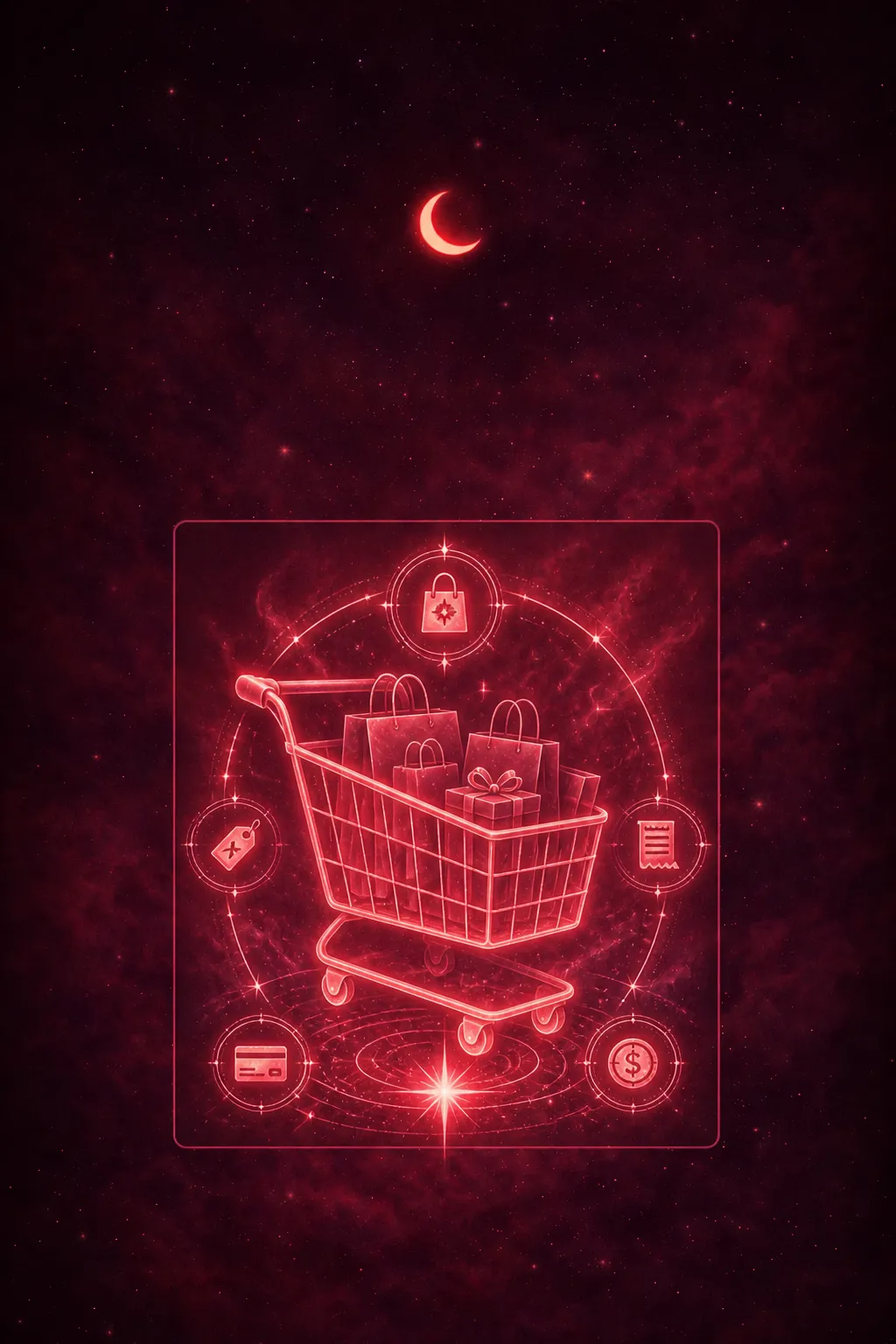

Dreaming of shopping typically symbolizes a search for identity, value, or fulfillment in waking life, reflecting your desire to make important choices, explore new opportunities, or assess what you truly need emotionally and materially.
In under a minute you could read what your exact dream means for you, and see a picture of it. Free.
You read what it can mean. But what did yours mean?
General meanings stop here. In the free app, tell Dream Book your exact dream and get a reading that actually makes sense for you.


A dream still on your mind? Get your personal reading.
Describe your dream in a line or two. In seconds you get a reading of your exact dream, a picture drawn from your own words, and every symbol explained.
Free. No sign-up. Takes 10 seconds. Your dream stays private.
0%
Analyzing your dream…
Something went wrong. Please try again in a moment.
Your dreams deserve more than a dictionary
Common shopping dream scenarios and what they mean
The specific shape your shopping dream takes matters enormously — browsing aimlessly feels nothing like watching your card get declined, and each variant points to a distinct waking concern.
Dreaming of grocery shopping or buying essentials
Food shopping tends to reflect self-care and basic security rather than luxury desire. Your mind may be prompting you to attend to fundamental needs — physical, emotional, or spiritual — that have been quietly neglected while you focus on bigger ambitions. It is a grounding scenario, often reassuring in tone.
But what does your version mean?
Dreaming of browsing endlessly but buying nothing
This is one of the most recognizable modern-anxiety dreams. Circling the same aisles without committing mirrors decision fatigue in waking life — too many options, too much second-guessing. It often surfaces when a real choice is overdue and the fear of choosing wrong has quietly become paralysis.
Dreaming that your card is declined or you cannot afford anything
A sharp jolt of scarcity and unworthiness. Beyond straightforward financial anxiety, a declined card can signal a deeper belief that you have not yet earned what you want — that access to a particular outcome or opportunity feels blocked, not just by circumstance but by self-doubt.
Dreaming of being lost or overwhelmed in a huge store
A maze-like store packed with competing demands captures the feeling of being swallowed by choices rather than empowered by them. This variant commonly appears during life transitions — new job, relocation, relationship change — when external pressure has quietly outpaced your sense of direction and control.
Dreaming of impulsive or excessive buying
Filling a cart far beyond any real need often signals emotional compensation. The dream may be flagging avoidance — shopping as a stand-in for addressing an uncomfortable feeling. There is frequently a guilt undertone, a quiet recognition that the spending is covering something rather than satisfying it.
Was yours a sign? Find out.
Dreaming of shoplifting or taking items without paying
Moral tension sits at the center of this scenario. Taking something without paying can reflect desire for what feels undeserved, a temptation to cut corners in waking life, or unresolved guilt. For those with a faith background, this variant may carry a conscience-check quality, a dream prompting honest self-examination.
What this dream could look like
Tap an image to open it full screen
Example images. Only you can see what you write in Dream Book.
What Your Mind Is Really Shopping For
From a psychological standpoint, a shopping dream is rarely about commerce — it is the subconscious staging a live audit of your desires, self-worth, and sense of agency. The items you reach for on those dream shelves often represent unmet emotional needs that waking life has not yet named: affection, security, creative expression, or simple rest. When the cart feels satisfying and full, your inner world is likely registering a sense of sufficiency; when shelves are bare or money runs out at the register, the dream is surfacing an anxiety about scarcity — not necessarily financial, but emotional or psychological.
The identity dimension runs just as deep. What you choose — and whether you feel you deserve to buy it — mirrors your current sense of self-worth. Reaching for something and then putting it back, or feeling guilt after purchasing, can reflect an internal tug-of-war between genuine need and the belief that you have not quite earned comfort or pleasure yet. A Christian-influenced conscience may amplify that guilt, framing desire itself as suspect, while modern consumer culture pulls in the opposite direction, equating acquisition with success.
- Browsing without buying: exploring options in life without committing — healthy curiosity or avoidant indecision, depending on the emotional tone.
- Overwhelm in a crowded store: a classic modern-anxiety signal — too many decisions, too little clarity about what you actually want or value.
- Buying something impulsively: the dream may be flagging a coping pattern — reaching for external fixes to regulate internal discomfort.
- Finding exactly what you need: a reassuring signal that your sense of agency and self-knowledge is healthy and aligned.
General meanings end here. Read your own dream.
Describe your dream in a line or two. In seconds you get a reading of your exact dream, a picture drawn from your own words, and every symbol explained.
Free. No sign-up. Takes 10 seconds. Your dream stays private.
0%
Analyzing your dream…
Something went wrong. Please try again in a moment.
Your dreams deserve more than a dictionary
Every dream you log starts to connect.
Dream Book keeps your dreams in one place and reveals the threads between them over time — your private dream journal. Free to start.
Shopping Dreams Through a Cultural Lens
In mainstream Anglo-American culture, shopping has long since crossed the line from practical errand to leisure activity and identity statement. Malls, big-box stores, and now the endless scroll of online retail have made the act of browsing and buying a routine backdrop to daily life — which is precisely why the imagery turns up so readily in dreams. When you dream of shopping, your mind is drawing on a setting that your waking culture has quietly taught you to associate with comfort, reward, and self-expression. The colloquial idea of retail therapy — the half-joking belief that a purchase can lift a bad mood — is deeply embedded in that same cultural script, and it surfaces in dreams as a shorthand for seeking relief or control during stressful periods.
A bad dream isn't a bad sign.
That modern-anxiety dimension is worth taking seriously. Consumer culture constantly signals that the right choice — the right product, the right brand — will resolve an underlying sense of lack. Dreams that replay this loop of selecting and acquiring may be reflecting real pressure around financial decisions, lifestyle expectations, or the sheer overwhelm of having too many options and too little certainty. From a broadly Christian perspective shared by a significant segment of the culture, dreaming of compulsive or guilt-ridden shopping can prompt an honest look at attitudes toward money and whether spending habits are filling a genuine need or masking a deeper one.
- Retail therapy impulse: dreaming of shopping as comfort may mirror a waking habit of using purchases to manage stress rather than address its source.
- Choice overload: an overwhelming store in a dream often echoes the modern experience of decision fatigue — too many options, too little clarity about what you actually want.
- Identity and consumption: cultural norms tie what we buy to who we are; dream shopping can surface questions about whether your public self reflects authentic values or external pressures.
A Spiritual Audit of Desire
From a Christian spiritual perspective, a shopping dream can function as an unexpected moment of self-examination — a prompt to ask whether what you are chasing in waking life reflects genuine need or restless wanting. The tension at the heart of Matthew 6:19–21, which contrasts storing up earthly treasures with investing in what truly lasts, maps surprisingly well onto the dream's core emotional register: the fleeting pleasure of acquiring something new followed, sometimes, by a quiet sense of emptiness. If your dream shopping leaves you feeling hollow rather than satisfied, your spirit may be flagging a misalignment between your pursuits and your deeper values.
The caution in 1 Timothy 6:6–10 against letting the love of money become a root of harm is worth sitting with too — not as a guilt-inducing verdict, but as an invitation toward contentment. Dreams about money running out or being insufficient while shopping can carry this same spiritual undercurrent: a nudge to examine whether anxiety about scarcity is driving choices that authentic faith or inner security would not. Contentment, in this framework, is not passivity — it is a practiced form of self-knowledge and trust.
- Overflowing cart, lingering guilt — may signal an inner conviction that accumulation is outpacing purpose.
- Unable to choose or afford anything — can reflect a spiritual season of waiting, surrender, or reassessment of what truly matters.
- Shopping for others — often carries a generous, stewardship-oriented energy aligned with values of service over self-interest.
Related Dream Meanings
common dreams
Money Dream Meaning: Wealth, Worth & Anxiety
5 min read

common dreams
Praying: Meaning and Interpretation
6 min read

common dreams
Reading: Meanings and Interpretations
5 min read

common dreams
Fruit: Meanings and Interpretations
5 min read

common dreams
Riding a Bicycle: Meaning and Interpretation
5 min read
common dreams
Dream of Suitcase: Meaning and Interpretation
5 min read

common dreams
Mansion: Meaning and Interpretation
5 min read

common dreams
Dream House Meaning: What It Symbolizes in Your Dreams
5 min read
Turning the Dream into a Waking Checklist
Because shopping dreams tend to surface when real-life decisions feel unresolved or overwhelming, the most useful first step is to treat the dream as a prompt rather than a verdict. When you wake, jot down what you were shopping for, whether you found it, and how the experience felt — hurried, joyful, shameful, or paralyzed. That emotional texture is the data point worth examining, not the specific items on the shelves.
But what does your version mean?
- Map the feeling to a real decision. Anxiety in the dream often mirrors a choice you are avoiding in waking life — a career move, a relationship boundary, a financial commitment. Name the decision out loud and give yourself a concrete deadline for revisiting it.
- Check your "want vs. need" ledger. If the dream left you feeling guilty or empty after buying, it may be flagging a pattern worth auditing — whether that is actual spending, overcommitting your time, or chasing approval. A quick honest review of recent choices can surface the mismatch.
- Reclaim a sense of agency. Recurring dreams about financial pressure or inability to pay often accompany real stress about control. A simple practical reset — drafting a short-term plan, setting one clear boundary, or decluttering a backlogged to-do list — can reduce the psychological noise that feeds these dreams.
- Pause before the next real purchase or commitment. Use the dream as a gentle circuit-breaker: ask whether the thing you are about to acquire reflects a genuine need or a mood you are trying to manage.
One dream is never the whole picture.
The free app remembers your dreams, draws them, and connects the threads over time — so the next one means even more. Free to start.
People Also Ask
Dreaming of shopping often reflects a search for fulfillment, choices, or new opportunities in your waking life. It can suggest you are evaluating your options, desires, or priorities. The emotional tone of the dream matters greatly — enjoyment signals confidence, while frustration may indicate feeling overwhelmed by decisions you face.
Grocery shopping in a dream typically relates to nurturing, basic needs, and self-care. It suggests you are taking stock of what sustains you emotionally or physically. An overflowing cart may reflect abundance, while empty shelves can point to feelings of lack, stress, or anxiety about meeting your own or your family's essential needs.
Dreaming of browsing without making a purchase often signals indecision or fear of commitment in your waking life. You may feel tempted by opportunities yet hesitant to act. It can also reflect a longing for something you feel is out of reach, whether that is a relationship, career change, or personal goal.
Curious what your dream would look like?