
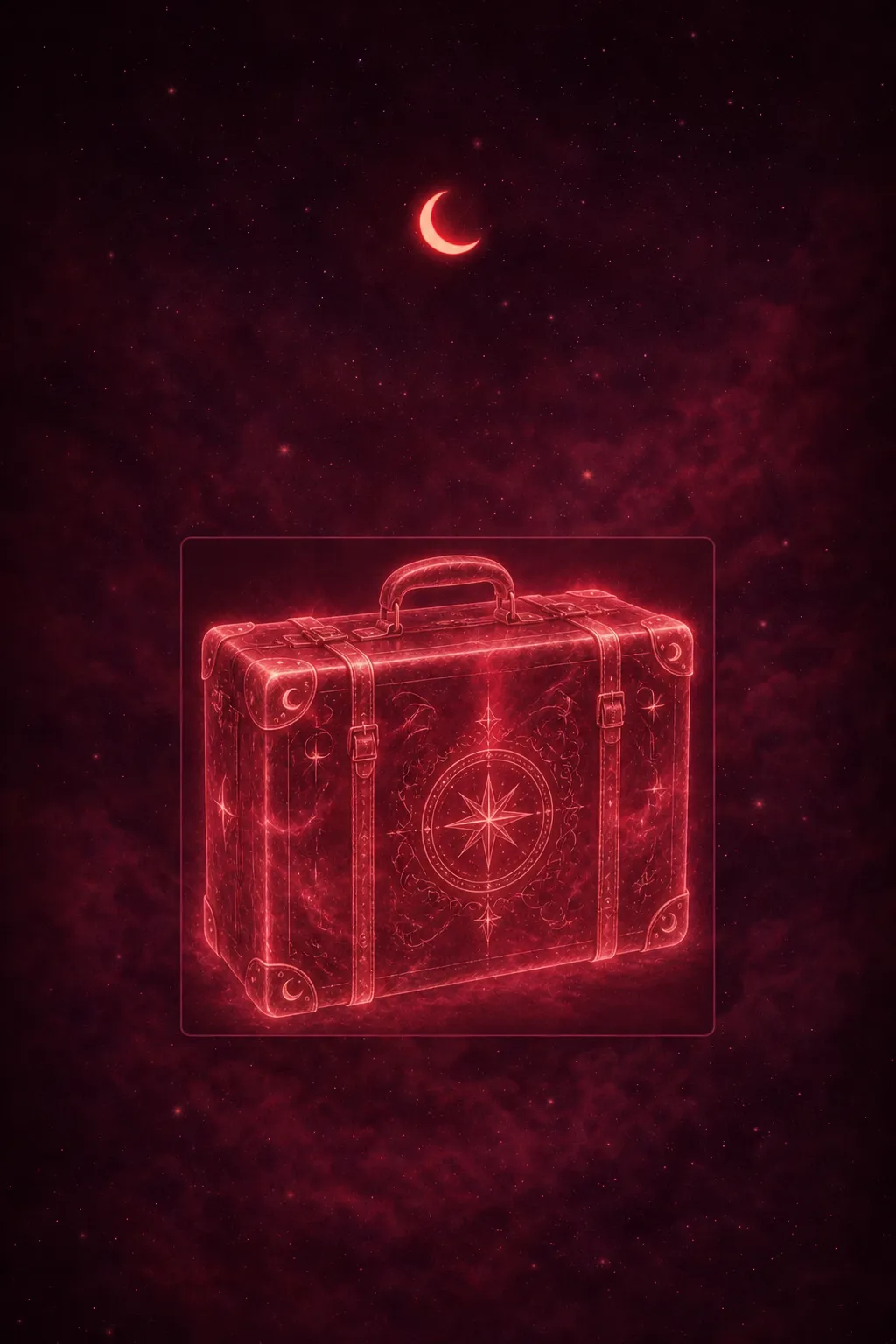

Dreaming of a suitcase typically symbolizes your readiness for change, the emotional baggage you carry from past experiences, or a deep desire for freedom and new beginnings, with the suitcase's condition and contents often reflecting how prepared or burdened you feel about a major life transition you are facing or approaching.
In under a minute you could read what your exact dream means for you, and see a picture of it. Free.
You read what it can mean. But what did yours mean?
General meanings stop here. In the free app, tell Dream Book your exact dream and get a reading that actually makes sense for you.


Common Suitcase Dream Scenarios and What They Mean
The specific details of your suitcase dream shift its meaning considerably. Hurried, chaotic packing — clothes spilling out, time running short — typically reflects anticipatory anxiety around a real-life transition: a job change, a move, or a relationship shift you feel unprepared to handle. Calm, deliberate packing, by contrast, suggests you are actively sorting your priorities and feel some measure of control over what lies ahead. One of the most telling variants is the overpacked suitcase that simply will not close. This scenario speaks directly to overwhelm — the sense that you are carrying more emotional weight or responsibility than any one person can reasonably manage, yet struggling to put anything down. At Dream Book we explore this symbol in depth.
- Lost or missing suitcase — a strong displacement anxiety signal, often surfacing during major life transitions (much like airport dreams); fear that your sense of identity or security won't survive the change.
- Suitcase too heavy to lift — unresolved emotional baggage or unsustainable obligations dragging on your energy; a nudge to examine what you are still carrying from the past.
- Empty suitcase — dual-edged: either genuine readiness for a fresh start, unburdened by history, or an unsettling feeling of being under-resourced for what is coming.
- Suitcase packed and waiting by the door — an unresolved urge for escape or change; the decision has formed internally but not yet been acted on.
- Packing someone else's bag — a caretaking role that may have blurred into over-responsibility; worth asking whose needs are actually being prioritized.
- Locked or hidden suitcase — concealed feelings or a part of yourself kept guarded, possibly for good reason, possibly at a cost.
But what does your version mean?
Leaving a suitcase behind in a dream can cut either way: a liberating release of old burdens, or a sign that genuine needs are being neglected in the rush to move forward. Pay attention to the emotional tone on waking — relief points toward healthy release, while unease suggests something important may have been left unaddressed.
What this dream could look like
Tap an image to open it full screen
Example images. Only you can see what you write in Dream Book.
The Psychological Meaning of a Suitcase Dream
In psychological terms, a suitcase is one of the mind's most honest self-portraits. What you choose to pack — and what you leave behind — mirrors your subconscious sense of identity and priority. Psychologists working in the tradition of depth psychology read the suitcase as a container for emotional baggage: the unresolved grief, guilt, or resentment you carry forward from one life stage to the next without fully examining. The weight of the bag in a dream often tracks directly with how burdened or liberated you feel in waking life, making it a reliable emotional barometer during periods of stress or change.
Modern anxiety culture adds another layer. In an era defined by pressure to stay productive and in control, the dream suitcase frequently surfaces when a person feels caught between the urge to flee a situation and the fear of actually doing so. That tension — staying versus leaving, concealing versus disclosing — is the psychological engine beneath the image. Dreams involving airports and suitcases together tend to amplify this, suggesting the dreamer is mentally rehearsing a transition they have not yet committed to. From a Christian psychological perspective, the image can also raise quiet questions about what attachments a person is dragging along rather than releasing through forgiveness or faith.
- Overfull suitcase: emotional overload, difficulty setting boundaries, a sense that responsibilities exceed capacity.
- Empty suitcase: openness to change, but possibly a fear of having nothing meaningful to bring into a new chapter.
- Lost suitcase: anxiety about losing your sense of self or control during an ongoing life transition.
- Unpacking calmly: readiness to examine your own history and integrate past experiences into a more grounded identity.
General meanings end here. Read your own dream.
Describe your dream in a line or two. In seconds you get a reading of your exact dream, a picture drawn from your own words, and every symbol explained.
Free. No sign-up. Takes 10 seconds. Your dream stays private.
0%
Analyzing your dream…
Something went wrong. Please try again in a moment.
Your dreams deserve more than a dictionary
Cultural and Traditional Readings of a Suitcase Dream
In Anglo-American culture, the suitcase carries a distinctly modern symbolic weight. Mainstream folk wisdom has long treated packed luggage as a sign of new beginnings — moving out, starting fresh, seizing opportunity — reflecting a deep cultural value placed on self-reliance and forward momentum. The phrase emotional baggage is so embedded in everyday English that most people use it without registering its origin in dream imagery and pop psychology, yet it captures a broadly shared intuition: what we haul through life shapes how freely we can move through it.
Was yours a sign? Find out.
For the sizable US Christian segment of the culture, the suitcase can quietly echo biblical themes of pilgrimage and sojourning — the idea that earthly life is itself a journey, and that we are responsible stewards of what we carry. This reading sits comfortably alongside secular interpretations rather than replacing them, adding a layer of moral accountability to the question of what burdens are worth keeping.
- Mobility culture: Frequent relocation and career pivots make the suitcase a familiar anxiety symbol; dreaming of one often mirrors real-life pressure around a travel or transition moment.
- Independence ideal: Carrying your own bag — without help, without overflow — reflects the Anglo cultural premium on self-sufficiency and having things under control.
- Modern-anxiety frame: Folk belief increasingly treats a disorganized or overloaded suitcase as a warning sign, an intuitive nudge that life has become unmanageable and something needs to be set down.
The Spiritual Meaning of a Suitcase Dream
Across Christian tradition, life is understood as a pilgrimage — a passage through temporary terrain toward something greater. In that frame, a suitcase in a dream can function as a quiet spiritual prompt: what are you carrying, and does it serve the journey ahead? Jesus's invitation in Matthew 11:28 — "Come to me, all who are weary and burdened, and I will give you rest" — resonates strongly here. A heavy, overstuffed suitcase may reflect a soul that has been hauling unresolved guilt, grief, or obligation rather than releasing it. The dream becomes a gentle confrontation: you are not meant to carry all of this alone.
A bad dream isn't a bad sign.
The biblical motif of traveling light runs through both the Old and New Testaments. When disciples were sent out, they were told to take little — trust the provision of the road rather than overprepare for every contingency. In spiritual terms, then, a suitcase dream can signal a call to discernment: not every habit, identity, or worry you have accumulated deserves a place in your next chapter. What you choose to pack is, spiritually, a statement of faith and self-knowledge.
- Overflowing or impossible to close: a sign that spiritual burdens may need to be consciously surrendered, not managed harder.
- Lost suitcase: an invitation to examine what your sense of identity is truly grounded in — much like the anxiety explored in airport dreams of missed departures.
- Packing calmly with space to spare: a reassuring image of spiritual readiness and trust in the transition ahead.
Related Dream Meanings

common dreams
Airport Dream Meaning: Transitions, Change & Anxiety
5 min read

common dreams
Door Dream Meaning: Opportunities, Transitions & Choices
5 min read

common dreams
Back in School Dream Meaning: Nostalgia, Anxiety & Growth
5 min read

common dreams
Old House Dream Meaning: Past, Nostalgia & Unresolved Issues
5 min read

common dreams
Being Late Dream Meaning: Anxiety, Fear & Missed Chances
5 min read

common dreams
Finding Money Dream Meaning: Luck, Wealth & Hidden Talents
5 min read

common dreams
What Does Dreaming About a Full Moon Mean - Dream Interpretation
5 min read

common dreams
Lucid Dreaming Meaning: Control, Awareness & Self-Discovery
5 min read
What to Do After a Suitcase Dream
Because the suitcase is so closely tied to the feeling of being overwhelmed by what you're carrying, the most useful first step is a simple inventory — not of physical belongings, but of commitments, obligations, and unresolved tensions. Ask yourself honestly: what am I lugging into each week that no longer needs to come with me? Modern life makes it easy to accumulate responsibilities the way luggage racks collect bags, and the dream may be flagging that your load has quietly exceeded your capacity.
- Audit your plate. Write down your top five current stressors. Which are genuinely yours to carry, and which have you absorbed from others?
- Name the transition. If the dream recurs, identify any real-life change — a career shift, a relationship evolving, a move — that you may be mentally avoiding rather than preparing for.
- Practice deliberate closure. Much like a door in a dream signals a threshold, a suitcase signals a choice point: decide consciously what you are taking forward and what you are leaving behind.
- Set a boundary this week. Choose one recurring demand on your time or emotional energy and decline it, delay it, or delegate it.
But what does your version mean?
The practical gift of a suitcase dream is that it hands you a concrete metaphor for self-examination. Use it as a prompt to reclaim a sense of control: pack lighter where you can, and be deliberate about what you choose to bring along.
One dream is never the whole picture.
The free app remembers your dreams, draws them, and connects the threads over time — so the next one means even more. Free to start.
People Also Ask
Spiritually, a suitcase represents the emotional and karmic baggage you carry through life. It reflects unresolved experiences, personal beliefs, and burdens on your soul's journey. A heavy suitcase may signal it is time to release old wounds, while a light or neatly packed one suggests spiritual readiness and inner peace.
Suitcases commonly represent transition, personal identity, and readiness for change. They symbolize what you carry emotionally into new chapters of life. A lost suitcase may indicate fear of losing your sense of self, while packing one suggests preparation for a major life shift, whether emotional, professional, or relational.
Biblically, luggage or burdens symbolize the cares of earthly life that weigh the spirit down. Scripture encourages believers to cast their burdens onto God. Dreaming of heavy luggage may reflect spiritual weariness, while releasing or setting it down can mirror the biblical call to surrender anxiety and trust divine guidance.
Warning dreams often feel unusually vivid, urgent, or emotionally intense and linger long after waking. They may repeat or carry a clear moral message. If a dream about a suitcase fills you with dread about a coming decision or journey, prayerful reflection and seeking wise counsel can help discern its divine significance.
Curious what your dream would look like?